Different Networks, Single Vehicle: The Roaming Problem at Charging Stations
Share This Page
E-roaming in electric vehicles means the driver can authenticate and charge at stations of different charging networks with a single account, a single app, or a single RFID card, and make the payment to a single provider. It is the charging world's equivalent of mobile phone roaming: you remain a subscriber of your own operator while using another network's infrastructure. As of October 2026 in Türkiye, 185 brands provide charging services; this number also shows numerically why creating memberships one by one is unsustainable.
Highlights
- There are 13,140 charging stations and 47,908 sockets in operation in Türkiye (October 2026).
- EPDK granted licensed operators the authority to make inter-operator roaming agreements.
- In Europe, hub-based platforms allow access to more than 580,000 charging points with a single account.
- Existing operators were given additional time until December 31, 2026 to comply with the new access rules.
Why Does Each Charging Station Require a Separate App and Membership?
The root of the problem lies in the structure of the market. Almost all publicly accessible chargers are connected to a network, and networks, even when free of charge, require the user to be registered in the system in order to start a session. Without authentication, neither billing nor fault, safety, and reconciliation processes can be carried out. The result: every operator builds its own app, its own card, its own wallet, and on the user side a situation known as app fatigue emerges.
As the market grows, this picture becomes heavier. According to June 2026 data, of the 45,097 sockets in Türkiye, 19,663 are DC and 25,434 are AC; the number of electric vehicles has surpassed 450,038, and in the first seven months of the year alone the fleet grew by 91 thousand vehicles. Every new brand adds one more app to the driver's accounting, at least until roaming agreements come into play. In a market where PwC Strategy& showed the number of license holders as over 150 as of late 2023, this trend cannot be expected to stop on its own.
How Does Roaming Work Technically?
To understand the system, it is enough to distinguish two roles. The CPO (charge point operator) is the party operating the network where charging starts; the eMSP (e-mobility service provider) is the party where the driver's account, app, and invoice reside. You are a customer of an eMSP; you physically charge at the CPO's station. Roaming is the data and payment flow that builds the bridge between these two parties.
The flow works step by step as follows: You connect the vehicle and present your identity (app, RFID card, or vehicle-based authorization). The station's own network transmits this identity to your main provider via a roaming platform or a direct connection. The main provider approves, and charging begins. At the end of the session, kWh, duration, and location data are transferred back for billing; payment is settled through your main provider with a single invoice. The shared data is not just session records: the station's location and operational status, tariffs, authentication tokens, fault notifications and reconciliation data also pass through these lines.
Protocols: What Are OCPP and OCPI For?
The two standards operate at different layers and should not be confused. OCPP governs the communication between the charging device and the backend management system: remote control, firmware updates, status monitoring. It was created by the Open Charge Alliance in 2009; today versions 1.5, 1.6 and 2.0 are widespread.
OCPI, on the other hand, is the navigation layer of the business: an open protocol developed since 2014 for peer-to-peer roaming between CPOs and eMSPs, and updated by the EVRoaming Foundation. It enables tariffs, session data, location and authentication tokens to be exchanged in a standard format. In short, OCPP manages the device, OCPI connects networks. The industry's failure to agree on a single protocol yet explains why interoperability is still imperfect.
Three Roaming Models: Network Platform, Hub and Peer-to-Peer
Roaming does not work with a single template; in practice there are three models. Knowing their differences helps when assessing how much network each provider actually opens up to you.
- Single platform model: the eMSP and CPOs operate payment reconciliation on a single system under the same platform provider. The model with the least friction but the most closed.
- Hub-based roaming: Data is transmitted through a central hub, and payments are handled separately between the parties. Access can be managed openly or through bilateral agreements.
- Peer-to-peer: A direct contract between two parties. Each new connection requires a new agreement; the most common protocol is OCPI.
The scale of hubs is tangible: Thanks to Hubject and Gireve memberships, some providers can offer their customers access to more than 580,000 charging points across Europe, Asia and the US; another intermediary provides connection to over 200,000 points. It should also be added that peer-to-peer agreements are a growing trend, especially for securing positioning between the two major players in the market.
RFID Card, App and Plug & Charge: Ways to Start Charging
There are three common methods of authentication. The app is the most flexible: pricing, availability and session management on a single screen. The RFID card, on the other hand, is used to start and stop a session by tapping it on a reader; it eliminates the hassle of opening the app every time and is more reliable in areas with weak signal. The third method is vehicle-based authorization, i.e. Plug & Charge (ISO 15118): the vehicle is recognized by its own certificate, and neither an app nor a card is needed. Once certificates are recognized across networks, a roaming version of this also becomes possible; AutoCharge-like solutions allow charging without a card or app on selected networks.
A practical note: Obtaining a single RFID card and registering the same card with multiple operators' apps is a common practice among users. A single card serves as a wallet within the networks it supports; which network reads the card depends on that station's identification method. Keep in mind that not all chargers support the same method (RFID, app, or Plug & Charge); checking which method the stations along your route accept before setting off is the cheapest measure that prevents failed charging starts.
The Situation in Türkiye: Regulation, Figures, and Single-App Steps
Türkiye has not left this problem entirely to the mercy of the market. An EPDK (Energy Market Regulatory Authority) regulation granted license holders the authority to conclude roaming agreements with different charging networks; mutual data and payment exchange between operators is envisioned. EPDK also runs the Şarj@TR open access platform, and the draft regulating access to charging services gives existing operators extra time until December 31, 2026 to comply with the new criteria. Regulatory pressure is the strongest force pushing the market from the era of individual subscriptions toward shared access.
The Market in Figures: 185 Brands, 13 Thousand Stations
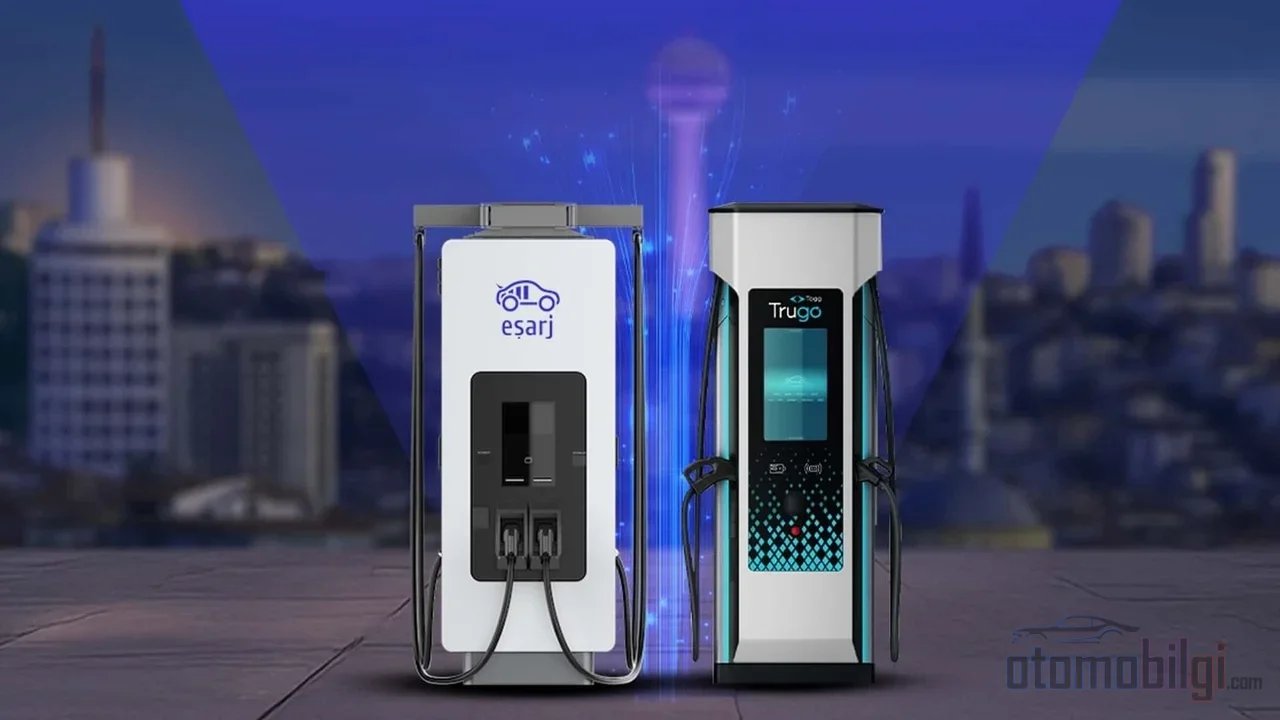
As of October 2026, 185 brands provide charging services in Türkiye; the total number of sockets is 47,908. The division of labor in this landscape can be summarized with two tables. The first covers infrastructure and pricing, the second integration examples that touch the user.
| Indicator | Value | Period |
|---|---|---|
| Number of brands providing charging services | 185 | October 2026 |
| Total stations / sockets | 13,140 / 47,908 | October 2026 |
| Number of electric vehicles | Over 465,000 | Mid-2026 |
| Operator selling the most energy (Trugo) | 18,543 MWh | September 2026 |
| Trugo DC/AC price | 9.95 / 14.98 TL | September 2026 |
| Eşarj price | 9.90 / 9.90-14.90 TL | September 2026 |
| Voltrun price | 10.90 / 13.90 TL | September 2026 |
Price comparison is done in practice through independent platforms; the cost difference is tangible. In a sample calculation for the same 100 km journey, charging at home comes to 52 TL, at a DC station 216 TL, and with a gasoline vehicle 520 TL. In other words, since roaming determines where and at which tariff you will charge, it is a matter that directly touches your wallet.
Consolidation has also begun on the market side: Zes and Wat Mobilite combined their strengths; users can start Wat charging stations from a single app, and the Zes-Beefull integration has also been announced. Such mergers are the fastest way to effectively reduce the number of subscriptions for the user. PwC Strategy&'s medium scenario predicts that the number of registered electric vehicles will exceed the 2 million mark by 2030; at that scale, interoperability between operators is no longer an optional feature but a condition of the infrastructure's usability.
Where Are the Limits: Why Doesn't Roaming Solve Every Problem?
For an honest picture, the limits must also be counted. First, coverage: roaming access depends on network participation and regional agreements; you still need to check which networks are supported yourself. Second is data quality: inconsistent location and availability data can make a station appear available when it is actually broken, leading to failed charging attempts; differences in session logging between CPO and eMSP systems also fuel billing disputes. Third is pricing: even in Europe, the market has not fully converged on a model considered fair and reasonable for roaming pricing, and comprehensive legislation is still lacking in this area; the European Commission has been working on protocol compliance, cross-border payments, and VAT regulations since 2020. Tariff transparency, reconciliation rules, and the limits of customer support in case of disputes are among the operational issues the industry is still struggling to settle.
The European perspective is promising: the continent reached 1 million public charging points in 2025; that is a tenfold increase compared to 2018, and current projections point to 2 million points by 2029 and 3 million by 2032. As the scale grows, so does the cost of the absence of a single standard; which is why interoperability is climbing to the top of the regulatory agenda, just as in Türkiye.
Practical Guide: How to Reach the Widest Network with the Least Subscription?
The engineering approach is simple: you eliminate the unnecessary variable and scale the critical one. On the driver's side, the same logic boils down to these steps:
- Define your route. List which networks the stations along your home, workplace, and frequently used long-distance routes belong to. The value of a membership depends entirely on how often you use that network.
- Choose the eMSP with the widest roaming coverage. Look at the network list within the app; thanks to hubs or peer-to-peer agreements, how many stations a single account can reach is your decision criterion.
- Get a single RFID card and register it with every app. It is possible to register the same card with multiple operators' systems; that way, no card collection builds up in your wallet.
- Determine a backup method. If your vehicle supports ISO 15118, use Plug & Charge; if not, keep a card accepted by at least two networks as a backup.
- Verify the price at the start of your route. Check the current tariffs on independent comparison platforms; the cost per kilometer on DC can be several times that of home charging.
The picture regarding the goal is clear: most charging stations opening with a single customer account; just as most payment cards are accepted at most stores. In Türkiye, the regulatory framework has been established in this direction, the market has begun to consolidate, and on the user side, with the right card and the right app choice, it is already possible today to access a wide network with a single account. Until the setup is complete, however, the best tool is the driver who plans for every route, not every station.
Sources
- Roaming in EV charging
- EV roaming
- Multi-network Access Benefits in Modern Technology
- E-Roaming: The invisible hand behind seamless EV charging
- Roaming: unlocking the future of EV travel
- A Comprehensive Regulation for the EV Charging Market from EPDK
- Free Access Platform Charge@TR - EPDK
- Draft New Rules for Access to Charging Services
- All EV Charging Companies in Türkiye
- Türkiye's EV Charging Infrastructure 2026
- Number of electric vehicles reached 465 thousand
- Charging station price comparison
- EV Charging Fees 2026
- Türkiye charging market profitability
- Why RFID Cards Still Matter
- Charging Without a Charging Card
- Charging network membership worth it?