What You Need to Know About Municipal Street Charging Networks
Share This Page
Municipal street charging networks are urban infrastructure installed in parking lots and along curbs, typically consisting of 7.4-22 kW units, offering electric vehicle users without a garage or private parking spot slow-to-medium speed AC charging overnight and during long parking periods. They are not an alternative to the fast charging network but its complement: they convert not short stops along the road, but the hours when the vehicle is already parked into charging time.
Highlights
- Street-type units generally provide AC power of up to 22 kW; the conversion takes place in the vehicle's own on-board charger.
- As of July 2026, the AC tariffs of major operators are in the 9.90-11 TL/kWh band; DC fast charging can exceed 13 TL/kWh.
- Charging at home tariff costs roughly half of public AC charging and about a third of DC charging.
- Izmir Metropolitan Municipality operates 52 charging units in 17 IZELMAN parking lots.
- The Charging Service Regulation amendment that came into force in 2026 granted operators the option of discounted pricing based on location and time.
The most critical breaking point of electric vehicle ownership is not range, but where to charge. For users who can install a wallbox at home, the problem is largely solved; if there is no outlet in the parking lot, the battery percentage becomes an item of anxiety every morning. While the number of electric vehicles first registered in Türkiye reached 465 thousand as of July 2026, a significant portion of these vehicles live in apartment and street parking arrangements. This is exactly the gap that municipal charging stations are built to fill: installing, on public parking lots and with the city council's budget, the infrastructure that the vehicle owner cannot set up at home.
What Exactly Is a Street-Type AC Charging Unit?
The technical definition is short: a charging unit that passes alternating current from the grid to the vehicle as is, leaving the conversion to direct current to the on-board charger inside the vehicle. This architecture simplifies the unit itself; since there is no converter, costs drop and there are fewer points of failure. The price is speed: since the vehicle's own converter does the conversion, charging speed is locked to the lower limit of the vehicle's on-board unit and the phase configuration the unit is connected to. Typical values are 7.4 kW single-phase and 11 kW or 22 kW three-phase.
The meaning of this power range should be read in terms of parking duration. While a vehicle with an 11 kW converter connected to a 22 kW unit fills up in a few hours, the same unit is more than sufficient for a vehicle parked overnight. Ireland's on-street charging design guideline, with exactly this logic in mind, deems AC units suitable for a few hours or overnight full charging scenarios. So street charging is not a slow version of fast charging; it is a separate product designed for a different use scenario.
Who Are Municipal Street Charging Networks Sensible For?
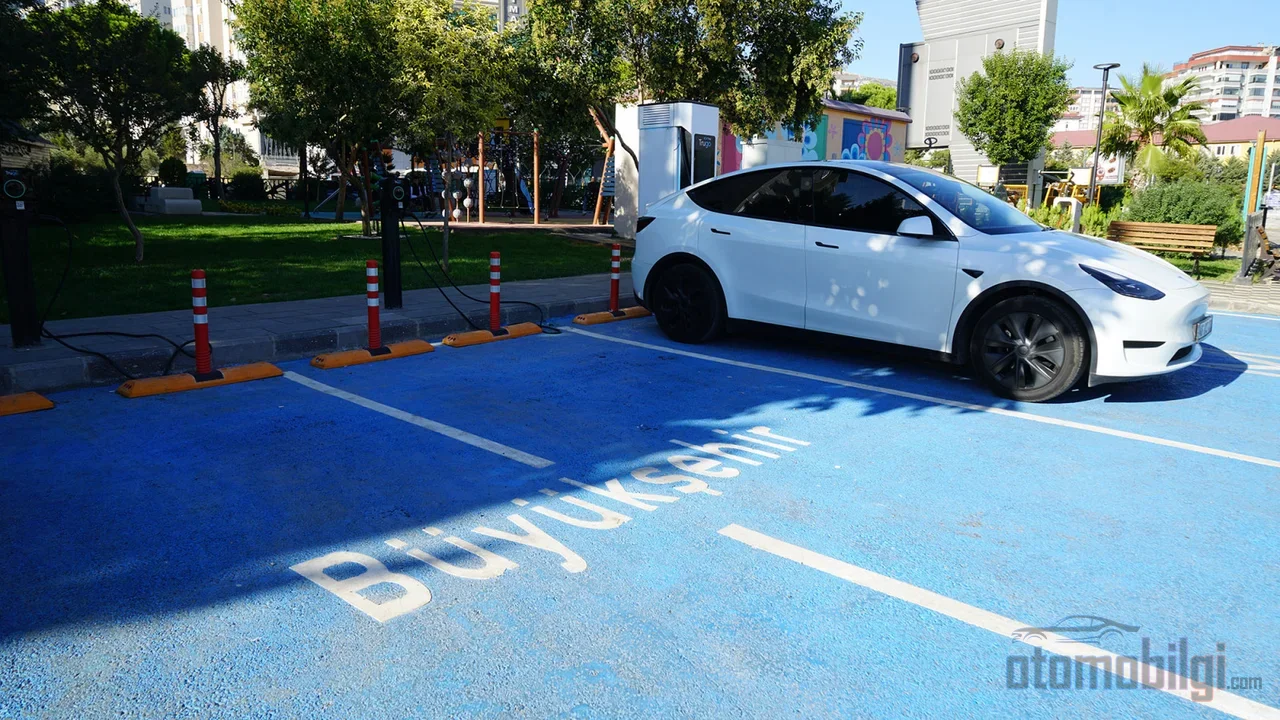
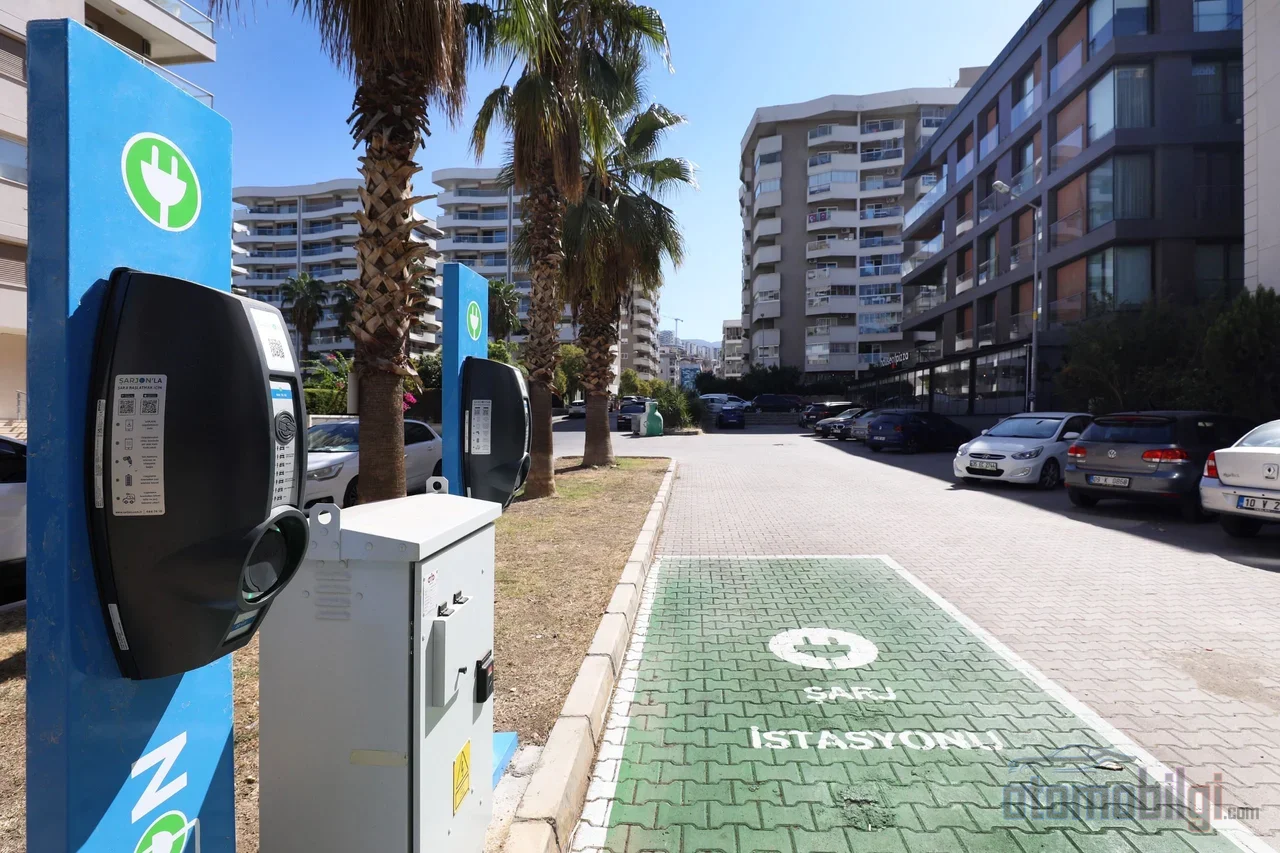
The target audience of street charging is clearly defined: users without a garage who park their vehicle on the street or in a shared parking lot. Offering the closest alternative to home charging in this profile is also accepted as the infrastructure's primary function in international examples. The logic is simple: bring the charging to where people are already parking. Installation integrated into the existing parking layout reduces both cost and the permitting process compared with building a separate charging plaza.
Those who park on the street overnight
With average daily usage in the 40–60 km band, a 7–11 kW AC charge overnight easily fills the battery by morning. The user does not need to go to a high-power station; charging takes place during sleep. Considering that filling at the home tariff costs 2.33–3.45 TL per kWh, the overnight charging habit is the economic foundation of electric vehicle ownership. The street AC network means extending this foundation to users without garages as well.
Users of public parking lots with long parking durations
Municipal parking lots are the natural territory of this scenario. For a vehicle that stays all day near a business center or metro station, an AC unit is an ideal match; for example, a vehicle that stays 3 hours in a parking lot gains meaningful range from medium-speed AC charging. The 52 units operated by Izmir Metropolitan Municipality in 17 IZELMAN parking lots are this model's concrete implementation in Türkiye. These areas, working half as shuttle lots and half as charging points, fill the narrow coverage area of DC stations.
Pricing: How Much Does Street AC Charging Cost?
In the 2026 table, public AC charging prices range from 6–12 TL/kWh depending on the operator; the July 2026 tariffs of the large networks cluster around 9.90–11 TL/kWh. On the same dates, standard DC fast charging is 12.99–13.78 TL/kWh, while high-power DC above 150 kW exceeds 15 TL. A 60 kWh charge costs roughly 480–540 TL at an AC station, while the same charge can reach 660–840 TL at a DC station.
| Charging type | Typical power | Price band (2026) | 60 kWh charge |
|---|---|---|---|
| Home type (wall unit) | 7.4–22 kW | 2.33–3.45 TL/kWh | 175–260 TL |
| Municipal/street AC | 7–22 kW | 6–12 TL/kWh | 480–540 TL (average) |
| DC fast | 50–120 kW | 11–13 TL/kWh | 660–840 TL |
| DC ultra-fast | 150–400 kW | 12–14 TL/kWh | Above 720 TL |
The regulatory side has also set pricing in motion. The amendment to the Charging Services Regulation, published in the March 23, 2026 issue of the Official Gazette, regulates the charging network operator's ability to apply discounted or dynamic pricing depending on location and time of day. Opening municipal units cheaply during night hours is not technically prevented after this regulation; on the contrary, it is a supported model.
The Limitations Must Be Written Honestly
Street charging is not a solution suitable for everyone, and buying a vehicle without knowing its limits is an invitation to disappointment. The most commonly voiced experience is this: if there is truly no overnight charging opportunity, electric vehicle ownership turns into regular DC station visits and the cost calculation reverses. While 100 km of usage costs roughly 52 TL at home, it can rise to 216 TL at a DC station; this gap grows rapidly in daily use.
- Occupancy risk: Street units serve a wide user base with a small number of sockets; while the unit is connected to one vehicle, a second vehicle waits.
- Idle occupancy problem: A non-charging vehicle parked at a unit is in practice the most frequently complained-about issue; a street charging point is not a parking space.
- Slow speed: For a driver in a hurry, an AC unit is the wrong address; it cannot compare to a DC stop of 15-60 minutes.
- Uneven coverage: The number of units can be distributed unevenly between neighborhoods; street luck is not a predictable variable for the buyer.
Relationship with Fast Charging Networks: Not an Alternative, a Layer
A healthy charging ecosystem works in layers. DC fast charging stations, with power ranging from 50 kW to over 350 kW, cover stops on a route of 15-60 minutes: highway breaks, urgent needs, long journeys. The street AC network, on the other hand, carries the storage side: it turns into energy the fact that the vehicle spends more than 90% of the day parked. The two come into play for the same user on different days, even at different hours of the same day.
This layered structure is growing in Türkiye. By the end of 2025, WAT Mobility was operating approximately 2,000 sockets at more than 600 stations in over 60 provinces; roughly half of these AC, half DC. The number of sockets nationwide has exceeded 36,000, and the high-power DC side is moving toward the 180-360 kW class. En Yakıt's target of 500 charging points in 81 provinces by 2027 also expands the coverage of the fast charging layer. In this picture, the role of municipalities is clear: beyond the main arteries where private operators go first for economic reasons, extending AC coverage at the neighborhood scale.
The Apartment and Housing Complex Side: An Alternative Installation to Street Charging
There is another route that is independent of the municipal network but solves the same problem: installing your own unit in a shared parking area. Under the Condominium Law and the 2024 EIDBK circular, for installation in shared parking areas, a majority in number and land share in the condominium owners' assembly is sufficient; block-type units that can be removed and reinstalled and require no construction work are not considered structures, so no building permit is required. The March 11, 2025 amendment to the Planned Areas Zoning Regulation also brought charging installations in apartment common areas under permit-exempt works; in return, an electrical project and an engineer's liability undertaking must be submitted to the administration.
The cost of installing a home-type wall unit, including the device and mounting, is between 45,000-150,000 TL. Installations above 11 kW require a three-phase electrical infrastructure; single-phase buildings remain limited to 7.4 kW. If paid electricity will be sold to third parties, the nature of the work changes and working with a licensed charging network operator becomes necessary. When this individual route is not possible, that is, when building processes are blocked and street parking is a necessity, municipalities' street AC networks emerge as the only accessible option.
Assessment: Who Should Do What?
The evaluation of the street charging network can be reduced to three questions. For someone with a garage who can install a wall unit, a municipal unit is unnecessary; home charging is both cheap and guaranteed. For someone who parks on the street but has an AC unit in their neighborhood, an electric vehicle is now a reasonable choice; it is enough to integrate the unit into the nightly routine. For someone who can find neither night charging nor workplace charging, the picture is difficult: regular DC use multiplies the cost per kilometer two- to threefold, and waiting for the street charging network to expand would be the most sensible plan.
From an engineering standpoint, municipal street charging is one of the most efficient public investments in the EV transition: low unit-cost units are being installed in parking spaces that already exist and directly close the infrastructure gap. The measurable impact is also clear: each street unit put into operation removes one garage-less user from the DC station queue and from twice the energy cost. As the network grows, the social distribution of EV ownership will also balance out; for now, whether you have a home beneath that green dot on the map is the most decisive technical parameter in the purchase decision.
Sources
- Charging Service Regulation – Official Gazette 03.23.2026
- Electric Vehicle Charging Prices 2026: AC and DC kWh-Based – OSARJ
- 2026 Electric Vehicle Charging Station Prices and Cost Calculation Guide
- Electric Vehicle Charging Fees 2026: How Much Is 1 kWh in TL?
- How to Install an Electric Charging Station in Residential Complexes and Apartment Buildings?
- Charging Station Installation in Apartment Buildings and Residential Complexes: Permits and Process
- IZELMAN parking lots charging unit announcement – Izmir Metropolitan Municipality
- Number of electric vehicles increased by 91 thousand in 7 months – Yenimesaj
- On-Street Kerbside Charge Points in European Cities – Ireland EV Infrastructure Strategy
- Universal Design Guidelines for EV Charging – ZEVI
- En Yakit – Fast Charging Network
- What Is the Difference Between AC and DC Charging in Electric Vehicles?