How to Get Approval from Condo Owners for Charging Installation in Your Apartment?
Share This Page
For charging installation in your apartment building, the threshold of condominium owners' approval is simpler than most car owners assume: For installation in a shared parking area, according to the 2024 ministry circular, a simple majority in terms of headcount and land share - that is, 50+1 percent of the condominium owners' votes - is sufficient; whereas a modification requiring structural changes to the building's common installations may require a four-fifths majority under the Condominium Law. In other words, the obstacle is not the cable, but holding the right meeting with the right agenda and securing the right majority.
Highlights
- For installation in shared parking areas, a 50+1 percent majority is sufficient: 6 owners' approval in a 10-unit building, 11 in a 20-unit building.
- Condominium Law Article 19 as a rule requires 4/5 written consent; the circular's easing of this requirement is a matter of legal debate.
- In an allocated parking space, for installation that does not alter the installation, a condominium owners' decision is not required.
- A building permit is not required for mobile units that do not create enclosed spaces.
- The Court of Cassation ruled for the dismantling of an installation that ran cables through common areas without permission (March 2025).
While the number of electric vehicles in Türkiye surpassed the 600,000 mark at the end of 2025, thousands of car owners are waiting for meeting day because of a box mounted on the wall in their own parking area, not on the street. This article looks not at cable cross-sections, but at the minute book: Which permit is required when, how to talk to the building manager, and how to respond to neighbors' objections?
What does the legal status of the shared parking area determine?
The parking area's status is the first variable in the permit process. In a building subject to condominium ownership, a shared parking area is under the common ownership of all owners; running an installation there or mounting a device on the wall falls under the rules governing the Use and Management of Common Areas. If it is a parking space allocated to an independent unit, tied to a specific apartment in the deed or management plan, the picture changes: that area is effectively for your use, and if your intervention does not extend to other units, the procedure shortens.
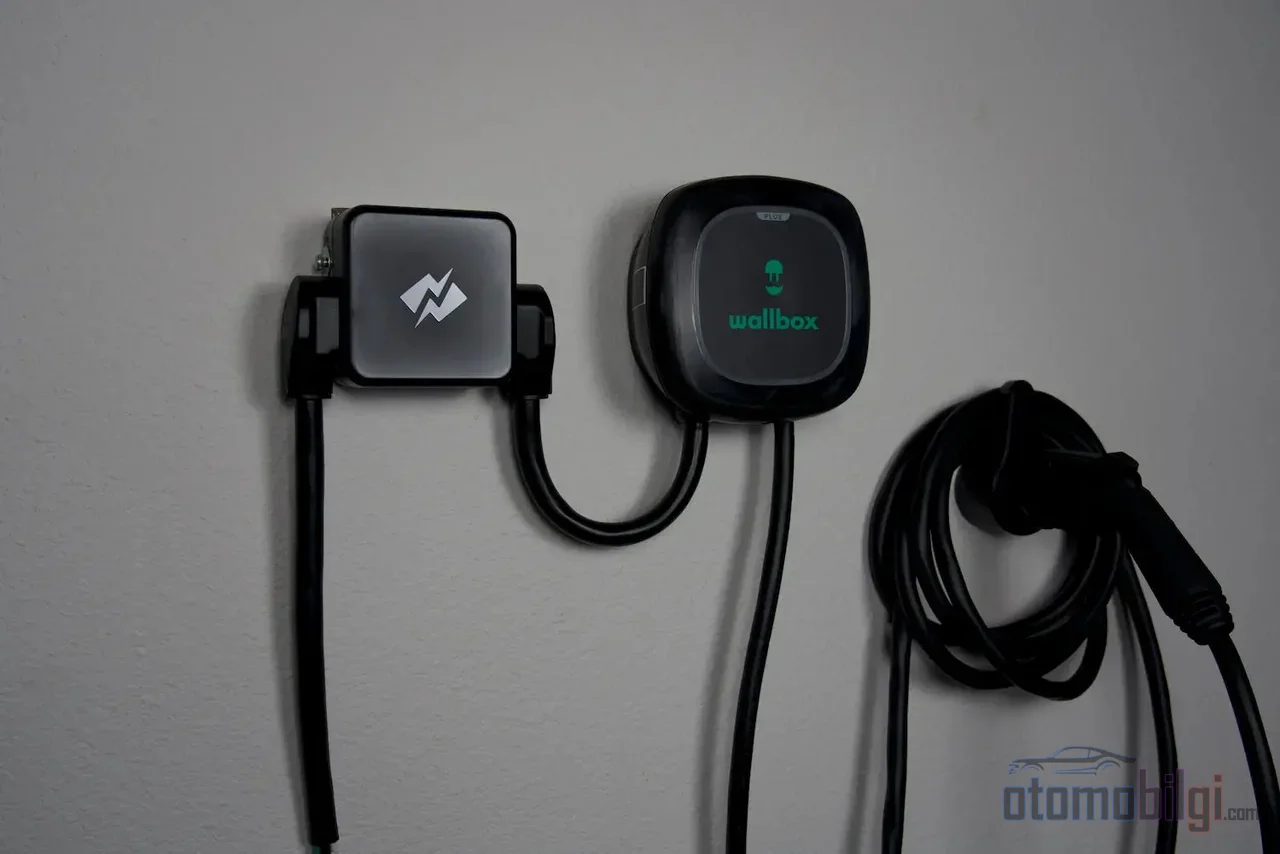
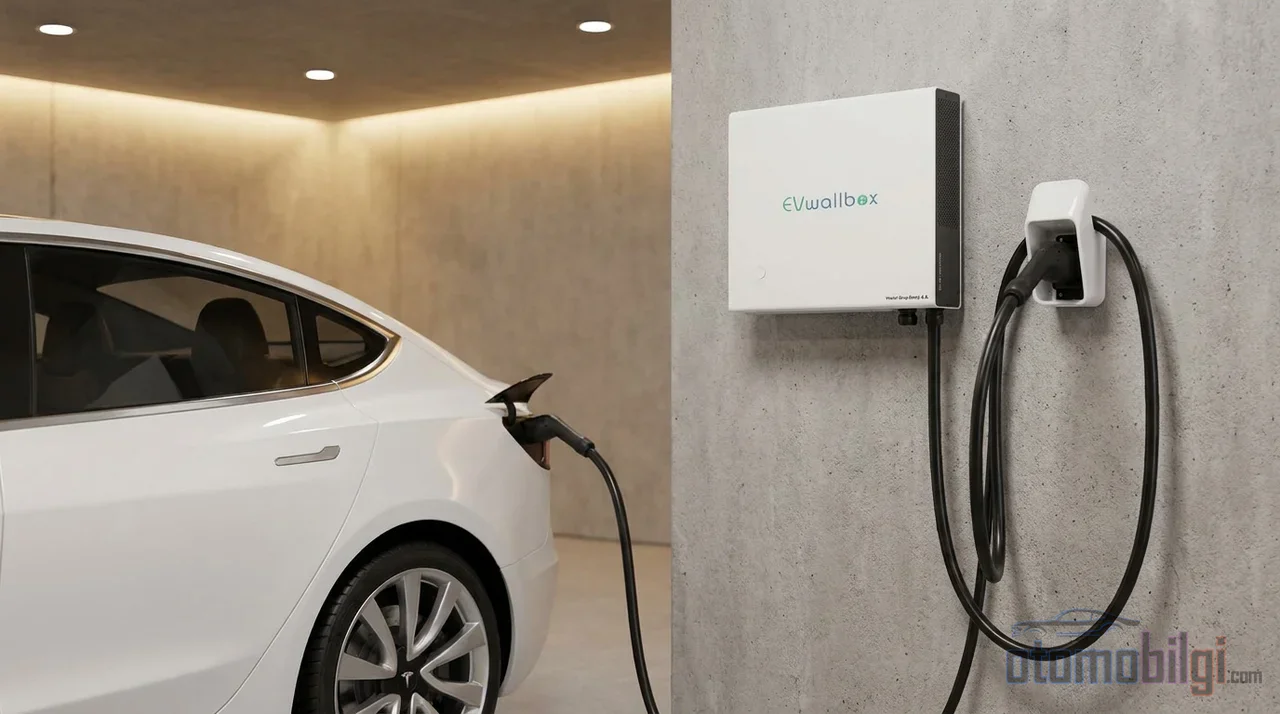
In August 2024, the Ministry of Environment, Urbanization and Climate Change clarified this distinction with a circular sent to governorships and the EMRA. The circular defines charging units used in apartment buildings and housing complexes as mobile electrical devices that do not require any construction, do not create enclosed spaces, and are delivered pre-assembled in block form, and therefore does not require a building permit. It also evaluates the units under the article of the Condominium Law governing beneficial innovations and additions; this approach has been formalized and incorporated into zoning legislation as well.
When is condominium owners' approval required, and which majority is sufficient?
The answer to the permit question splits into three scenarios, each with a different majority threshold. The table below compares these thresholds:
| Scenario | Required permit | Majority / condition |
|---|---|---|
| Unit installation in a shared parking area | Condominium owners' assembly decision | Majority of headcount and land share (50+1 percent) |
| Installation in an allocated parking space, without altering the installation | No condominium owners' decision required | Other units and common areas must not be affected |
| Regulation requiring structural modification in common areas | Written consent of the property owners | A qualified majority of 4/5 |
| Common requirement in all three scenarios | The positive opinion of the relevant electricity authority | Compliance with the Charging Service Regulation |
Let's read it through a practical example: The votes of 6 owners in a building with 10 independent units, or 11 owners in a complex with 20 units, are enough to validate the decision to install in the common parking area. This simple-majority ease based on the circular solves the problem arising from the classic 4/5 threshold positioning at least one fifth-share block in the building as a permanent blocker.
There is an ongoing legal debate
The durability of the ease introduced by the circular is not the same for everyone. Article 19 of the Law requires the written consent of four-fifths of all owners for construction and new installations in common areas; there is serious legal criticism that a ministry circular reducing the qualified majority in the law to a simple majority may be contrary to the hierarchy of norms. The practical consequence of this criticism is as follows: An owner who relies on the circular and has an installation carried out may face removal as a result of a single lawsuit filed by a neighbor. The Court of Cassation 5th Civil Chamber's decision dated March 2025 showed that this risk is not theoretical; it ruled for the removal of the installations of owners who drilled through the common wall to run cables without a duly adopted decision, and for restoration to the former state. While the expectation of revision at the statutory level continues, executing the legal process flawlessly at the decision stage significantly reduces the risk.
Another critical layer is the management plan. If there is an explicit provision prohibiting the installation of infrastructure in common areas, a simple-majority decision based on the circular cannot override this ban on its own; the management plan itself must first be amended by a 4/5 majority. That is why the first step of the process is not the meeting call, but reading the plan.
Step-by-step permitting process: from the call to the minutes
Think of the process as a seven-link chain; if any link is skipped, the next link weakens in court:
- Needs analysis: How many vehicle owners want an installation, and which parking spaces are allocated?
- Electrical survey: The capacity of the building's existing infrastructure is checked.
- Information: The charging issue is clearly written as an agenda item in the meeting call.
- Selection of a solution partner: The technical and commercial model is determined.
- Project design and approvals: Coordination is established with the electricity distribution company.
- Installation, testing, commissioning.
- Operation and monitoring: Tracking of the electricity fee and the meter arrangement.
Two details here require engineering discipline. First, the agenda: A decision taken without the charging issue being clearly stated in the call letter becomes open to objection. Second, the minutes: Minutes reflecting what the decision was, how many owners supported it, and the land shares constitute first-hand evidence in any future lawsuit.
How should the first meeting with the building manager be conducted?
Coming to the manager with a petition is more effective than trying to convince neighbors at the door. The petition must include three elements: a request for installation, which article the required majority is based on, and how the electricity subscription and expense sharing will be structured. The basic principle on the cost side is that those who benefit from the useful innovation share the expense: The costs are covered only by the owners who benefit from the service, meaning your neighbors' dues who do not want charging are untouched by this. For the electricity cost to be paid by the user, either an MID-certified meter is installed or the unit is connected to the relevant apartment's meter. These two lines extinguish a significant portion of the objections at the meeting right from the start.
How to deal with neighbor objections?
There are usually three concrete concerns behind the objections, and each one is manageable:
- Safety: The concern that other owners might be affected first by any damage arising from a unit in the shared garage is the backbone of the objections. The answer is transparent feasibility: the capacity calculation, the regulation compliance of the equipment to be used, and the distribution company's positive opinion are shared.
- Unfair expense: The expense sharing model above and the individual meter arrangement fix numerically who pays what.
- Occupation of common areas: Scenarios like routing cables through the opposite block's common area are genuinely contentious issues. Accepting that installation in commonly used areas is subject to an entirely different layer of approval and staying out of it saves the process.
There is one more scenario to address: individual installation at your own parking spot without a management decision. For an assigned parking spot, if no changes will be made to the existing electrical installation and other sections will not be affected, a condominium owners' board decision is not required. In contrast, an unauthorized individual installation in a common area is contrary to the Condominium Law; unauthorized installations can be dismantled and the installer may face legal penalties. As for charging with an extension cord from a household outlet, there is no regulation as clear as that for common area installations; this gray area should be used carefully so as not to strain neighborly relations.
Commercial models and two brief comparisons from the outside world
A site-scale solution does not always have to be an individual unit. Establishing a commercial model by working with a charging network operator makes management easier, especially at sites with many electric vehicles; in this model, an operator subject to an EMRA license must come into play. The boundary to be aware of is this: Stations providing commercial service outside the site or apartment building fall outside the scope of in-building facilitation.
The international picture gives a hint about where the discussion in Türkiye might evolve: The US state of Florida guarantees apartment owners the right to install charging by law; In Hawaii, too, the right to installation in multi-unit residences is secured by statute. In Canada's Ontario province, cooperative boards can require an owner vote in some cases. Since this right in Türkiye is currently at the level of a circular rather than a law, expecting a legislative amendment remains a legitimate expectation.
Checklist: final scan before the meeting
- Review the management plan; if there is a ban on installations in common areas, change the plan first.
- Have an electrical survey and capacity check carried out.
- Make the charging issue an explicit agenda item in the meeting notice.
- Take the decision with a majority of headcount and land share, and record it in the minutes.
- Obtain the electricity distribution company's positive opinion.
- Structure the electricity subscription and expense sharing in writing (MID meter or unit meter).
In conclusion, the formula of the process is tight but solvable: determine the right status, gather the right majority with the right agenda, keep flawless minutes, add the electricity administration's opinion to the file, and charge the cost to the beneficiary. The simple majority convenience introduced by the circular stands on legally debatable ground; but when the process is carried out in due form, your chances of winning both at the meeting table and in a possible lawsuit increase significantly.
Sources
- Ministry of Environment, Urbanization and Climate Change - Proliferation of Electric Vehicle Charging Units in Apartment Buildings and Sites
- How to Install an Electric Charging Station in Sites and Apartment Buildings? - WAT Mobilite
- Electric Vehicle Charging Station Installation in Apartment Buildings and Sites - Yol Hukuk Bürosu
- Electric Vehicle Charging in Apartment Buildings: Installation, Legal Process and Costs - Anka Enerji
- Sample EV Charging Station Request Petition - AptYonet
- Installation Conditions for Electric Charging Stations in Apartment Buildings and Sites - Janset Özdemir Avukatlık
- Law Faculty Journal (DergiPark)
- CAO Guide on Electric Vehicles Charging Systems - Condo Authority Ontario
- Know your EV charging rights - Ulupono