Is a Smart Wallbox Really Necessary?
Share This Page
Not every smart wallbox is an unnecessary luxury, but not every home needs one either. If your home's electrical infrastructure is adequate, you have no solar panel plans, and you regularly charge your vehicle at the same time every night, a basic device that simply works on a plug-and-charge basis will most likely do the job. On the other hand, when variables such as limited subscription power, a solar energy goal, or an apartment building common area come into play, phase and ampere adjustment, dynamic load balancing, and app control deliver tangible savings in money and time.
Key Takeaways
- Single-phase 16A charging delivers roughly 3.7 kW, while three-phase 32A delivers 22 kW: a sixfold difference that directly determines charging time.
- Dynamic load balancing measures the home's instantaneous consumption and automatically adjusts charging power, making an expensive infrastructure upgrade unnecessary in most cases.
- Charging at home is approximately 3-4 times cheaper than at a public station.
- With solar surplus charging, a single-phase device's ability to reduce current in small steps offers a clear advantage.
- Every device with an app is not truly smart; load management, diagnostics, and integration are the dividing line.
What Is the Difference Between a Smart Wallbox and a Basic Device?
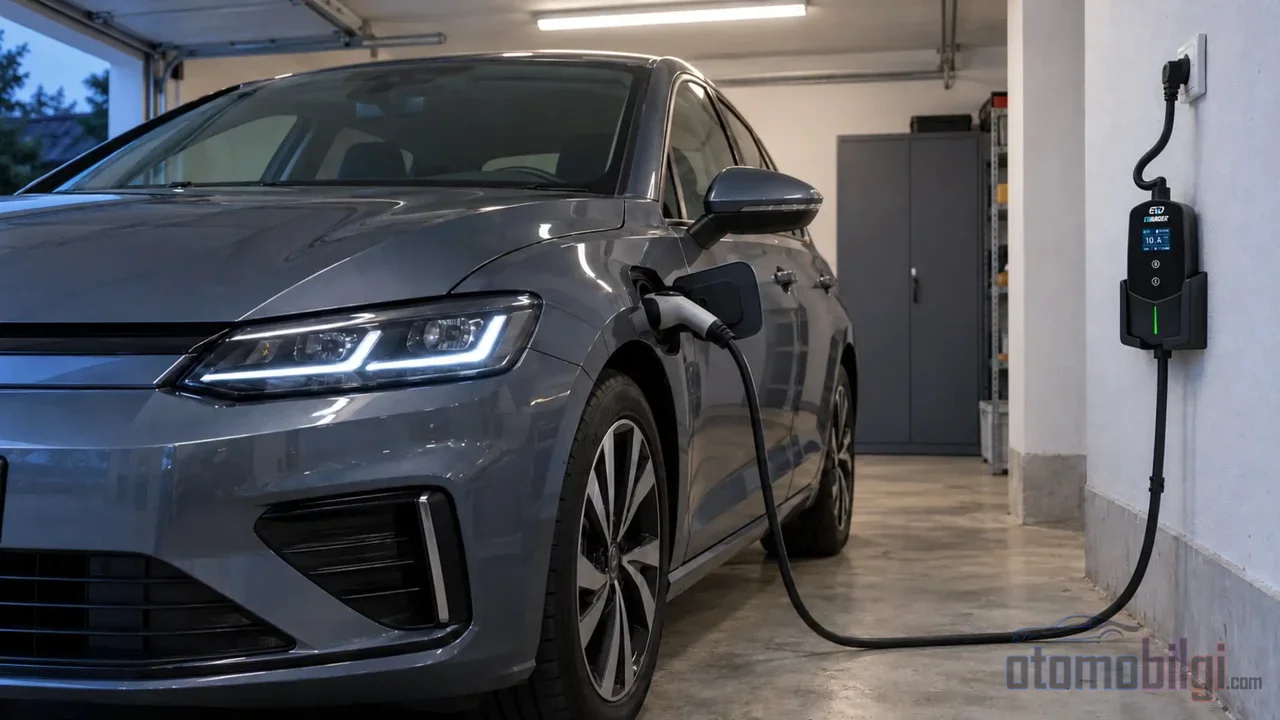
The fundamental difference lies in how much the device can decide on its own. The simplest wallbox models work on a Plug & Charge basis: you plug in the cable, an LED indicator reports the status, and the device charges at maximum power. Smart models, on the other hand, connect to an app via Wi-Fi, Bluetooth, Ethernet, or SIM; they offer charge start-stop, scheduling, current adjustment, consumption records, and dynamic power control. Each of these features solves a distinct user problem, and none of these problems is present in every home.
On the power side, the picture is clear. Wall-mounted AC units operate in the 2.4-22 kW range; single-phase models are in the 2.4-7.4 kW band, and three-phase models in the 11-22 kW band. The most common configuration is 7.2/7.4 kW (32A), with current adjustable between 6A and 32A. The Type 2 plug is the standard for AC charging in Türkiye and Europe. The vehicle's internal AC charging unit sets the upper limit: while most electric vehicles are limited to 7.4 kW, some accept 11 kW (for example, the Tesla Model 3 or Audi e-tron), and the Renault Zoe accepts 22 kW. Buying a 22 kW wallbox for a vehicle whose internal charging unit is limited to 7.4 kW is a pointless expense, since the topmost component of the hierarchy is already the bottleneck.
Two examples are enough to make the time difference concrete:
| Vehicle / Battery | Regular outlet | 3.7 kW wallbox | 7.4 kW wallbox |
|---|---|---|---|
| Nissan Leaf, 40 kWh | ~21 hours | ~15 hours | ~7 hours |
| Renault Zoe, 52 kWh | ~37 hours | - | ~8.5 hours |
Compared to Mode 2, that is, charging from an outlet, a properly installed Mode 3 wallbox can deliver results up to ten times faster. This speed difference alone is already a sufficient argument for a wallbox decision; the real question to ask is whether this device should be smart or not.
Why Do Phase and Ampere Adjustment Save You Money?
Your home's electrical installation sets its own limit before the wallbox's upper limit comes into play. 22 kW charging requires a three-phase meter and a contractual power of approximately 20.7 kVA; a single-phase meter is sufficient for up to 7.4 kW. A significant portion of residential subscriptions in Türkiye does not meet this upper band. This is exactly where the amperage setting comes into play: By limiting the current within the 6A-32A range, you can match the charging power to your home's fuse and wiring capacity. On some devices, this setting is done manually via the app within a range of 3.5-22 kW.
Three questions determine whether it is worth paying extra for this feature. First: does your subscription power allow charging at full power? If it does, manual limiting is of little use. Second: are other high-power appliances in the home (boiler, air conditioner, oven) running at the same time during charging? If so, the risk of tripping the fuse is a real operational problem. Third: do you have plans for solar panels or a second vehicle in the future? If at least one of the three is yes, adjustable amperage leaves you room to maneuver throughout the device's lifetime.
For Whom Is Dynamic Load Management a Must?
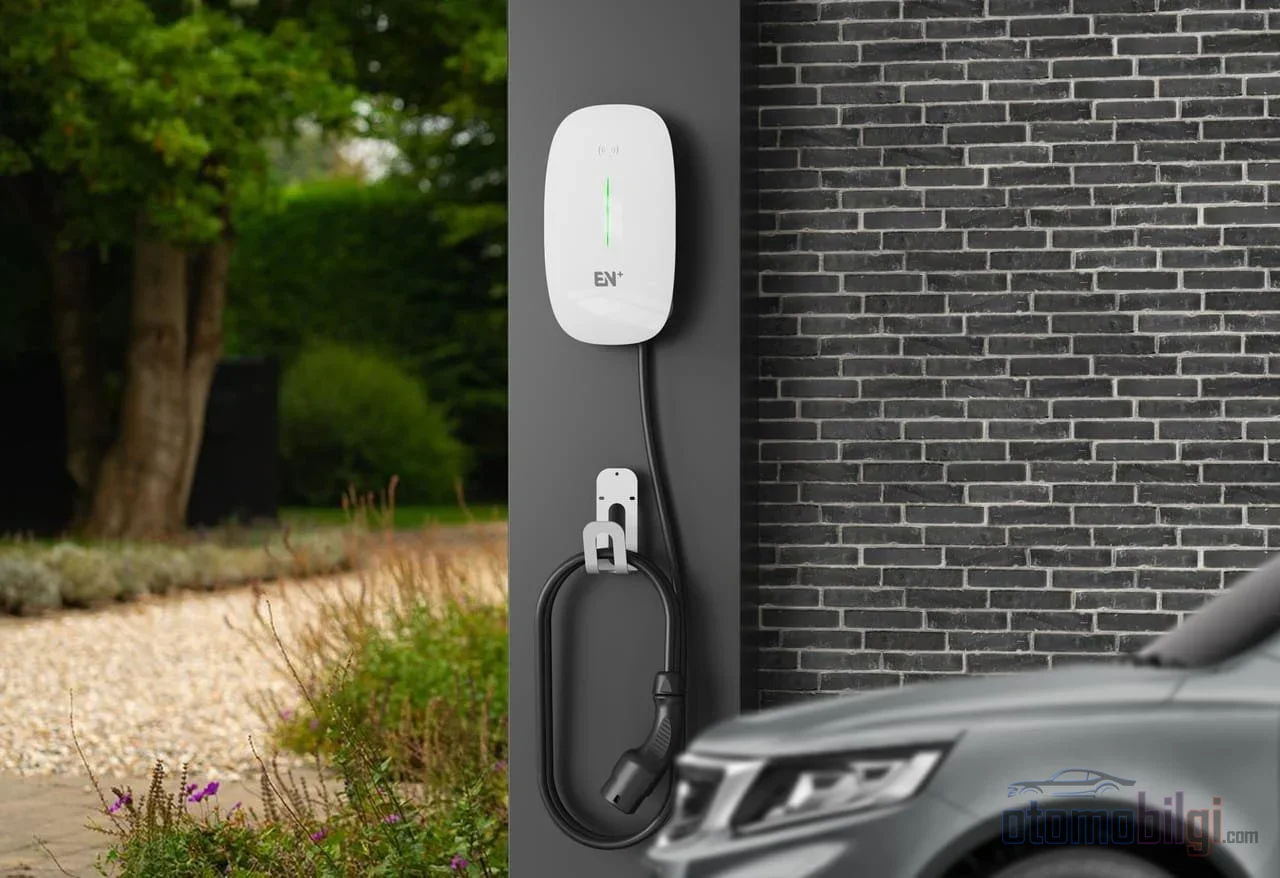
Dynamic load management (DLM/DLB) is a system that continuously measures the building's total electricity consumption and automatically adjusts the EV charging power accordingly. CT clamps installed on the main panel read the amperage the home is drawing at any moment; the wallbox lowers or raises the power based on this data. While static load balancing sets a fixed upper limit, the dynamic version reacts instantly to changing household consumption. The result: uninterrupted charging becomes possible even while the washing machine, oven, and air conditioner are running, and in most cases fuse problems and costly infrastructure upgrades are eliminated.
This feature becomes a necessity mainly in two scenarios. The first scenario is homes with tight contractual power: rather than expanding the infrastructure, intelligently dividing the existing capacity is the shortcut and economical solution. The second is apartment buildings and commercial properties: five 22 kW wallboxes running at full power simultaneously create a demand of 110 kW, and most apartment or workplace subscriptions cannot handle that load. Dynamic load management makes it possible to install additional charging points without increasing existing capacity; in a building with a shared parking lot, this difference means whether the project is feasible or not.
On the other hand, in a single-vehicle home with high contractual power that schedules charging into low-consumption night hours, dynamic management rarely kicks in. The device can run at maximum power all the time; and you never recover the difference you paid for the clamp and control infrastructure.
Charging with Solar Panels: When Does It Make Sense?
A PV-compatible wallbox follows the moment-to-moment changes in solar generation and directs the surplus directly to the car; instead of drawing a fixed current from the grid, it operates according to the measured power flow. This raises the home's self-consumption rate and significantly lowers the electricity cost of charging. When battery storage is added, charging with solar energy becomes possible even at night.
The technical subtlety here lies in the number of phases. Solar surplus fluctuates according to weather conditions and often runs at very low levels. Single-phase charging can step the current down in 1A increments (about 0.24 kW), so it can make use of even this fine surplus; the minimum charging power on three phases is higher, and when solar is insufficient the system has to turn to the grid. If you are planning PV-surplus charging in a heavily sunny region, this detail alone can determine the phase choice.
The point to watch is this: not every device labeled "smart" can actually deliver solar integration. It requires the correct meter position, a compatible control system, and proper commissioning. Also, if a solar system will be added later, choosing a PV-compatible model from the start usually works out cheaper overall than starting with a basic device and incurring the cost of a second device and a second installation.
App Control and Night Tariff: What Is the Concrete Payoff?
Starting and stopping charging via the app, scheduling, current adjustment, consumption monitoring, and remote updates are standard smart features; authorization via RFID card or app is also found on most models. Among these, the one with the clearest financial payoff is the scheduler. While public AC stations in Türkiye range at 6-12 TL/kWh and DC fast charging at 9-16 TL/kWh, the home tariff is around 2.33-3.45 TL/kWh; with the night tariff this figure drops to as low as ~3.26 TL/kWh. Filling a 75 kWh battery at home costs roughly 175-260 TL; in a typical monthly consumption scenario of 225 kWh, you pay about 776 TL at home while the bill on public fast charging can climb to ~2,925 TL. The scheduling + night tariff combination is the most easily measurable benefit of a smart wallbox.
The app experience, however, varies sharply between devices. While the manufacturer's own app offers device-specific diagnostics, software support, and logging, generic platforms (of the Tuya/Smart Life type) offer only basic on-off control. Having Wi-Fi connectivity and a scheduler alone does not make a device smart; true smartness lies in load management, EV-specific consumption logs, diagnostic capability, and smart home integration. On the user side, interest in connectivity presents an interesting picture: in a user survey, about a third of participants use their device connected to smart home platforms such as Home Assistant and openHAB, while about half use no integration at all. So this layer is an optional premium; not a price everyone has to pay.
Decision Guide: Who Should Buy a Smart Device, and Who Should Settle for a Basic One?
There is no need to complicate the decision; three variables are decisive: subscription power, energy plan, and usage pattern.
- A smart device makes sense: if your contracted power is limited and household load during charging is high, if you are planning a charging point in an apartment/shared parking lot, if solar panels are installed or on the agenda, or if you want to optimize costs with the night tariff.
- Basic device is sufficient: If grid power is ample, there's no solar plan, it's a single vehicle, and there's regular overnight charging; plug-and-charge logic covers the entire scenario.
- Check in either case: Is the app the manufacturer's or generic, which meter/clamp/subscription is required, is there compatibility with your solar inverter, and how do local service and warranty channels work.
Keep expectations realistic on the installation side: home AC systems are typically installed within 1-3 days, and the process includes a needs/power analysis, permits, electrical infrastructure, and cable cross-section assessment. While a portable charger is an alternative for renters or frequent travelers, a hardwired wallbox is the more controlled and safer solution for daily home charging. Take the warranty item seriously too: gray-import devices commonly offer 6-12 month warranties, while some brands provide a 36-month factory warranty; this difference is one of the factors that determines long-term total cost. Protocol support like OCPP isn't necessary for normal overnight charging, but it's worth headroom if you're considering home energy management integration in the future.
The summary formula is this: buying a wallbox is the right decision for almost every EV owner; whether it's smart or not is an engineering choice that depends on your insurance risk, your energy plan, and your building's capacity. If at least two of your variables are borderline, the flexibility a smart model brings pays for itself in a short time.
Sources
- EV Charging 101 – Wallbox
- Smart EV Chargers vs Standard Wallbox Chargers – NevGridSolutions
- Wallbox Chargers for Electric Cars – Evolut.green
- 1-phase vs 3-phase charging – Voldt
- Static vs Dynamic Load Balancing in EV Charging – Teltonika Energy
- Dynamic Load Management (DLM) – AmpECO Glossary
- Best Wallboxes for Solar Surplus Charging – go-e
- Single vs 3 phase when EV charging from Solar – ChargeHQ
- Electric Car Charging Cost – Sigortam.net
- Charging Fees 2026 – ChargeMate
- Electric Vehicle Charging Prices 2026 – OSARJ
- Charging Station Installation Guide – Bemis