Wallbox or Outlet? Setting Up Electric Vehicle Charging at Home
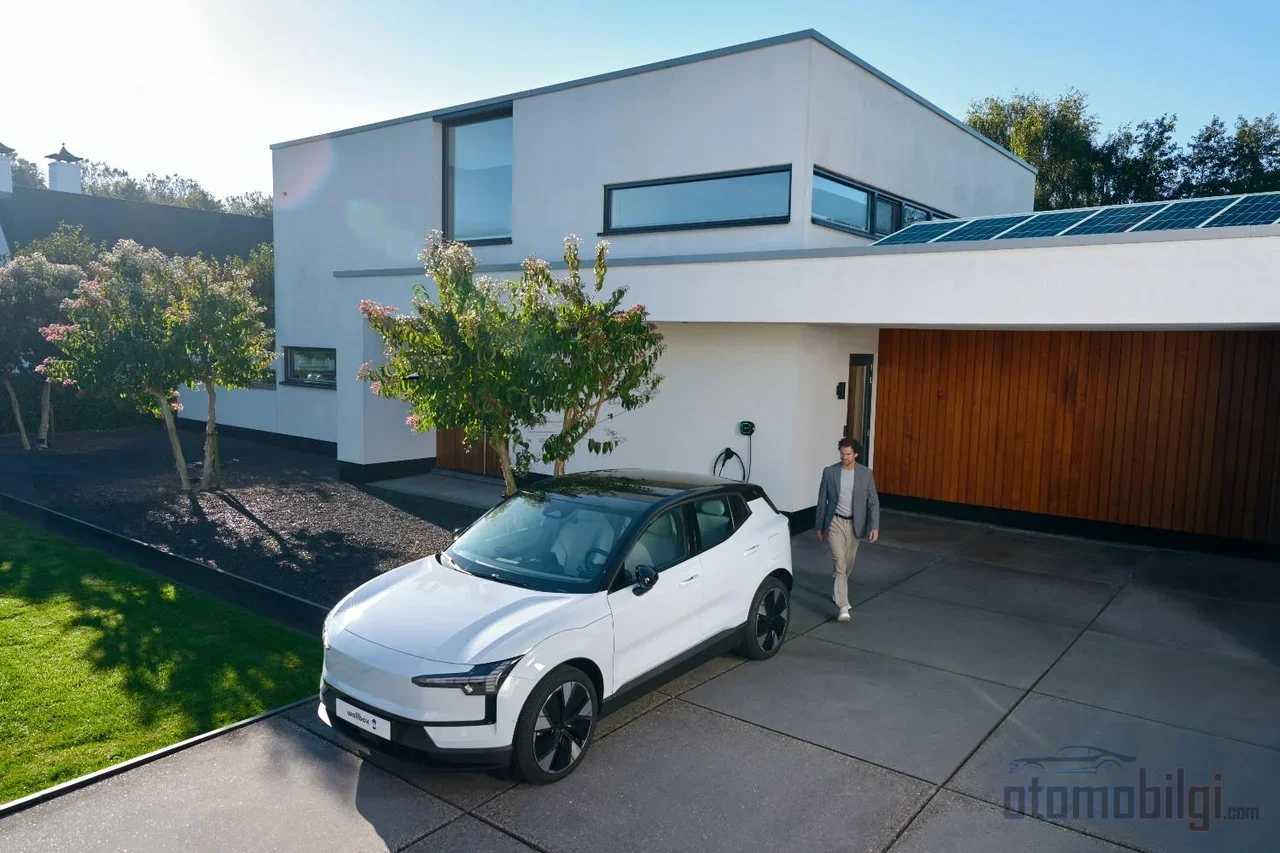
Share This Page
Short answer: for a user driving 30-40 km per day, a standard outlet is usually enough; however, for anyone wanting a bigger battery, longer weekday distances, or a safe and permanent installation, a wallbox wired to the fuse panel with a dedicated line is the right solution. The difference in practice is speed, safety, and installation cost: charging from an outlet delivers about 2.3 kW of power, while a wallbox reaches 7-22 kW .
Highlights
- A standard outlet (10A) provides roughly 10 km of range per hour; a full charge for a 60 kWh battery takes ~30 hours .
- A wallbox is 3-10 times faster than an outlet; with a three-phase subscription it can reach up to 22 kW.
- In Türkiye, a 7 kW wallbox installed costs around 50,000-100,000 TL, and an 11 kW model 80,000-150,000 TL (2026).
- For a safe installation, a 30 mA Type A RCD on the dedicated line and DC leakage current protection are mandatory.
- Physical installation usually takes 2-6 hours ; the real time goes to permits and electricity distribution processes.
Is Charging from an Outlet Really Enough? Looking at the Numbers
From an engineering standpoint, the matter is a simple power calculation. A standard household outlet delivers 10A of current; 10A × 230V = 2.3 kW. In practice, this means roughly 10 km of range per hour. A vehicle with a 60 kWh battery waits about 30 hours to go from empty to a full charge. If your car stays plugged in for 10-12 hours every evening and your daily distance does not exceed 60-80 km, this rhythm works for most weeks.
But there are two limits. The first is time: a vehicle with a large battery cannot be topped up by Tuesday after a long weekend. The second, and more important, is safety. Standard outlets are not designed for the long, uninterrupted high-current draw that vehicle charging requires; drawing 10A for hours can cause the cable and plug to heat up. That is why charging from an outlet is a solution, but it should remain a temporary and low-power one.
- Do not use an extension cord; for permanent charging, have an outlet or wallbox installed near your parking spot.
- Charging during evening peak hours (16:00-22:00) is expensive; smart devices shift charging to off-peak tariffs for savings.
What Is a Wallbox, and What Does It Actually Do?
Let me correct a common misconception: the wall-mounted device is not, in the technical sense, a "charger." Its name is EVSE - Electric Vehicle Supply Equipment, i.e., power supply equipment. The actual charging system that converts AC to DC and fills the battery (the onboard charger) is inside the vehicle. The wallbox's job is to provide a safer, higher-power, and supervised AC supply than an outlet. Nearly all home charging is done with AC; public DC fast-charging stations perform the rectification at the station and are up to 50 times faster than a typical home device - at home you are not pursuing that speed.
The connection standard has also become clear: for vehicles sold in Türkiye after 2020, the standard plug is the Type 2 (Mennekes) connector. You can assume this when choosing a wallbox; only very old or specially imported vehicles are exceptions.
Single-Phase or Three-Phase? Its Effect on Charging Time
This is where your home's electrical infrastructure comes into play. A typical apartment in Türkiye has a single-phase subscription; with this line, 7-7.4 kW a wallbox can be installed up to. A three-phase subscription divides the electrical load across three phases, allowing higher power to be used safely and stably, and increases charging speed by up to three times: in practice 11 kW or 22 kW.
For the majority of individual scenarios in Türkiye, 7.4 kW (single-phase home) or 11 kW (three-phase home) is the natural starting point. 22 kW only makes sense when three conditions are met simultaneously: your vehicle can draw 22 kW AC, your usage pattern requires hundreds of kilometers per day, and your installation is suitable for it. Remember, the vehicle sets the upper limit - some models are limited to 7 kW on the AC side, while most modern Teslas draw 11 kW. Paying for an installation more powerful than your vehicle can use is wasted money.
To find out how many phases your home has, simply check your fuse panel or subscription document: three fuses on a single meter and a four-conductor supply line mean three-phase. Your panel's capacity is also critical; most modern homes can handle a wallbox with the existing panel, while older installations with low capacity may require a panel upgrade. In this case, a load calculation by a licensed electrician is essential - an installation that leaves the panel below the total load is invalid both in terms of fusing and safety.
Comparison: Socket, 7.4 kW, or 11 kW?
| Criterion | Standard socket | 7.4 kW wallbox (single-phase) | 11-22 kW wallbox (three-phase) |
|---|---|---|---|
| Power | 2.3 kW | 7.4 kW | 11-22 kW |
| Range / hour | ~10 km | ~30-40 km | 50 km and above |
| 60 kWh battery charging time | ~30 hours | ~9-10 hours | ~3-6 hours |
| Installation | Existing socket (risky, temporary) | Dedicated line to the panel | Three-phase subscription + dedicated line |
| Cost in Türkiye (2026) | - | ~50,000-100,000 TL | 80,000-250,000 TL |
A note on prices: These figures reflect typical ranges including device and installation as of 2026. In an inflationary environment, prices need to be rechecked for currency with every quote. As of September 2026, home-type units are quoted in the 45,000-150,000 TL band including device and installation; the wide spread depends on the length of the installation and the condition of the wiring.
Safety: A Brief Specification on RCD and Grounding
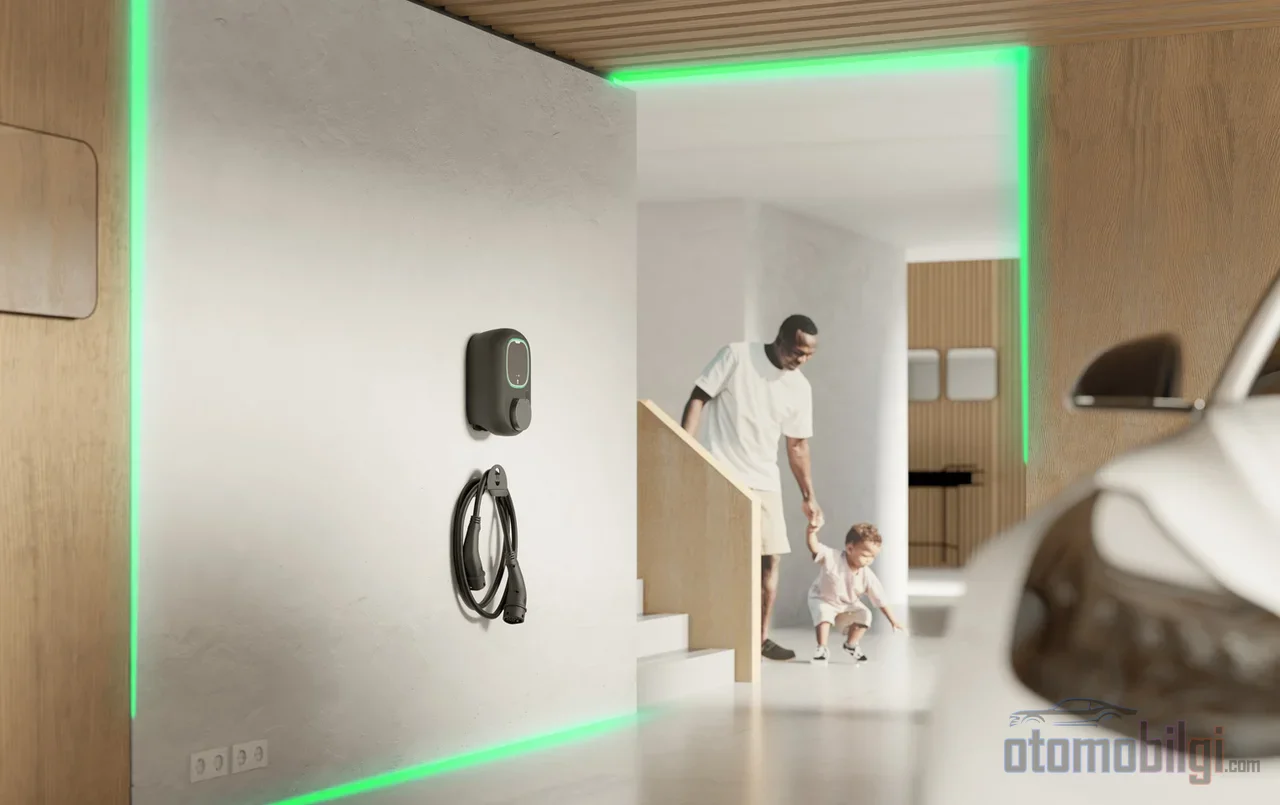
The non-negotiable part of a wallbox installation is the protection scheme. International standards (IEC 60364-7-722 and the corresponding DIN VDE 0100-722) mandate a 30 mA Type A residual current device (RCD) on the charging unit's supply line. On top of this, a second layer is required: DC residual current that may occur inside the vehicle during AC charging. IEC 62955 additionally requires this protection; in practice, it is solved either by installing a Type B RCD or with a Type A RCD with built-in DC leakage detection. Recent updates explicitly make detection of DC residual current exceeding 6 mA mandatory.
Grounding is the foundation of this entire protection chain; the residual current device can only protect your life when it sits on a healthy grounding system. So let me say this clearly: wallbox installation is not an amateur job. Work with a licensed electrician who can calculate loads, and make sure the installation is completed with an inspection.
Installation Process: Apartment Buildings, Detached Houses, and Grid Distribution
Detached house
This is the simplest scenario. A dedicated line is run from the fuse panel to the parking area, and the wallbox is mounted; the physical work usually takes 2-6 hours. If the electrical system has sufficient capacity, no extra administrative procedure is needed; those who want to switch to three-phase apply to the electricity distribution company. Applications to the grid operator are now made through an electronic form - the permitting process can take longer than the installation itself, so plan accordingly.
Apartment unit
In Türkiye, charging installation in an apartment building is governed not by a single regulation but by the intersection of two independent frameworks: the Condominium Law and the Parking Regulation. Within the context of the Condominium Law, parking is considered a "utility facility"; in shared parking areas, a vote of the unit owners is required, and if you have your own enclosed parking space, the process becomes noticeably easier. The rule has also become clear for new buildings: in new constructions with 20 or more mandatory parking spaces, at least 5% of these areas must be delivered ready for electric vehicle charging.
Smart Wallbox and 22 kW: Unnecessary? Two Decision Criteria
A smart device is a model that adds scheduling and load management. You determine its value in two situations: If you have solar energy at home, a smart device that matches charging with the electricity you generate pays for itself quickly. If you have no solar but your provider has an off-peak/peak rate difference, shifting charging to nighttime rates reduces annual costs. In a home with a fixed tariff and no solar, smart features usually do not justify the extra cost.
The 22 kW question goes through a similar filter: Turkish expert sources commonly note that 7.4/11 kW is sufficient for most individual users. For a vehicle that will stay plugged in for 10 hours at night, 22 kW is excess capacity that will never be used - spending that money on a panel upgrade, quality cabling, or smart features is a more sensible engineering decision.
Charging Routine for Battery Health
The hidden advantage of home charging is not speed, but consistency. Preferring slow (AC) charging whenever possible contributes to battery life; using it in the 20%-80% range also helps the cells operate efficiently. The slowdown of charging after 80% is not a fault, but normal behavior designed to protect the buffer zone - as the cells fill, their voltages approach the upper limits and the current is deliberately reduced. Plugging in every evening without letting it drop below 20% is the healthiest routine in the long run.
Decision Summary: Choosing Based on Your Home and Usage
You can reduce the decision to three questions. If your daily distance is under 60 km and you have a solid outlet in your parking spot, use outlet charging as a temporary solution but stay away from extension cords. If your distance is growing or your battery is large, a single-phase 7.4 kW setup is the sweet spot for most scenarios in Türkiye. If you have three-phase power or the transition cost is reasonable, consider 11 kW, especially if you are thinking about a second vehicle in the future. Choose 22 kW only if the trio of vehicle, usage, and installation truly requires it. In any case, have the job done by a licensed electrician who performs a load calculation, and have the protection system installed according to standards - speed can easily be purchased, but safety only comes with the right specification.
Sources
- Home EV Chargers in Australia: Best Brands, Prices & Installation
- Wallbox or Socket? The Better Choice for Charging Your EV at Home
- Home EV Charging 2026: Wallbox Guide, Costs
- Portable EV Charger vs. Wallbox: Which Is Better?
- Can You Install a 3-Phase EV Charger at Home?
- Home Electrical Panel Requirements for EV Chargers
- Home EV Charging Station Guide (2026)
- Home Charging Station Installation: Cost, Permits, Process
- Choosing a 7.4 kW, 11 kW or 22 kW Charging Station: Single-Phase or Three-Phase?
- How Your Electricity Subscription (Single-Phase / Three-Phase) Affects Charging Power
- Ground Fault Current Protection in AC Level 2 Charging (Bender)
- EV Charging and the Role of Residual Current Devices (Doepke)
- EV Charging Rules for Buildings in Türkiye 2026 (ENGN)
- Charging Station Regulation - Apartments and Car Parks
- EV Charging in Turkish Apartments | Articles 42-43 Guide
- Comprehensive Amendments to Türkiye's EV Charging Services Regulation
- Do I need a permit to install an EV charger at home?
- Mistakes Made When Charging Electric Vehicles
- Ways to Extend Battery Life
- How to Extend the Life of Electric Vehicle Batteries?
- Why Does the Battery Charge More Slowly After 80%?
- Best Practices for Extending Battery Life