How Much Can Off-Peak Charging Rates Save You?
Share This Page
Charging on a night tariff only really saves money if your tariff is multi-rate - meaning three-rate: in this tier the kilowatt-hour price drops to the cheapest level of the day, and a user who shifts charging to after 22:00 buys the same energy noticeably cheaper than at peak hours. With a single-rate subscription, however, night charging has no price advantage; the same unit price is paid regardless of the hour. So the source of the savings is not the night hour itself, but the tariff choice.
Key Highlights
- In a three-rate tariff, the night tier (usually 22:00-06:00) is the cheapest tier of the day.
- Public AC charging prices range between 5.90-11.19 TL/kWh; levels of 16.5 TL/kWh have been seen on the DC tariff.
- On the residential tariff, home charging falls in the 2.33-3.45 TL/kWh band; the night tier can fall below this.
- EPDK's flexible pricing regulation opened up a discount potential of up to 60% during off-peak hours.
- If no tariff selection is made, night consumption is billed on the single-rate tariff - savings do not happen automatically.
How Does the Three-Rate Tariff Work?
In Türkiye, residential subscribers have two basic options. With a single-rate tariff, the same unit price applies at every hour of the day; the meter makes no distinction of time. With a three-rate (multi-rate) tariff, the day is divided into three tiers and each tier has a different price. The commonly applied tier structure is: daytime 06:00-17:00 at standard price, evening 17:00-22:00 as peak, i.e. the most expensive tier, and night 22:00-06:00 as the cheapest tier.
For an electric vehicle owner, this is the critical point: the expensive tier coincides exactly with the hours when most people return home and plug in their car. If you leave charging as it is, you pay for energy at its most expensive. If you shift charging to the night tier, you buy the same battery capacity at the cheapest price of the day. From an engineering standpoint, this is a matter of moving the load to the hours when supply is abundant; that is the whole logic of the tariff.
| Tariff | How It Works | Night Charging Advantage |
|---|---|---|
| Single-rate | 24 hours at a single unit price | None - the hour makes no difference |
| Three-rate | Daytime / peak / night tiers | Yes - night is the cheapest tier |
Why Can Tier Hours Differ?
The 06:00-17:00 / 17:00-22:00 / 22:00-06:00 breakdown above is the generally accepted template and is not a standard set by regulation. In some regions, the daytime tier runs 07:00-18:00, peak 18:00-23:00, and night 23:00-07:00; in certain tariffs the night tier can extend until 08:00. Setting your charging time without verifying the tier hours on your bill against the table published by your own supplier can shift your entire account. EPDK's tariff tables and your distribution company's current page are the primary references on this matter.
How Much Does Night Charging Save? Concrete Calculation
The cleanest way to calculate savings is to multiply consumption by the price. Let's start from an average consumption value: 15 kWh per 100 km (0.15 kWh per km). A driver who covers 50 km a day needs approximately 7.5 kWh of energy per night.
Now let's put the two scenarios side by side. At a public AC charging station, the market price range hovers around 5.90-11.19 TL/kWh; its average approaches 9.87 TL. In the night tier of the three-time-of-use residential tariff, the price per kilowatt-hour can be far below this; according to current data, home charging generally falls in the 2.33-3.45 TL/kWh band, and the night tier can drop below this band. Speaking in terms of 7.5 kWh, the difference between charging at home at night and charging at the public average reaches tens of lira in a single night and easily hundreds of lira per month. The estimated monthly electricity saving of 400-800 TL for users who shift all their charging to the night is consistent with the scale of this difference - the upper-bound figure should be read cautiously, because usage intensity and the local tariff directly change the result.
The same logic also applies when comparing with a gasoline car: the difference in energy cost per 100 km multiplies into thousands of lira per year for a driver who covers 15,000 km annually. But the main message of this section is this: part of the difference comes from the electric vehicle's efficiency, and part comes from charging at the right time on the right tariff. The latter is entirely within your control and requires no equipment investment.
Automating Charging with a Smart Wallbox and Timer
If the night tier starts at 22:00 but you plug in the car at 18:30, the four hours in between are billed at the expensive peak tier. There are two ways to close this gap, and neither requires the driver to get up at night and unplug.
In-Car Timer Setting
Almost all current electric models offer a delayed charging start setting. Let's give concrete examples: In the FordPass app, under Vehicle → Charging Settings → Departure Times, you define when charging should finish and the system calculates the start time backwards. The Hyundai IONIQ 5 owner's manual recommends setting off-peak hours via the EV → Charging menu. On the Nissan Leaf, the delayed charging start and climate timer can be used together. Practical rule: set the finish time in the morning, close to your wake-up time; place the start point in your tariff's night tier.
The Smart Wallbox's Contribution
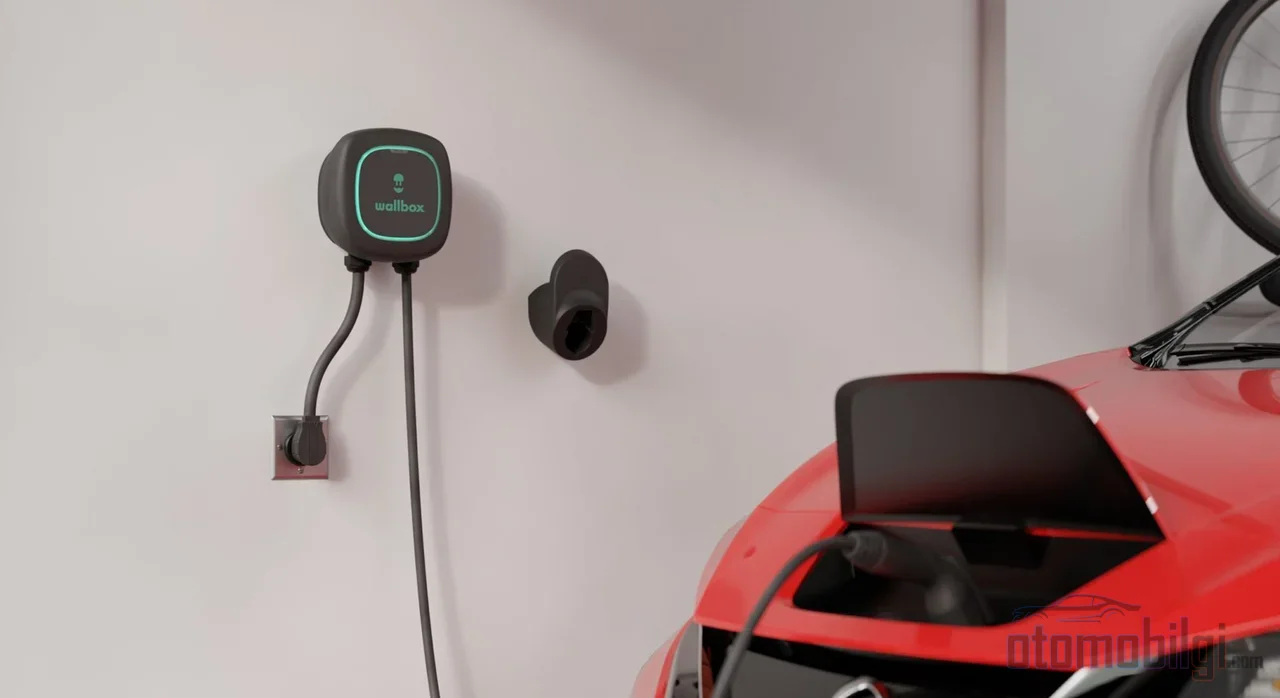
Smart wallboxes take things one step further: the device works integrated with tariff information and locks charging into the night tier by itself. When you pair your home wallbox with suitable software, whenever you plug in the car, energy draw is scheduled for the off-peak tier. This also solves the power side: a battery that takes about 40 hours to fill at 2.3 kW from a household outlet fills in about 9.5 hours on an 11 kW wallbox, and in around 2.5 hours on a 22 kW unit. If the night tier is eight hours long, an 11 kW unit means the guarantee of a comfortably full battery overnight; 2.3 kW outlet charging may not fit into a single night, however. There are also mobile charging solutions that work without requiring three-phase power; your charging time needs should determine the choice before you head home.
Discounted Hours in Public Charging and the EPDK Regulation
For those without charging options at home, the picture changed in 2026. EPDK approved flexible pricing for electric vehicle charging; charging network operators can now apply discounted tariffs at certain hours and locations. After the regulation, it was reported that off-peak discounts could reduce users' monthly costs by up to 60%. Almost all charging networks updated their tariffs accordingly; in Aksa Şarj's list valid as of August 2026, AC charging is in the 9.90–10.90 TL/kWh band and DC charging in the 11.99–13.99 TL/kWh band, and time of day can also affect the prices.
This regulation has two faces: the way was opened for hikes as much as for discounts. During evening peak hours, some operator tariffs can stretch upward. For a driver using public charging, checking the in-app price table and choosing off-peak hours is the exact equivalent of choosing a home tariff. It is also worth remembering: the idle fee that starts 15 minutes after charging is complete at DC sockets, at a level of 10 TL per minute, can take back what a poorly planned charge gained.
What Should Those Using a Shared Meter in an Apartment Building Do?
For apartment residents charging through a shared meter, there are two separate problems: tariff selection and fair distribution. On the tariff side, if shared consumption can be switched to a three-time tariff, the nighttime charging advantage also applies at the building scale; but since water, elevator and lighting consumption get mixed with vehicle charging on the shared meter, how much energy each person used must be separated out. In practice, this is solved by adding the charging station to the management plan and defining usage rules - methods such as weekly installments, outlets with their own meters, or user-based measurement through the device are available.
- Add the charging station to the management plan and put the usage terms in writing with a decision of the unit owners.
- Look for the load balancing feature in multi-user devices; it provides both safety and reduces the need to upgrade the meter and expensive infrastructure investment.
- If you are carrying the shared tariff on your own account, monitor off-peak charges on the bill; mixed usage can upset the calculation.
A new door also opened on the storage side: Türkiye allowed battery-supported high-power charging above contracted grid capacity. While not common at the apartment scale today, it is a regulation that paves the way for systems that store at night and deliver to the vehicle during the day.
Who Benefits from the Fuel Subscription Tariff?
Fuel subscription tariffs are discounted electricity structures designed primarily for businesses with a 24/7 consumption profile - such as fuel stations, for example. For a residential subscriber, no direct advantage of these tariffs for EV charging has been documented; on the residential side, your savings tool is the three-time-of-use tariff and the night window. It is important to keep this distinction clear: an EV owner's tariff strategy is not to change subscription type, but to switch the existing subscription to time-of-use billing and shift consumption to the cheap window. Avoiding the peak window in a home that does not run 24/7 is equivalent to managing the single risk of the three-time-of-use tariff (the expensive evening hours).
Checklist for the Correct Setup
- Verify whether your bill is single-rate or time-of-use; if it is single-rate, request a switch to the three-time-of-use tariff from your supplier.
- Learn the window hours for your own region from the official tariff table - template hours vary by region.
- Set up the timer on your vehicle: the end aligned with your morning departure time, the start with the night window.
- Choose equipment based on your charging time needs: 2.3 kW outlet charging for long nights, an 11-22 kW wallbox for short nights.
- To preserve battery health, keep the charging range within the 20-80% band as much as possible and avoid frequent fast (DC) charging; save fast charging for the road.
- If public charging is a necessity, check discounted hours in the operator's app and unplug the vehicle once full to avoid idle fees.
In plain engineering terms: the night tariff is a savings lever as simple as a software setting and as durable as choosing the right tariff. When the right tariff, the right hours, and at least one layer of automation - whether an in-vehicle timer or a smart wallbox - come together, the energy cost of the same kilometers falls exponentially.
Sources
- EPDK - Tariff Tables Underlying Electricity Bills
- Türkiye Adopts Flexible EV Charging Pricing (Anadolu Agency)
- Aksa Charging Fees
- Electric Car Prices in Türkiye, September 2026 (adze)
- What Is the Single-Rate / Time-of-Use Electricity Tariff? (Kuveyt Türk)
- Tariff Information (CK Boğaziçi)
- What Is the Discounted-Hour Scheme for EV Charging Prices? (Wikipedia)
- Claims of Saving by Consuming Electricity at Night (Teyit.org)
- Electricity Tariffs (Gediz Perakende)
- How Is the Charging Cost of Electric Vehicles Calculated? (Otopratik)
- Home EV Charging: What Is a Wallbox? (Mullinix)
- Increase in the Electricity Bill for a Home-Type Charging Station (Elaris)
- IONIQ 5 User Manual (Hyundai)
- EV Charging Guide (Bridgestone)
- Shared EV Charging Station in Residential Sites and Apartment Buildings (GG Elektrikli Garaj)
- Multi-user charging stations (Eaton)
- Türkiye permits storage-backed EV charging (Netzero)
- Discounted Electricity Tariffs for Fuel Stations (myenerji)
- How Much Does Charging My Car at Night Cost? 2026 (Mube Energy)