What Permits Are Required to Install a Charging Unit in an Apartment Parking Lot?
Share This Page
To install a charging unit in an apartment building parking lot, depending on the condition of the location where the unit will be installed, either a simple majority decision of the homeowners' association or no decision at all is required: If your parking space is allocated to an independent unit in the land registry and the installation does not affect common areas, you can act on your own; if you are having a wall-type charging unit (wallbox) installed in a common parking area, a general assembly decision achieved by majority in number and land share is sufficient. With the zoning regulation amendment that came into force on March 11, 2025, a building permit is also no longer required for this installation.
Highlights
- The regulation amendment dated March 11, 2025, means that the electrical installation of a charging unit in a common parking area is not subject to a building permit.
- For installation in common areas, the old 4/5 majority requirement no longer applies; majority in number and land share is sufficient.
- In an allocated parking space, if common areas are not affected, no homeowners' association decision is required.
- For individual and non-profit use within the site, no EPDK license is required.
- In new buildings with 20 or more parking spaces, at least one charging unit is mandatory.
Which Permits Are Required, and Which Are Not?
The answer to this question depends on two variables: where the unit will be installed and where the electrical line will be drawn from. To be systematic, you can divide the installation scenario into three.
Scenario 1: If you have an allocated parking space
In a parking space allocated to an independent unit in the land registry, if the installation is carried out without modifying the electrical installation and without affecting other independent units and common areas, no homeowners' association decision is required. The owner draws the line from their own meter; in practice, it is recommended to inform the management in writing. A survey conducted by an electrical engineer before installation clarifies whether the line passes through the allocated space and whether the common panel will be touched.
Scenario 2: Installation in a common parking area
A non-allocated parking area is a common area, and a permanent installation made there is subject to the approval of the homeowners' association because it affects the common infrastructure. The manager's permission alone is not sufficient; this is the most common misconception. What is required is a duly adopted general assembly decision obtained by majority in number and land share. The decision is taken by adding it to the agenda of the ordinary assembly meeting or through an extraordinary meeting, and it is recorded in the minutes; owners who do not participate in the decision may file an annotation in the minutes.
The critical change here came in 2025. Previously, in practice, a three-quarters majority was required under Article 19 of the Condominium Law; this requirement was removed with the regulation stating that the electrical installation does not count as construction. The practice clarified by the Ministry's announcement is as follows: for installing a charging unit in common parking areas, the decision of the homeowners' majority in number and land share is sufficient.
Is a building permit required?
Not necessary. With the amendment to the Planned Areas Development Regulation published in the Official Gazette dated March 11, 2025 and numbered 32838, the electrical installation required for charging unit installation in shared parking areas was exempted from the building permit requirement. Prior to this date, the Ministry had issued a circular to eliminate uncertainties in apartment buildings and housing complexes, defining charging units as portable equipment brought in pre-assembled, not requiring construction, and not creating enclosed space; the regulation amendment formalized this approach into rules.
The Permit Process Step by Step: From Management Approval to Commissioning
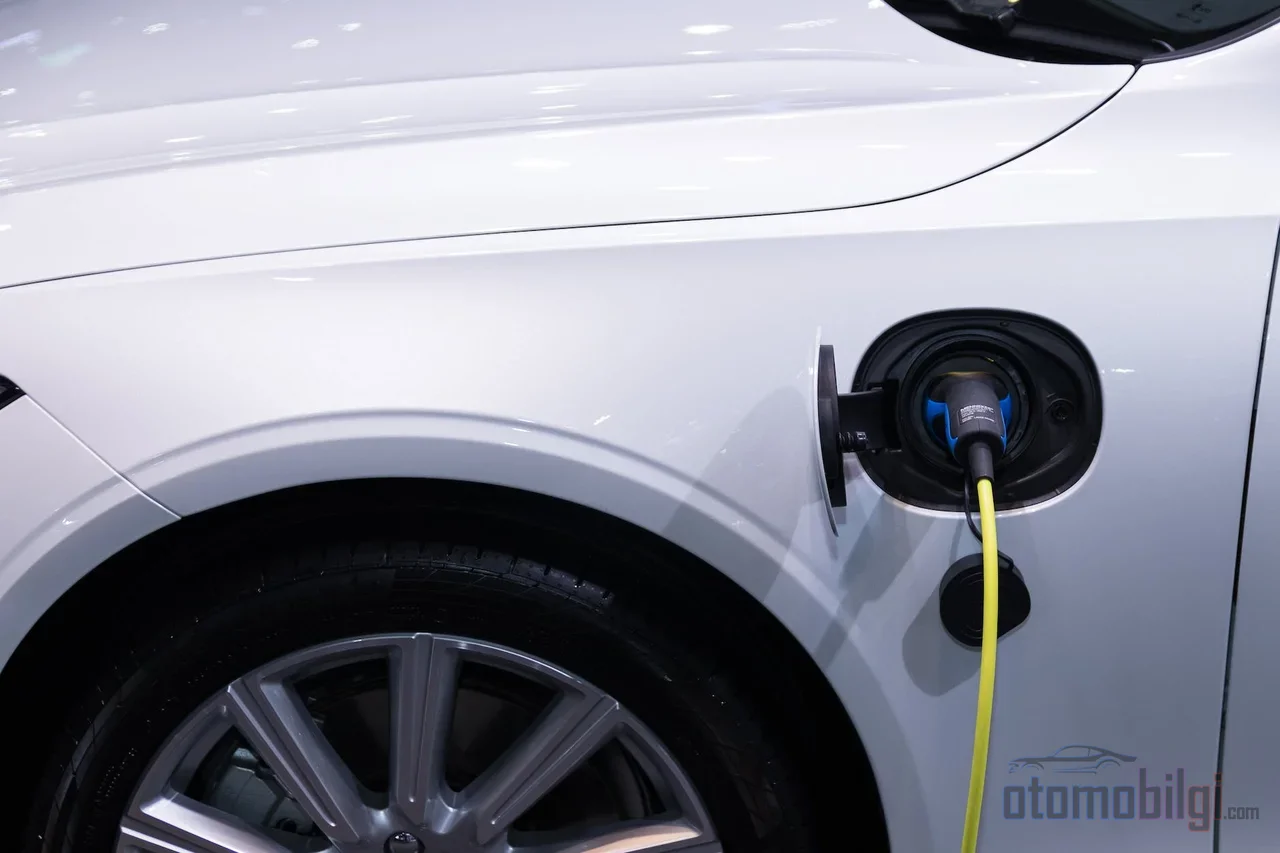
If you are having an installation set up in a shared area, the permit is not just a board resolution; there is also a chain of technical approvals. The steps to follow are, in order:
- Site survey: The main panel's power capacity, fuse type, and cable cross-sections are measured with an electrical engineer.
- General assembly resolution: The matter is placed on the agenda, and a decision is made by majority vote, without the old requirement of seeking unanimity.
- Technical project: A project including a single-line diagram, cable routing, fuse, and grounding details is submitted to the electricity distribution company; approval of the LV project amendment is obtained. If necessary, a power capacity increase is requested; approval usually takes a few weeks.
- Regulatory opinion: Compliance with electrical legislation and the Charging Service Regulation is ensured.
- Installation and commissioning: Grounding resistance measurement, insulation testing, and residual current relay checks are performed.
There is a separate framework for new buildings: according to the updated Parking Regulation, buildings with 20 or more mandatory parking spaces must have at least one charging unit; in new district, general, and shopping mall parking areas, at least 10% of parking spaces must be designed to accommodate electric vehicles. These requirements apply only to new buildings; there is no installation obligation for existing buildings. Sources differ on the ratio requirements for existing buildings; the safest approach when making decisions is to rely on the current regulation text.
Electricity Subscription: Separate Meter or Connection to a Shared Meter?
The second issue as critical as the permit is how electricity is measured and who pays for it. There are three options, each with a different cost profile.
Feeding from an individual meter
In this method, common in dedicated parking spaces, the unit is fed directly from the apartment's meter, and consumption is reflected on the apartment's bill. A separate meter is not mandatory; the existing apartment subscription can be used. This is the option requiring the least paperwork for the management side.
Shared meter and sub-meter system
If multiple neighbors will charge, a separate charging subscription is opened on behalf of the management, a MID-certified sub-meter is connected to each charging point, and consumption is billed to users on a kWh basis. Feeding from shared electricity without metering or authorization is contrary to EMRA regulations and creates liability risk for the management; attempting to absorb the cost into common expenses without sub-meters is both legally indefensible and generates unnecessary conflict with neighbors who do not use vehicles.
Tariff selection
There is an important point to watch when a separate subscription is opened: the subscription type may fall into the commercial category and the per-kWh unit price may increase; therefore, the subscription type should be clarified with the distribution company from the start. For those seeking low cost, a three-time-of-use subscription makes sense: during the night hours between 22:00-06:00 the unit price is lowest, which coincides exactly with the hours when EV owners prefer to charge overnight.
Who Pays? Sharing Infrastructure and Operating Costs
There are two approaches to sharing the installation cost. In the first, the cost is divided only among the EV-owning unit owners; in the second, if the installation is considered an improvement benefiting all unit owners, everyone contributes in proportion to their land share. Under the Condominium Law (KMK), the cost of an installation benefiting only certain owners can be charged to those owners; that is, it is legally possible for 10 owners who will actually use a shared infrastructure expense of 20,000 TL to share it. The clearest picture is this: you are not obliged to pass the cost of this installation on to those who do not use electricity.
Operating expense, i.e. electricity consumption, is measured per user through a sub-metering system. This is important both so that everyone pays correctly and so that management does not open an unforeseeable electricity line item in the dues budget.
How Many kW Is Enough? Power Selection and Cable Cross-Sections
Units commonly used in residences are in the 7-22 kW AC range. The power selection should be compatible with your vehicle's onboard charger and the building's infrastructure. An engineering note: installing a unit with power above the vehicle's on-board charging unit does not shorten charging time, it only increases the cost.
| Unit Power | Supply | Charging Time (60-80 kWh battery) | Recommended Cross-Section |
|---|---|---|---|
| 7 kW | Single-phase | 8-10 hours | 3x6 mm² |
| 11 kW | Three-phase | 5-7 hours | 5x4 or 5x6 mm² |
| 22 kW | Three-phase, 32 A | 3-4 hours | At least 5x6 mm²; 5x10 mm² for runs over 40 m |
The cable channel must be flame-retardant and halogen-free (LSOH). If the main panel's capacity is insufficient, there are two options: transformer upgrade or dynamic load balancing. Load balancing directs the building's temporarily unused capacity to the charging point; with a sample calculation, the usable power of a 400 kVA transformer is approximately 368 kW .
Safety Requirements and the Licensing Question
Since an enclosed parking garage is an environment where electricity is used, safety equipment must not be neglected. The installation uses at least 30 mA Type A RCD ; Type B or RDC-DD is required against DC leakage current, and a separate RCD is recommended for each charging point. The mounting point should be at least 50 cm away from water and gas lines, and the unit's protection rating should be IP65 . In enclosed parking garages, smoke detection, sprinkler and ventilation measures are taken, and a fire scenario document is added to the file.
On the EPDK side, the situation is simple: no license is required for individual or on-site, non-profit use. If electricity will be sold for profit or a public service will be offered, a Charging Network Operation License is mandatory; licensed operators have an obligation to install at least 50 units and report to EPDK. If the site management will enter a for-profit sales model, the legally safe path is to work with a licensed charging network operator.
What to Do When an Objection Comes? Risks and Common Scenarios
The most common objection encountered in practice is the management or neighbors opposing the installation. Here, the legislation is on your side: for units installed before a decision is made, other property owners can file a lawsuit for removal, and unauthorized use of common area electricity can be reported to the prosecutor's office. Even if permission has been obtained from the management, additional conditions may be put forward; therefore, conducting the process in a documented, minuted, and decision-bound manner protects everyone.
The risks are not only legal: a unit installed in violation of the regulations can lead to lawsuits against the management, fire and malfunction risks, and exclusion from insurance coverage. Running cables through common areas without authorization will also become a source of both legal and administrative disputes in the future. Let's also close out a frequently asked question: electric vehicles can enter enclosed parking garages; there is no additional condition on this matter.
Conclusion: Proceed in the Right Order
The process is more predictable than it sounds. First, clarify whether your parking space is allocated and where the line will run; if it is allocated and common areas are not affected, you can go directly to survey and installation. If you are working in a common area, come to the general assembly with a survey report prepared by an electrical engineer; record the majority decision in the minutes, have the project approved by the distribution company, and choose the subscription model (individual meter or shared system with a sub-meter) from the start. There is no longer a permit obstacle, the majority is enough; everything else depends on a correct technical project and transparent cost sharing.
Sources
- Information Regarding the Regulation Amendment on Electric Vehicle Charging Station Installation in Residential Complexes and Apartment Buildings
- MoEUCC: We Are Facilitating the Widespread Adoption of Electric Vehicle Charging Units in Apartment Buildings and Residential Complexes
- MoEUCC: Facilitated the Conditions for Installing Electric Vehicle Charging Units in Residential Complexes and Apartment Buildings
- Charging Services Regulation
- Electric Vehicle Charging Station Installation for Residences
- Residential Complex Charging Station Legislation: A Legal Guide for Management Boards
- Charging Unit Requirement in the Updated Parking Regulation
- Regulator laying ground for EV charging stations