Is Your Electricity Subscription's Capacity Sufficient for Home Charging?
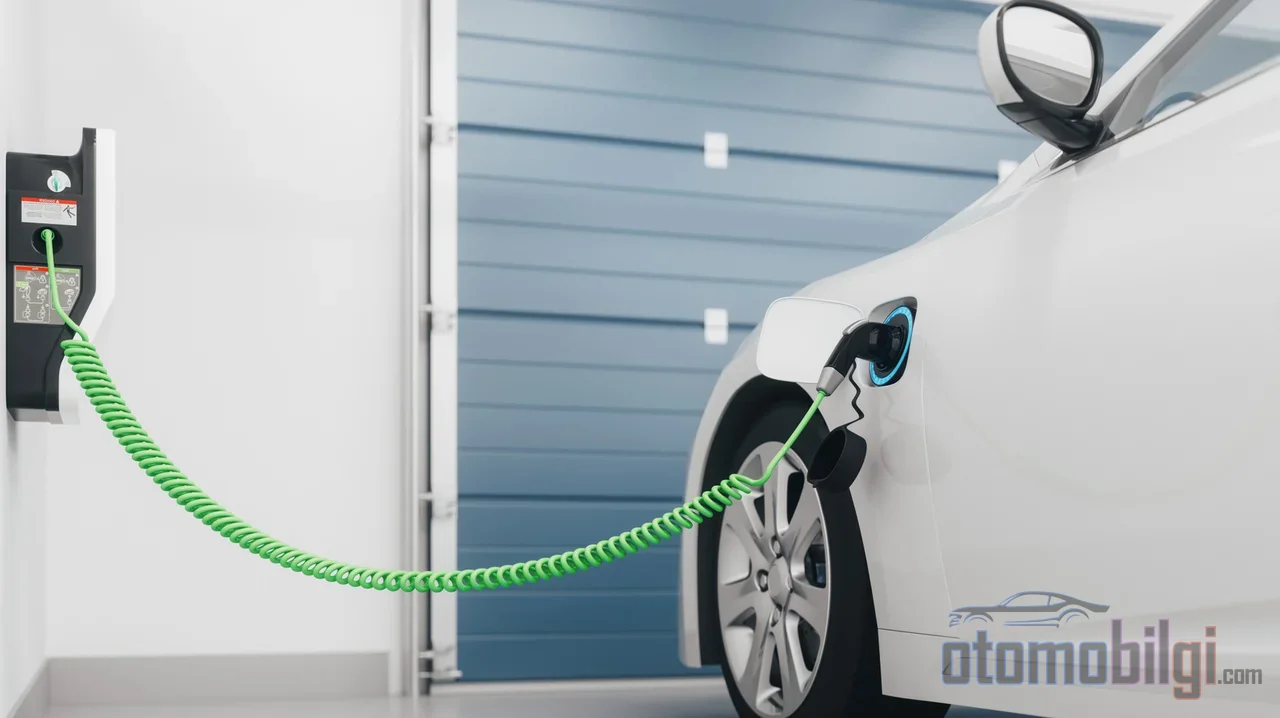
The power stated in the wallbox brochure is not the power you will actually get from your home. A charging unit labeled 22 kW may be limited to as little as 7.4 kW at the outlet if your subscription power and wiring do not allow more; worse still, it can trip the main breaker while the oven and air conditioner are running at the same time. The most commonly overlooked obstacle in home charging installation is not the vehicle or the device, but the kW limit of your electricity subscription. On this page, we go step by step through what that limit means, which subscription type supports which charging power, and what checks you need to make before ordering a wallbox.
How Does Your Subscription Limit Charging Power?
The value written on the charging unit's label is the theoretical maximum. In reality, the power drawn by the vehicle is determined by the power limit in your subscription contract and the wiring in your home. The electricity authority has sold you power at a specific kW level; if demand exceeds that limit, the main breaker kicks in. In other words, wallbox selection is a decision that should be made based on your infrastructure first, not on your vehicle.
Residential subscriptions come in two types. Single-phase (monophase) subscriptions are standard in the vast majority of homes and generally allow charging up to 7.4 kW. Three-phase (triphase) subscriptions are found in buildings that require higher power and open the door to the 11-22 kW range. For comparison: a normal household outlet typically delivers only 2.3 kW; raising a 52.4 kWh battery from 20% to 80% at that power takes about 15 hours. Even on a single-phase infrastructure, a wallbox dramatically shortens charging time compared to outlet charging.
The picture also becomes clear on the current side. An 11 kW charge on three phases draws about 16 A per phase; 22 kW requires a 32 A breaker. These values directly determine which cable cross-section, which breaker, and therefore which subscription power will be needed.
Key Takeaways
- A single-phase subscription typically allows 7.4 kW charging, while a three-phase subscription allows 11-22 kW.
- Most electric vehicles on the market are limited to 11 kW on AC charging; a 22 kW unit adds no extra speed.
- The continuous charging current should not exceed about 80% of the breaker rating.
- Dynamic load balancing prevents breaker trips by adjusting the current delivered to the vehicle in 1 A steps.
- As of 2026, the total cost of a home AC installation typically falls in the range of 30,000-80,000 TL.
The Hidden Limit Inside the Vehicle: The Onboard Charging Unit
Before your subscription power becomes the limiting factor, another limit comes into play: the vehicle's internal AC charging unit, technically known as the onboard charger (OBC). This is what primarily determines the speed of AC charging. In most vehicles, the OBC is in the 7.4-22 kW range, and the majority of electric vehicles on the market are limited to 11 kW. For example, the Togg T10X takes 11 kW AC as standard; even when connected to a 22 kW unit, it will not accept more power.
The practical consequence is this: a 22 kW wallbox is only meaningful for models that support 22 kW AC charging. Expecting double the speed from every car means trusting the device label; the reality will be more modest. So the right question comes before subscription power: how many kW of AC does my car accept?
11 kW or 22 kW: Which Unit Suits Which Home?
To compare the two power levels, three axes must be evaluated simultaneously: the AC power the vehicle supports, the subscription's phase type, and simultaneous household loads. When all three are not complete, 22 kW is in most homes merely a value on expensive paper.
| Feature | 11 kW (3 phase, 16 A) | 22 kW (3 phase, 32 A) |
|---|---|---|
| Range gain | ~50-70 km per hour | ~100-140 km per hour |
| Vehicle compatibility | Almost all vehicles | Only those supporting 22 kW AC |
| Subscription impact | Low | May require a power upgrade |
| Installation requirement | Standard cable cross-section and protection | Higher cable cross-section and protection |
| Typical use | 400+ km in 8 hours, overnight charging | Intensive use, multi-vehicle households |
For a household where the car is plugged in for 8 hours at night while the adults work during the day, the math is clear: 11 kW three-phase charging delivers over 400 km of range in a single night and is compatible with almost all vehicles. In households with short daily distances, overnight charging and low consumption, even a single-phase subscription is often sufficient; 11 kW charging gives the same result overnight as 22 kW. 22 kW is only recommended in multi-vehicle or very high-consumption households, when all three conditions are met: vehicle support, three-phase infrastructure, and sufficient subscription power.
What Happens When the Oven, Air Conditioner and Charger Work Together?
This is where the real test of subscription power begins. The electrical installation is designed according to the total of all simultaneous loads. When vehicle charging, the oven and the air conditioner run at the same time, the contract power can be exceeded and the main fuse trips. A practical rule for continuous EV charging is that the current should not exceed about 80% of the fuse rating; charging is a long-duration load and does not have the same tolerance as short-term devices.
A simple example: A wallbox drawing 11 kW consumes most of the budget of many single-phase subscriptions even on its own. Add an air conditioner and a cooktop on top of it, and no margin is left. This is also why installation companies look for a simultaneous load list during the site survey: power planning is not done without accounting for major consumers such as a heat pump, cooktop or air conditioner. The solution has three arms: lowering the charging current, shifting charging to nighttime, or enabling dynamic load balancing, which we will explain in the next section. Let us also add that the charging circuit must be run as its own separate line, not shared with other outlets.
Dynamic Load Balancing: Avoiding Tripped Fuses Without Upgrading the Subscription
Dynamic load balancing (DLB) is a method that adjusts the power given to the charger according to the home's instantaneous total consumption. The building's current consumption is measured via current transformers (CT) installed on the main panel or via smart meters; the smart unit reduces or increases the current supplied to the vehicle in 1 A steps. The result: charging never stops, it only slows down, and the home never exceeds its subscription limit.
The strongest aspect of this feature is that it provides a solution without requiring a panel or subscription upgrade; it prevents the breaker from tripping at low residential current limits and can even enable charging multiple vehicles without upgrading the infrastructure. But its limits must also be known: DLB is a smart management layer; it cannot compensate for weak or inadequate infrastructure. If simultaneous loads permanently exceed the subscription power in total, a power upgrade may still come up.
When Is a Power Upgrade Needed, and How Much Does It Cost?
The power upgrade process is not automatic
It is a common misconception that the subscription power will be automatically adjusted by looking at the kW value on the Wallbox. A power upgrade must also be requested, and switching to three-phase is not just about the subscription fee: main panel replacement, larger cable cross-sections, meter and installation compatibility, and the distribution company's administrative procedures are required. The total cost can even exceed that of the charging unit itself. Therefore, the decision to switch to three-phase should be based on your daily driving profile; for a household that drives short distances and charges at night, this investment is often unnecessary.
Installation cost and charging economics
As of 2026, the total cost of a residential AC installation is generally in the 30,000-80,000 TL range; cable length, panel reinforcement, and protective equipment can push this toward the upper end of the range. The cable itself also varies with distance: in an 11 kW / 16 A three-phase installation, a cross-section of 5x4 mm² for short distances and 5x6 mm² for long distances is typical; exact values are determined by project calculations.
On the other side, charging economics offsets the installation cost. With the night tariff at home, the cost can drop to around 3.26 TL per kWh, while AC charging at stations is 9.90-11 TL and DC charging is 12.90-15.95 TL. Charging a 60 kWh battery at home at the lower tier costs roughly 190-200 TL. So a properly planned home charge neither leaves you with an installation running without breaker protection nor significantly lowers the cost per kilometer.
Checklist Before Ordering a Wallbox
The five criteria installation companies check during the site survey will guide you in the same order:
- Subscription type and power: Three-pole breakers in the panel are a sign of a three-phase installation; if you are unsure, check your bill or ask your electrician.
- Main panel capacity: Free space and the main breaker rating show whether there is enough room for a new circuit.
- Cable distance: The distance from the panel to the parking spot determines the cable cross-section and cost.
- Grounding and residual current protection: Due to the risk of DC-component residual current in EV charging, a Type B RCD or a unit with DC fault detection (RDC-DD) is essential; IEC 61851 compliance, SPD surge protection, and CE/TSE markings should be checked.
- Simultaneous large loads: Does the combined demand of the heat pump, stove, and air conditioner together with charging exceed the subscription power?
So, Is My Subscription Power Sufficient for Home Charging?
There is no single universal answer to this question, but the decision chain is clear. First, find out how many kW your vehicle's onboard charging unit accepts; for most vehicles this is 11 kW, and it is impossible to exceed this limit. Then, look at your subscription type: with a single-phase subscription the ceiling is 7.4 kW, and overnight charging covers most of your daily use within that. With a three-phase subscription, 11 kW is practically sufficient for overnight charging as long as simultaneous loads are reasonable; 22 kW only makes sense when vehicle support, three-phase power, and sufficient subscriber capacity come together. If your breaker trips while charging alongside the oven and air conditioner, the solution order is as follows: reduce the charging current or shift it to nighttime, add dynamic load balancing with a smart unit, and if these are not enough, calculate the power upgrade together with panel and cabling costs. Choosing a Wallbox not according to the device's label but according to the power your subscription and installation can handle protects both your breaker and your budget.
Sources
- Home EV Charger Installation: 11 kW or 22 kW? Complete Guide | Özbek Mühendislik
- How to charge an electric vehicle at home? Duration and cost | Uberco
- Home Charging Station Installation: What You Need to Know | Bolt Energy Solutions
- How Does Your Electricity Subscription (Single-Phase / Three-Phase) Affect Charging Power? | Sarjelek
- What Is Dynamic Load Balancing? | Sarjmodul
- How to Increase Subscription Power for a Charging Station | Mube Energy
- Why Does My EV Charger Keep Tripping the Breaker? | ChargePapa
- Why a Circuit Breaker is Crucial for Safe Charging | go-e
- Electric Vehicle Charging Fees 2026 | ChargeMate