Wallbox Guide for Tenants: Permission, Costs, Moving

You have bought your electric vehicle and plan to charge it overnight in the parking lot of your rented home; but the wall-mounted unit will be installed in a building whose apartment you do not own. While the question seems technical, the real issue is legal: who gives permission, who owns the unit, what happens when you move, and who covers the bill and insurance? This guide walks through the wallbox installation process step by step as a tenant, with the numbers and the risks.
Who Gives Permission for Wallbox Installation in a Rented Home?
First, the good news: a wall-mounted charging unit is legally considered not a "structure" but a portable electrical device. An amendment made on March 11, 2025 to the Zoning Regulation for Planned Areas clarified this situation; no additional building permit is required for a wall-mounted unit installed in an existing parking space. If the unit will be fixed to the ground, the picture may change, so the mounting method must be clarified from the start.
The permission chain has two stages. The first stage is your landlord: in most cases your lease agreement ties structural changes to the owner's consent, and running cable along a wall or taking a line from the panel falls within this scope. The second stage depends on the status of your parking space. If you have an assigned or independent parking space and no changes are made to the existing electrical installation, that is, if other independent units are not affected, no decision from the homeowners' association is needed; permission from the management and the landlord is sufficient. If you will install the unit in a common area, the picture changes.
The Common Parking Difference and the Voting Threshold
A single owner installing their own unit in a common parking lot, under Article 19/2 of the Condominium Law, as a rule requires the written consent of four-fifths of the homeowners. However, a 2024 ministry circular lowered the majority required for installation in a common parking lot from four-fifths to a simple majority, that is, a majority of homeowners both by count and by land share. The difference between these two matters: while the circular facilitates the shared installation scenario where the building-wide installation is used, the old four-fifths requirement of the Condominium Law can still come to the fore when a single owner places their own unit in a common area. As a tenant, your role here is limited but not zero: under the Condominium Law, tenants have a say about common areas and can attend apartment meetings. Being a tenant does not eliminate your right to use your assigned parking space; the lessor transfers to you the right of use consistent with the form of use in the title deed.
Highlights
- No building permit is required for a wall-mounted wallbox (March 11, 2025 Zoning Regulation amendment)
- Total cost including a 7 kW installation is 50,000-100,000 TL, and 80,000-150,000 TL for 11 kW
- Charging at home on the night tariff saves ~25,000 TL per year compared to a public DC station
- In an assigned parking space, if the installation is not affected, no homeowners' association decision is needed
- No EPDK license is required for home-type charging; the license applies only to commercial stations
How a Tenant Gets Wallbox Permission from the Landlord: Step-by-Step Process
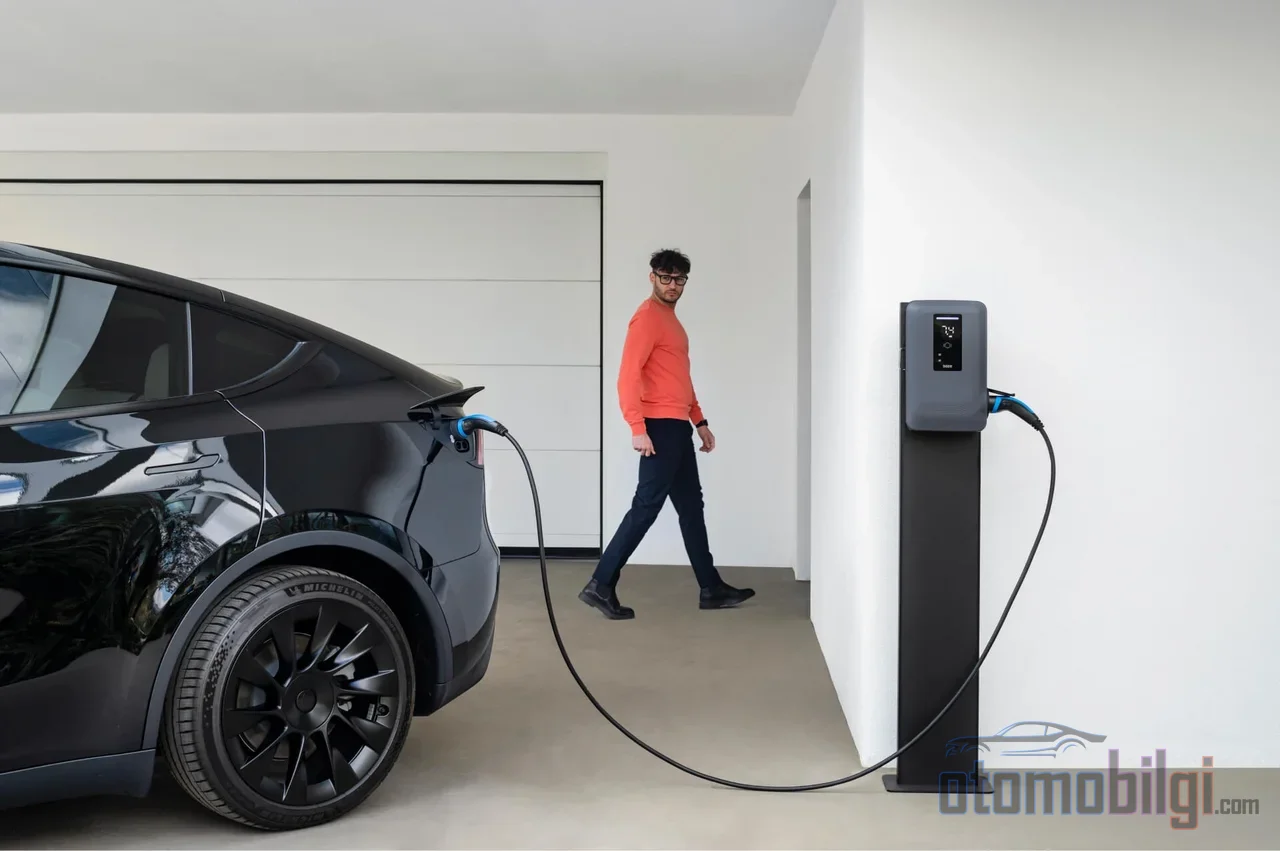
The process starts with going to the landlord with a file in hand. Uncertainty produces landlords' first resistance; a concrete file usually dissolves that resistance. The recommended step order is as follows:
- Review your rental agreement: check the clauses on structural changes, renovations, and installations.
- Send a written request to your landlord: the file should include the device's technical brochure, a sketch of the cable route, the billing solution, and the details of the certified company that will carry out the installation. Also remember that the agenda item must be clearly stated in the meeting notice.
- Once you have the landlord's approval, inform the building management; if the shared installation is touched, the process moves to the condominium owners' board.
- Apply to the electricity distribution company for a capacity increase; this process typically takes 1-2 weeks.
- Have the installation done by an authorized and certified company; the physical installation is usually completed in a single day. The part of the process that really takes time is the permits and infrastructure clarification, not the installation itself.
Installation, Power, and Cost: The Numbers Coming Out of the Tenant's Pocket
A typical apartment in Turkiye has a single-phase electricity subscription, and the contracted power is usually in the 5-6 kW range. A 7.4 kW wallbox can work with this installation; 11 kW requires a three-phase switch and a capacity increase. Also factor in your car when choosing the power: on nearly all vehicles sold on the market, the onboard AC charging capacity is limited to 11 kW. In other words, a 22 kW unit is an unnecessary expense in most cases; models such as the Togg T10X and T10F also accept charging of up to 11 kW on the AC side. For daily use under 50 km, single-phase 7.4 kW is sufficient; if three-phase is available, 11 kW is the ideal choice.
The technical requirements are as follows: a dedicated line must be run from the panel, the cable cross-section must be chosen correctly, the grounding must be solid, and there must be protection that detects DC residual current (Type A RCD + 6 mA DC detection or Type B RCD). The fuse selection varies according to power: 1x32A for 7.4 kW, 3x16A for 11 kW, 3x32A for 22 kW. Unauthorized or faulty installation directly affects warranty coverage.
Cost Table and Administrative Expenses
The total cost, including the device and installation, varies over a wide range depending on the power. The official EPDK fees effective from January 1, 2026 should also be added to the budget: meter check 194 TL, residential guarantee fee 263 TL per kW, low-voltage disconnection-reconnection 140 TL. Total administrative costs typically remain in the 5,000-10,000 TL range.
| Power | Cost including installation (2026) | Important note |
|---|---|---|
| 7 kW | 50,000-100,000 TL | Single-phase, the most common tenant scenario |
| 11 kW | 80,000-150,000 TL | Requires a three-phase switch and a capacity increase |
| 22 kW | 150,000-250,000 TL | Unnecessary for most vehicles, AC limit is 11 kW |
As a general range, the total cost including the device and installation varies between 45,000 and 150,000 TL. The payback calculation, on the other hand, depends on usage: with an assumption of 15,000 km per year and 16 kWh/100 km consumption, charging at home on the night tariff costs about 7,800 TL, while a public DC station costs about 32,400 TL; the difference is about 24,600 TL per year. According to this calculation, the installation pays for itself in 2-3 years. With 50 km of daily use, the increase in the electricity bill is roughly at the level of 250-400 TL/month.
Electricity Subscription and Tariff: Who Pays the Bill?
A wallbox is billed through a separate line fed from your own apartment's meter; thus, common area electricity expenses are untouched and no sharing with the apartment building is needed. Alternatively, a sub-meter is also a solution. As a tenant, under Article 22 of the Condominium Law, you are responsible for common area repair costs falling to the owner's share only if specified in your lease agreement; you are not responsible for expenses not included in the contract. This is the legal safeguard ensuring that the installation does not pass costs onto the common infrastructure.
On the tariff side, a three-time meter is clearly advantageous for an electric vehicle owner who charges at night: while the night window (22:00-06:00) is 2.94 TL/kWh excluding VAT, in a single-time tariff 4.32 TL/kWh is paid after the first 240 kWh. Switching to the three-time meter is free, and you have the right to change your tariff once a year. If there is no vehicle, the three-time tariff can increase the bill since the tiered advantage is lost; when deciding on this switch, base it on your vehicle's actual night-time consumption.
Ownership, Eviction and Moving: What Happens to the Wallbox?
Since the device counts as a portable electrical appliance, its ownership as a rule belongs to the tenant who installed it; but the established and clear legal practice on this matter in Turkiye is still weak. Therefore, the solution is to regulate unforeseeable scenarios in advance with a written supplementary agreement. Models around the world are instructive: In the tenant investment model applied in Switzerland, the tenant pays for the installation, and the agreement regulates the moving situation and compensation for the remaining value. In the UK, ownership of a device installed with a government-backed grant remains with the homeowner after installation; if the tenant moves, the device stays on the property. In France and in the Portuguese regulation that came into force in 2025, the tenant has the right to install a charging point at their own expense. In the US, five states grant tenants a legal right to installation; California is a good example of this: the homeowner does not have to pay the cost but must permit the tenant to install it at their own expense.
In the moving scenario there are two options, and write clearly in the supplementary agreement which one applies: to dismantle the device and take it to the new address, or to leave it in place and make a compensation agreement for the remaining value. Concern about dismantling costs is the resistance homeowners most frequently voice; in UK homeowner forums, this concern revolves around the anticipated electrician cost for later removal. The tenant assuming the removal cost with a written commitment directly resolves this resistance. If the device will remain on the wall, put the insurance declaration in writing as well.
Alternative: Portable Charging Unit
If the permit process stalls or you are staying short-term, a portable (mobile) charging unit, which requires no fixed installation, is the option that completely bypasses the wall permission issue. A fixed wallbox is the right solution for users who charge in the same spot every day; a mobile unit is the tenant looking for flexibility's realistic Plan B. Charging from a regular outlet is only for emergencies; at 3.7 kW a full charge takes nearly a day and it is not suitable for regular use.
Arguments That Will Convince Your Landlord and Cost Sharing
When talking to your landlord, the strongest card in your hand is the permanent value the device adds to the home. There is evidence that apartments with charging stations can see a 3-5% increase in value; installation is an investment with a return during sale or re-leasing. The second card is the savings calculation: home charging saves approximately 25,000 TL per year compared to public stations and pays for itself in 2-3 years; this offers a solid negotiating ground for cost sharing. The third card is eliminating risk: a CE-certified device, a cable route diagram, a line fed from your own apartment meter, a certified company, and an insurance declaration presented as a file give the landlord the message of "professional work." Knowing that as a tenant using common areas you are obligated to follow the rules of diligence like an owner, not to disturb anyone, and not to violate rights also preserves the elegance of the process.
Three reasonable scenarios stand out in cost sharing: the tenant pays for everything and the device stays with the tenant; the tenant pays, the landlord takes ownership after installation, and an agreement is reached on rent or compensation; or the parties share the cost and agree that the device will stay with the property. Whichever you choose, the single rule is the same: put the agreement in writing.
Short Answer: Can a Tenant Install a Wallbox?
Yes. As a tenant, you can install a wallbox at your own expense in your designated parking space, with the landlord's written permission, as long as the common installation is not affected; no building permit or EPDK license is required, the device is considered portable, and its ownership belongs to the person who had it installed. The critical point is three written documents: the landlord's permission, the installation file, and a supplementary agreement regulating the move-out and compensation scenario. When these three are completed, the process has been entrusted to a certified company that complies with technical requirements.
Sources
- Home Charging Station Installation: Cost, Permission, Process
- Electric Vehicle Charging Units in Apartment Buildings and Complexes - Ministry of Environment, Urbanization and Climate Change
- Charging Unit in an Apartment Parking Lot: Permission, Permit and Costs
- Home-Type Electric Vehicle Charging Station Guide (2026)
- Electric Vehicle Charging Station Installation Guide
- Electric Charging Station Installation for Complexes and Apartment Buildings
- Tenant's Liability for Common Area Repair Costs
- EV chargers as a tenant: rights & procedure
- Right-To-Charge Policies
- My Tenant Has Requested a Home EV Charger