Who Pays the Cost at Shared Charging Areas?
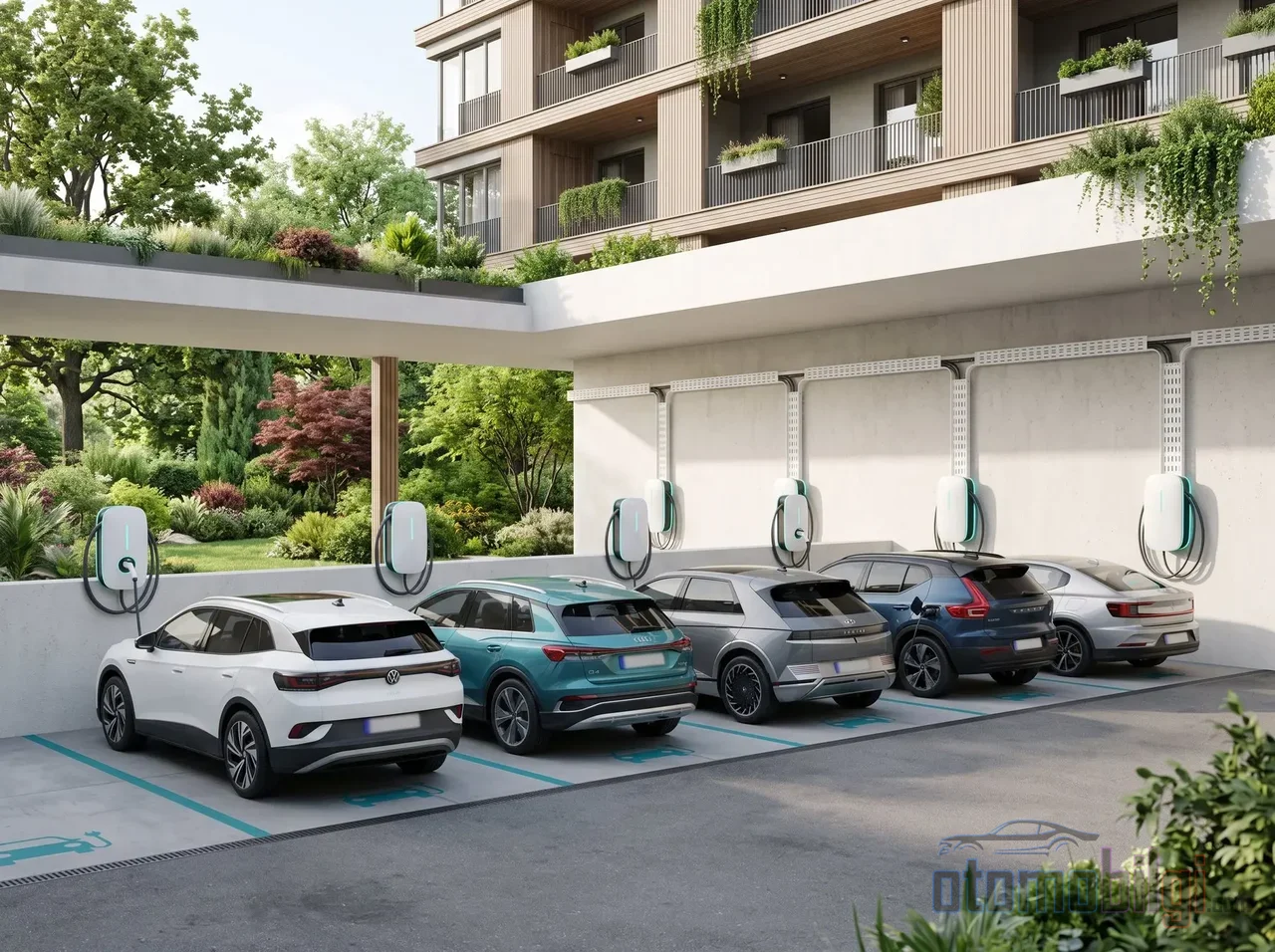
The charging column has been installed, the opening has been held, and the first vehicles have started drawing energy from the socket. In apartment or residential complex life, this is where the real work begins, because the core issue is not installation but operation: whose meter will every kilowatt-hour consumed be recorded on, will the column's electricity bill be covered by the common fees, how will power be split when two people plug in at the same time, and when will unexpected maintenance items land on the expense list. The question of who bears the cost of a shared charging column is one that most site managements are forced to face in the first six months after installation, and it has too many components to be answered in a single sentence.
The Clearer the Metering Method, the Clearer the Cost
It all starts with metering. There are two basic setups for shared columns: whether a separate electricity meter has been installed for the column or not. In the separately metered model, smart management platforms automatically measure the energy consumed in each charging session in kilowatt-hours and record this consumption in the resident's profile. At the end of the month, everyone pays only for the energy they drew; the common bill is not divided among anyone. In this model, the pay-for-what-you-consume principle is established from the start, and the surface for disputes shrinks to a minimum.
If there is no separate meter, the column is fed from the building's common consumption meter. In that case, tracking consumption on a per-user basis requires using the column's own internal metering and reporting software: the consumption reported and notified per user on a monthly basis is apportioned among residents through the building's common bill. A column with no meter that cannot measure on a per-session basis is the most problematic scenario; consumption can only be absorbed into the common fees by estimation, and that means an unfair burden for residents who do not own an electric vehicle.
A legal layer should also be added to this: charging from a neighbor's line or a shared meter without authorization may not be considered legal in any case, even with the management's verbal approval. Billing for energy drawn through a shared meter is evaluated in the context of Energy Market regulations, and failing to keep proper records leads to a gray area that could count as electricity theft. In other words, technical metering is not just a practical convenience; it is also part of the column's legal footing.
Highlights
- In a separately metered column that measures on a per-session basis, each resident pays only their own consumption.
- The kWh price of a shared column consists of three components: the unit electricity cost, the share of common expenses, and a maintenance provision if there is one.
- Simultaneous charging without smart load balancing can overload the building's electrical infrastructure.
- 1-2 detailed maintenance sessions per year, a visual inspection every three months, and software license renewals are ongoing expense items.
- The free charging model is the easiest to operate, but the weakest in cost control.
Billing Models Applied by Site Managements
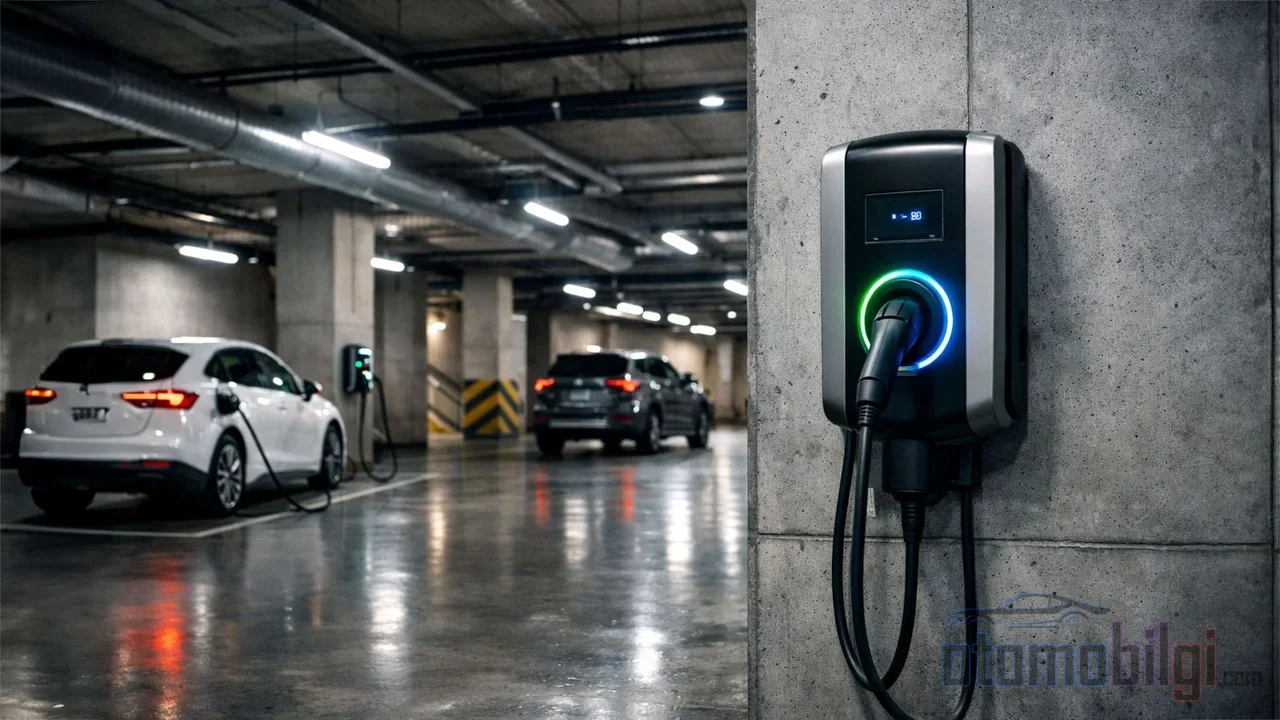
When the column is installed, the management has several ready-made models in front of it. Whichever option is chosen, sharing the decision with the condominium owners' assembly and putting it in writing prevents disputes in later years.
Pay As You Use: Per kWh Charging
The most common model is to charge a fixed fee for every kilowatt-hour charged. In a shared unit, this kWh price usually consists of three components: the unit cost of the energy drawn, the unit's share of common expenses, and a maintenance allowance if applicable. In setups where revenue is shared with the operator, a sample fee structure can be traced with concrete figures: a parking space occupancy fee of 1.00 TL and a locking fee of 1.00 TL can be added on top of the 4.80 TL/kWh energy charge; with a 100 kWh usage, the total charging cost reaches an amount like 480.00 TL. In such revenue-sharing models, the operating share and the platform share are separated at ratios such as 80 percent and 20 percent. Prices vary according to the electricity tariff used and must be updated periodically.
Included in Monthly Dues Model: Easy but Uncontrolled
Some sites treat charging as a social amenity and fold the electricity cost into common expenses, that is, into the monthly dues. This is the simplest model to operate: the bill arrives, it is paid from the dues, no extra collection is made from anyone. Its weak point is the lack of cost control. A few residents with heavy usage charge at the expense of neighbors who do not consume; this setup creates a hidden subsidy in favor of users and becomes unsustainable as the number of cars increases. Subscription or fixed fee per session models also exist; they provide predictability but may not match actual consumption.
Dedicated Wallbox Model
As an alternative to the shared column, each apartment can have its own charging point dedicated. In this approach, the ideal is for each charging device to be connected to the apartment's own electricity meter; thus the cost belongs entirely to the user and no common accounting ever arises. The installation cost falls on the user side; international examples cite a range of approximately 500-1,500 CHF per connection to the apartment meter and sub-meter installation.
| Model | Who Pays | Strength | Weakness |
|---|---|---|---|
| Per kWh charging | Resident who uses it | Fair, measurable | Requires metering infrastructure |
| Included in dues (free charging) | All condominium owners | Simple to operate | No cost control |
| Subscription / session fee | Resident who uses it | Predictable | May not match consumption |
| Dedicated wallbox connected to apartment meter | Apartment owner | No common accounting | Installation cost on the individual |
Simultaneous Charging: Power Sharing and the Queue Issue
The technical issue at least as important as the column's operating cost is the management of vehicles that want to charge at the same time. The electrical installation of apartment parking lots is generally not capable of allocating high power to a single column; for example, a total power of 22 kW must be divided according to the number of vehicles connected at the same time. Simultaneous charging without load balancing can overload the building's electrical infrastructure and put the installation at risk.
The solution is smart load management. In static balancing, a fixed power limit is applied to each charging point; it is an inflexible but predictable setup. In equal load sharing, power is dynamically distributed among the connected devices according to the number of vehicles plugged in at that moment: with two vehicles plugged in, the power is split in half; with three, it is divided by three. More advanced systems integrate charging with the building's total consumption; when the building is consuming intensively, the power going to the vehicles is throttled, and it is restored during nighttime hours. Since vehicle batteries remain parked for hours, this planning protects the installation without subjecting the user to a noticeable slowdown.
There is also a social side to the queueing issue. At shared stations, vehicles charge in turn, and in some systems the order is managed by making reservations through a mobile app. This is exactly where the extra item called the blocking fee comes into play: as long as the vehicle whose charging is finished remains at the station, it passes the cost of the occupied spot on to the user and encourages the station to be freed up. If the queue rule, reservation procedure, and blocking practice are not defined in advance in the management plan, the station quickly becomes the focal point of tension within the residential complex.
Expense Items That Do Not Appear on the Electricity Bill
The true cost of the charging station extends far beyond the kilowatt-hours consumed. In a sample calculation at the scale of an apartment building, assuming an electricity cost of 4 TL per kWh, the annual energy expense can reach approximately 28,800 TL; on top of that, annual maintenance, software, and insurance items are added. The non-electricity items are as follows:
- 1-2 detailed maintenance sessions per year: software updates, tightening checks of connections, grounding measurement
- Visual inspection every three months
- The cost of a commitment to on-site intervention within 24-48 hours in case of failure
- Software license renewals
- Interest, depreciation, and commissioning expenses during the establishment and operating period
Knowing that these categories are also listed as operating period expenses in official legislation helps administrations when preparing a budget plan: they are not unexpected, but plannable items. Who will cover them is a separate question. In a shared charging setup, the hardware, installation, network memberships, maintenance, and electricity expense can be borne by the building management; residents pay only an access or usage fee. Alternatively, these items can be tied to a revenue-sharing arrangement with an operator earning income from the station. The fact that the installation of a charging unit is mandatory under the parking regulation in newly built apartment buildings and residential complexes means that these expenses are now a natural part of the building budget.
Legal Ground: The Station Is a Shared Facility, the Decision Is a Joint Decision
The basis for cost distribution is the legal status of the station. Under Article 42 of the Condominium Ownership Law, a duly convened meeting and decision are required for useful facilities to be built in common areas. Under traditional practice, written consent of 4/5 of the property owners was required for a charging unit in a common area; under current practice, an approach has emerged in which a 50%+1 majority is deemed sufficient for common use areas; in a building with 10 units, the approval of 6 units is sufficient under this calculation. However, this threshold is not yet fully settled in legal practice: legal circles emphasize that the requirement of a duly adopted decision is protected in every case. A unit installed in a common area without management permission violates the Condominium Law; such units can be dismantled and penalties may be applied to the installer. Moreover, even having obtained permission does not in every case create an individual installation right; according to some approaches, the station should be installed by the management and made available for everyone's common use. In short, whoever covers the cost of the charging column, that decision must also necessarily be based on a resolution of the property owners' assembly.
Short Answer: Who Covers the Cost?
The clear answer to the question depends on the metering setup. If the column has its own dedicated meter or metering is done per session, the resident who charges directly covers the energy cost; in a column fed from a shared meter, the cost is covered according to the sharing rule set by the management, either by incorporating it into the dues or by allocating it per user. Recurring items such as maintenance, software and insurance are kept in the management budget in a shared model, and on the operator's side in a revenue-sharing model. A site management that installs a charging column must have three documents in hand: a property owners' assembly resolution, an internal regulation defining the metering and billing procedure, and a current expense budget. Once these three are in place, the shared charging column becomes not a burden that constantly generates debate, but a facility that is operated in a measurable and fair manner.
Sources
- EV Charging Management - Çardak
- Charging Station in a Common Area: Who Uses It, Who Pays? - Future Teknik
- How Is EV Charging Managed in an Apartment Building? Guide 2026 - sarjmodul
- Revenue-Sharing Electric Vehicle Charging Station Installation - Powera
- Electric Vehicle Charging Unit Operation Model Guide - Apartora
- Electric Vehicle Charging in an Apartment Building: Installation, Legal Process and Costs - Anka Enerji
- EV Charging Load Management: A Comprehensive Guide - Beny
- How to Charge an Electric Vehicle in an Apartment Building? - Lumicle
- Installing Electric Vehicle Charging Stations in Common Areas of Residential Complexes - Otowatt
- Electricity from a Neighbor, Shared Meters and Vehicle Charging - Güneş & Güneş