How to Choose the Right Tires for Hybrid Cars?
The promise of a hybrid car is clear: low consumption, quiet operation, long range. Yet half of that promise is hidden in the tires. Two different tires fitted to the same car can measurably change its consumption; in electric mode, most of the sound you hear inside the cabin comes from the tires. Still, most drivers treat a tire change like they would on a gasoline car, choosing based on size and price. Yet the hybrid's weight, instant motor torque, and silent nature impose an entirely different job description on the tire. How do you choose the right tire?
Rolling resistance: a fuel cost every four turns
Rolling resistance is the energy spent to keep the tire rolling along the road. The moment the tire contacts the road, it deforms and flexes, and part of this flexing is lost as heat and friction. In passenger cars, this loss contributes up to 20 percent of fuel consumption; in light commercial vehicles, the rate can climb to 30-40 percent. If the hybrid's entire efficiency engineering ignores this trade-off in the tire, it is partially wasted.
The relationship is linear and measurable: a 10 percent improvement in rolling resistance means up to 2 percent savings in fuel. It also works in the opposite direction - a 30 percent increase in rolling resistance can raise consumption by 3-5 percent. Low rolling resistance (LRR) tires come into play precisely at this point: they reduce the energy loss caused by the tire's flexing through special compounds and carcass construction. In hybrid city driving, where the car switches to the electric motor, every saving translates directly into range and quietness.
LRR also has a pressure dimension. An underinflated tire raises rolling resistance on its own and creates 0.5-1 percent extra consumption. So buying the most efficient tire and then neglecting the sidewall pressure means quietly giving back the gains made at the start of the purchase.
Highlights
- A 10 percent improvement in rolling resistance provides up to 2 percent savings in fuel.
- Hybrid and PHEV tires feature reinforced structures that withstand battery weight and sound-absorbing foam.
- In electric mode, the main source of cabin noise is not the motor but the tires and the road.
- Some hybrid-focused tires show up to a 7 percent range advantage over their rivals in the ISO 28580 test.
- Monthly pressure checks and rotation every 5,000 miles are the two habits that determine the life of a hybrid tire.
Silent motor, noisy tire: what do you hear in electric mode?
In an internal combustion vehicle, tire noise competes with engine sound and usually disappears. When a hybrid switches to electric mode, the motor falls silent, so the dominant sound left in the cabin is road noise - that is, the tire's dialogue with the asphalt. A tire that may go unnoticed in a gasoline car can become disturbing in a hybrid. In tire selection, noise is not a comfort detail in a hybrid but a fundamental design parameter.
Manufacturers solve this in two ways: a sound-absorbing foam layer placed inside the tire and tread pattern optimization. However, there is a common misconception here. Not every tire labeled Hybrid or EV is automatically quieter; noise performance depends on the tread pattern, internal construction, and material selection. While the label is more than just a badge, checking the noise value on the label before buying is still necessary.
Weight and torque: why is the load index non-negotiable?
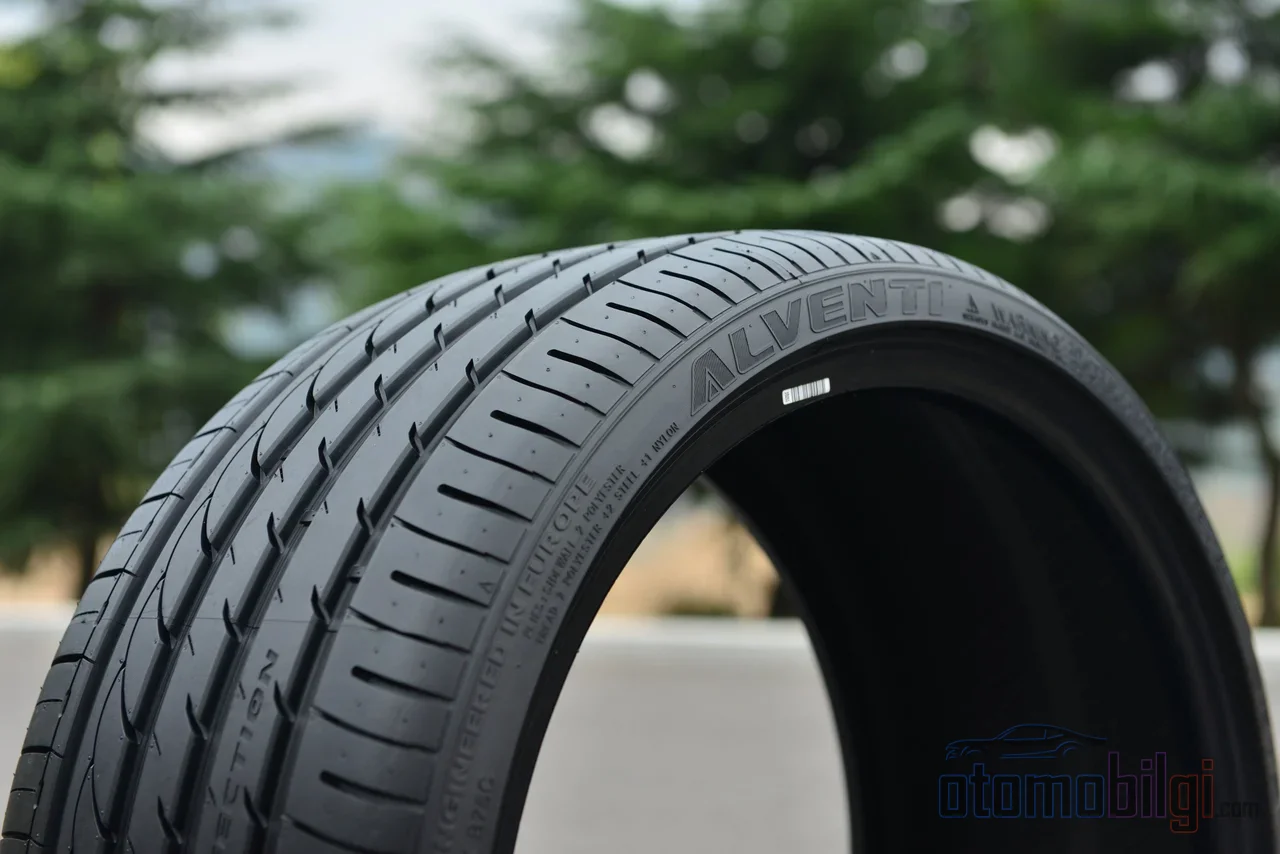
Plug-in hybrids carry both a battery and an internal combustion engine, plus a fuel tank and exhaust line. The result is a car that is noticeably heavier than the gasoline vehicles in its class, and this weight lands directly on the shoulders of the tires. The load index on the tire's sidewall determines the carrying capacity; if the vehicle requires a load index above that of a standard tire, meeting this specification is mandatory, not a matter of preference.
The practical checkpoint is the sticker on the door jamb: if the vehicle manufacturer mandates XL (extra load) or HL tires, all four tires, including the spare, must meet this specification. Alongside weight, a second challenger enters the picture: an electric motor produces torque from zero rpm. This instant torque wears out the components and structure of ordinary tires faster than in a gasoline vehicle. That is why hybrid tires are designed with reinforced casings and components resistant to rapid wear; current EV-focused tires have tread compounds with more than 30 percent higher wear resistance than those of internal combustion vehicle tires.
Does a tire labeled Hybrid really make a difference?
The honest answer: not mandatory, but beneficial. A hybrid can be driven on standard tires; the car works, and no safety debate arises. However, hybrid-focused tires deliver measurable differences in three areas: lower rolling resistance for range and consumption, foam and tread pattern for noise, and reinforced construction for weight and torque durability. These differences can also be tracked in numbers. In rolling resistance measured according to the ISO 28580 standard, a hybrid-focused tire drops to 6.59 kg/ton, while some rivals in the same class range between 8.28-8.94 kg/ton. Under WLTP conditions, this difference corresponds to more than 8 percent of the initial range, and some manufacturers claim up to a 7% range increase.
There is data on the longevity side as well: in a test on a Tesla Model 3 in the 235/45R18 size, a tire with a long-life compound delivered 72,301 miles of tread life, while two EV-focused rivals stopped at 38,610 and 43,478 miles. The difference depends on compound technology - some manufacturers are developing compounds that promise up to two years of additional tread life. The point to watch out for is the trade-off between low rolling resistance and grip. Some LRR-focused tires are defined by a slightly lower grip level than comparable products; they meet daily use, but those expecting aggressive driving should choose a balanced model. In summary: if efficiency matters above all else, the car's factory tire is probably the best choice; if comfort, noise, and longevity are the priorities, the hybrid-focused market is broad and competitive.
Tire size, e-CVT and regen braking: is deviating from the original risky?
The power-split system at the heart of the hybrid continuously recalculates the relationship between the engine and the wheels. Pulling the tire diameter outside the original size changes the inputs to this calculation: gauge speed, power-split behavior and the amount of brake energy recovery (regen) all shift. The energy captured by the regenerative braking system depends on the wheel's rotation; a diameter deviation can make it appear that you are recovering less energy than you use, or unexpectedly more. In hybrid tire selection, size is not an aesthetic choice but a system parameter.
The effect of regen braking on tire wear, however, is a debated topic. A system that applies braking force to the wheels through the motor places additional stress on the tire-road contact, and choosing tires that can withstand this stress is important; on the other hand, the reduced use of disc brakes extends the life of the brake components. A long-term, large-scale comparison study does not yet exist. Engineering logic allows a clear recommendation: a tire with high wear resistance and a load index capable of carrying the instantaneous torque of regen braking and the vehicle's weight is the safe default choice for a hybrid.
Pressure and maintenance: a 15-minute monthly routine
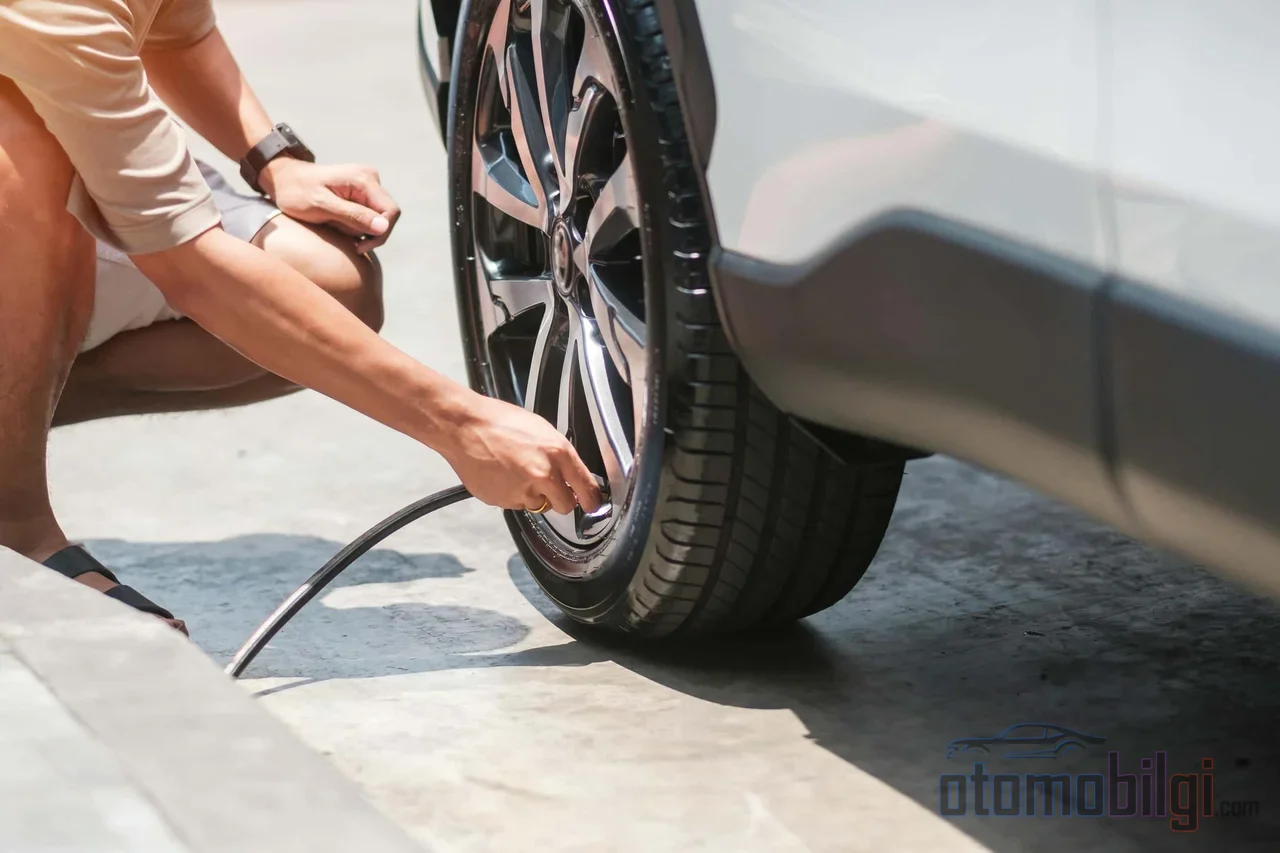
Tires lose about 1.5 psi of pressure per month; measuring once a month at least 3 hours after driving, i.e. when cold, catches this loss. General guides recommend 32-35 psi for most vehicles; hybrids mostly stay within this band, while EV-focused and XL-construction tires generally perform better in the 38-42 psi range. The correct value is always on the manufacturer's label on the door jamb - the number on the tire's sidewall is the maximum value, not the recommendation.
The maintenance routine consists of three items:
- A monthly cold pressure check; every lost psi pushes rolling resistance and consumption upward.
- Tire rotation approximately every 5,000 miles; the hybrid's torque wears out the front tires especially faster. If there are signs of uneven wear, rotation should be done without waiting.
- On heavy vehicles, a balance check after speed bumps and potholes; vibration disrupts both comfort and the wear pattern.
The minimum safe limit for tread depth is 2/32 inch; the penny test is the practical check for this limit. Because the hybrid's instantaneous torque accelerates wear, replacing a tire approaching this limit early is a sensible cost in terms of wet-road braking distance.
Seasonal choice: being a PHEV does not change the calculation
The answer to the winter tire or all-season question does not change based on whether the car is a hybrid. In climates with snow and ice where temperatures drop below 7 °C (45 °F) continuously, winter tires are the right choice: while winter compounds retain their flexibility at this temperature, summer and all-season tires harden and lose grip; flexibility means shorter braking distance. In mild climates, all-season or all-weather tires work year-round. In the all-weather category, 3PMSF-certified models deliver reliable performance in snow; In the 2026 all-weather tests, some models finished first on dry ground and second in the wet, and it was observed that properly loaded winter tires could outperform all-weather products. Most hybrids come from the factory with all-season tires; they are sufficient for an average winter but do not offer the best traction.
For hybrid SUVs, two additional criteria come into play: a high load index and an asphalt-oriented (Highway Terrain) construction, a compound that maintains traction during regenerative braking. On a vehicle with a high center of gravity and large mass, the tire's load-carrying capacity is more critical than in sedans.
Conclusion: defining the right tire
The right tire for a hybrid car is one that meets four criteria at the same time: low rolling resistance, a load index that matches the vehicle's weight, sound management, and high wear resistance. This goal is achieved by meeting the load specification written on the sticker on the door pillar, staying within the original size, and checking the pressure cold once a month. A dedicated hybrid tire is not a necessity; but it is a choice with a measurable impact on the hybrid's very reasons for existence, such as range, quietness, and longevity. In a car purchased for fuel economy, choosing the tire at random is a gift made to the rest of the system.
Sources
- The Best EV and Hybrid Tires to Buy
- Best Tires for Hybrid Cars: Maximize Your Vehicle's Efficiency
- How To Choose the Right Tires for Your Plug-In Hybrid
- Low-Rolling-Resistance Tires For Your Hybrid SUVs
- Tested: Best All-Weather Tires for 2026
- How To Choose the Right Tires for Your Hybrid Car
- Fuel efficient tires for hybrid