Who Are Hybrid Cars a Sensible Choice For, and Who Are They Just an Unnecessary Expense?
Share This Page
A hybrid car is a solution that supports a gasoline engine with an electric motor and a small battery, recovering energy through braking in stop-and-go city traffic and delivering fuel savings of 20-35%. Who it makes sense for cannot be summed up in a single sentence: for a driver whose daily route runs through the city, covers short-to-medium distances, and can charge the battery regularly (if it is a plug-in), a hybrid is usually the right choice; for a driver who drives exclusively on highways, tows a trailer, or has home charging and can switch directly to a fully electric vehicle, part of the money may go to waste.
Highlights
- The average premium of hybrids over gasoline models is about $1,300-1,375; the payback period is typically 3 years or so.
- Most hybrid sedans reach 45+ mpg, most hybrid SUVs reach 35+ mpg - roughly a 40% improvement compared to gasoline models.
- The electric range of plug-in hybrids is typically 30-50 miles; an uncharged PHEV turns into a heavy gasoline car.
- Annual fuel savings compared to gasoline models range from $300-800 .
- Routine maintenance costs are no higher than gasoline cars; the real risk is the cost of battery replacement.
Who Should Buy a Hybrid Car? A Decision Guide Based on Your Usage Profile
From an engineering standpoint, a hybrid is not a single product; it is the collective name for three different technology levels. The type of car you buy directly determines how smart a decision you are making. That is why the correct form of the question "should I buy a hybrid?" is this: "Which type of hybrid, if any, suits my usage profile?" Below I will briefly clarify the three types and then evaluate them according to concrete usage scenarios.
What Is the Difference Between the Three Hybrid Types?
The fundamental difference between them comes down to two parameters: the degree to which the car can drive on electricity alone, and how the battery is recharged.
- Mild hybrid (MHEV): It typically uses a 48-voltbattery-motor architecture. The electric motor merely assists acceleration, powers the start-stop system, and recovers energy through regenerative braking. The car never moves on electricity alone; the gasoline engine is always engaged.
- Full hybrid (HEV): Its battery is larger than a mild hybrid's but smaller than a plug-in's. It can cover very short distances - typically around 1-2 miles - on electricity alone; for example, a Prius progresses on electricity up to about 15 mph (24 km/h), then the gasoline engine kicks in. It requires no external charging; it generates its energy from fuel and regenerative braking.
- Plug-in hybrid (PHEV): The type with the largest battery. Since recharging the battery with the engine and braking is not practical, external charging is essential. The electric range is usually in the 30-50 mile (48-80 km) range; the most efficient examples reach up to 68 miles.
Let's clean up a marketing term here: "self-charging," that is, the phrase "self-charging hybrid" is pure advertising language. The vehicle still runs on a fuel tank; there is no "perpetuum mobile" that produces energy out of thin air. This term is simply a packaged version of the "no need to plug in" message.
There is also a practical penalty: PHEV batteries are usually placed under the trunk and under the rear seats. Compared to non-PHEV equivalents, it can eat up some trunk space and legroom. If the area behind the seats and cargo space is critical for you, compare the dimensions before buying.
| Feature | Mild Hybrid | Full Hybrid | Plug-in Hybrid |
|---|---|---|---|
| Electric-only driving | None | Very short distance such as 1-2 miles | 30-50 miles |
| External charging | Not required | Not required | Mandatory |
| Battery size | Smallest (48V) | Medium | Largest |
| Living space within range | Unaffected | Small impact | Some space taken from trunk/under seats |
City and Short-Distance Driving: The Hybrid's Main Stage
Hybrid technology delivers its efficiency primarily in the city. The reason lies in physics: in city driving the vehicle brakes constantly, and with regenerative braking the kinetic energy that would normally be lost as heat during braking is written back to the battery. Additionally, at low speeds and in stop-and-go traffic the gasoline engine shuts off and the vehicle maneuvers on electricity. When these two mechanisms combine, hybrids achieve their best consumption figures on local roads; this is exactly why many taxis are chosen as hybrids.
For someone who drives frequently in the city, my recommendation is clear: full hybrid is the natural match for this profile. Without setting up an external charging arrangement, you get significant savings while living with the same usage habits as a gasoline car. Most hybrid sedans run in the 45+ mpg band, and most hybrid SUVs in the 35+ mpg band; that means roughly a 40% improvement compared to gasoline.
5 km Daily Commute: Is a Hybrid Worth It?
This question is one of the most discussed scenarios on hybrid forums, and there is a valid reason for it. Over very short distances the engine never reaches full operating temperature; a cold engine burns a richer mixture and the journey is over before all of the hybrid system's saving mechanisms kick in. In this profile, the payback period of the hybrid premium gets longer. If you drive 5 km a day, your fuel bill is already low; the absolute amount you save is also small. In this case the hybrid premium often never pays off - for this profile, a standard gasoline car is mathematically the more honest choice.
Plug-in Hybrid: Two Very Different Cars - With and Without Charging Access
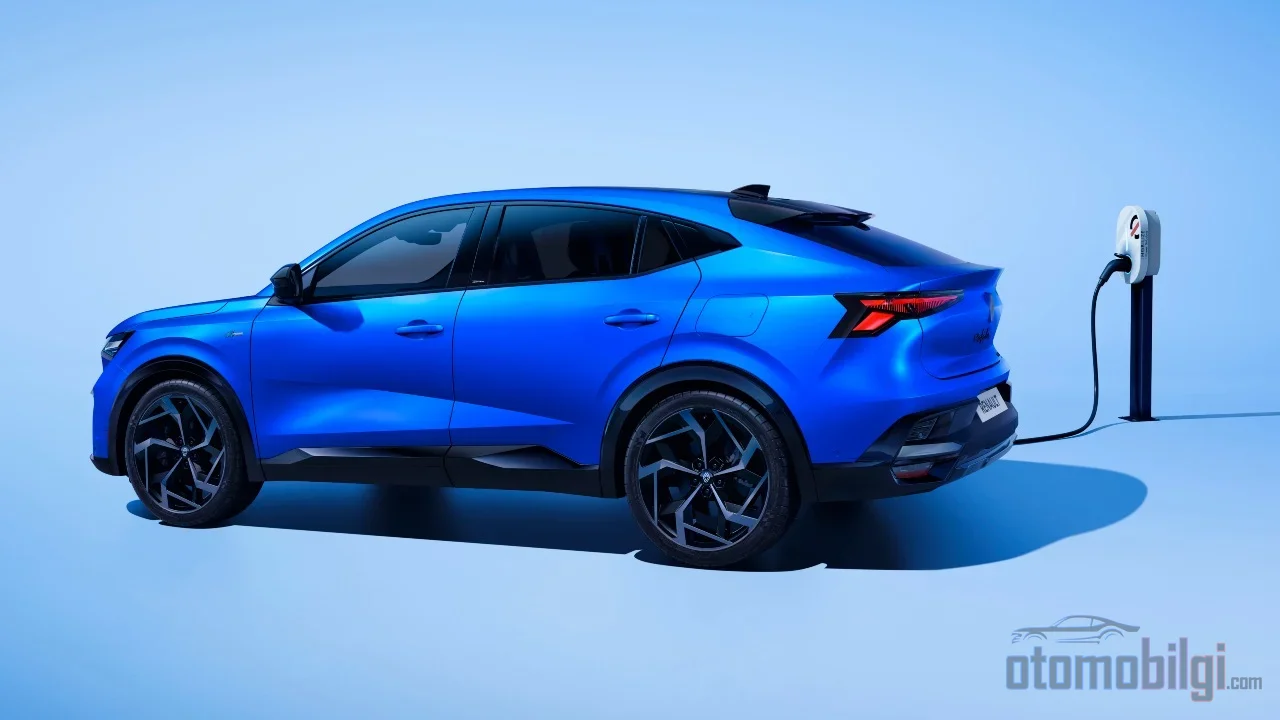
PHEV is the most dual-natured product in the hybrid world. Under the right conditions it is extraordinarily efficient; under the wrong conditions it is a weight that burns your money. The single determining variable in between: whether or not you can charge it regularly every day.
If You Can Charge at Home or at Work
If your daily distance falls within the electric range - in practice, usage that fits within the 48-80 km band - a PHEV lives like a true electric vehicle. Charged every night, it can complete all of your short city trips on electricity alone, and you may not touch the gasoline tank for weeks. This is precisely the ideal and most efficient use of a PHEV: daily charging plus driving within the electric range. Moreover, modern PHEVs are also ambitious on the performance side; for example, some plug-in SUVs 455 hp and 523 lb-ft of torque.
Should You Buy a PHEV If You Have No Home Charging?
Short answer: no, or at least a PHEV should not be bought. A PHEV that is not regularly charged is just an ordinary vehicle carrying the weight of its onboard battery - meaning it consumes more fuel than its gasoline equivalent. The triple-digit mpg claims you see in brochures can only be approached in the real world through regular charging. If you cannot commit to regular charging, a conventional full hybrid is both a more practical and more cost-effective choice.
Financial realism is also required at this point: a PHEV is not expected to pay most drivers back within the first few years - or in some usage patterns, ever. Although the maintenance/repair cost of a plug-in hybrid is as low as roughly 3 cents per mile, you can only offset the high purchase premium if you truly keep your electric driving share high.
Long-Distance and Highway Driver: Is Hybrid Still on the Agenda?
The highway profile is the most debated item in the hybrid discussion. According to one view, full hybrids are not that economical on long highway journeys; because regenerative braking rarely gets an opportunity at sustained high speeds, the savings mechanism weakens, and the long-distance driver is advised to choose a hybrid rather than - or, if necessary, at least a mild hybrid. On the other hand, it is true that modern hybrid systems also provide a fuel economy advantage at steady high speeds: most hybrid engines use a highly fuel-efficient but torque-weak operating principle called the Atkinson cycle . The electric motor is there precisely to close this torque gap; under constant load on the highway, the Atkinson engine's efficiency continues to show itself.
From an engineering perspective, it is possible to reconcile the two: a hybrid is more efficient than a gasoline car on the highway too, but its advantage does not drop to the 40% band seen in the city. The leverage effect weakens. If the overwhelming majority of your annual mileage consists of steady highway trips and your route has no stop-and-go traffic, the hybrid premium closes slowly for you. For some representatives of this profile, a mild hybrid may be a reasonable middle ground with its "small benefit, low premium" balance - but make your decision knowing that a mild hybrid is not as fuel-efficient as a normal hybrid and has virtually no EV mode at all.
Also be careful if you will be towing a caravan or trailer: for reasons stemming from their engine architectures, hybrids are generally not rated with as much towing capacity as their non-electrified equivalents. In this profile, be sure to verify towing figures on a model-by-model basis.
When Does the Fuel Saving Pay Off the Purchase Premium?
This is the financial backbone of the decision, and the math is simple. The hybrid's premium over its gasoline equivalent typically $1,300 or so, in some estimates ranging between $0-3,000 . Annual fuel savings, meanwhile, fall in the $300-800 band. Divide the two numbers and you get the answer: recovering the roughly$1,375 extra purchase price through fuel savings takes about 3 years. In examples where the premium rises to $2,600 and the driver covers low mileage, this period can stretch to 6 years - meaning the longer you keep the vehicle and the more you drive, the stronger the equation works in your favor.
On the maintenance side, contrary to what most people think, it's not a problem. Hybrids generally don't require more expensive maintenance than gasoline cars; in the first few years, you won't expect major maintenance beyond tire rotation, cabin filter, and the occasional oil change. The electric motor reducing the load on the gasoline engine also lowers wear. The only item that really requires attention is that battery replacement isn't cheap: if you plan to keep the vehicle for many years, read the warranty coverage before you buy.
Who Should Skip Hybrids Entirely: Gasoline or Fully Electric?
For two profiles, the hybrid intermediate step makes no sense:
- Those who drive very few kilometers: If your annual fuel bill is low, the amount to be saved is also low, and covering the hybrid premium can take years, sometimes never. In this profile, a well-equipped gasoline car is more sensible.
- Those who can do 90% of their driving on electricity: If you have charging capability at home and your daily route is within electric range, skipping the PHEV intermediate step and buying a fully electric car directly maximizes operating cost savings. EVs are the most efficient option; while 100+ MPGe values are common, hybrids - especially PHEVs - bottom out around 50+ MPGe.
On the other hand, for the general buying audience the picture is clear: with current fuel prices and the model lineup in 2026, a hybrid is almost certainly a smarter financial decision than a gasoline car for most drivers. What determines it is whether your profile falls into this "majority."
Decision Summary: Recommendations by Profile
- Frequent city, stop-and-go usage → full hybrid: maximum savings, zero charging responsibility.
- Daily 48-80 km + charging at home every night → plug-in hybrid or, if your charging infrastructure is ready, go straight for fully electric.
- Mostly highway, long distance → gasoline or low-premium mild hybridVery short distances like ~5 km a day →
- gasoline Caravan/trailer towing → don't buy a hybrid without confirming the towing capacity on a model-by-model basis.Summary formula with an engineering mindset: an equation with three variables - your annual mileage, the city share of your route, and (if you're considering a PHEV) your charging routine. Write these three down honestly; whether which hybrid type - or none at all - makes you money will reveal itself naturally.
- Sources
Hybrid vs. Plug-in Hybrid vs. Mild Hybrid
What's a mild hybrid? And how's it different to a full hybrid?
- Hybrid vs. mild hybrid vs. plug-in - what's the difference?
- Electric Vs. Mild-Hybrid Cars: Differences Explained
- Are Hybrids Good for Long-Distance Driving?
- Hybrid vs. Gas in 2026
- Are Hybrids a Smart Choice Right Now?
- Will a Plug-In Hybrid Save You Money?
- Hybrid vs. Plug-in Hybrid Cars: What's Right for You?
- Hybrid vs Plug-in Hybrid: What's Best for Your Commute?
- Why Do Hybrids Get Great City Gas Mileage?
- Hybrid vs. Electric Car in 2026
- How Hybrid Cars Help Save You Money
- Plug-In Hybrid Ownership Costs
- Should I Choose a Plug-in Hybrid without Home Charging?
- Demystifying Hybrid Vehicle Maintenance
- Should I Choose a Plug-in Hybrid without Home Charging?
- Demystifying Hybrid Vehicle Maintenance