How Do Hybrid Cars Behave in Cold Weather?
Share This Page
Cold weather reduces the support the electric motor provides in hybrid cars, runs the gasoline engine more often and for longer, and temporarily increases fuel consumption. The cause is not battery degradation, but the slowing of lithium-ion chemistry at low temperatures; once the battery warms up, the system returns to full performance and the loss is not permanent. In other words, winter does not change the hybrid's character, but it turns operating conditions against you for a few months.
Highlights
- In dynamometer tests, hybrids lose 22.8% of their fuel economy in the cold; under the same conditions, EVs lose up to 39% of their range.
- Capacity loss is temporary; once the battery warms up, full performance returns and no permanent damage occurs.
- Winter consumption increase in hybrids is typically 5-15% or more, caused by engine warm-up and heating demand.
- Cabin heating in hybrids is provided by engine waste heat; this is why hybrids are protected from the range collapse EVs experience.
- NiMH batteries usually experience a milder performance loss in the cold, staying below 10-20%.
Why cold weather affects hybrid cars: Three chained effects
What happens to a hybrid in winter should not be thought of as a single event. When the temperature drops, three effects chain together, each triggering the next. Following them in order explains every deviation you see on the dashboard.
- Battery chemistry slows down: In a lithium-ion cell, energy is produced by the movement of ions between the electrodes. Low temperature slows these chemical reactions; the battery's usable energy decreases, its internal impedance increases, and its discharge voltage drops.
- Electric support is reduced: A more resistant battery gives the electric motor less opportunity to work. Electric range shortens, driving time in electric-only mode decreases, and the system leans more on the gasoline engine.
- Consumption increases: The engine kicks in more often both to heat the cabin and to bring the cold battery into its ideal operating range with waste heat. On top of that comes the increased aerodynamic drag caused by cold air and the rolling resistance raised by dropping tire pressure.
So the increased consumption you see on the dashboard is the sum of three separate mechanisms, not the sign of a single fault.
How much efficiency does a hybrid battery lose in the cold?
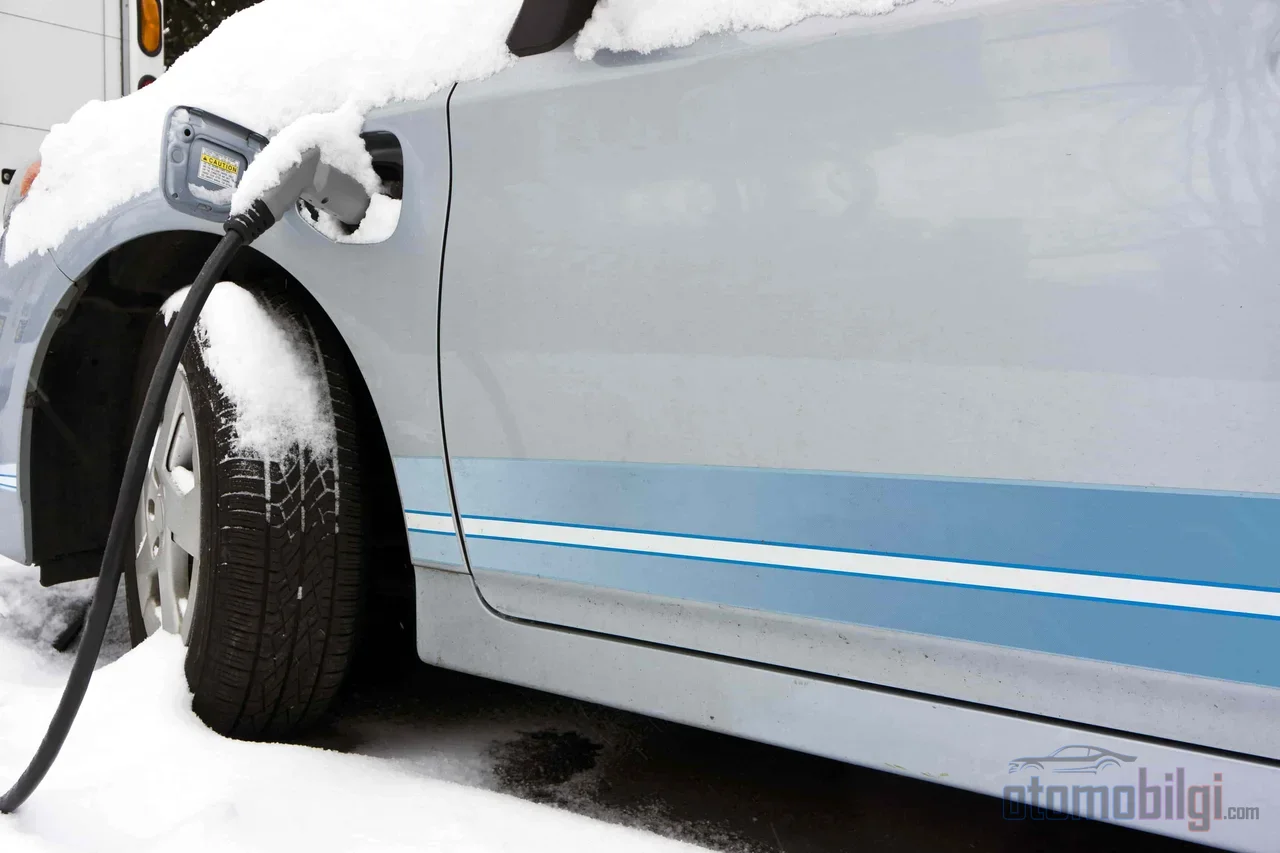
The clearest data on this subject comes from a laboratory study conducted with automotive engineers comparing three hybrids and three electric vehicles on a dynamometer. The vehicles were tested at temperatures of 20°F (about -7°C), 75°F, and 95°F, with cabin heating set to 72°F. The results show that the cold affected hybrids more than expected but never reached the picture seen in EVs:
| Condition | Hybrid | Electric (EV) |
|---|---|---|
| Cold (20°F / -7°C) | 22.8% loss in fuel economy | 35.6% drop in MPGe, 39.0% drop in range |
| Hot (95°F) | 12.0% efficiency loss | 10.4% MPGe, 8.5% range loss |
| Extra cost in cold (1,000 miles) | +$28.44 in fuel | With home electricity: +$32.11; with public charging: +$76.93 |
The director of the automotive engineering team that conducted the study described the drop of around 23% in fuel economy seen in hybrids in cold weather as an unexpected finding; the EV range loss, on the other hand, was consistent with previous measurements. For hybrids using NiMH batteries, the picture is somewhat milder: this chemistry typically gets through cold weather with a loss of under 10-20%.
Why isn't the loss permanent?
Low temperature slows the battery down but doesn't damage it. The capacity drop shown in the early hours of a frozen morning is temporary; once the cells warm up, full capacity returns. The real enemy isn't cold but extreme heat: in hot climates, the lifespan of a hybrid battery is noticeably shortened. The single permanent risk associated with cold is concentrated at one point - lithium plating. This means the accumulation of lithium in metallic form on the surface when a very cold cell cannot accept a charge, and it can cause permanent damage. It is precisely for this reason that the Battery Management System (BMS) deliberately limits the charging rate in cold weather. Regenerative braking feeling weak on winter mornings is also a result of the same protection: the battery does not accept more charge than it can handle at that moment, and braking is handed over to the friction brakes. This is normal and temporary.
Why does the engine keep running: The warm-up cycle and BMS logic
The most surprising behavior in winter is the gasoline engine kicking in after the "ready" light comes on and running for a long time. While drivers tend to think this is a malfunction, it is in fact a protection strategy applied by the BMS by design: the engine is intentionally run longer to bring the frozen cells into their ideal operating range using waste heat. Not inefficiency, but protection.
In modern hybrids, the engine enters an automatic warm-up cycle during a cold start; this both protects engine components and ensures the cabin heats up quickly. Once the engine is sufficiently warm, consumption values return to normal. At this point, one must avoid a classic mistake: seeing "ready" instantly on the dashboard does not mean the vehicle should be warmed up at a long idle. Idling burns fuel inefficiently and leads to carbon buildup over time; the most effective warming method is to wait briefly and then warm the entire system on the road using gentle throttle and braking.
Why doesn't cabin heating strain a hybrid as much as an EV?
The difference between an electric vehicle and a hybrid in cold weather can be summed up in one sentence: in an EV, the heating energy is drawn directly from the battery, while in a hybrid it comes from the engine's waste heat. This architectural distinction makes the winter experience of the two technologies fundamentally different.
In an electric vehicle, cabin heating weighs disproportionately on range precisely because the vehicle is so efficient. In deep cold, an EV can lose 10-40% of its range; a vehicle with a nominal range of 250 miles can effectively drop to 150-190 miles in winter. Preheating the cabin from the grid can draw up to 2 kWh of energy in most vehicles, and up to 5 kWh in some cases - energy that is spent not on driving, but on comfort.
In hybrids, however, the same heat is provided almost free from engine waste heat, a byproduct. It is of course not free: the engine works harder to produce that heat, and the cost appears as increased fuel consumption rather than range loss. This increase, which varies by model and heating use, is typically in the 5-15% range or slightly above in hybrids. So the hybrid also feels the winter, but it does not experience the range collapse that an EV faces. Even in the cold, hybrids offer better fuel economy than conventional gasoline vehicles.
The battery appears full, so why did the range shrink?
This is the question hybrid owners ask most often in winter, and the answer lies in a measurable physical detail. The gauge showing "full" does not mean you can access all the energy stored in the cells at every temperature. Cold temporarily reduces both the power the battery can deliver and absorb: voltage drops, internal resistance increases, and the pool of energy the system can safely draw shrinks. Electric range shortens, and the system covers this deficit with the gasoline engine.
Moreover, the same bottleneck applies on the charging side. A lithium-ion cell's operating window depends on temperature; a cold cell cannot handle fast charging, and the BMS reduces the acceptance rate to guard against lithium plating. Consequently, the energy flowing to the battery from regenerative braking also decreases. Range is trimmed from both ends: less recovery at the input, less delivery at the output.
Windshield fogging and the electric compressor advantage
The second invader of cold mornings is fogging. Fog arises from the imbalance between cabin humidity and the glass surface temperature; the solution is to take in dry air, reduce humidity, and turn off the interior air circulation mode. In defrost mode, high fan speed and high temperature give the fastest result. Hybrids have a practical advantage here: since the A/C compressor runs on electricity, it can operate independently of the engine, meaning dehumidifying and defogging can be carried out effectively even before the engine has warmed up.
Ways to manage consumption in winter
It is not possible to eliminate the effect of cold weather, but it is possible to budget for it and partly mitigate it. The recommendations are technically simple and deliver measurable benefits:
- Avoid long idling: A short wait is enough; do the remaining warming up with gentle driving.
- Use seat and steering wheel heating: It requires far less energy than heating the cabin air.
- Maintain tire pressure: Cold air lowers pressure; low pressure increases rolling resistance and consumption.
- If you drive a plug-in hybrid, stay plugged in: Keeping the car plugged in the cold allows the system to preheat the battery before driving - a kind of preconditioning.
- Do not be surprised by the budget: The source of the increased consumption in winter is engine warm-up and heating demand; plan for this as a normal winter norm.
So which drop is normal, and which is a fault? A slight increase in consumption and a shorter electric range are natural in winter. However, a sudden and permanent drop far below winter norms; an engine that runs constantly; a fluctuating, unpredictable charge indicator, or a "Check Hybrid System" warning may indicate a real problem with the battery, and a service visit is required.
Conclusion: Winter losses are temporary, and the hybrid equation still holds
Cold weather creates a measurable cost for the hybrid system in three areas: a drop in battery efficiency, a reduction in electric assistance, and an increase in fuel consumption starting at 5-15%. None of these are permanent; once the battery warms up, the system returns to factory performance. Moreover, under the same laboratory conditions, while EVs can lose up to 39% of their range, the hybrid's loss remains at 22.8%, and the hybrid drives more efficiently than a gasoline vehicle even in the cold. Using a hybrid in winter is not a situation that ends economy for a driver who understands the system logic; it is a budgetable deviation lasting a few months.
Sources
- AAA Study Reveals Temperature Impacts on EV and Hybrid Performance, Efficiency and Costs
- A comprehensive review of lithium-ion batteries used in EVs (Jaguemont et al., 2016)
- Lithium-Ion Batteries under Low-Temperature Environment (Luo et al., 2022)
- Does Cold Weather in Canada Harm Hybrid Car Batteries?
- Are Hybrid Cars Good In Cold Weather?
- Winterizing Your Hybrid Vehicle Battery
- Winter consumption: electric car vs. hybrid vs. petrol
- Electric Cars in Winter vs Hybrids & Gas
- Grid-connected cabin preheating of EVs in cold climates
- How to Defog Windshield in Any Weather
- Defogging Your Car Windshield with Psychrometrics
- Hybrids in Winter: Advantages and Tips
- How Long To Warm Up The Engine Before Driving
- Interior fogging up! - PriusChat