What Happens If a Plug-in Hybrid Is Not Charged? PHEV in Real-World Use
Share This Page
A plug-in hybrid that never gets charged becomes nothing dramatic: the vehicle simply keeps working like a normal hybrid that is a bit heavier and burns a bit more fuel. The battery is not damaged, the car does not shut down; the only thing lost is the entire electric driving advantage that the big battery offers in exchange for its purchase price and weight. The problem is not a technical failure but an economic imbalance.
Highlights
- An uncharged PHEV works like a regular hybrid; once the electric range is used up, the battery's reserved portion acts as the hybrid battery
- Real-world consumption averages across data from ~1 million vehicles 5.9 L/100 km, well above official figures
- A PHEV battery carries about 1/6 of the energy of an EV battery; at a 240-volt station it fills up in 2-3 hours dollars
- Electric range in most models falls in the 32-80 km band; it makes sense for those whose daily distance falls within that band
- Kia/Hyundai charging data: owners spend an average of 6.5 hours in charging sessions, meaning they do actually plug in
What Actually Happens to a PHEV That Is Never Charged?
The answer itself is surprisingly calm: nothing happens. When the electric range runs out, the vehicle does not shut itself down or light up a warning lamp. In PHEV architecture, a portion of the battery is deliberately reserved once the electric range is depleted; this reserve does the same job as the battery in a full hybrid. The vehicle recharges this reserve itself through regenerative braking and power drawn from the gasoline engine, just like a full hybrid that could never be plugged in.
The physics side is consistent too. Running out of electric range is not the end of the energy source; it is only the end of the energy drawn from the outlet. Some models can re-accumulate 1-4 miles of pure electric range through regenerative braking during a long, steep downhill descent. In other words, the vehicle keeps running; it is just that the gasoline engine takes on a larger share of every km.
The price paid for this is weight. A PHEV's traction battery is significantly larger than that of a comparable full hybrid, and this mass is carried on the vehicle in every case. A charged PHEV converts this mass into electric km; an uncharged PHEV carries the same mass for nothing and pays for it in fuel.
What Is the Difference Between a Full Hybrid and a Plug-in Hybrid?
The dividing line between the two technologies comes down to three headings: battery size, fully electric driving range, and how the battery is replenished. A standard hybrid (HEV) has no plug-in capability; it fills its battery entirely and automatically from regenerative braking and the gasoline engine. Most mild hybrids (MHEV) and full hybrids do not even have a charging port. The PHEV, however, is the only link in the chain that can be plugged in, and the only one that offers fully electric driving.
| Feature | Full Hybrid (HEV) | Plug-in Hybrid (PHEV) |
|---|---|---|
| Charging port | No | Yes |
| Electric range | None (assistance only) | Approximately 32-80 km |
| Battery replenishment | Regenerative braking + engine | Plug + regenerative braking |
| If not charged | Unaffected | Works like a heavy hybrid, consumption increases |
| If charged | Makes no difference | Most of the daily route on electricity |
The conclusion from the table is a simple equation: the extra battery on a PHEV only pays for itself if it is charged regularly. Without a charging habit, the buyer would have gotten the same benefit from a cheaper and lighter full hybrid. That is why the question "if it will never be charged, why not just buy a regular hybrid?" sits at the center of the debate.
Why Does an Uncharged PHEV Consume More Fuel?
Three separate mechanisms act in the same direction. First, mass: the weight of the unused large battery demands extra energy at every acceleration. Second, architecture: the PHEV's drivetrain is designed to manage a large battery and two power sources; in gasoline mode this complexity offers limited efficiency advantages. Third, the remaining reserve battery does not provide the electric support that a full-capacity hybrid delivers.
The net guide-level comparison is this: an uncharged PHEV probably delivers better fuel economy than a non-hybrid gasoline car, but almost always worse than a comparable standard hybrid. The difference varies from model to model, but the direction does not change.
Real-world data supports this picture with a striking photograph. In a February 2026 report analyzing approximately 1 million vehicles with fuel consumption device (OBFCM) data, the average real consumption of PHEVs was 5.9 L/100 km calculated as; roughly three times the official laboratory values. In an older Europe-based analysis the gap was striking: real consumption in private vehicles was in the 4.0-4.4 L/100 km range, while in company cars it rose to 7.6-8.4 L/100 km levels. The biggest variable in between is whether the vehicle is actually charged, and how often.
On the electric range side too, there is a gap between official figures and real use. In a large-scale usage analysis, driving on "battery only" was found to fall 26-56% below official estimates, while gasoline use came out 42-67% above official values. The laboratory cycle models a driver with perfect charging habits; in real life, not everyone is that driver.
Do PHEV Owners Actually Charge?
The common narrative in the industry is that most PHEV owners never plug in. Telematics data from Kia and Hyundai refutes this: owners stay plugged in for an average of 6.5 hours of charging - almost exactly the same as the 6.6-hour average among EV owners. In other words, plugging in is becoming a habit for those who bought the car as a device that can be charged from the mains.
On the other hand, manufacturers are not required to report charging behavior data; many brands, including Toyota, remain silent on this. For this reason it is not possible to give a clear figure across the market. There are two definite poles: a large, silent group that charges regularly and is happy with electric driving; and buyers who do not even know their car has a plug - there are widespread narratives in the industry that some sellers sold the car merely as a "hybrid," stories that everyone in the sector knows at least one example of.
Does Leaving It Uncharged Harm the Battery?
It does not harm the vehicle; when it comes to battery life, however, the picture has two sides. On one hand, a PHEV's battery management never allows the cells to be overcharged or fully deep-discharged; an uncharged vehicle also operates safely within its reserve band. On the other hand, a significant portion of manufacturer guides warn: batteries left sitting at a low charge level for a long time, or never used at all, degrade faster. The note that "an unused battery ages faster" is a genuine maintenance item for owners who never plug in.
For those who want to preserve battery health, the practical rule is also clear: keeping the charge level within 20%-80% as much as possible and avoiding repeatedly filling the vehicle to 100% extends its life. More broadly, telemetry analysis of more than 22,000 vehicles shows an average 2.3% per year degradation in battery capacity; regular use shows no sign of unexpected decline.
Should You Charge at a Home Outlet or at a Station?
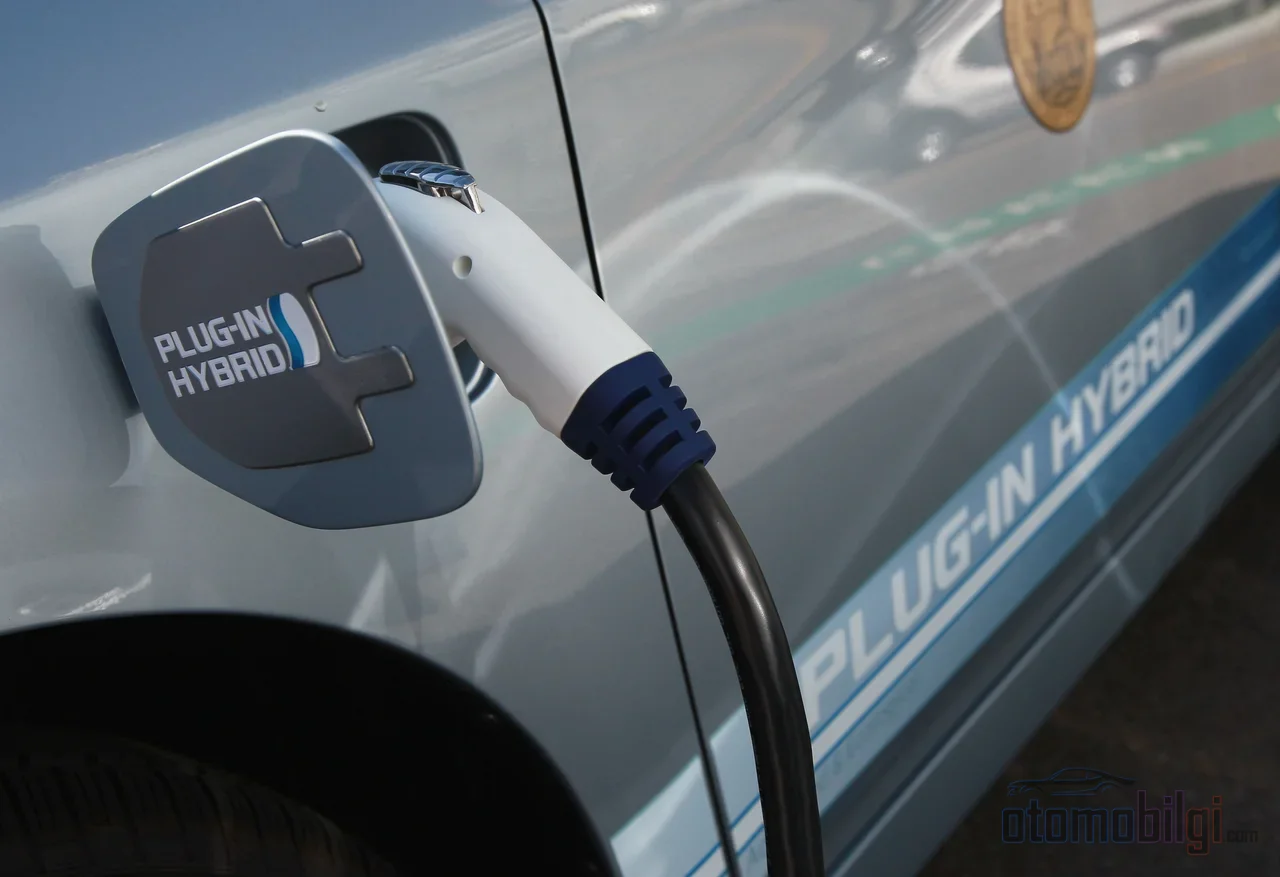
Since a PHEV's battery carries roughly one-sixth the energy of an EV battery, charging is fast and creates no infrastructure burden. Most PHEVs charge overnight even with a household outlet (low current, similar to a standard 120-volt outlet). With a wall-mounted 240-volt (Level 2) station, the time typically drops to 2-3 hours. In other words, PHEV charging demands almost none of the infrastructure investment that EV charging requires.
On the cost side, the difference is even more pronounced. A full charge at home costs around 80 cents, while covering the same electric distance on gasoline can run several dollars. For a user with home charging, the math is one-sided enough to be surprising. For a user without home charging, however, the electric leg of the equation effectively disappears: using a public station every night is not practical, and this is exactly where the PHEV's main advantage begins to erode.
The question of frequency depends on daily distance. If the daily route exceeds the electric range, charging every night is necessary; if the range covers two days' needs, charging twice a week may suffice. Flexibility is inherent to the PHEV, but the value of that flexibility depends on having access to a plug.
Under Which Usage Profile Is a PHEV Truly Economical?
The answer rests on two variables: daily distance and access to a plug. The electric range band is 32-80 km in most models; the average driver covers about 50 km per day. So for a driver whose daily traffic stays within the city and who can plug in at home every night, a PHEV completes most trips on electricity - "the best of both worlds" is exactly this. In the US market, as of 2026, nearly three dozen PHEV models are on sale; the abundance of options works in favor of the buyer who matches the right profile.
On the money side, caution is warranted. Ownership cost analyses show that a PHEV either earns no money for most drivers in the first few years of ownership or never earns it back - what makes the difference is whether the electric km ratio can be kept at the expected level. Reliability data also notes in the same direction: PHEVs report significantly more reliability problems compared to standard hybrids and pure gasoline cars. The source of the problem is largely the complexity of the two drivetrains; however, most complaints concern the software of additional features such as scheduled charging and the app-based cabin pre-heating. Complex technology, when not plugged in, charges its price as pure mass.
A Practical Checklist for the Decision
- Is your daily distance within the electric range (32-80 km)? If so, a PHEV makes sense.
- Do you have access to a plug every night? If not, a full hybrid is usually a smarter choice.
- Is most of your route long highway travel? The electric range's contribution remains limited, a full hybrid may be sufficient.
- Do you find it sustainable to keep the charge in the 20-80% band? It is important for battery life.
- If you know you cannot maintain the plugging-in habit, do not pay for the extra battery.
Conclusion: The Plug Is the PHEV's Only Profit Factor
An uncharged PHEV is not a faulty vehicle, but a mismatched one. It works flawlessly technically, its battery is not damaged, it does not leave you stranded. But the extra battery cost you paid, the extra mass you carry, and the complexity of the two drivetrains go uncompensated; consumption falls behind that of a similar full hybrid. A PHEV more than pays back its money for the driver whose daily distance matches the electric range and who makes plugging in a habit. For everyone who cannot establish that habit, the answer to the problem is already ready in the market: a plugless, lighter, and cheaper standard hybrid.
Sources
- What Happens If You Never Charge Your Plug-In Hybrid? - Car and Driver
- Do You Have to Charge a Hybrid Vehicle? - Mazda USA
- What's the Difference Between Hybrid and Plug-In Hybrid? - Toyota.com
- Real-world usage of plug-in hybrid vehicles in Europe - ICCT
- Do People Actually Charge Their Plug-In Hybrids? - The Autopian
- Will a Plug-In Hybrid Save You Money? - Consumer Reports
- Is a Plug-In Hybrid the Right Car for You? - Consumer Reports
- Hybrid vs. Plug-in Hybrid Cars: What's Right for You? - Edmunds
- Is a Plug-In Hybrid Right for You? - GreenCars
- Plug-In Hybrid Ownership Costs: What to Expect - GreenCars
- Hybrid Battery Health: 7 Pro Tips - Kelley Blue Book
- EV Battery Health: Key Findings from 22,700 Vehicle Data - Geotab
- How Often Should You Charge a PHEV? - DEC-Elec
- Should I Choose a Plug-in Hybrid without Home Charging? - DG Motors
- Real-world PHEV battery-only usage study - Mach-E Forum