How Long Does a Hybrid Battery Last, and How Much Does Replacement Cost?
Share This Page
Hybrid batteries last on average 8–15 years or 160,000–320,000 km or thereabouts, and in most cases they outlive the vehicle's engine; the warranty period in the 160,000 km band is not the battery's expiration date, only the manufacturer's minimum limit of responsibility. When replacement is needed, the cost varies over a wide range depending on the pricing model, and the refurbished battery option changes the picture significantly.
Highlights
- Toyota hybrid batteries on 2020 and later models come with a 10 year / 240,000 km warranty.
- In well-maintained Toyota hybrids, 320,000–480,000 km of life is observed; documented taxis have exceeded 480,000 km on the original pack.
- Out-of-warranty replacement in most mainstream hybrids, with fixed labor, is $2,000–4,000, with the general range being $2,000–8,000.
- A quality remanufactured battery can cost a fraction of a new unit: example price for a Prius is $1,299.
- On the used market, 85% and above capacity (SoH) is generally considered healthy.
How long does a hybrid battery actually last?
Short answer: longer than you expect. The typical battery life in Toyota hybrids is 240,000–320,000 km for the average owner, rising to 320,000 km and above in well-maintained vehicles. It is known that this figure is seen at 480,000 km or even higher in high-mileage fleet use, and that documented Prius taxis have traveled over 480,000 km on their original packs. Honda hybrids show a slightly more modest profile: typical range is 160,000–240,000 km, though some users have reported exceeding 320,000 km.
As a general band, we can say that most hybrid batteries offer 8–15 years or 160,000–320,000 km of life in most vehicles. The key point is this: unlike lead-acid batteries, hybrid batteries are specifically designed to withstand repeated charge-discharge cycles. Thanks to regenerative braking, the pack experiences small, gentle cycles at every stop; this is far less wearing than deeply draining and refilling the battery each time. In many cases, it is no exaggeration to say that a hybrid battery will outlive the vehicle itself.
Where does the "it dies at 160,000 km" myth come from?
The source of this belief was that early hybrid battery warranties were 8 years / 160,000 km . A warranty indicates the period for which the manufacturer guarantees the component, not the point at which the battery's life is expected. US federal law already mandates a minimum 8 years / 160,000 km warranty for high-voltage batteries in all hybrid and electric vehicles - meaning this figure is the legal floor, not the technology's ceiling. Toyota gradually expanded coverage as field performance improved, which is the most concrete indicator of the manufacturer's confidence in its own data.
What periods and conditions does the warranty coverage include?
The picture across brands is improving rapidly. If we compare the most commonly encountered values:
| Manufacturer / Coverage | Battery Warranty | Note |
|---|---|---|
| Toyota (pre-2020) | 8 years / 160,000 km | Older standard band |
| Toyota (2020 and later) | 10 years / 240,000 km | From first use; other high-voltage components are covered under an 8-year / 160,000 km hybrid system warranty |
| Hyundai (2026 Sonata Hybrid) | Lifetime / subsequent owners 10 years / 160,000 km | Lifetime coverage for the original owner |
| Legal minimum (US federal) | 8 years / 160,000 km | Usually applied as a capacity warranty |
| California (from the 2026 model year) | 8 years / 160,000 km | Regulation covering plug-in hybrids as well |
Pay attention to two technical details. First, these warranties are mostly capacity warranties: coverage applies to abnormal capacity loss, not complete pack failure. Toyota's full electric battery warranty defines this explicitly - abnormal losses that fail to deliver at least 70% of the original capacity are covered by the warranty. Second, the warranty period runs from first use; checking the remaining period via the VIN should be among the first steps for a used-car buyer.
How much does an out-of-warranty battery replacement cost?
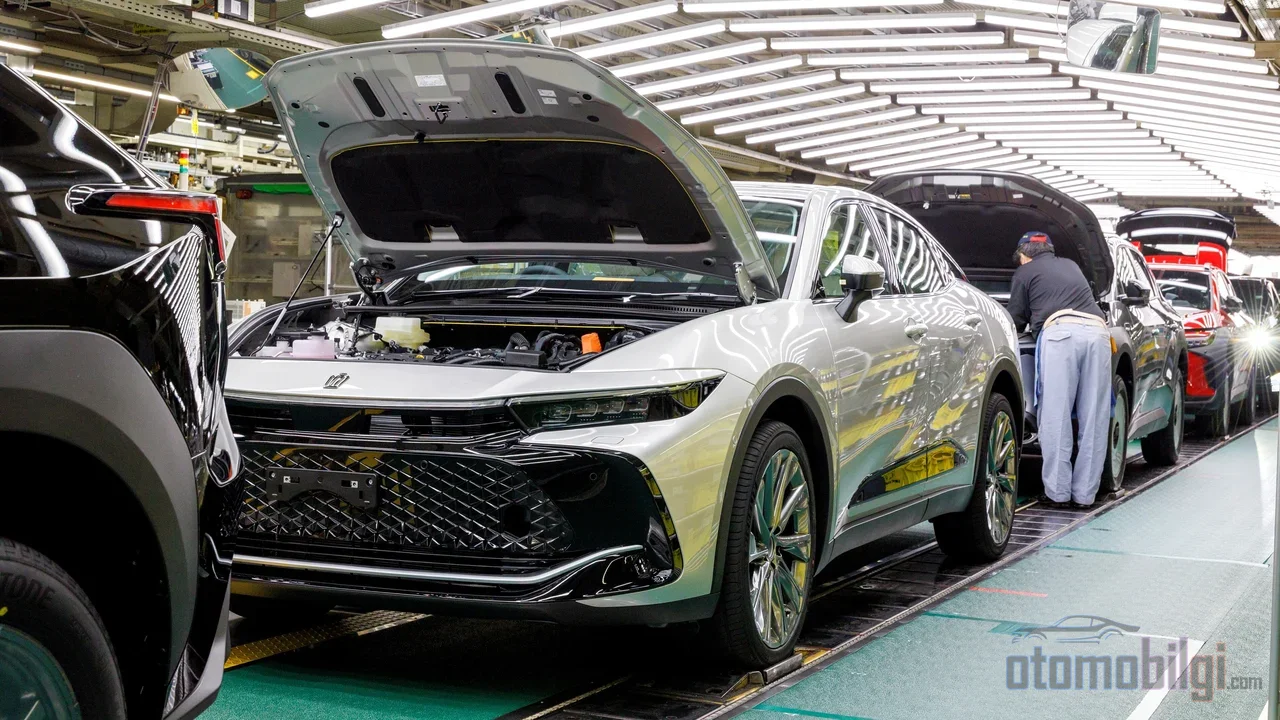
For an out-of-warranty replacement, the average range varies by model between $2,000-8,000 ; most mainstream hybrids stay in the $2,000-4,000 band including installation labor. New batteries from dealers are at the $3,000-8,000 level, while packs removed from used or scrapped vehicles can be found installed at a noticeably lower figure such as $800-2,500 . Prices have generally trended downward in recent years, but they should still be planned as a recorded cost.
An illustrative example: Toyota Prius (2010-2015), a quality remanufactured unit costs $1,299, while a new battery with a four-year warranty is $2,249. New batteries usually come with their own warranty protection; for example, services offering a 3-year battery warranty are common. For comparison, it is worth noting that an out-of-warranty battery replacement in fully electric vehicles starts at roughly $12,000-20,000 - different technology, different pack size, but this comparison makes it clearer how relatively reasonable the hybrid side is.
Is a remanufactured battery a sensible option?
Remanufactured batteries are the main factor that changes the economic equation of a high-mileage hybrid: the upfront cost stays well below that of a new unit, and quality remanufacturers offer module-level tested, balanced packs. On the other hand, the weak point is clear: despite the low upfront cost, remanufactured batteries may lack the full warranty protection and after-sales support of new batteries. The decision formula is simple: if the rest of the vehicle is in good condition, replacing the battery is almost always more economical than buying a new car, and the replacement can also increase the vehicle's second-hand value.
How do you notice a weakening battery?
A hybrid battery doesn't die overnight; it is a slow and measurable process of degradation. Recognizing the symptoms makes it possible to catch a small problem before it turns into a major failure:
- Illumination of the hybrid system warning light; battery failure often check engine light as well.
- A noticeable increase in fuel consumption - the most everyday and clearest indicator of degradation.
- The vehicle switching from electric mode to gasoline mode earlier and more often than normal.
- Rapid and harsh fluctuations on the battery gauge; when the modules become unstable, the gauge jumps repeatedly.
- Sluggish acceleration, reduced electric range, and the engine running unusually frequently.
- The cooling fan running almost constantly, along with charging problems, reduced range, or strange noises.
Seeing one item from this list is not a cause for concern, but seeing two or three of them together is a clear sign that the vehicle needs a service inspection.
Factors that shorten battery life and risks you can prevent
Battery degradation is largely a thermal problem, so the variables you can control are mostly related to temperature and usage patterns:
- Excessive heat: In hot climates, battery life shortens; parking in the sun for long periods puts extra thermal stress on the pack.
- Blocked cooling vent: When the cooling intake that draws cabin air becomes clogged with dust, hair, and pet fur, airflow is restricted and the battery heats up. Periodic vent cleaning is a simple but effective maintenance step that takes only minutes.
- Prolonged inactivity: Hybrid batteries demand regular use. In a vehicle left parked for months, the pack self-discharges; the modules may become unbalanced or suffer permanent damage. Regular driving is beneficial for the battery.
A separate note for plug-in hybrid owners: frequent Level 3 DC fast charging can reduce battery life. Keeping charging on the AC side as much as possible is the simplest way to keep the pack's stress level low.
Does regenerative braking wear out the battery?
The picture on this subject is nuanced. A peer-reviewed study published in a journal that conducted cycle tests on 200,000 km shows that regenerative braking extends battery life by reducing cycle depth. However, the abstract of the same study indicates that long-term regen charging current is a significant factor in degradation, regardless of current magnitude. The practical interpretation is this: in normal use, regenerative braking is not considered harmful to the battery; it contributes to the cycle but does not create damage-level stress in daily driving. Rather than worrying, it is more appropriate to view this energy recovery as a gift.
How to assess battery health when buying a used hybrid?
In a used car purchase, the battery is a single component even more critical than the engine and transmission combined. A systematic checklist:
- Measure the SoH value: State of Health (capacity health) 85% or above if the pack is generally considered healthy. Dealer software or a good OBD-II scanner can read the usable capacity.
- Check cell voltages: Cell-based voltage balance can be read with an OBD-II scanner; a full system scan is recommended.
- Look at warning lights: During a test drive, if the check engine or hybrid system warning is active, walk away or turn it into negotiation leverage.
- Evaluate age and mileage together: Of two vehicles with the same mileage, the older one usually has a more worn-out pack.
- Query the warranty status with the VIN: Especially for 2020 and later Toyota hybrids, the remaining 10 years / 240,000 km coverage is one of the vehicle's most valuable assets.
A real-world example shows how the math works: the owner of a 2008 Prius evaluated the replacement options when the vehicle 164,000 miles (approximately 264,000 km) suffered a battery failure - even at that mileage, the rest of the vehicle was seen as an asset worth the battery replacement. This sums up the long-term economics of hybrid ownership.
Summary: How should you do the math?
When you put the data side by side, the picture becomes clear. A typical hybrid battery 160,000-320,000 km comfortably exceeds the range, and in Toyota hybrids from 2020 and later this entire distance is covered by warranty, and even if you fall out of warranty, the replacement cost stays around $2,000-$4,000 in most mainstream models - and drops even lower with a refurbished battery option. Protect it from extreme heat, keep the cooling vents clean, and don't leave the car idle for long periods; the rest of the time, the pack will likely quietly do its job until you sell the car.
Sources
- Toyota Hybrid Battery Lifespan: How Long Do They Really Last?
- What hybrid warranty coverage do I have on my Toyota?
- How Long Does a Toyota Hybrid Battery Last?
- Toyota Hybrid Battery Warranty Explained
- Toyota EV Hybrid Battery Warranty
- Car Warranty Coverage for Hybrid and EV Batteries
- Section 1962.8, Title 13, California Code of Regulations
- 2026 Sonata Hybrid Battery Warranty: What It Really Covers
- Hybrid Battery Replacement Cost
- How Often to Replace a Hybrid Battery
- Used Hybrid Battery Replacement Cost
- Best Extended Warranty for Hybrid Vehicles (2026)
- Effect of Regenerative Braking on Battery Life
- Does Regenerative Braking Wear Out Your Battery?
- Signs of a Hybrid Battery Dying
- Signs That Your Hybrid Battery Is Dying
- How To Buy A Used Hybrid Without Getting Burned
- Why You Should Always Check Battery Health Before Buying
- Buying a Used Hybrid? Check the Battery First
- How to Check Hybrid Battery Health
- Hybrid Battery Health: 7 Pro Tips
- How Long Do Hybrid Batteries Last in Used Cars?
- How Long Do Hybrid Batteries Actually Last?
- Is Hybrid Battery Replacement Worth It?
- Common Misconceptions about Remanufactured Hybrid Batteries
- Deciding Between New vs Reconditioned Batteries
- Electric Car Battery Replacement Cost Explained
- Electric Car Battery Life
- How Long Should a Hybrid Battery Last?
- Battery Longevity for Hybrid cars