Why Do Toyota, Honda and Hyundai Hybrids Work Differently?
Share This Page
Beneath two vehicles wearing the same "full hybrid" label, completely different powertrain architectures can operate: Toyota splits the power with a planetary gear set, Honda mostly works like a series hybrid and connects directly to the engine at high speeds, while Hyundai sets up a parallel arrangement with a single electric motor placed between the engine and the transmission. This architectural difference determines everything from driving feel to fuel consumption. Comparing the three systems by understanding how they work explains why two hybrids that look the same in the brochure turn into completely different vehicles on the road.
Highlights
- Toyota Hybrid Synergy Drive uses a single planetary gear set instead of a conventional transmission.
- Honda i-MMD operates like a series hybrid at low speeds; engine lock-up mode connects the engine directly to the wheels.
- Hyundai improves power and efficiency with a P2 parallel architecture integrated into the transmission.
- In full hybrids, city consumption is generally better than highway consumption; the Prius can reach 4.3 L/100 km in the city.
Why Do Toyota, Honda and Hyundai Hybrids Work Differently?
The answer to the question lies in one word: architecture. All three manufacturers meet the definition of "a hybrid that can run on electric power," but their decisions about when and how electricity and the gasoline engine reach the wheels are radically different. Toyota leaves this decision to a mechanical power-splitting device, Honda to a software-managed dual motor, and Hyundai to a single motor and clutches. At the same traffic light, on the same hill, the engines of the three vehicles engage at different moments; this directly changes the sound you hear, the response the accelerator pedal gives, and the consumption shown on the dashboard computer.
Another reason for the confusion is classification. Most hybrids on the market are mild hybrids and can never run on electricity alone. The fundamental distinction between full hybrid, plug-in hybrid and mild hybrid is the ability to drive fully electric. On this page, we compare the full hybrid solutions of the three brands, that is, the systems that can truly move on electricity alone.
Toyota: Power Splitting with a Planetary Gear Set
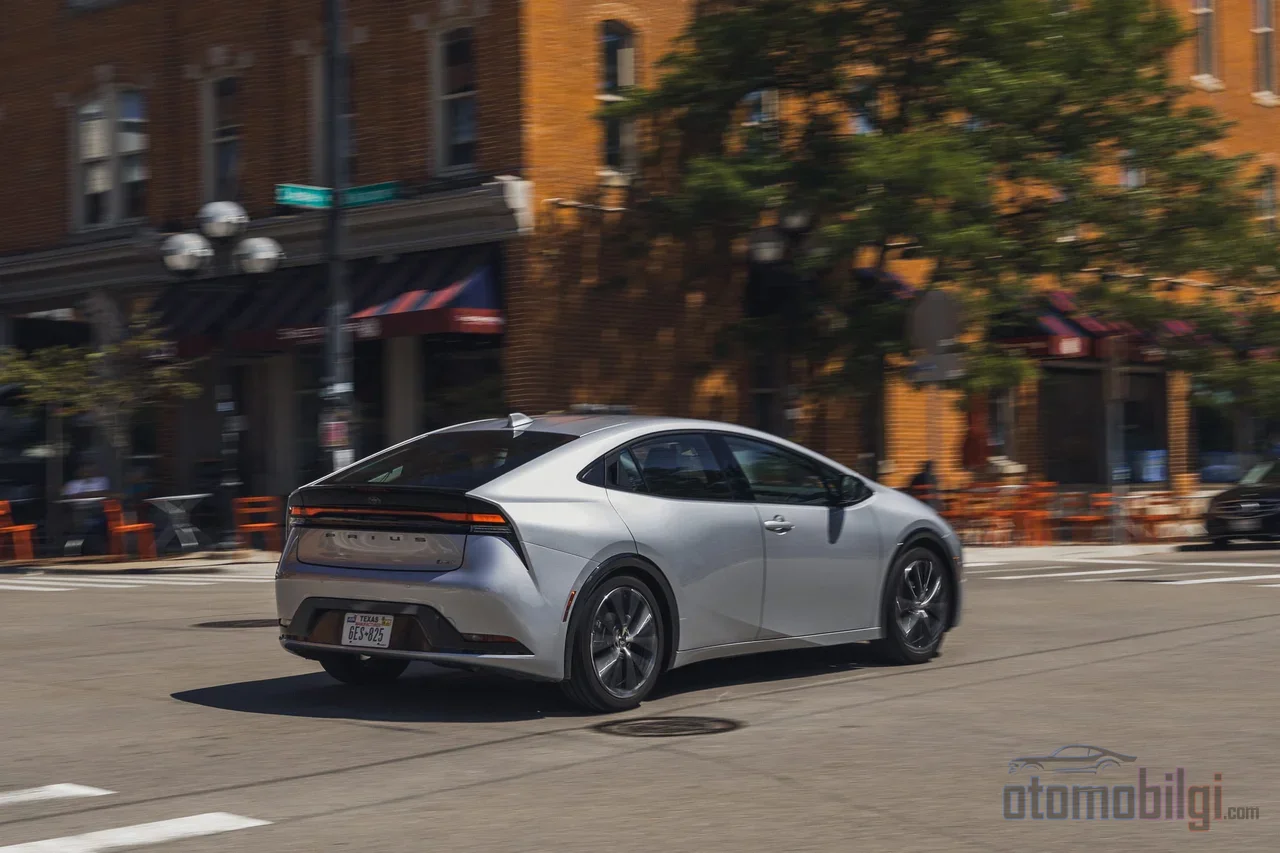
Toyota's Hybrid Synergy Drive, first introduced on the Prius as an improved version of the system first used in the second-generation Prius in 2004, then appeared on the 2006 Camry and Highlander. At the heart of the system there is no conventional transmission; instead, there is a single, compact planetary gear set - that is, a power-splitting device. This single component also eliminates the conventional transmission, the alternator and the starter motor. The power of the internal combustion engine can be split into three directions thanks to the planetary set: extra torque to the wheels, extra speed at the wheels, or power to turn the generator.
The system uses two motor-generators. MG1 mostly serves as a generator: it starts the engine, charges the battery, and controls the continuously variable ratio of the e-CVT through its own torque and speed. MG2 is the main traction motor and is generally more powerful; it reverses during braking and acts as a generator. In the third generation, connecting MG2 through a 2.5:1 planetary gearset allowed the use of a smaller but more powerful motor and reduced situations such as MG1 over-revving.
The result is a continuous flow of torque in which the driver never feels gear changes. The system operates drive-by-wire: the accelerator pedal and gear selector have an electrical, not mechanical, connection to the motor. The control logic is based on a simple engineering goal - keeping the gasoline engine always at its most efficient operating point, that is, in the optimal fuel consumption zone. When power demand changes, the battery provides the quick balance, while the engine slowly adapts.
Honda: Mostly Series-Operating Dual-Motor i-MMD
Honda's i-MMD, later renamed e:HEV, is technically a series-parallel hybrid carrying dual motors in P1+P3 positions. Its core consists of an Atkinson-cycle gasoline engine, a clutch, and two motors arranged in a three-axis layout; in the first three generations these motors were mounted on the same line (in-line). According to Honda's own definition, unlike series-parallel systems that adjust the engine ratio according to driving conditions, e:HEV prioritizes efficient electric traction.
In practice this means: in the city, the vehicle operates largely like a series hybrid. The gasoline engine does not turn the wheels; it works as a generator, and the electricity it produces feeds the traction motor. Since there are no gear changes, acceleration is smooth, and the vehicle's sound depends not on speed but on the electric motor's behavior. On the highway, however, the system changes its tune: in the direct-connection mode called engine lock-up, the engine locks to the transmission together with the electric motor, and the two sources pull the vehicle together. Series at low speed, parallel at high speed - Honda's hybrid is defined by this dual character.
Hyundai: P2 Parallel Architecture Integrated into the Transmission
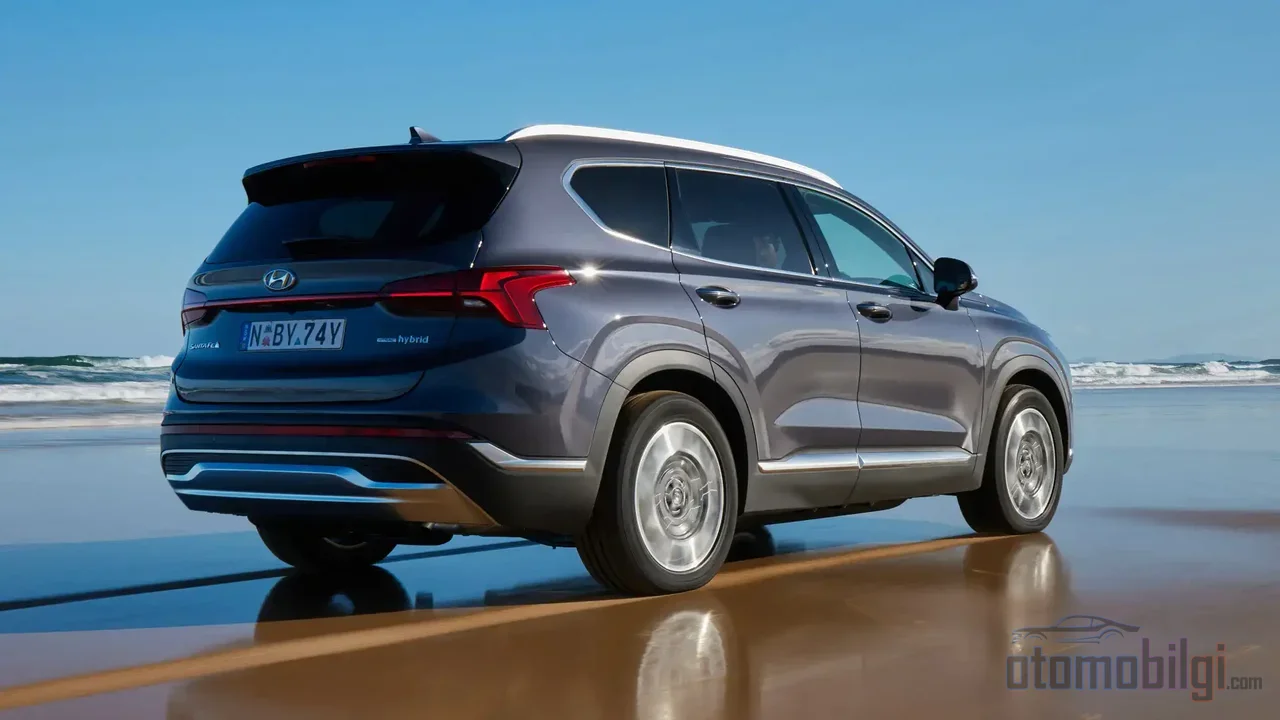
Hyundai's path is a more linear hybridization strategy. Sonata hybrid is documented as a classic P2 design with an integrated electric motor/generator. The P2 position is the architecture where the electric motor sits between the gasoline engine and the transmission; a second clutch follows the motor, and in a single-motor parallel system this motor can serve both as a generator and as a standalone traction motor. In the new-generation Hyundai system, the P2 traction motor is responsible for drive and regenerative braking; the integrated dual-motor setup improves power and fuel efficiency simultaneously.
The biggest advantage of this architecture is its modularity: the P2 layout can convert an existing gasoline car into a hybrid without changing the engine or transmission. In the off-axis configuration, the motor is placed parallel to the main axis. Since there is a conventional gearbox between the wheels and the gasoline engine, Hyundai's hybrids, unlike Toyota's and Honda's, give the driver a familiar transmission feel - we will evaluate this difference through driving feel in the next section.
Comparison of the Three Architectures: City, Highway and Hill
| Feature | Toyota (power split) | Honda (i-MMD / e:HEV) | Hyundai (P2 parallel) |
|---|---|---|---|
| Basic architecture | Planetary gear set, two motor-generators | P1+P3 dual motor, Atkinson engine | Single P2 motor between engine and transmission |
| City driving | Engine can shut off completely, EV progress via MG2 | Mostly series hybrid: engine is generator, traction is electric | Electric driving and regenerative braking via clutches |
| Highway | Engine splits excess torque through the power split device | With engine lock-up, the engine connects directly | Parallel: engine and electricity pull together |
| Gear feel | e-CVT: continuous, no gears | Mostly no gears, electric torque | Conventional transmission, familiar feel |
| Hill / acceleration assist | Planetary set keeps the engine in its efficient region | Electric traction prioritized during acceleration | Engine assists with climbing and overtaking |
What happens in stop-and-go traffic?
The true stage for hybrids is the city. Regenerative braking recovers energy at every stop, the engine shuts off when the vehicle is stationary, and electricity kicks in at launch. That is why hybrids achieving better city consumption than highway consumption is not a paradox but a natural outcome - contrary to popular perception. In a Toyota, the engine can be completely shut off at traffic lights; at low speeds and moderate torque the vehicle moves forward solely via MG2 without ever running gasoline. With sufficient battery charge, fully electric driving up to around 1.6 km is possible below 40 km/h. In a Honda, city driving is already the system's default mode; the engine mostly just generates electricity. In a Hyundai, clutch control manages these transitions.
What changes at constant highway speed?
At constant high speed, regenerative braking is nearly nonexistent and the hybrid advantage narrows; still, all three systems can remain more efficient than gasoline cars. Toyota uses the flexibility of its planetary set here: even if the engine spins slower than the wheels, it produces more torque than needed; the excess torque is absorbed by MG2, power is fed to MG1 acting as a motor, and the wheel speed is increased. The engine thus stays in its efficient region. Honda's most efficient answer is to lock the engine directly to the wheels, because at high speed the electricity-back-to-electricity cycle adds losses. In a Hyundai, the engine works with a direct mechanical connection; the parallel architecture is the structure offering the fewest intermediate layers in this scenario. Under medium-high speed conditions, power split systems stand out as the primary strategy thanks to their high flexibility; in mixed driving conditions, power-split systems combining series and parallel deliver the highest efficiency.
Is the difference noticeable on hills and hard acceleration?
Yes, and this is where the architectural difference becomes most tangible. In parallel systems the electric motor provides acceleration and climbing assistance to the gasoline engine; the engine stays in its efficient region and a smaller engine can be used thanks to this assistance. Hyundai's single P2 motor does exactly this job: when the pedal demands it, electric torque is added, and the feel resembles a more conventional car. In Honda, acceleration mostly comes from the traction engine, and this is considered to give Honda's hybrids a strong character, especially at the moment of acceleration. In Toyota, on a hill, the instant power split among the three power sources is reflected to the driver as seamless but "hidden" support; the character of the sound may not match engine speed as much as the request, because the system holds the engine at a speed based on efficiency rather than demand.
The Numerical Basis of Efficiency Differences
The architectural choice produces measurable results in fuel consumption. A comparative academic analysis shows that the P2 parallel architecture delivers 6.68% fuel savings compared to P1; in proposed advanced architectures the improvement is even greater. On the Toyota side, the Prius performs noticeably above 5.9 L/100 km in city driving, and values of 4.3 L/100 km can be seen - roughly twice the efficiency of a conventional sedan of similar size. Part of this success is attributed not to the power-split system but to the Atkinson cycle in the engine itself; Honda's i-MMD also uses the same cycle.
A small example shows how critical the detail is: in systems like P2.5, clutch control directly determines driving quality; when the clutch engagement is softened, acceleration can be reduced from 2.9 m/s² to 1.5 m/s². In other words, even within the same architecture, software tuning can double or halve the feel the pedal delivers. The hybrid transmission type is the single most decisive component simultaneously affecting fuel efficiency, emissions, and the driving experience.
The common logic on the battery side
None of the three systems tries to fully charge the battery. In Toyota, the charge range is limited to 40-80% for the life of the NiMH or lithium-ion pack; in the third-generation Prius, only 40% of the 6.5 Ah capacity was usable. This explains why battery anxiety in fully electric vehicles is less of a problem in hybrids: the pack operates in a narrow, controlled range, delaying fatigue.
Which Hybrid Architecture Is More Suitable for Whom?
If your daily route is mostly stop-and-go traffic, all three architectures pay off thanks to regenerative braking and electric progress; the difference lies in feel and character. Toyota's power-split system appeals to drivers seeking uninterrupted torque flow and proven efficiency; its long hybrid history and fuel economy advantage in certain areas have matured this system. Honda's i-MMD wants the smoothness of electric drive in the city and the efficiency of the mechanical direct connection on the highway - an approach that tries to combine the best of both worlds in a single package. Hyundai's P2 architecture, on the other hand, offers a sensible balance for those who value the familiar transmission feel and modularity. There is no official answer to the question of "which is better"; the right question is which architecture's strong scenario matches your own route profile.
Sources
- Hybrid Synergy Drive
- Hybrid vehicle drivetrain
- e:HEV - Original Honda Hybrid System
- Honda Two-Motor Hybrid-Electric Powertrain
- NextGen Hybrid Power: Hyundai Motor Group
- P2 Hybrid Architecture
- Comparison of power-split and parallel hybrid powertrain (Yang 2016)
- Research on drivability control in P2.5 hybrid system (Jing 2021)
- A Review of Hybrid Vehicles Classification (Pan 2025)
- Why Do Hybrids Get Great City Gas Mileage?