How to Test the Battery When Buying a Second-Hand Hybrid?
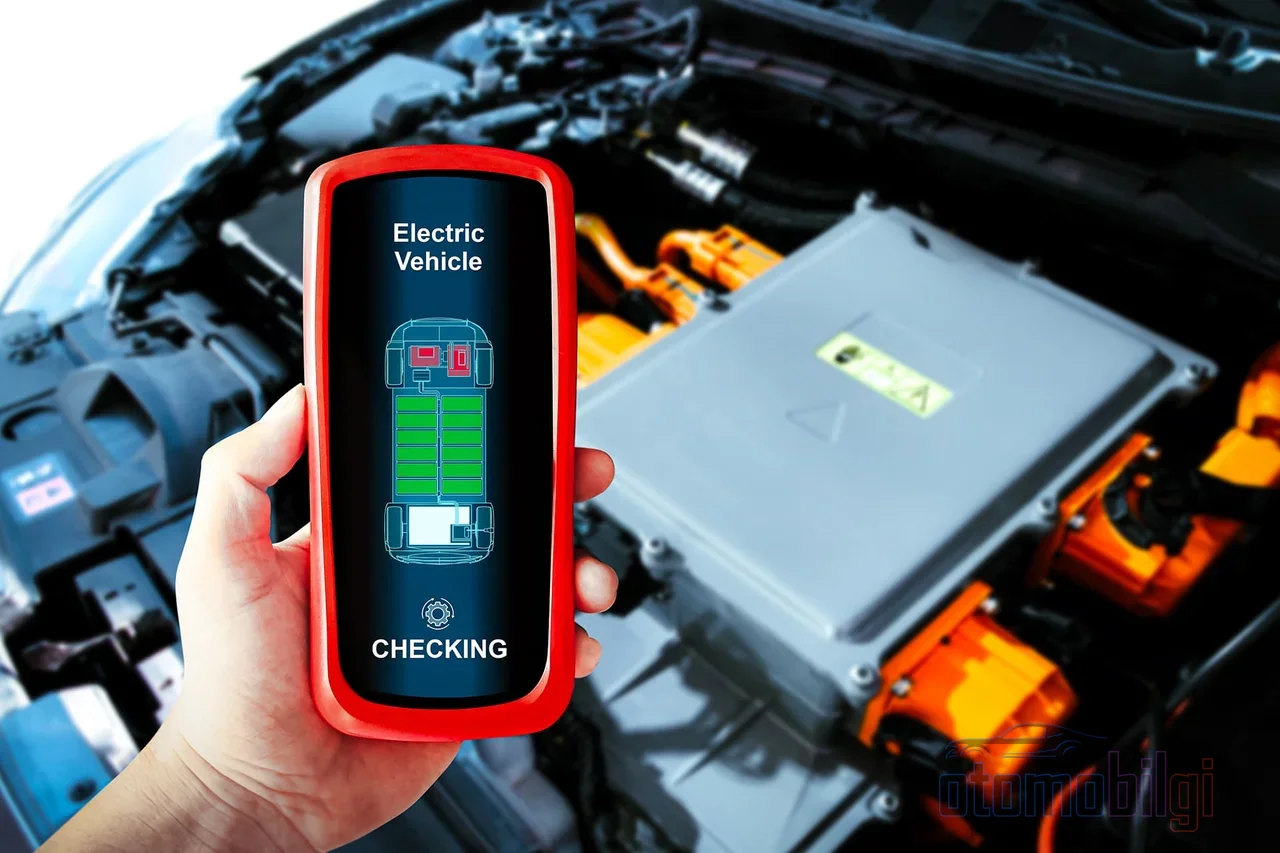
In the used hybrid market, the most expensive risk item is often not the engine, but the high-voltage battery. The car may have 80,000 kilometers on it, look spotlessly clean, and have a proper service history; but the battery's true state of health cannot be read from the gauge, detected by smell, and often does not reveal itself even during a test drive. Since a new pack can turn into a line item of anywhere between $2,000 and $8,000, the few hours of inspection you do before the purchase decision can change the entire price of the car. This guide walks you through that inspection step by step, with measurable threshold values.
What Does Battery Health Mean: The Difference Between SOH and SOC
There are two fundamental measures of battery evaluation, and they are often confused. SOC (State of Charge) shows how much electricity remains in the cells at that moment; it is the electric equivalent of the fuel gauge in the tank. SOH (State of Health), on the other hand, is the ratio of the battery's remaining total capacity compared to its new condition. The measure that concerns the purchase decision is SOH: a battery can have lost a large portion of its capacity even when fully charged.
The practical threshold values are as follows: SOH is expected to be above 60-70%. Between block voltages, that is, between the cell pairs making up the battery, the difference between the highest and lowest block under static conditions should remain below 0.15V in a balanced NiMH pack; a difference between modules typically not exceeding 0.3V is also considered acceptable. Internal resistance per module should ideally be below 25 milliohms. These three numbers are the backbone of the report you will get from a professional scan.
Key Highlights
- In a healthy battery, SOH should be above 60-70%, block voltage difference below 0.15-0.3V, and internal resistance below 25 mΩ.
- A noticeable and persistent increase in fuel consumption is one of the earliest signs of battery degradation.
- The Toyota hybrid battery warranty is tied to the vehicle's VIN number and is transferred free of charge to subsequent owners: from the 2020 model year onward, 10 years / 150,000 miles.
- A battery test at a dealer typically costs $100-250; a full replacement falls in the $2,000-8,000 range.
- Do not proceed with a car showing a hybrid warning light until the diagnosis has been documented and the fault resolved.
What Do the Dashboard and Diagnostic Codes Tell You?
The first signals on the panel are assessed in two tiers. The engine malfunction lamp (Check Engine) is a general warning that could also stem from the battery; the Check Hybrid System warning is the most direct indication that the battery has exceeded its fault threshold. There is an important nuance here: the hybrid system warning light does not always mean the battery is dying. The vehicle is reporting that it has detected a problem that needs to be examined. Therefore, the light alone does not decide; the diagnostic data decides.
Diagnostic codes also carry a clear hierarchy. The P0A80 code indicates that the hybrid battery needs to be replaced, codes in the P3011-P3024 range point to specific weak blocks, while P0A7F and P0AFA indicate efficiency loss. A critical point to keep in mind: codes can be cleared. Checking whether old codes have been cleared before buying, and rescanning after a test drive, is essential. Scanning twice in the same day and comparing the difference is the most practical way to reveal a hidden fault.
Reading Battery Condition from Fuel Consumption
A noticeable and persistent increase in consumption is one of the earliest signs of battery degradation. The logic chain is simple: as the weakening battery reduces its electric support, the gasoline engine quietly compensates for the deficit and engages more frequently. This compensation progresses without the driver noticing; the consumption figures, however, do not hide it.
Secondary signs that accompany this are: shortened or completely lost EV-only driving times, harsher transitions between electric and gasoline, a noticeable drop in power during acceleration, and the battery cooling fan behind the rear seat running constantly and loudly. No single sign on its own is a definitive verdict; when two or three signs appear together, that is where you should take hold of the situation and start taking it seriously.
You should also account for measurement errors: Consumption is affected by many factors such as driving style, tire pressure, weather conditions, short-distance use, and air conditioning. Therefore, an increase in consumption alone is not sufficient grounds to reject the vehicle; it must be confirmed with diagnostic data. Just how decisive it is shows in the numbers: A battery charge state remaining around 40-50% compared to average can result in 57% higher fuel consumption and 56% higher CO2 emissions. Battery health means not only range comfort but a direct operating cost.
Step-by-Step Test: From Visual Inspection to Test Drive
Cold Start and Dashboard Check
See the car with a cold engine if possible; the seller may have warmed it up beforehand. Turn the ignition on without pressing the brake and verify that all warning lights illuminate and go out shortly after. A system that refuses to engage the engine during a cold start is one of the most serious red flags.
Visual Inspection
Corrosion on terminals, leaking, swollen or cracked modules, and mismatched, incompatible modules; these are signs that the battery may have been tampered with or undergone a poor reconditioning process. Orange cables belong to the high-voltage line: never remove the covers yourself; this job belongs to experts. Also check that the interior battery cooling vents are not clogged with dust, luggage, or pet hair; clogged cooling prematurely ages even a healthy battery.
Test Drive: Real-World Load Test
During driving, you expect the battery to provide smooth support for acceleration, regenerative braking to be responsive, and the energy monitor to show consistent charge-discharge. If the battery indicator drops abnormally fast or charges faster than normal, the likelihood of imbalance or degradation increases. But also know the limits of the test drive: some forms of degradation are only visible through diagnostic data. Driving is a good screening step, not a definitive diagnosis.
Professional Battery Testing and What You Can Do Yourself
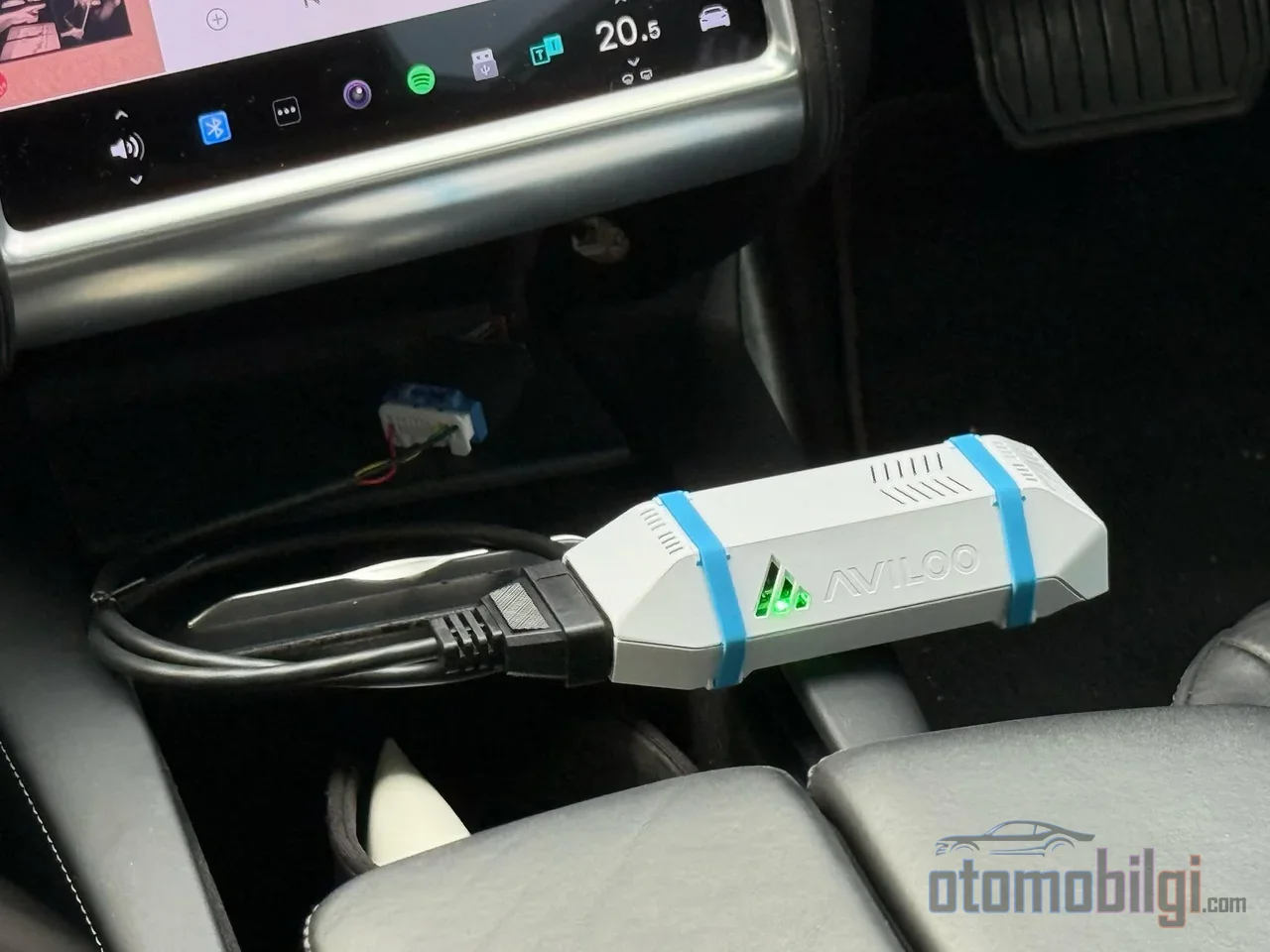
What you can do on your own is limited: gauge check, consumption assessment, listening for sounds, and visual inspection. One step beyond is reading real-time data with a Bluetooth OBD2 scanner and a compatible app; this solution comes at a reasonable one-time cost of around 13-30 dollars. However, while generic OBD2 readers pull standard fault codes, they often cannot read model-specific block voltage and resistance data.
The scope of a professional scan is clear: SOH, block and cell voltage differences, stored and pending fault codes, battery temperature, charge-discharge behavior, cooling fan, inverter and electric motor faults, 12V battery condition, and whether the codes were recently cleared. Some services read the battery ECU data in about a minute and provide a health score and condition grade. On the cost side, a dealer scan typically runs 100-250 dollars, independent hybrid specialists range from free up to 150 dollars, and mobile diagnostic services operate around 300 dollars. A seller who does not allow an independent inspection before purchase is in itself a standalone risk sign.
Always request a written report from the scan. The report is the documented basis for both your purchase decision and your price negotiation.
Warranty Transfer: The Remaining Term Is Part of the Price
Toyota extended the hybrid battery warranty to 10 years / 150,000 miles (whichever comes first) from first use, starting with the 2020 model year. The critical point is the transfer condition: the warranty is tied to the vehicle's VIN number and is transferred in full to subsequent owners for the remaining term without any additional fee. This is a direct value item for the used buyer; a vehicle whose battery warranty is still active is objectively more valuable than one sold at the same price with an expired warranty. On the other hand, in the US market the powertrain warranty drops to 5 years / 60,000 miles for the second owner. For electric models, Toyota covers a drop below 70% capacity for the traction battery under 8 years / 100,000 miles.
Practical rule: request the warranty terms in writing and verify them via the VIN with the manufacturer or dealer. The seller's verbal statement is not a warranty document.
Inspection Differences by Hybrid Type
A full hybrid operates without being plugged in, with a relatively small battery, and recharges itself through regenerative braking. A mild hybrid (MHEV), on the other hand, has a much smaller battery; requires no external charging, assists with acceleration, and reduces emissions. This smallness also makes things easier on the control side: in mild hybrids, battery risk and depth of control are a lower-cost item compared to full hybrids. Plug-in hybrid (PHEV), on the other hand, carries a much larger capacity battery and more powerful electric motors, requires external charging, and offers longer range on electricity alone.
The additional controls specific to PHEVs are: the charging cable being correct and complete, the charging port being undamaged, the charging schedule working, and the vehicle accepting a charge without errors. Always test EV-only driving in person. When comparing prices, also keep full hybrids, PHEVs, and mild hybrids in separate categories; comparing them under the same heading misleads both consumption and battery assessment.
Questions to Ask the Seller and Red Flags
The questions to put to the seller can be reduced to a short list:
- Has the high-voltage battery ever been repaired or replaced? What work was done?
- Is the battery original, or is it a module replacement, reconditioned, or remanufactured?
- Was the hybrid system serviced by a specialist, and which shop did the work?
- Is the battery warranty still valid?
- Was the vehicle used as a taxi, courier, or delivery vehicle?
- Is there a record of flood or accident damage?
- (For PHEVs) Are all charging cables and equipment included?
In battery history, the distinction between these terms matters: module replacement, electrical repair, reconditioning, and full replacement have different cost and reliability profiles. Ask for an invoice; an undocumented repair story should add a question mark to your assessment, not data. The red flag list is consistent too: an illuminated hybrid warning light, an erratic battery gauge, a constantly loud fan, traces of moisture and corrosion, unexplained service gaps, mileage that does not match the documents, explanations that attribute everything to a sensor without documentation, a price clearly below similar vehicles, and the seller not allowing an independent inspection. Also remember that the periodic technical inspection does not measure battery capacity; repeated failures in the inspection history can be a clue, but it is not a battery health certificate.
Turning Findings into a Decision: Negotiate or Walk Away
So, how do you test the battery when buying a used hybrid, and what do you do with the results? The summary answer is this: you screen with warning lights and consumption trends, confirm with a test drive, measure with an OBD scan or a professional battery test, confirm the warranty transfer in writing, and reflect the report in the price. Your measurable reference points are ready: SOH above 60-70%, block voltage difference below 0.3V, internal resistance below 25 milliohms.
If the report is clean and the warranty transfers, you can evaluate the vehicle with confidence. If the SOH is borderline or the difference between blocks is wide, you have a concrete basis for a price negotiation: full replacement runs in the 2,000-8,000 dollar range, while targeted repair of weak modules or reconditioning is far cheaper; you can carry the difference into your negotiation. If the warning light is on, undiagnosed, or the codes have been suspiciously erased, the right call is usually not to negotiate but to walk away. Original batteries older than 8-10 years may be approaching the end of their life even without a service history; age is as decisive a variable as mileage.
Do not limit the check to the purchase: repeat the scan roughly once a year after buying, and at every warning sign. Battery health is not a one-time check but a parameter to monitor throughout the entire ownership; this monitoring, which starts off well, is the foundation of using the car for many years with low running costs.
Sources
- How to Evaluate a Hybrid Vehicle & The Hybrid Battery Before Purchasing
- How to Check Toyota Hybrid Battery Health
- How to Check a Used Hybrid Car's Battery and Hybrid System
- How to Check Battery Health Before Buying a Used Hybrid
- Why You Should Always Check Battery Health Before Buying A Used Hybrid
- Toyota Battery Warranty
- The Pre-Owned Hybrid Battery Inspection Protocol
- What are SOC and SOH of a battery