How Much Energy Does Regenerative Braking in Hybrids Actually Provide
Share This Page
Regenerative braking in a hybrid car recovers about half of the kinetic energy that would otherwise be lost during braking, which translates into an efficiency gain of around 10-25% in real-world use. The gain is not a fixed figure: in stop-and-go traffic it becomes a decisive engine of savings, while its contribution drops noticeably during highway driving. So there is no single answer to the question "how much fuel does braking energy save?"; the answer depends on where and how you drive.
Key Takeaways
- Regenerative braking recovers about half of the energy lost during braking; this corresponds to a 10-25% efficiency gain.
- City driving can recover roughly three times more energy than highway driving.
- In a typical urban trip (with frequent stops covering 30 km), 5-10 km of range recovery is possible.
- When the battery is full, regeneration drops and can even be cut off completely; the friction brakes take over the job.
- With correct use, brake pad life is significantly extended; in some hybrids, pad and rotor life can exceed 200,000 miles. or more.
How Braking Energy Is Converted into Electricity: Step-by-Step Working Principle
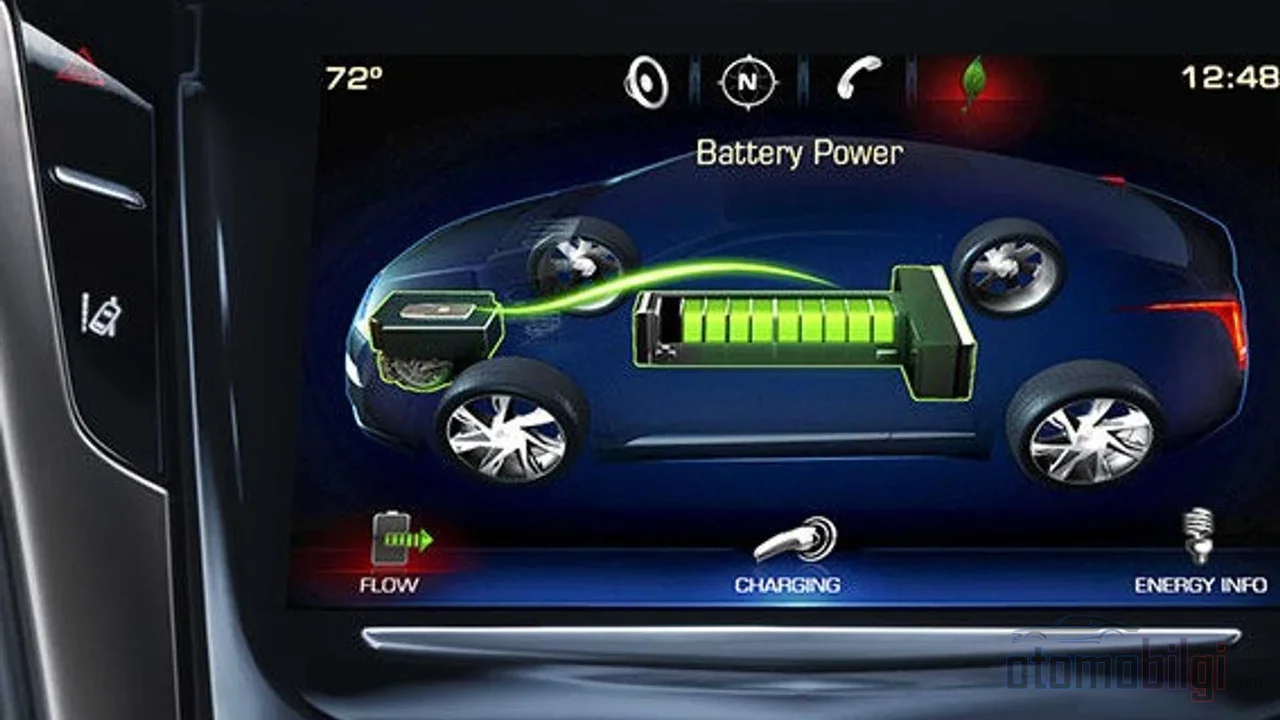
Let's build a logical chain. Slowing down any vehicle means disposing of the kinetic energy the vehicle carries. In a conventional braking system, this energy is converted into heat through friction and "warms up" the surroundings; in other words, the energy you stored by burning fuel is completely lost at a red light. What regenerative braking does is capture this loss.
In a hybrid, the electric motor serves as the traction source while also acting as a generator. When you release the accelerator pedal or press the brake pedal, the system runs the motor in the opposite direction, that is, in generator mode. The power that turns the wheels now produces resistance inside the motor; this resistance slows the vehicle and converts mechanical energy into electrical energy. The electricity obtained is stored in the high-voltage battery and used again for traction at the next start.
Two technical details are critical here. First: the system alone cannot safely stop the vehicle. The regenerative effect diminishes at low speeds, and with current technology it cannot bring the vehicle to a complete stop from a reasonable speed; therefore it works in stages, together with the friction brakes. During light braking, the system prioritizes regeneration first; energy recovery continues until the brake pedal is pressed to a certain point, and the friction brakes engage only when necessary. Second: regeneration is usually applied only to the wheels connected to the motor. Mechanical braking is mandatory for all wheels to be slowed down safely.
The control side is also an old engineering problem. The first commercial vehicle in which regenerative and friction braking were managed together under a single pedal feel was General Motors' EV-1 pioneer; today's blended braking systems are based on the work of that era and the subsequent brake-by-wire patents.
How Much Energy Does Regenerative Braking Actually Provide?
As for the numbers, here is the full picture: recovery is roughly around half of the energy lost during braking, and its contribution to overall efficiency is stated to be in the 10-25% range. In city driving, some studies point to efficiency gains of up to 30%. The reason the figures vary across such a wide range is that recovery is not an absolute but a conditional quantity: how many times you slow down, from which speeds you drop to which speeds, and how long the energy is stored and used determine the result.
To make it more concrete: on a 30-kilometer urban journey with frequent stops, a 5-10 kilometer range recovery is considered typical. The system performs at its most efficient in stop-and-go traffic; the energy captured at every light stop is immediately spent to set the car in motion again. For this reason, city driving can recover roughly three times more energy compared to the highway.
Why does the contribution drop on long journeys?
On the highway, you rarely slow the car down. When braking events are few, the energy that can be recovered naturally decreases; coasting at a constant speed is often the more meaningful option. Also, while cruising in electric mode, regeneration operates through a channel limited by the motor's power, so it does not produce large sudden gains. Descending downhill, however, is the exception: a long and continuous deceleration is the system's most efficient scenario; a car coming down from a hill can work like a generator for minutes on end.
There is a point confirmed by research as well: higher regenerative braking levels provide more energy recovery and lower net energy consumption; in other words, what largely increases the gain is the driver's level and pedal preferences.
How Does Battery Charge Level Limit Recovery?
The least discussed but most decisive rule of regeneration is this: if there is nowhere to store the energy, it cannot be recovered. As the battery charge level (SOC) rises, the amount of charge the system can accept is limited; if the battery is completely full, regeneration drops noticeably and may not work at all. In this case, the friction brakes take over the job of slowing the car - the energy is once again lost as heat. If you are descending a long hill with a full battery, know that the friction brakes will engage more and use the pedal early.
Just as decisive as charge level is temperature. If the battery has not yet reached sufficient temperature, regenerative braking drops; a cold battery, a full battery, and low road grip are the three classic conditions that limit regeneration. Since some vehicles prioritize raising the temperature of the drive motor, recovery may be weak in the first minutes after setting off.
Toyota's bumper-area strategy
An interesting engineering choice: Toyota limits charging to 80% and discharging to 40% in order to protect the high-voltage battery's lifespan. Although this looks like inefficiency at first glance, it actually works the opposite way - there is always buffer space left in the battery for regeneration. That is why, in classic hybrids (except for long descents with a fully charged battery), regeneration is rarely cut off completely in practice. Continuing to push energy into the battery at 100% SOC is deliberately prevented by the system, both because it could damage the battery and because it poses a safety risk.
The Role of Regeneration in Electric Mode and Different Hybrid Types
Since regenerative braking is a natural part of hybrid architecture, it is found in full hybrids, mild hybrids and plug-in hybrids alike - but their roles differ. In a full hybrid, the energy you gain allows you to cover short distances on electricity and reduces the internal combustion engine's workload; it effectively recharges the high-voltage battery, especially in urban environments. Manufacturers position this system as a core feature that reduces fuel consumption in electric mode: Ford highlights regeneration in its hybrids precisely for this purpose.
A current real-world example: in models like the 2026 Accord Hybrid regenerative braking makes the electric motor do more work in the early stages of deceleration, both gaining energy and reducing brake pad wear.
| Hybrid type | Role of regeneration | Note |
|---|---|---|
| Full hybrid (HEV) | Charges the small battery, lowers fuel consumption in electric mode | The main engine of urban savings |
| Mild hybrid | Provides support to the engine with a small electric motor and a 48-volt battery | Fuel economy improves but does not reach full hybrid levels |
| Plug-in hybrid (PHEV) | Provides only a limited amount of recovery in the large battery | Main charging comes from the charging network, regeneration is complementary |
Let us also note a driving difference: since hybrids are not fully electric, regenerative braking is generally less pronounced compared to EVs - you will not notice that the pedal feels slightly soft, the system works quietly.
How Does Driving Style Increase Recovery? The Place of One-Pedal Driving
Regeneration is as much about habit as it is about hardware. The same vehicle can recover measurably different amounts of energy in the hands of two different drivers. There are three fundamental behaviors that make the difference: slowing down early, releasing the accelerator gently, and using the regenerative channel for braking as much as possible.
- Early coasting: Releasing the accelerator from a distance allows the system to start regenerating without ever touching the brake pedal.
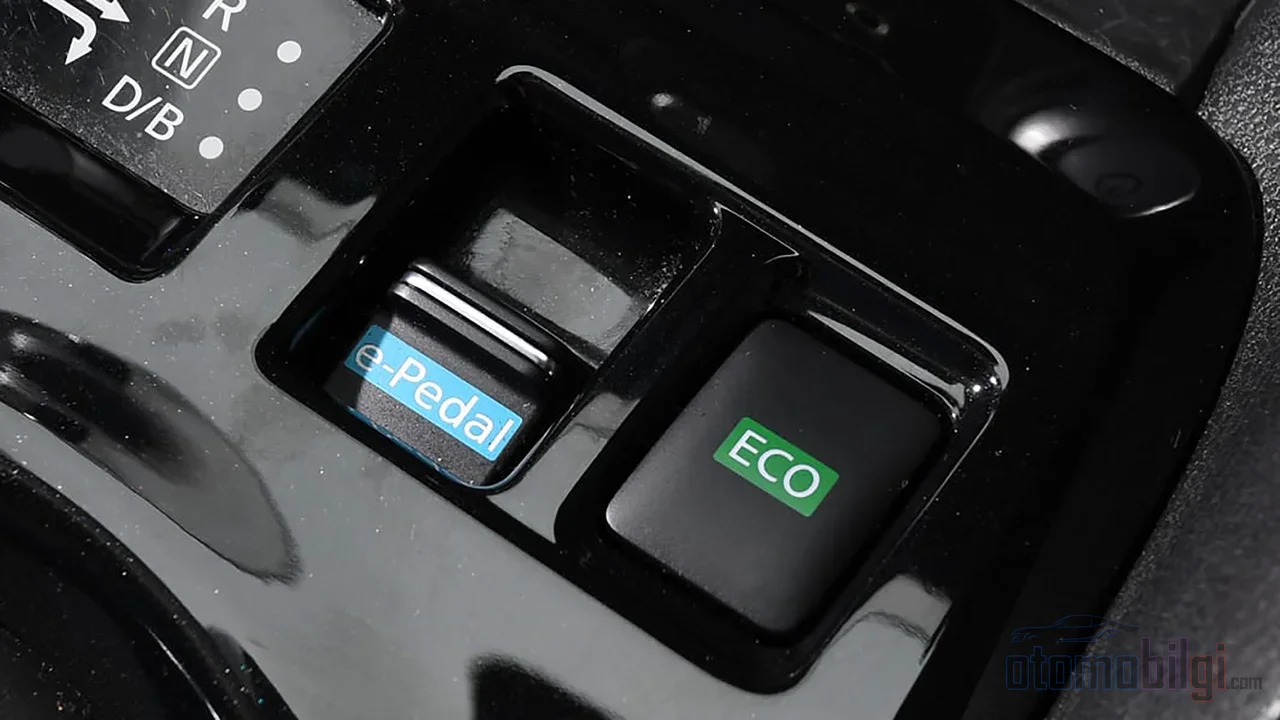
- One-pedal driving (OPD): When you release the pedal completely, the vehicle can come to a full stop through regeneration; in most vehicles this mode is managed by a button that can be turned on and off. One-pedal driving maximizes the amount of energy recovered and extends brake life; it is especially effective when combined with "Eco" mode.
- Blending on the brake pedal: Pressing the brake pedal applies regenerative braking up to a certain point, after which the friction brakes come in. In other words, regeneration works in both pedal modes; the difference largely lies in driving habits.
- Level selection: A higher regenerative level means more energy recovery and lower net consumption. On downhill descents, a high level both recovers energy and preserves the friction brakes.
Blended braking systems with a wide pedal map are designed to maximize regeneration wherever it is practical - the driver's job is to use this pedal range knowingly.
Effect on Brake Pad Life: Extended Life and a New Risk
The most tangible ownership benefit of regeneration is the lifespan of mechanical brake components. Discs, calipers, and pads wear noticeably slower because they are not constantly in use. Field experience supports this: in some hybrid models, pads and rotors are seen to last beyond 200,000 miles (approximately 320,000 km) - an unusual duration for a conventional vehicle. The perception that "pads become immortal" is not accurate, but the duration figures themselves are impressive.
There is also a flip side: when the mechanical brakes are used very little, pad and disc contamination, even rust, can become a risk. Little-used brakes deserve to be used firmly from time to time; occasionally braking harder to keep the disc surface clean is a simple maintenance requirement of a long-lasting brake system.
Conclusion: The Gains Are Realistic, the Usage Is Conditional
Regenerative braking is not a trick, but a well-measured energy accounting. It is the main engine of fuel savings in stop-and-go city traffic; on the highway it is useful but a secondary mechanism. Growing the gains is up to you: coast early, try one-pedal driving if possible, take advantage of level support on descents, and engage the friction brakes early when the battery is full. With the right habits, both fuel economy and brake pad life improve measurably - that is precisely the promise of regeneration.
Sources
- Regenerative braking
- What is Regenerative Braking in Hybrid Cars?
- Regenerative braking: how does EV and hybrid car work
- Do Hybrid Cars Use Regenerative Braking the Same Way as EVs
- Regenerative Braking: A Key Advantage Of EVs
- How to Maximise EV Range with Regenerative Braking
- Regenerative braking in electric cars: how it works and how to benefit from it
- Study on energy consumption characteristics of passenger cars
- What Is Regenerative Braking?
- Why Do Hybrids Use Regeneration Less on a Full Battery?
- What Is Regenerative Braking and How Does It Work?
- Regenerative braking and full battery
- Regenerative Brakes: How Do They Work?
- What's a mild hybrid?
- What is One-Pedal Driving and How Does it Work?
- One-Pedal Driving: What Is It & Why Should You Do It?
- Why Regenerative Braking Is Bad for Your Brake Pads
- Regenerative braking makes for immortal brake pads