Does a Hybrid Car Charge Itself? The Self-Charging Myth
Share This Page
No, a hybrid car does not generate its own energy without being plugged in; it fills its battery during driving through regenerative braking and the surplus of the gasoline engine. So although it may seem to charge itself, every electron that goes into the battery ultimately comes from gasoline. In this article, we explain the mechanism, the efficiency balance, and the reality behind the marketing claim.
Highlights
- In a non-plug-in hybrid, the battery is charged only through regenerative braking and the gasoline engine.
- Depending on driving conditions, regenerative braking can recover 10-30% of the energy .
- Hybrids can be 20-35% more fuel efficient than conventional gasoline cars.
- A full hybrid can usually travel on electricity alone only over short distances of about 1-2 km .
- Hybrid batteries typically show a lifespan of 10-15 years (approximately 240,000-320,000 km).
What Does the Self-Charging Hybrid Claim Technically Mean?
Self-charging hybrid is the marketing term for full hybrid vehicles. By definition, it is a combination of a gasoline internal combustion engine, one or more electric motors, and a compact battery pack. The vehicle cannot be charged by plugging it in; the battery is filled in only two ways: energy recovered during braking and the surplus power produced by the gasoline engine.
Technically, this statement is true but incomplete. The battery really does fill up on its own during driving, without any external intervention. However, energy is never created; it is only converted from another form into electricity. In a non-plug-in hybrid, that other form is either the car's kinetic energy (in other words, the gasoline you burned earlier) or the instantaneous power of the gasoline engine. That is why the self-charging hybrid is a label that conceals the true source of the energy. There is no such thing as free electric kilometers; there is only a system in which part of the gasoline is used more efficiently.
The manufacturers' view is also notable: some brands present it as a legitimate product category - a hybrid with no charging hassle, used like a conventional automatic. Critics, on the other hand, say it is simply a new name for an ordinary hybrid that hides the fact that the energy comes from fuel. Both sides are partly right; the distinction lies in what the claim promises. If the promise is free energy, the claim is false; if the promise is hybrid advantage without the need to plug in, it is technically true.
How Does the Battery Charge During Driving?
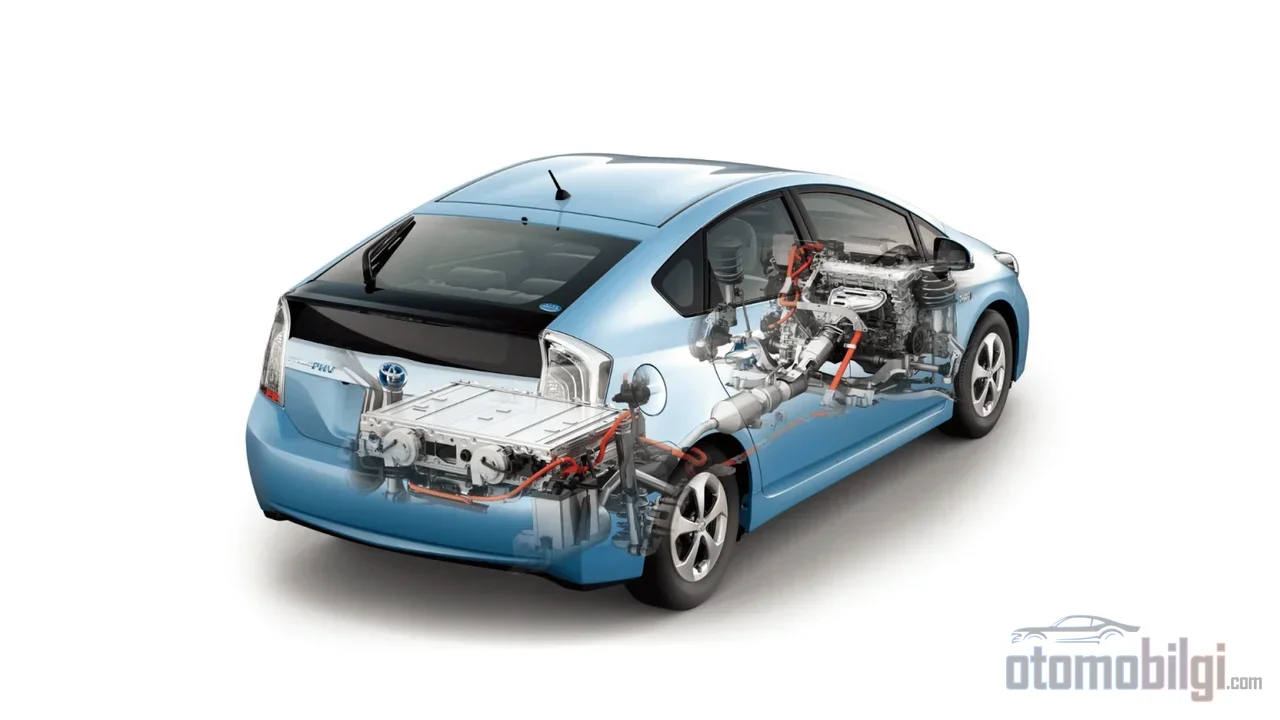
At the heart of the system are two mechanisms. Neither produces energy; one rescues energy, and the other carries it from the fuel.
Regenerative braking: Recovering kinetic energy
In a conventional vehicle, when you brake, the car's kinetic energy turns into heat in the brake discs and is wasted into the atmosphere. In a hybrid, however, the electric motor works in reverse - as a generator - when the accelerator is released or the brake is pressed. The car's forward momentum is converted into electricity through this generator and transferred to the battery. This is the only measurable way to recover braking energy.
The recovery rate depends on conditions: depending on driving style, terrain, and frequency of braking, 10-30% of the energy can be recovered. This means regenerative braking is most efficient in stop-and-go traffic. In city driving, every intersection and every stop is a charging opportunity; on the highway you barely brake, so the gain is minimal.
Two practical details matter. First, when the battery is full, the system cannot accept further regenerative charging; in that case the vehicle relies on the mechanical brakes. Second, in emergency braking situations or at very low speeds, the friction brakes come into play, but the transition between the two systems is not felt by the driver. In most models, the brake lights also come on during regenerative braking, so drivers behind are still alerted.
Generator mode: When the gasoline engine charges the battery
The second way is for the gasoline engine to generate electricity directly. Series hybrid architecture works on this principle: the electric machine converts the engine's mechanical energy into electricity and charges the battery; when the battery drops or demand is high, the gasoline engine kicks in. In Honda's two-motor system, in hybrid drive mode the electric traction motor powers the front wheels on its own, while the gasoline engine only runs the generator. Nissan's e-POWER architecture takes a similar approach: the engine runs to generate electricity only when needed, and at speeds where its sound can be masked by road noise.
The efficiency logic of this design is simple: a small gasoline engine can always produce power at its most efficient operating point, independent of the vehicle's speed. Since the link between engine rpm and wheel speed is severed, the engine is not forced to operate in inefficient regions. The battery also powers auxiliary loads during stops, shortening the engine's idling time; fuel economy is gained without sacrificing performance.
If the Energy Comes from Gasoline, Where Does the Efficiency Gain Come From?
A fair question: if the gasoline engine charges the battery, why does converting gasoline first into electricity and then into motion result in lower consumption? The answer lies in three separate gains in the system. First is regenerative braking: a portion of the energy normally lost as heat is recovered - this means part of the fuel is used a second time. Second is the engine operating in its efficient region: the gasoline engine is kept out of the low-efficiency idling and low-rpm regions. Third is that idling is almost entirely eliminated in stop-and-go traffic. The combined effect of these three is that hybrids can be 20-35% more fuel-efficient than conventional gasoline vehicles.
Still, every conversion in the chain involves a loss. In the energy going from gasoline to battery and then to the wheels, each stage reduces efficiency somewhat. That is why a hybrid's battery is not an energy source but an efficiency buffer: it reduces total losses by using energy at the right time, in the right place, and in the right way. Not free, just less waste.
There are also factors that disrupt this balance. A degraded hybrid battery reduces the effectiveness of regenerative braking and lowers fuel economy; a weakening battery forces the gasoline engine to run more often. For this reason, battery health is a prerequisite for a hybrid to maintain the consumption values it promises.
Full Hybrid, Mild Hybrid and Plug-in Hybrid: What's the Difference?
To understand exactly what the self-charging claim covers, it is necessary to distinguish between hybrid types. The fundamental distinction comes down to a single question: where does the vehicle recharge its battery?
| Feature | Full Hybrid | Mild Hybrid | Plug-in Hybrid (PHEV) |
|---|---|---|---|
| Plugging in | No | No | Required |
| Electric-only driving | Short distances (usually 1-2 km) | No | Long electric range |
| Battery size | Compact | Smallest | Largest |
| How the battery charges | Engine and braking | Engine and braking | External charging + braking |
| Additional function | Full hybrid advantage | Acceleration support | Long electric-only range |
Unlike self-charging hybrids, a plug-in hybrid draws energy from a charging point and genuinely offers electric kilometers independent of gasoline. The price of this is weight: due to the larger battery, plug-in hybrids have somewhat worse fuel economy than their hybrid siblings in mixed city and highway use. In other words, if external charging is not used, the PHEV's extra weight does not turn into an advantage - meaning anyone considering a plug-in should honestly assess whether they will actually charge the battery regularly.
City or Highway: Where Does a Hybrid Make Sense?
The true value of a self-charging hybrid is determined by the usage profile. Stop-and-go traffic is the ideal environment for regenerative braking: every braking event feeds the battery, and idle consumption disappears at every stop. In city use, the consumption difference between a hybrid and a gasoline car becomes most apparent. On the highway, braking is rare and the electric motor's contribution at constant speed is limited; still, the hybrid advantage does not disappear entirely, because the engine can still operate in its efficient zone and auxiliary loads can be managed through the battery.
On the ownership side, the picture is also balanced. Hybrid maintenance is generally cheaper than that of traditional gasoline vehicles; the key points are keeping the battery housing clean and ensuring the cooling fan works properly. The basic rules for battery life are simple: avoid extreme temperatures, keep the charge range within the 20-80% band, and avoid sitting idle for long periods. Toyota hybrid batteries typically last 150,000-200,000 miles (10-15 years) under normal conditions. A note on driving feel is also worth adding: many vehicles' hybrid versions offer stronger and smoother acceleration than their gasoline siblings - efficiency here does not come at the cost of performance.
Convinced by the Self-Charging Claim? A Concrete Framework for Decision
Your decision in the face of this claim can be reduced to three questions.
- Is your driving profile weighted toward stop-and-go traffic? City driving maximizes the hybrid's regenerative gains; if you mostly take long, steady highway trips, the gap narrows.
- Do you have charging options at home or at work? If so, a plug-in hybrid offers an electric range independent of gasoline, delivering a clearer saving. If not, the convenience of cordless use in a self-charging hybrid is a real advantage.
- How should you read the promise? A self-charging hybrid does not produce free energy; it converts a larger portion of the gasoline you burn into motion. A hybrid purchased with this in mind meets expectations.
In the end, a self-charging hybrid is not a misnomer, but an incomplete description. The car really does operate without needing to be plugged in, and its battery charges within itself; but the fuel for this cycle is gasoline. The technical truth is this: regenerative braking and generator mode are engineering solutions that extract more kilometers from the same liter of gasoline. That is an advantage less magical than marketing suggests, but far more measurable.
Sources
- How Do Hybrid Electric Cars Work? - AFDC
- What is Regenerative Braking in Hybrid Cars? - SEAT
- How Does Regenerative Braking Work? - Pod Point
- What Is Ford Regenerative Braking?
- Don't Fall For The Self-Charging Hybrid Con - Forbes
- What is a hybrid, self-charging hybrid and plug-in hybrid? - Pocket-lint
- What is a Self-Charging Hybrid Car & How it Works - Lexus UK
- Self-charging hybrids - a big part of our future - Renault UK
- Plug-in Hybrid vs Self-Charging Hybrid - DS Automobiles
- What's a mild hybrid? - Top Gear
- Hybrid vs. Plug-in Hybrid vs. Mild Hybrid - MG UK
- What's the Difference Between Hybrid and Plug-In? - Toyota
- Honda Two-Motor Hybrid-Electric Powertrain - Honda News
- First generation e-POWER - Nissan Global
- Hybrid vs. Plug-in Hybrid Cars - Edmunds
- Are Hybrids a Smart Choice Right Now? - Consumer Reports
- The Link Between Battery Health and Fuel Efficiency - Midtronics
- Hybrid Battery Health: 7 Pro Tips - Kelley Blue Book
- Hybrid Battery Maintenance - Toyota Knoxville