Hybrid Vehicle Battery: NiMH or Lithium?
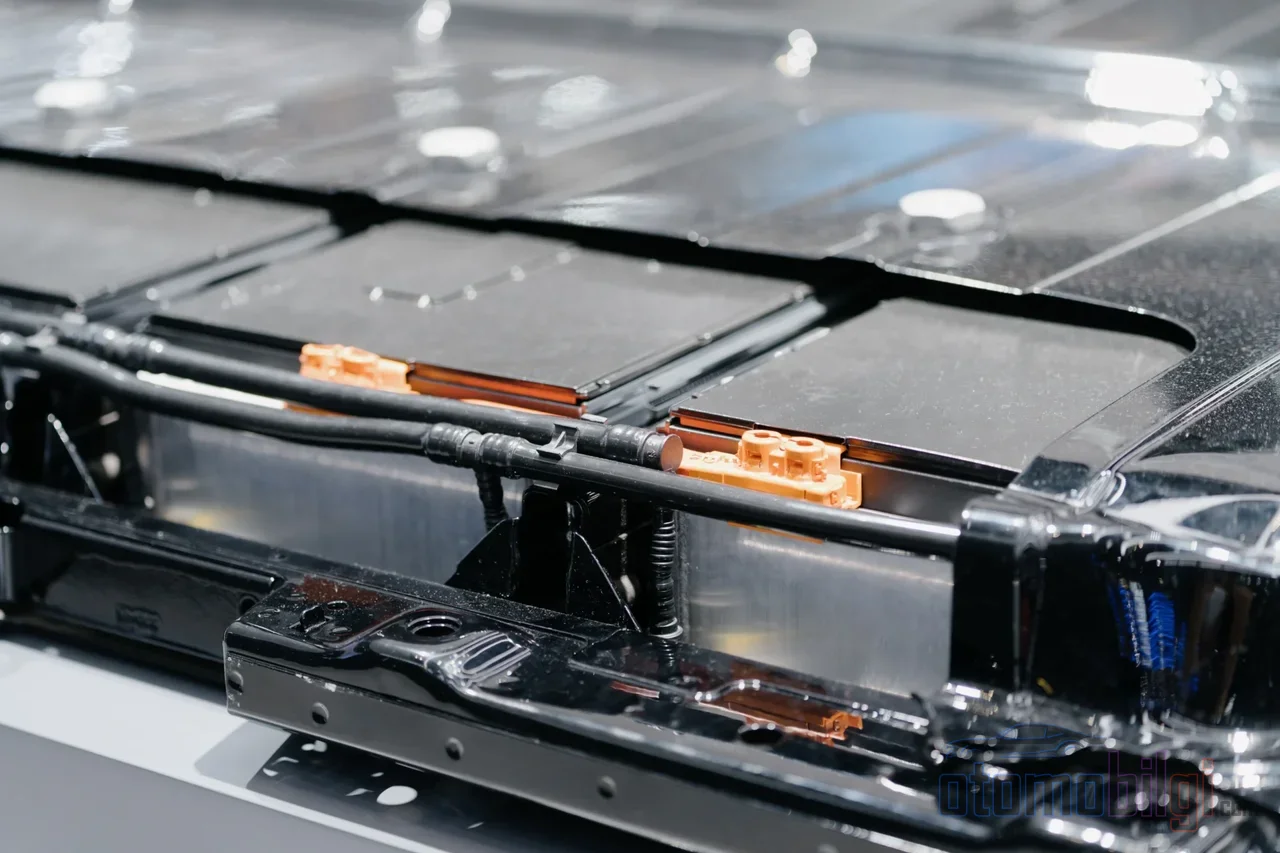
In the world of hybrid cars, 2026 still finds us in the middle of an interesting transition period: Toyota, along with the RAV4 Hybrid, has moved one of the highest-volume NiMH users over to the lithium-ion side, but the same company's large vehicles like the Tundra and Sequoia are still on the road with nickel-metal hydride packs. So two battery chemistries live side by side in the same manufacturer's product lineup. Is this a technological delay, or a refined engineering choice? The answer to the question lies not in the energy density figures; it is hidden in temperature tolerance, deep discharge behavior, and replacement cost.
What Causes the Difference Between the Two Chemistries?
A nickel-metal hydride (NiMH) cell produces a voltage of approximately 1.2 V. Toyota packs these into 7.2 V prismatic modules in groups of six; in the second and third generation Prius, 28 modules are connected in series to create a 201.6 V pack. A lithium-ion cell, on the other hand, delivers approximately 3.6-3.7 V per cell; that is, roughly three times that of NiMH. The fourth-generation Prius's lithium pack reaches 207.2 V with only 56 cells in place of the 168 cells of the NiMH pack it replaced, and is approximately 16 kg lighter.
The energy density difference also arises from this: lithium-ion typically operates in the 150-250 Wh/kg range, while NiMH is at a noticeably lower density; a heavier pack is required to provide the same electrical power. But weight is only half the story. The electrolyte chemistry is what truly defines the character of the two technologies.
The electrolyte changes everything
The NiMH electrolyte is water-based potassium hydroxide. This has three concrete consequences: It tolerates overcharge energy harmlessly by converting it into heat, and therefore requires no electronic balancing circuit per cell; it can be charged safely even below freezing point; and its voltage curve is flat, meaning the computer cannot read the state of charge (SOC) from voltage and calculates it by counting current. Lithium-ion's organic solvent electrolyte, however, is unforgiving: Overcharge results in gas generation and heat, and in the worst case carries a risk of fire. That is why every cell is monitored and electronically balanced individually. Charging a lithium cell in freezing cold can lead to metallic lithium plating on the anode and permanent damage; for this reason, the vehicle restricts regenerative braking when cold.
Highlights
- A lithium-ion cell delivers roughly three times the voltage of NiMH: 3.6-3.7 V versus 1.2 V.
- Most original NiMH packs in temperate climates last more than 150,000-200,000 miles.
- Toyota deliberately gave the AWD-e Prius NiMH in 2019; in cold-climate preference, NiMH comes out ahead.
- A new OEM NiMH replacement is 4,000-5,500 USD, while lithium-cell packs start from the 1,500-2,000 USD band.
- Toyota's post-2020 hybrid battery warranty: 10 years / 150,000 miles.
Which Chemistry Does Toyota Use in Which Model?
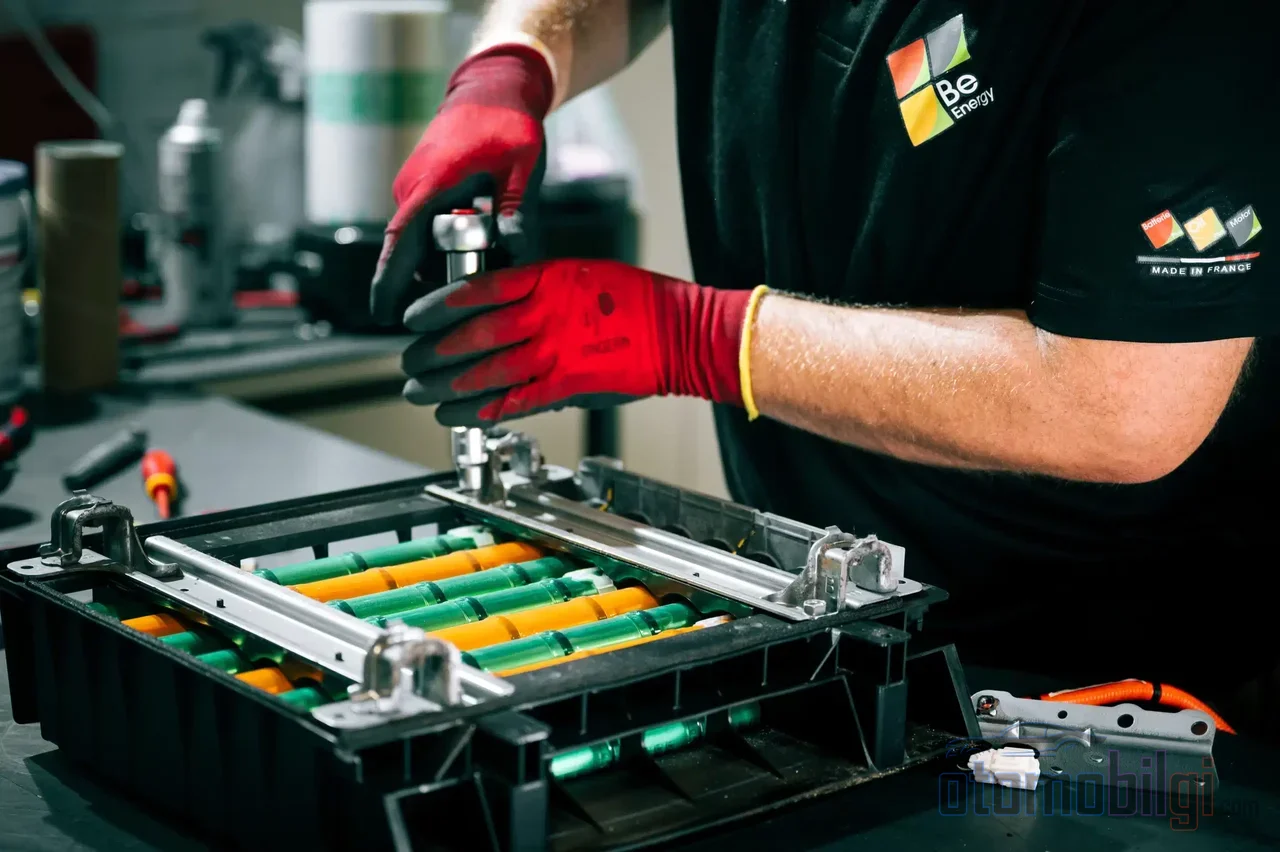
Toyota's map follows an easily readable rule: smaller and newer models switched to lithium, while NiMH remained in large, heavy, or towing vehicles. The Prius was entirely NiMH from 2001-2015; from 2016 onward it was mixed depending on trim level, and fully lithium from 2023 onwards. The Camry Hybrid was NiMH between 2007-2017, and all Camrys are lithium from 2025 onwards. The Corolla Hybrid was NiMH between 2020-2022, and lithium after 2023. The RAV4 Hybrid, meanwhile, remained NiMH throughout 2016-2025 and then switched to lithium with the 2026 model year.
On the other hand, the Highlander Hybrid (since 2006), the Sienna (after 2021), the Tundra and Sequoia i-FORCE MAX, and the Avalon Hybrid (2013-2022) are still in the NiMH camp. On the plug-in side, there is no exception: every generation of the Prius Prime (2012, 2017, 2023) used lithium; lithium's energy density was essential for deep charging cycles.
The reason NiMH remains in trucks, minivans, and three-row SUVs is not cheapness. In these vehicles, the battery operates at high currents, across a wide temperature range, and under heavy loads; a chemistry resistant to heat and stress is a deliberate engineering choice here. Toyota deliberately giving NiMH to the AWD-e Prius in 2019 was also a product of the same logic: since buyers preferring four-wheel drive are concentrated in cold regions, a chemistry that performs better in the cold was chosen.
Lifespan, Temperature, and Deep Discharge Comparison
| Criterion | NiMH | Lithium-Ion |
|---|---|---|
| Energy density | Low | 150-250 Wh/kg |
| Overcharge tolerance | Tolerates it by converting it into heat | None; every cell is monitored and balanced |
| Charging in cold | Safe | Restricted; risk of metallic lithium |
| Typical service life | 6-10 years, 150,000-200,000 miles+ in a temperate climate | 10-15 years with proper use (long-term data still being collected) |
| Weight | Heavier | Noticeably lighter at the same voltage |
Temperature: where the two chemistries diverge
NiMH's domain of victory is heat and cold endurance. It tolerates summer heat and harsh winters well. Lithium-ion, however, demands a narrow thermal window; its ideal is around 20°C. Outside that window, degradation accelerates: at 40°C, capacity loss can be 33-50% greater over the same period; not an insurmountable threshold for a vehicle parked in the sun. The most degrading factor is not just ambient temperature, but the pack's own heating; in very hot climates, the lifespan of NiMH packs also shortens noticeably. NiMH's way of aging is also unique: within 10-15 years, internal resistance increases due to electrolyte loss, and error codes in the P0A80 and P3011-P3030 range manifest themselves.
Deep discharge and cycle behavior
In cycle life debates, battery chemistry specifications and hybrid pack design are usually confused with each other. For example, LiFePO4 chemistry, a member of the lithium family, can endure 4,500-6,000 cycles at 80-90% depth of discharge, while lead-acid is around 1,000-1,500 cycles at 50% depth. However, hybrid vehicle packs do not follow this picture: The Toyota hybrid battery is designed to operate with shallow cycles within a narrow band of state of charge. Shallow cycling is the operating regime that is best for lithium cells; high heat and sitting fully charged, the two main drivers of calendar aging, are also excluded by design. The fact that the first lithium hybrids, such as the 2012-2015 Prius Prime, which cycle far more deeply than a regular hybrid, are still going strong 11-14 years later supports this design logic.
The Unknowns of Lithium
To be honest, the long-term durability of lithium hybrid packs has not yet been proven; even the oldest lithium Prius is only ten years old. Service data looks positive for now: in vehicles from 2016 onward, failure-related pack replacement has dropped to a small percentage per model year. Two uncertainties remain: there is no data yet on the long-term effect of charge limits in cold climates; and the failure modes are different. While NiMH dies gradually with a warning for each individual module, a single failed cell in a lithium pack can shut down the entire pack. The NiMH reconditioning market has also matured; whether a similar ecosystem will develop for lithium packs remains to be seen.
How Much Does a Battery Replacement Cost?
On the price side, the picture is surprising at first glance: a new OEM NiMH replacement can exceed 4,000-5,500 USD (with a 1-3 year warranty), while refurbished or second-hand NiMH packs are in the 2,000-3,000 USD range; new lithium-cell packs can start at 1,500-2,000 USD. With dealer-level labor included, replacement typically lands in the 3,500-5,000 USD range. Toyota's 10 year / 150,000 mile battery warranty on 2020 and later vehicles keeps most of the cost risk on the manufacturer's side.
Fitting lithium into a NiMH vehicle is practically a dead end: the battery ECU, balancing strategy, and pack voltage are all designed for a single chemistry, making a switch with original parts impossible. Lithium conversion projects developed by the community do exist for the older Prius and Honda Insight; but these conversions should remain within the scope of experimentation. Services familiar with problems seen in rebuilt NiMH packs, such as cells that look good on the bench but fail in real driving, end plates installed backwards, and corroded connections, approach these packs with caution.
What Does Battery Chemistry Mean When Buying a Used Hybrid?
In the used market, the chemistry question can be inferred from the model year and trim level, but it is always an estimate; matching the vehicle's identity (VIN) with the model and equipment is the most reliable way. The real criterion is not the chemistry but the condition of the pack: vehicle age, the climate it was used in, service history, and a battery health check are the deciding factors. The pre-purchase checklist is short: corrosion on the battery terminals, refrigerant leaks in the battery cooling system, and the remaining time under warranty coverage. A proper measurement of battery health requires the authorized service's special diagnostic equipment; decisions should not be made without looking beyond the information on the surface of the gauge.
So Which One Is Better?
The honest answer is that neither is: the two chemistries serve different need matrices. Lithium-ion is lighter, offers higher energy density and contributes to fuel economy; in return it requires a narrow thermal window, a charging restriction in cold weather, and electronic complexity that monitors every cell. NiMH is heavier and has lower energy density; but it is resistant to heat, high current and strain, performs better in cold weather, and is proven by 25 years of field history across millions of vehicles. Thanks to the hybrid pack's shallow-cycle operating regime, lithium is expected to last at least as long as NiMH in hybrid use, and probably longer in temperate climates; however, this expectation should be read as the interim report of a field test that is not yet complete. Anyone who says lithium hybrid packs will last 20 years or that all of them will be depleted in eight years is guessing; the first big wave of lithium Priuses will reach the age at which the NiMHs are depleted within five years, and the data will become clear then.
In short, battery chemistry alone does not determine a hybrid's value. For a buyer living in a hot climate, NiMH's thermal tolerance matters; for one living in a cold region, the same chemistry's charging flexibility; when fuel economy and lightness are the priority, lithium comes to the fore. For a used-car buyer, there is only one valid rule: choose based on the vehicle's condition and history, not its chemistry.
Sources
- Toyota Hybrid Batteries: NiMH vs Lithium-Ion by Model - Atomic Auto
- NiMH vs Li-Ion Hybrid Batteries: Which Technology Is Right for Your Vehicle?
- Hybrid vs EV Batteries Explained: The Complete Guide 2026 - Greentec Auto
- Toyota Hybrid Battery Replacement Cost - CDM Performance
- Hybrid Battery Hot Weather: Survive Arizona Summers - Tucson Hybrids
- Deep Discharge: Definition & Battery Cycle Life Impact - Qbits Energy
- Hybrid Battery Health: 7 Pro Tips - Kelley Blue Book
- Some Geniuses Are Turning Old Honda Insights Into Plug-In Hybrids - The Autopian