Zebra Battery: The Hidden Chemistry of the Smart ForTwo ED
The battery vocabulary for hybrid cars usually revolves around three names: lithium-ion, LFP, and nickel-metal hydride. Yet in the early electric vehicle generation between the late 1990s and the early 2010s, none of these lay beneath the vehicles - they carried an entirely different chemistry: sodium-nickel chloride, also known as the Zebra battery. The most striking feature of this technology was that it operated at a range of approximately 270-350°C, that is, at oven temperatures. So can a battery filled with molten salt that needs constant heating be fitted to today's hybrid cars? The answer to this question relates to our usage habits as much as to the technology itself.
What Is the Zebra Battery and How Does It Work?
The Zebra battery, technically known as the sodium-nickel chloride (Na-NiCl2) battery, is a rechargeable molten salt battery. Its name comes from the Zeolite Battery Research Africa project, which began in South Africa in 1985; the core idea was developed in 1978 through a patented study at that country's scientific research organization. The beauty of its chemistry lies in its simplicity: sodium, nickel chloride obtained from table salt, and a ceramic electrolyte called beta-alumina are readily available and relatively low-cost materials.
The structure of the cell is easy to establish with a chain of logic. Metallic sodium serves as the anode, while nickel chloride is found at the cathode. Between the two electrodes, a solid-state beta-alumina ceramic separates them, transmitting sodium ions; in the cathode region, liquid NaAlCl4 acts as a secondary electrolyte. During charging and discharging, sodium ions pass through this ceramic barrier, moving back and forth between the two sides. The system works efficiently: the energy efficiency at the cell level, that is, the ratio of energy taken during discharge to energy given during charging, is approximately 90 percent; when auxiliary systems such as heating are included, the overall efficiency drops to 80.9 percent.
Why Is 270°C Necessary?
The temperature requirement is not a design choice, but a necessity of the chemistry. Metallic sodium melts at 98°C; the salt components inside the cell liquefy above 150°C, and the ionic conductivity of the beta-alumina ceramic only reaches a sufficient level at high temperatures. For this reason, the Zebra battery typically operates between 270-350°C, with a commonly used reference of approximately 300°C. To control heat loss, the cells are placed in double-walled vacuum flasks about 25 mm thick, essentially a thermos.
Highlights
- The Zebra battery is a molten salt battery operating at a temperature of approximately 270-350°C.
- Its specific energy at the system level is 120 Wh/kg, and its specific power is 180 W/kg.
- It endures more than 1000 cycles at a discharge depth of approximately 100 percent; it is unaffected by ambient temperature.
- Reheating and recharging a fully cooled pack takes 12 hours, and returning to use after freezing can take up to 2 days.
- The technology's main role today is not electric vehicles, but stationary energy storage.
Performance and Lifespan Data
Looking at the numbers, the technology was a serious contender for its era. On a cell basis, specific energy is 120 Wh/kg and specific power is 180 W/kg; this means roughly four times the energy density of contemporary lead-acid batteries. When an entire 30 kWh battery pack is taken into account, the figure drops to 86 Wh/kg; as with every technology, packaging, thermal insulation and auxiliary systems erode the initial number somewhat. Over 1000 cycles can be completed at around 100 percent depth of discharge, and the effect of freezing on cycle life is minimal; no significant problems have been reported in terms of calendar life either.
There is also an advantage on the cost side: it is considerably cheaper than the lithium-ion alternatives of the era; the figure for a 28.2 kWh system was approximately 19,000 US dollars. The material list is also strategically reassuring; sodium, nickel and aluminum are abundant, non-critical elements. More recent studies have also shown that very high energy density can be achieved at intermediate temperatures such as 190°C with a planar cell architecture; meaning the technology's temperature threshold remains open as an axis of development.
Its Brief Stint in Early Electric Vehicles
The Zebra battery's place in vehicle history opens with large-scale work carried out in the 1990s at the Harwell research center in England and at Germany's AEG. The joint venture established in 1988 moved to pilot production in 1994; the 1998 Daimler-Chrysler merger ended the project, after which Switzerland-based MES-DEA, which took over development in 1999, maintained small-scale production of a few thousand packs per year. GE tried to commercialize the technology as Durathon through Beta R&D in 2011, but abandoned it in 2015 for market-related rather than technical reasons. Today the technology's sole manufacturer is FZSoNick, and the technology lives on primarily in stationary storage, such as a 540 kWh solar storage facility on the roof of a shopping mall.
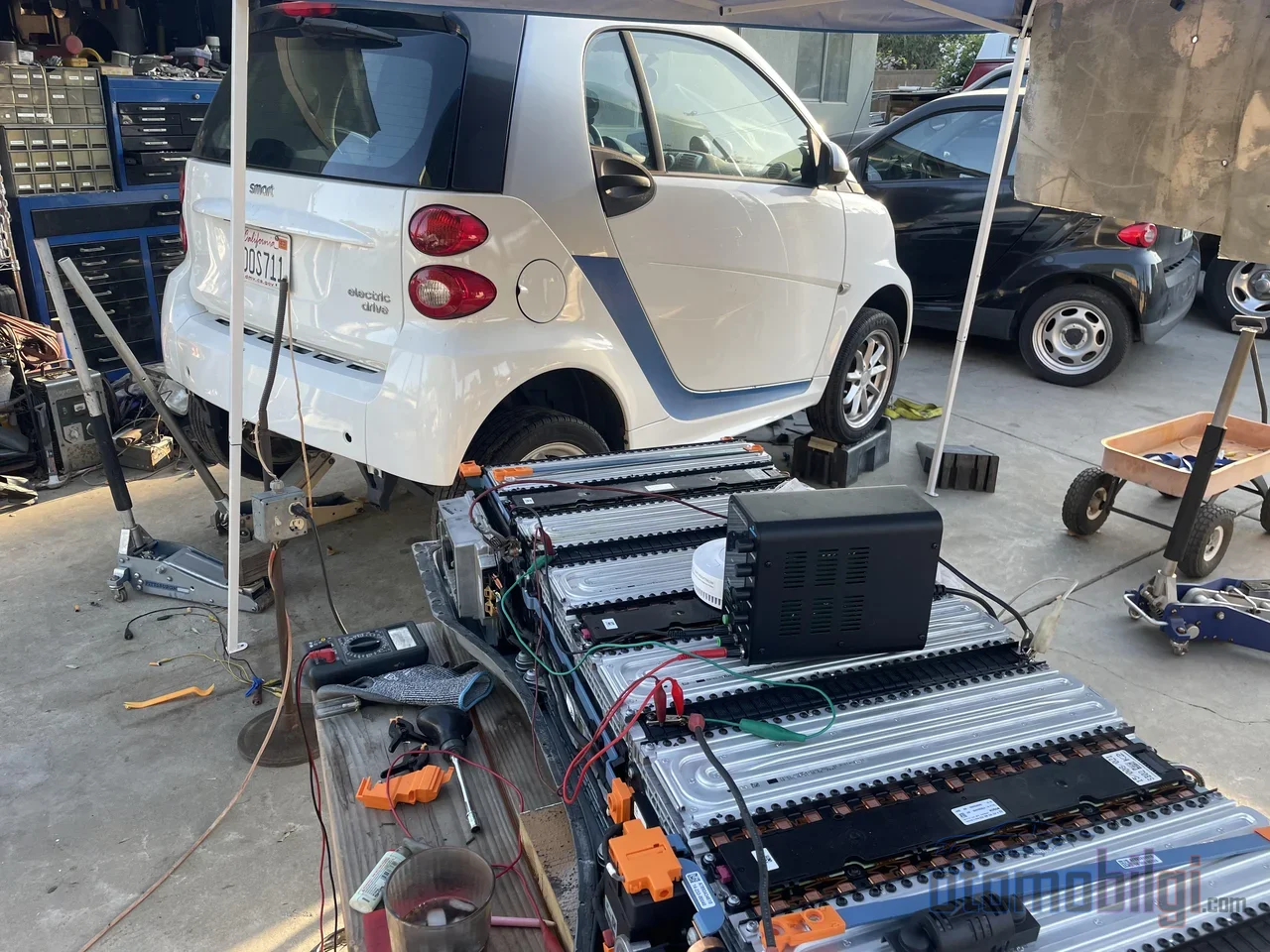
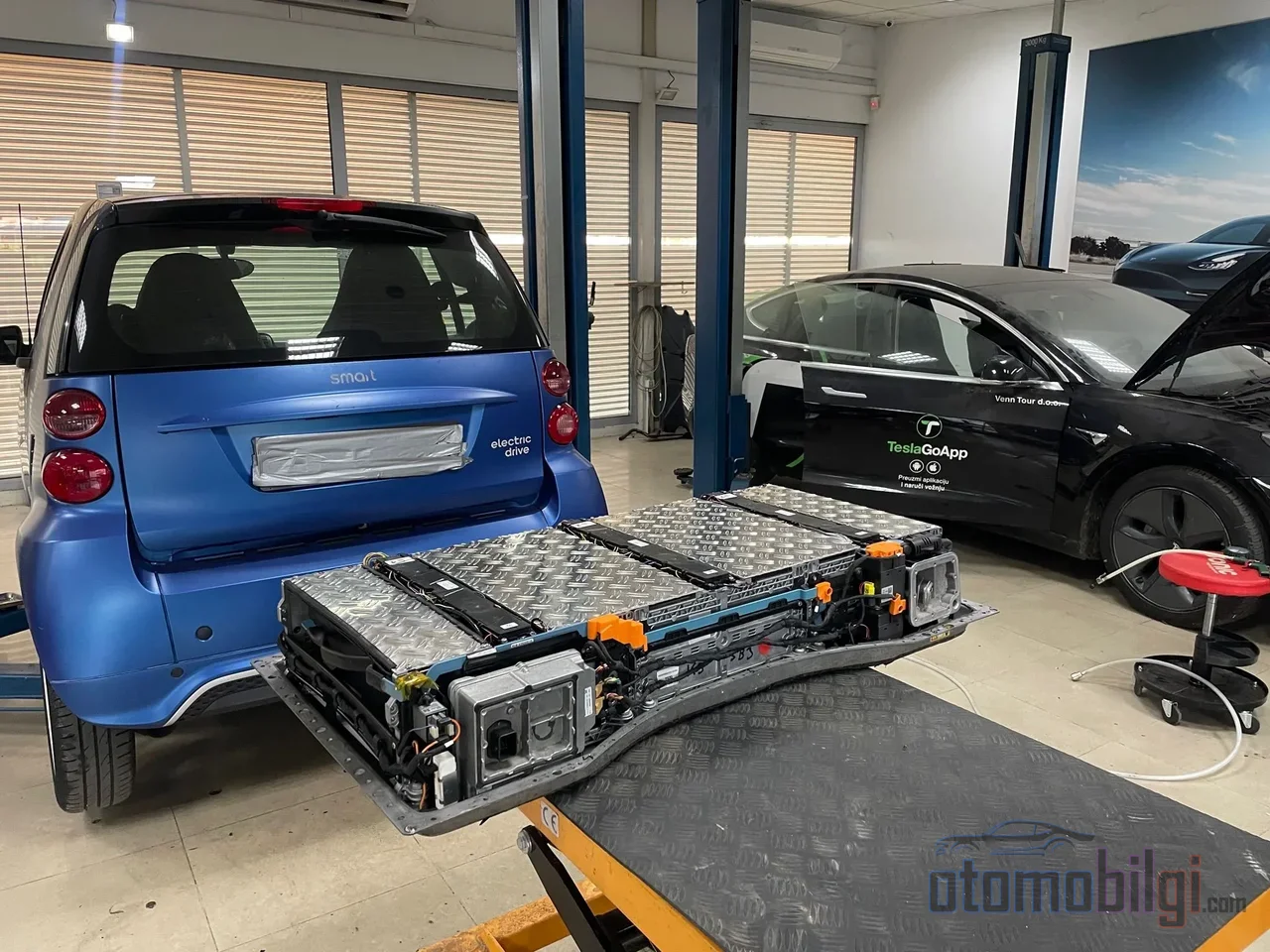
The most concrete example on the road is the first-generation electric Smart ForTwo ED. This 450-body vehicle carried a 13.2 kWh Zebra pack operating at 245°C; field trials that began in London in 2007 with 100 vehicles were run solely with a leasing model aimed at corporate customers, and the brand switched to lithium-ion from 2009 onward. Understanding the reason behind this transition decision also sheds light on the main question of this article.
The Real Problem in Long-Term Storage
Before discussing whether the Zebra battery is suitable for a hybrid car, its most critical operating constraint must be clarified. The battery must stay hot in order to work; ensuring this in a rarely used vehicle means the idle pack continuously drains its own energy. In regularly parked vehicles this heating consumes quite a lot of energy, and if the battery cools down to room temperature, it can take up to two days to become operational again. Reheating and charging a completely frozen pack, on the other hand, takes around 12 hours.
This is precisely why the technology has been considered more suitable for fleets than for individual users: In vehicles that run all day long, used nonstop such as taxis or police cars, the pack has no time to cool down. The same logic lies at the center of the hybrid use assessment as well.
Does the Zebra Battery Enter Hybrid Cars?
Now all the pieces of the question are on the table. From the perspective of a hybrid powertrain, the Zebra battery truly has appealing aspects. Its immunity to ambient temperature, meaning no loss of performance and capacity in the winter months, is a direct answer to one of the best-known weaknesses of lithium-ion in cold climates. A lifespan exceeding one thousand cycles at nearly 100 percent depth of discharge and four times the energy density of lead-acid are theoretically attractive for full hybrid systems that operate on constant micro-cycles. The fact that its materials are abundant and can be procured on a non-toxic budget also supports the cost side.
However, when the picture is reversed, the obstacles weigh more heavily. A hybrid vehicle means short city trips, days of waiting in the garage, and an unpredictable rhythm of use; this picture is the exact opposite of a battery that needs to be kept constantly hot and requires 12 hours to come back once cooled. Full hybrids have a small battery, and the energy budget to be allocated to temperature management is narrow; in plug-in hybrids, even if the pack is large, it is not an acceptable scenario for a vehicle waiting plugged in for days to spend its energy on heating. Moreover, the specific power of 180 W/kg is also limited for hybrid use, which lives on instantaneous power surges. Indeed, the development history of the technology confirms this picture: the Zebra battery does not appear as a technology actually applied in a hybrid vehicle; the areas examined have been stationary grid storage and a small number of fully electric vehicles. For comparison purposes, even nickel-metal hydride batteries, which are truly well established in the hybrid segment, have struggled with high cost, high self-discharge, and heating problems; a technology with a heating requirement many times heavier could not be expected to enter this segment.
Conclusion: Capable Chemistry, Wrong Job
The short and clear answer: Due to its high operating temperature of 270°C, its constant heating requirement, and a re-preparation time of up to 12 hours after cooling, the Zebra battery is not a practical option for hybrid cars; despite its advantages such as immunity to cold weather and long cycle life, the intermittent and unpredictable nature of hybrid use is incompatible with the thermal management obligation. The technology's home today also confirms this: grid load balancing and stationary energy storage are areas where this chemistry's heating cost can be easily absorbed. The Zebra battery is not a failed technology, but a technology that has found the right job; only that job is not the small package in a hybrid's trunk, but the large storage in a building's basement.