Sodium-Ion Batteries Are Coming to Hybrids
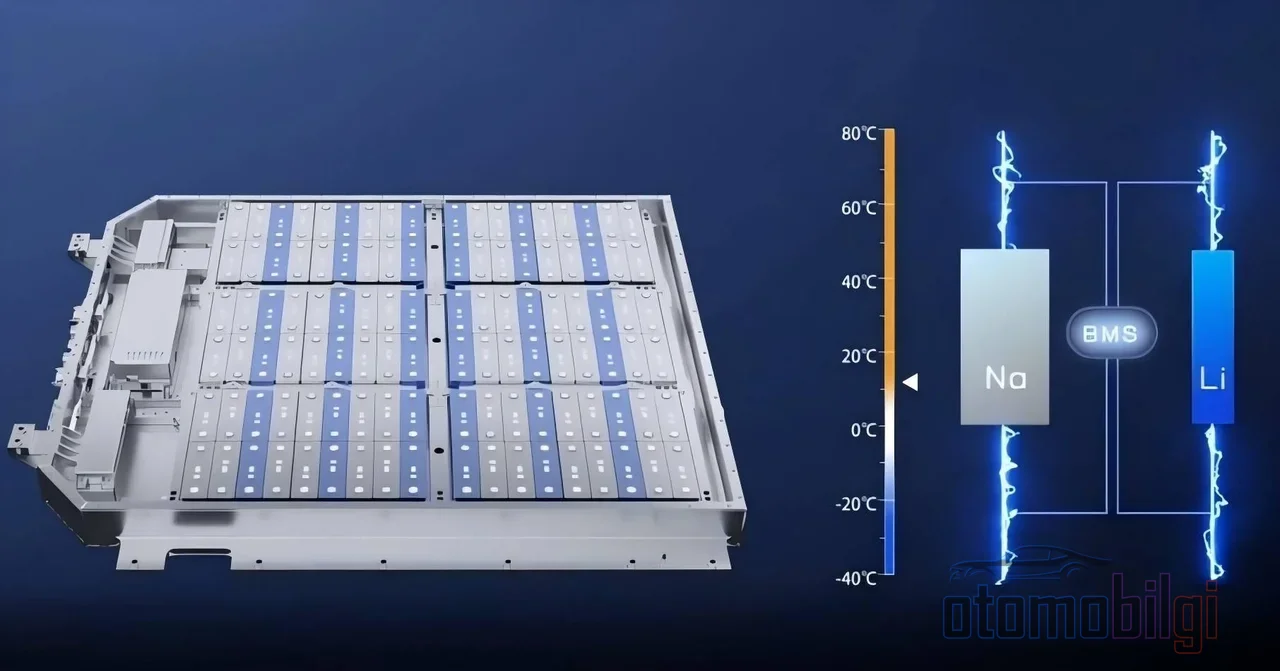
The battery of a hybrid car, tucked under the dashboard or beneath the rear seat, is one of the vehicle's most expensive and least discussed components. For more than twenty years, two chemistries have shared this duty: nickel-metal hydride and lithium-ion. Now a third candidate is sitting down at the table. Sodium-ion batteries have entered mass production, cost projections are falling, and the first aftermarket hybrid battery packs have gone on sale. But can this chemistry really take on the small yet demanding battery role in a hybrid?
What is a sodium-ion battery and how does it work like lithium-ion?
A sodium-ion battery is a rechargeable cell that uses sodium ions (Na⁺) instead of lithium ions as the charge carriers. Its operating principle and cell structure are similar to lithium-ion; since sodium sits in the same group as lithium on the periodic table, its chemical behavior is also familiar. During charging, sodium ions move from the cathode to the anode, and reverse direction during discharge. On the anode side, the typical material is hard carbon; it offers a capacity of roughly 300 mAh per gram, which is very close to graphite's 300-360 mAh/g in lithium-ion cells.
The difference begins at the molecular scale. The sodium ion (116 pm) is larger than the lithium ion (90 pm), and this slows the rate at which ions settle into the cathode structure, that is, the intercalation kinetics. The nominal cell voltage is in the 3.0-3.1 V band. As a result, sodium-ion's known weak point is clear: energy density. Current cells are in the 75-200 Wh/kg specific energy band; volumetric density is around 250-375 Wh/L. For comparison: While NMC lithium-ion reaches 120-260 Wh/kg, CATL's mass-produced sodium-ion power battery represents the upper band at 175 Wh/kg.
Highlights
- The strongest mass-produced sodium-ion cell entered passenger vehicles in December 2025 with an energy density of 175 Wh/kg.
- Commercial cells offer a lifespan in the 2,000-5,000 cycle range; the target stretches to 8,000 cycles.
- They can be designed to retain more than 90% of room-temperature capacity at -20 °C.
- Theoretical cost is 40-77 USD/kWh; the 2025 average for LFP is 81 USD/kWh.
- Not yet at the OEM level in hybrids; the first sodium-ion hybrid products came from the aftermarket battery market.
Mass production began in 2025: where are we?
The critical milestone in the sodium-ion story happened in December 2025. CATL put the world's first mass-produced sodium-ion power battery into production for passenger vehicles; the announced energy density is 175 Wh/kg, with a targeted range of 500 km. The company's 45 kWh package suited for low temperatures in the Tianxing II series is among the first tangible products to reach mass production. Production began first with battery-swap models, and the world's first 30 GWh capacity sodium-ion battery factory was announced. As early as the beginning of 2024, some manufacturers had announced they were commercializing sodium-ion technology for low-temperature applications, but mass production at the automotive scale made the real leap at the end of 2025.
The market side is lively, too. The sodium-ion battery materials market is projected to grow from 122 million USD in 2026 to over 500 million USD by 2034; the total battery market is expanding from 1.08 billion USD to 1.93 billion USD between 2026 and 2030, with annual growth of 15.6%. These are still dwarfed figures next to lithium-ion, but the trend is in the right direction.
Cost and supply chain: sodium's real trump card
The reason sodium-ion is being discussed for hybrids is not just energy storage; it is where it is made from. Sodium is a far more abundant element than lithium, virtually unlimited especially in saltwater. Many types of sodium-ion cells do not require cobalt, nickel, or copper; cheap and common elements like iron and manganese can be used as cathode material. Aluminum is sufficient as the current collector instead of copper. The theoretical cost, even with 2019 data, was in the range of 40-77 USD per kWh, while the 2025 average is 81 USD/kWh for LFP and 128 USD/kWh for NMC.
This picture means a strategic advantage. Sodium-ion significantly reduces the single-country supply dependency seen in lithium and largely eliminates the need for critical minerals. Of course, it does not solve everything: it limits the use case because more volume is needed to store the same energy in transportation, and the fact that the known cell production chain is concentrated in a single country today makes it debatable whether a new supply chain can be established. Sodium-ion is not the end of lithium; it changes which parts of the supply chain matter.
Cycle life and cold weather: two critical criteria for hybrids
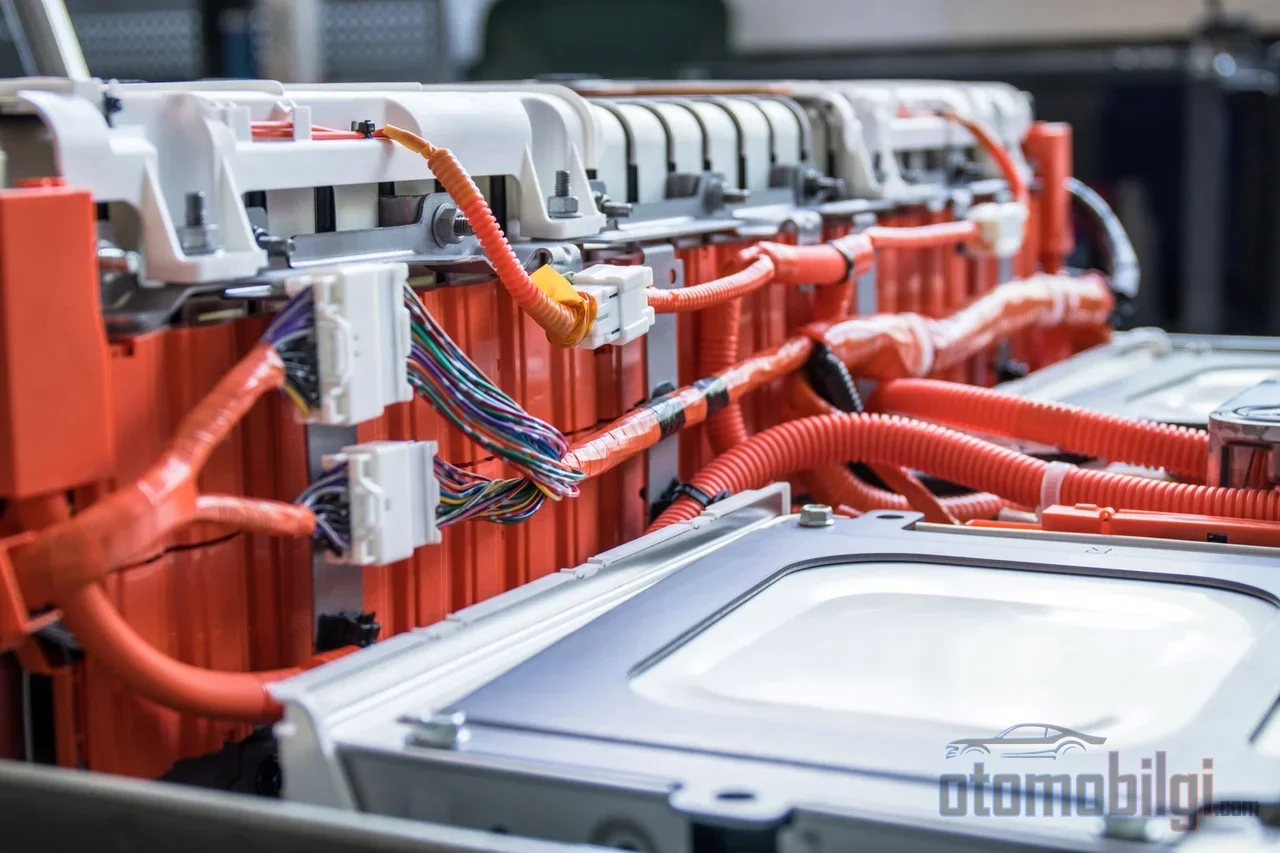
A hybrid's battery works like a heart: it constantly cycles between partial charge and discharge. That is why cycle life is even more decisive than energy density. Commercial sodium-ion cells generally offer over 2,000-4,000 cycles; leading technologies exceed 3,000-5,000 cycles at high depths of discharge. It is also noted that official targets extend to 8,000 cycles. An honest counterpoint: quality LiFePO4 packs are still competitive in this area; the view that sodium-ion matches or surpasses LFP in cycle life, cold performance, material safety, and fire risk exists alongside the view that it lags behind in energy density and initial investment cost. The real picture is a balance that varies by criterion.
The real difference emerges in the cold
The most striking data point about sodium-ion concerns temperature. At -40 °C, the cells can retain more than 90% of their capacity, and in a hybrid-related application, an 80% charge can be completed in 15 minutes. At -20 °C, while lithium-ion systems generally lose 30% or more of their capacity, sodium-ion systems can be designed to exceed 90% of their room-temperature capacity; 6C discharge at -20 °C and 2C discharge at -40 °C have been measured. The physical reason is clear: the solvation shells of sodium ions do not freeze as easily as lithium's, and the electrolyte remains more fluid at low temperatures.
However, all of these claims need to be viewed with skepticism. The scientific literature emphasizes that sodium-ion cells experience thermodynamic and kinetic challenges at low temperatures, and that performance drops in conventional carbonate-based electrolytes. As with every battery chemistry, the distance between laboratory data and what actually shows on the dashboard matters here too.
Hybrid use scenarios: separate accounts for full hybrid and plug-in
A full hybrid's battery pack is small: It operates with capacities below 1 kWh, lives in a constant charge-discharge cycle through regenerative braking and engine assistance, and must fit perfectly with the vehicle's voltage window, communication protocol, and battery management system. This last point is critical: sodium-ion chemistry alone does not make a battery suitable for a hybrid vehicle; even a replacement battery must be compatible with the vehicle's BMS.
Fortunately, some natural properties of sodium-ion fit this task well. Thanks to its wide voltage range of 1.5-4.0 V per cell, accidental full discharge or overcharging becomes harder - and the cell voltage window offers a wider operating band for the vehicle's BMS tolerance. In safety tests, no smoke, flame, or explosion was reported during penetration, short circuit, overcharging, and compression. When compared with NiMH, sodium-ion enters NiMH's territory, which stands out in applications requiring high power output and temperature stability; since NiMH packs are 20-30% heavier and larger than lithium-ion for the same energy, weight savings are also waiting at the door.
The plug-in hybrid side is more difficult. Because a PHEV's battery carries electric range, it requires large packs; sodium-ion's energy density disadvantage is felt here in its gap with lithium-ion. Independent analyses therefore say that sodium-ion is limited in transportation today, especially in plug-in applications requiring large packs. On the academic side, there are studies mentioning PHEVs thanks to the technology's abundant-element and low-cost structure, but the practical story is still at an early stage.
The first sodium-ion hybrid products came from the replacement battery market
In the hybrid context, the first commercial step regarding sodium-ion came from an unexpected place: the replacement battery market. Replacement battery packs with sodium-ion cells went on sale for the Toyota Prius (2016-2020) and Honda hybrids. The Prius pack is priced at 2,795-3,095 USD and comes with a 5-year warranty. The approach of these packs is also interesting: Instead of replacing the entire OEM battery, they offer a cheaper solution by replacing only the faulty modules. Given the prices, cost difference, and warranty period here, this fact should not be forgotten either: since these products come from commercial sources, independent field data is still limited.
For comparison, it is worth remembering the classic figures. A new hybrid battery costs on average 2,000-8,000 USD depending on the model; For a 2017 Prius, the dealership quote was around 2,700 USD, while the Honda Accord ranged from 4,250-4,480 USD, the Honda CR-V about 3,940 USD, and the Chevrolet Silverado in the 1,680-1,800 USD band. In this table, a sodium-ion module replacement that is 10-20% cheaper stands as a meaningful alternative, especially for vehicles out of warranty.
So is sodium the future of hybrids?
The honest answer to that question is this: sodium-ion has started to become a real option in hybrids today, but not tomorrow. The small package of a full hybrid overlaps well with the technology's strengths - low cost, temperature tolerance, safety, cycle life - and the first evidence of this can be seen in the replacement battery market. On the plug-in side, the energy density barrier will keep sodium-ion from being a main player, at least until the gap with LFP/NMC at 175 Wh/kg closes. As energy density gains a few points each year and production scale grows, this balance will shift; and the direction it will shift in will not surprise materials scientists: a chemistry produced cheaply from abundant elements and resistant to cold will be the first choice for vehicles with small batteries.
Sources
- Sodium-ion battery momentum grows, but challenges remain - IEA
- Sodium-ion battery - Wikipedia
- Sodium-ion batteries - ETC/Systemiq Innovation Brief
- Sodium-Ion Batteries: Should we believe the hype - C&EN
- Sodium-Ion Cold Temperature Testing Insights - Acculon Energy
- Low-temperature sodium-ion batteries - RSC
- Can sodium-ion batteries replace lithium-ion ones? - ING
- Comparative Analysis: NiMH vs Sodium-Ion - PatSnap Eureka
- How Much Does It Cost To Replace a Hybrid Car Battery - Synchrony
- Sodium ion batteries: A sustainable alternative - ScienceDirect