Regenerative Braking: The Art of a Hybrid Charging Itself
Share This Page
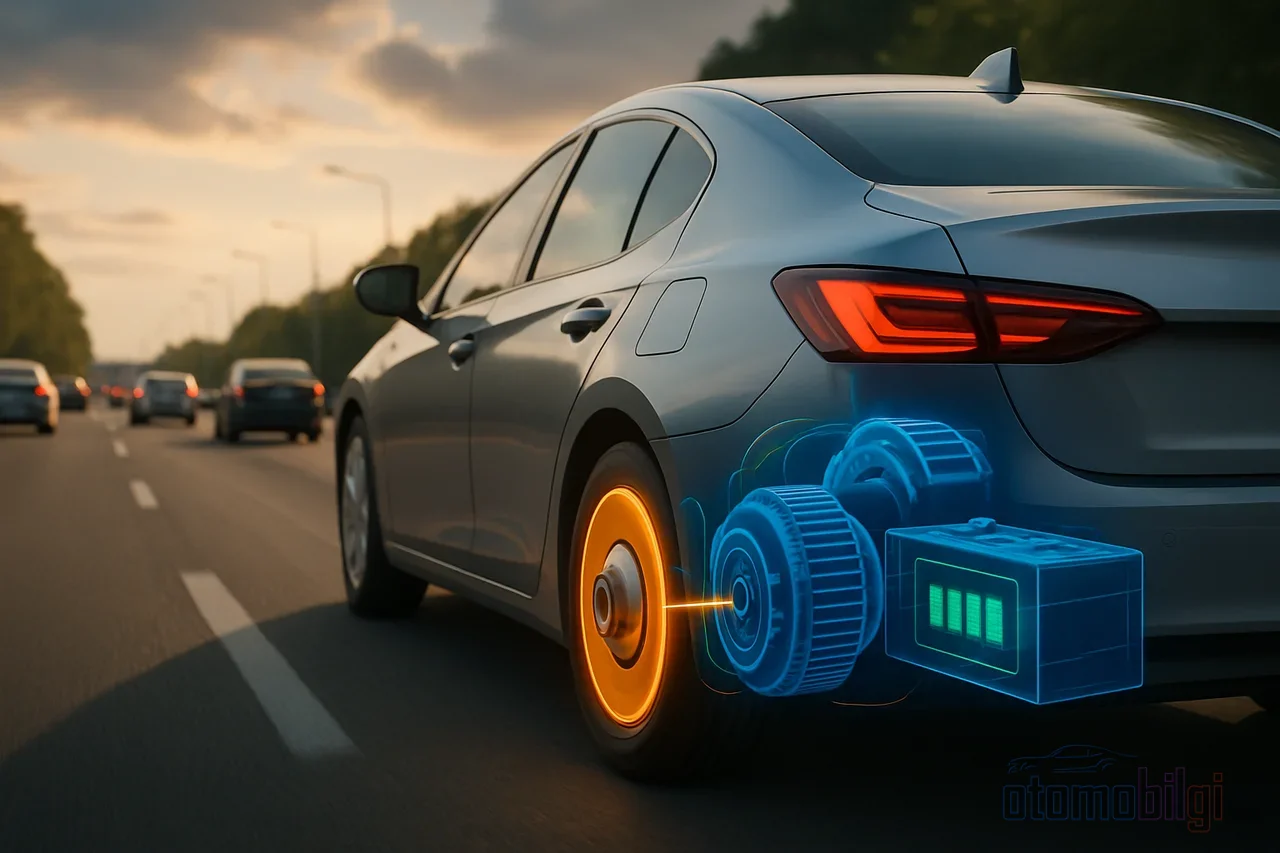
Regenerative braking is an energy recovery system used in hybrid and electric vehicles that converts the kinetic energy that would otherwise be lost while slowing down into electricity by temporarily turning the electric motor into a generator and stores it in the battery. Energy that would normally be wasted as heat during braking is thereby converted back into driving power; this is precisely the technical explanation of how a hybrid "charges itself."
Key Highlights
- Hybrids can achieve 20-35% fuel savings compared to conventional gasoline vehicles.
- Full hybrids charge their batteries only through regenerative braking and the internal combustion engine; plug-in hybrids also offer the option of charging via a plug.
- Cold weather temporarily limits regeneration; this restriction, made to protect the battery, is lifted automatically once the battery warms up.
- Toyota has applied a 10-year / 150,000-mile high-voltage battery warranty to its hybrids and plug-in hybrids since the 2020 model year.
- Regenerative braking significantly extends the life of friction brake components.
How does regenerative braking work?
Every electric motor can work in both directions: feed electricity into it and it produces traction; turn its shaft from the outside and it generates electricity. Regenerative braking is the natural consequence of this bidirectionality. When slowing down begins, the vehicle control system switches the motor into "reverse mode"; the traction motor becomes an electric generator and converts the mechanical energy it takes from the rotating wheels into electricity. During this process, the electrical resistance applied to the motor provides the braking force needed to slow the vehicle. There are also alternative architectures in which the energy can be stored chemically in a battery, electrically in a capacitor, or mechanically in a flywheel, but the vast majority of vehicles on the road use the battery.
The physics is quite clear: the kinetic energy of a moving vehicle is either lost as heat in the brake discs or recovered through regenerative braking. Mazda's official statement summarizes this conversion as follows: "The kinetic energy of a moving vehicle is captured and converted into electrical energy; it is not dissipated as heat."
A critical technical limitation is often overlooked: regenerative braking alone cannot safely bring the vehicle to a stop. At low speeds, the recovery effect diminishes, and the mechanical, i.e. friction, brake must engage to bring the vehicle to a complete stop. For this reason, modern systems manage both types of braking simultaneously. The commercial pioneer of this integration was GM EV-1 which controlled regenerative and friction braking together; the brake-by-wire patents from 1997-1998 bear the signatures of Abraham Farag and Loren Majersik. Going further back in history, the concept was introduced in 1886 by Frank J. Sprague; it was used in the 1890s in Krieger electric vehicles in Paris traffic, and in 1967 the AMC Amitron became the first fully automatic example, initiating battery charging automatically whenever the brake pedal was pressed.
How a hybrid charges itself: the difference between full hybrid and plug-in
The question "Should a hybrid vehicle be plugged in?" is one of the most frequently asked questions by those curious about hybrids, and the answer depends on the type of vehicle. Full hybrids (HEV) - called "self-charging" hybrids in marketing language - recharge their batteries from only two sources: regenerative braking and the internal combustion engine. They do not need to be plugged in; regenerative braking transfers energy back to the hybrid battery, keeping the battery at a consistently proper charge level.
Plug-in hybrids (PHEV), on the other hand, can be charged both via charging equipment and regenerative braking. They can be powered from a home outlet, wall unit, or a charging point at work; thanks to grid electricity, they can run part or all of the vehicle on electric power. Larger battery packs offer a noticeably longer 100% electric range compared to self-charging hybrids.
The difference between the two architectures is not just battery size. Plug-in models are more likely to offer regen levels that the driver can adjust, and even one-pedal driving. In hybrids, regenerative braking improves efficiency, but its role is not as dominant as in a fully electric vehicle; the system's task is to keep the small battery at its charge level.
| Feature | Full hybrid (HEV) | Plug-in hybrid (PHEV) |
|---|---|---|
| Charging via plug | Not required | Required (home, outlet, wall unit, workplace) |
| Sources that charge the battery | Regenerative braking, internal combustion engine | Charging equipment and regenerative braking |
| Electric range | Short | Longer 100% electric range |
| Regen levels / one pedal | Less common | More common |
Do NiMH and lithium-ion batteries respond differently to regen?
Short answer: yes, the difference is measurable. Lithium-ion packs have lower internal resistance; this means power is delivered faster, improving the energy capture rate in regenerative braking and therefore the feel of electric assistance. Lithium-ion chemistry generates less heat during charging/discharging, charges faster, and offers better regenerative braking efficiency. On the other hand, lithium cells are more sensitive to charging; the battery management system (BMS) first routes the current coming from regen into a buffer zone and keeps the cells within strict limits.
NiMH has its own strengths: a wider operating temperature range and a lower fire risk. Its cost per watt-hour is also generally lower. Its weaknesses are numerical: compared to lithium-ion, energy density and cycle life lag behind, it is prone to the memory effect, and it carries a high self-discharge rate - although this rate can be reduced with new chemical additives, low energy density ultimately becomes inevitable. In short: lithium-ion is more agile in regen, NiMH is sturdier and cheaper; manufacturers choose the pack according to the vehicle's mission.
Regen levels and one-pedal driving
Regenerative braking is not a single setting; in most modern vehicles the driver selects the deceleration strength in stages. One-pedal driving (OPD) is the setting at the far end of this scale: when you release the accelerator pedal, the vehicle slows down rapidly, and it can even come to a complete stop on flat ground - models from some manufacturers such as Chevrolet can achieve a full stop with a single pedal. This behavior can be thought of as a kind of engine braking; steering wheel controls such as Honda's regeneration paddle slow the car down faster than one-pedal mode, because in this mode the pedals effectively act as brakes. In heavy traffic, one-pedal driving, and in flowing traffic softer automatic regeneration, are preferences that are common among drivers.
There is one safety detail to watch out for: whether the brake lights should illuminate while the vehicle slows down with regeneration used to vary from manufacturer to manufacturer. This gap is being closed with new regulations; China's GB 21670-2025 standard makes it mandatory for the brake lights to illuminate when deceleration from regenerative braking exceeds 1.3 m/s². Another debated aspect of one-pedal driving is the concern over sudden unintended acceleration (SUA) linked to the risk of the driver mistaking the accelerator for the brake in stressful situations - which is why OPD is not offered as the default setting in all markets.
Why is regenerative braking restricted in cold weather?
Many drivers notice that regeneration weakens in winter, and the reason is not a system fault but the battery's chemistry. As the temperature drops, the chemical reactions in the battery slow down and the battery's ability to accept and store energy decreases. A cold lithium battery suddenly charged at high current carries the risk of lithium plating - that is, the metallic deposition of lithium on the anode surface; this is a situation that can cause permanent damage to the battery. This is why the vehicle's control system temporarily restricts regeneration: the aim is to protect the battery, not to harm it. When the battery warms up, the restriction is lifted and regeneration returns to full capacity; many models speed up this process by actively heating the battery.
There are two more separate limits that come into play in the cold. At low temperatures, a slight range drop and longer charging times are observed. And although it may seem surprising, there is another logical situation: if the battery is completely full, regenerative braking does not work at all, because there is nowhere for the ions to go back to. Descending a long hill with a fully charged battery is the least efficient scenario in terms of regeneration.
How much real fuel savings?
Regenerative braking measurably improves real-world fuel consumption by converting kinetic energy into electricity during deceleration and storing it in the battery. As an aggregate figure, hybrids achieve 20-35% it can save fuel. However, this gain is not evenly distributed: the efficiency improvement from regenerative braking depends on speed and braking patterns. In city driving with low speeds and frequent deceleration, the gains are high; in steady-speed highway driving where the brake is almost never touched, the gain approaches zero. For this reason, some hybrids may have lower fuel economy values on the highway compared to city driving - the opposite of what is expected in a gasoline vehicle.
How does driving style increase the gain?
The same vehicle consumes differently depending on the driver, even on the same route. Anticipating traffic ahead and decelerating gradually through drag instead of braking hard gives the regenerative system time to recover energy and charge the battery. Sudden, late braking, on the other hand, misses part of the regeneration and leaves the job to friction brakes - meaning the energy becomes heat on the discs. The gain is not only fuel either: since friction brakes wear less, discs, calipers, and pads last longer, and brake system maintenance intervals are extended. The reverse question is also reasonable: how much of hybrid efficiency comes from regeneration, and how much from running the engine in a more efficient rev range? The two factors work together and their shares vary by model; there is no single clear answer.
Battery life, warranty, and replacement cost
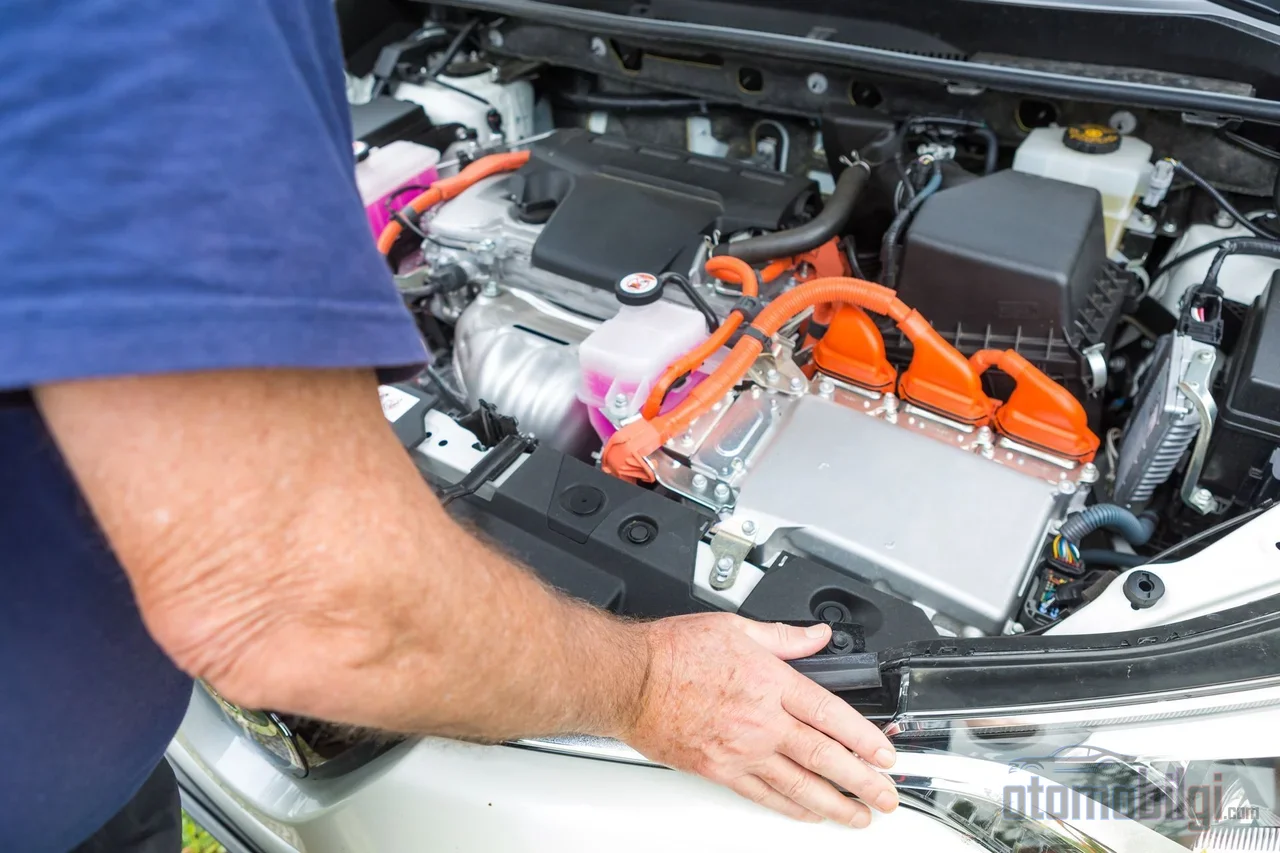
Regeneration does not constantly strain the battery; on the contrary, it slows the aging of the hybrid battery by keeping its charge level within a narrow window. Manufacturers' warranty commitments also reflect this confidence. Toyota applies the same 10 years / 150,000 miles high-voltage battery warranty to standard hybrids and plug-in hybrids from the 2020 model year onward. Hyundai, within a similar framework, guarantees that the high-voltage battery will retain at least 70% of its original capacity for 10 years. In California, however, emissions regulations require that hybrid and electric vehicle batteries be covered for 10 years / 150,000 miles.
If it falls outside the warranty, the cost table spans a wide range. A dealer's battery replacement quote for a 2017 Prius was $2,700 and the new battery came with a 3-year warranty; through the manufacturer channel, hybrid battery replacement is generally shown as $2,000-8,000 . The upper range given by independent services and warranty companies is much wider: hybrid battery pack replacement is $5,000-15,000 or more. The difference is explained by whether the pack is repaired as a whole or cell by cell, the vehicle's model, and labor costs.
Conclusion: A system that extracts energy from braking
Regenerative braking is the heart of a hybrid's self-charging mechanism. The motor turns into a generator, channeling energy that would normally be lost as heat in the brake discs back into the battery; a significant share of the hybrid's savings of up to 20-35% in city traffic comes from here. The system's limits are also clear: at low speeds it works together with the friction brakes, it is throttled in cold weather to protect the battery, and it does not work at all when the battery is full. A driver who consciously uses its stages and one-pedal mode extends the life of both energy and brake components - from an engineering standpoint, this is a gain that is not free but comes very close.
Sources
- Regenerative braking - Wikipedia
- Regenerative Braking - Clemson University CVE
- What Is Regenerative Braking and How Does it Work? - Mazda USA
- What is Regenerative Braking & How Does It Work? - Kia UK
- What's the Difference Between Hybrid and Plug-In Hybrid - Toyota
- Plug-In Hybrid Electric Vehicles - Alternative Fuels Data Center
- Hybrids vs. Plug-In Hybrids: Pros and Cons - Car and Driver
- NiMH vs Lithium-Ion Batteries for Toyota Prius - NextgPower
- NiMH vs. Li-ion Hybrid EV Batteries - A3 Global
- Comparison of NiMH and Li-Ion Batteries in Automotive Applications - Missouri S&T
- What Is One-Pedal Driving? - MotorTrend
- How to Use One-Pedal Driving and Regen On Demand - Chevrolet
- Innovative Braking Tech Helps EVs Go the Extra Mile - GM Financial
- Why Does Regenerative Braking Not Work in the Cold? - Medium
- How Does Cold Weather Affect Electric Cars? - CUPRA
- Regenerative Braking with a Cold Battery - Tesla Owners Online
- How much Do You Really Save with a Hybrid Car? - Sunset Hills Subaru
- Fuel consumption of hybrid electric vehicles under real world conditions - ScienceDirect
- Are Hybrids a Smart Choice Right Now? - Consumer Reports
- Toyota Hybrid Battery Warranty Explained - North Hollywood Toyota
- Demystifying the Hyundai Hybrid Battery Warranty - Herrnstein Hyundai
- Car Warranty Coverage for Hybrid and EV Batteries - KBB
- Hybrid Battery Problems, Repair Costs, Lifespan and Warranty - A-Protect Warranty