Do Hybrid Vehicles Really Need Charging?
Share This Page
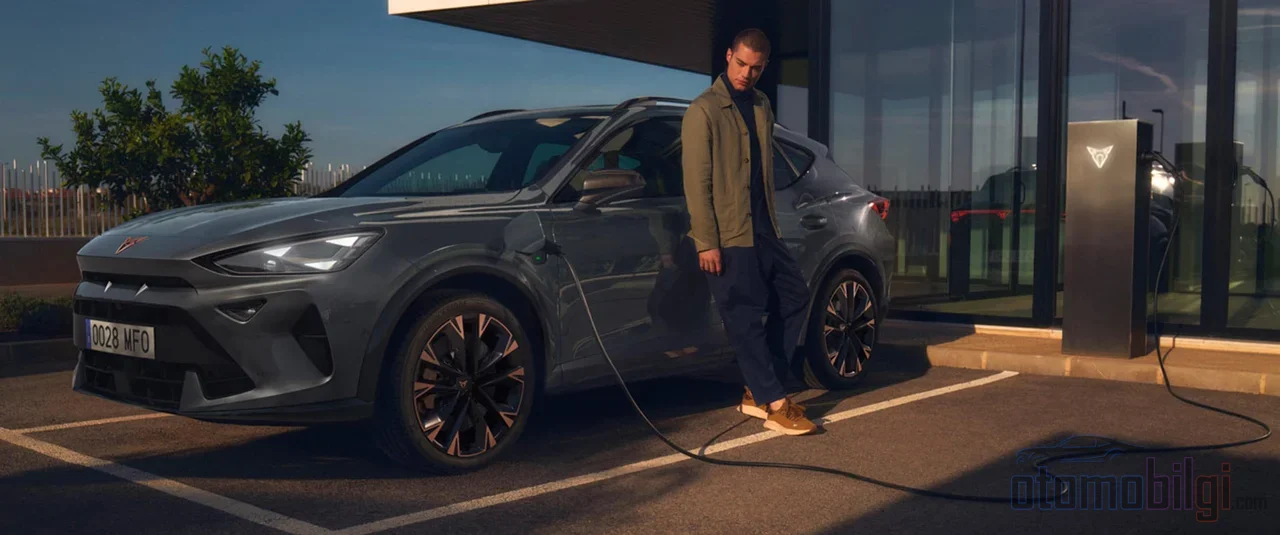
The answer depends on the hybrid type: full hybrid vehicles are not plugged in, in fact they cannot technically be plugged in at all; they recharge their batteries on their own thanks to regenerative braking and the gasoline engine. Plug-in hybrids (PHEVs), on the other hand, require charging from an outlet; when not plugged in, the vehicle still runs but most of the electric range and fuel advantage is lost. So there is no single correct answer to the question of whether charging is required; the correct answer lies in the vehicle's hybrid type.
Highlights
- Full hybrid batteries are typically 1 kWh or less in capacity and are not plugged in.
- Plug-in hybrids typically offer 15-50 miles (24-80 km) of electric range.
- A PHEV that is not plugged in works like a normal hybrid but almost always consumes more fuel compared to a standard hybrid.
- On a 240-volt (Level 2) charger, most PHEVs fill up in 2-3 hours ; on a 120-volt home outlet, overnight is enough.
- A PHEV battery carries roughly one sixth of the energy of an average fully electric vehicle battery.
Two Hybrid Types, Two Different Charging Logics
Here is the origin of the confusion: both vehicle types use a gasoline engine and an electric motor together, but how they deliver energy to the battery is completely different. A full hybrid is a closed energy system. There is no external input to the battery at all; all the energy needed is produced and consumed within the vehicle itself. A PHEV, on the other hand, is deliberately an open system: it is designed to take electricity from outside, because it carries a battery pack that can hardly be considered small, and the practical way to fill that battery completely is the plug.
Seeing the size difference in numbers is useful. A full hybrid's battery typically stays around or below 1 kWh ; that means just enough energy to support the engine in stop-and-go traffic and travel a few hundred meters in electric mode. On the PHEV side, a typical package is around 14 kWh and offers more than 20 miles of pure electric driving. The average PHEV battery capacity has steadily increased in recent years, and some models have reached 55 miles (approximately 88 km) of electric range. The difference between these two classes is not a nuance but a matter of an order of magnitude.
| Feature | Full Hybrid | Plug-in Hybrid (PHEV) |
|---|---|---|
| Is it plugged in? | No, cannot be plugged in | Yes, must be plugged in by design |
| Typical battery capacity | Approximately 1 kWh or below | Average 21.8 kWh (2023 data), trending upward |
| Electric range | Short distances, low speeds | Approximately 15-50 miles, up to 55 miles in some models |
| Charging time | Not required | 2-3 hours on Level 2; overnight on a 120 V outlet |
| If not plugged in | No problem, the system is independent | It runs but the electric advantage is lost |
| Starting cost | Lower | Usually higher than the equivalent hybrid |
How Does a Full Hybrid Recharge Itself?
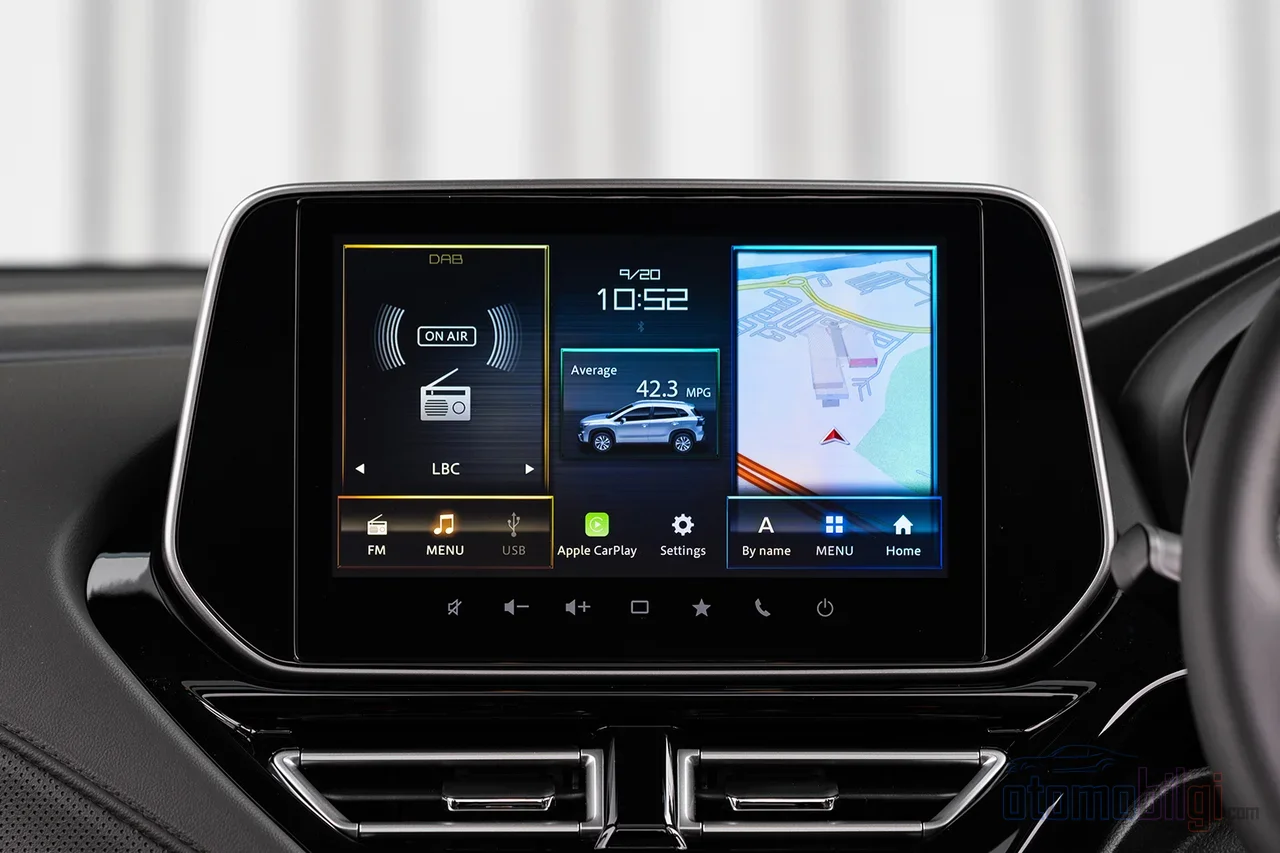
The charging mechanism of a full hybrid is called regenerative braking, and how it works is a matter of physics more ordinary than you might think. When you brake or lift off the accelerator, the vehicle's kinetic energy is lost as heat in a normal gasoline car. In a hybrid, the electric motor switches to generator mode at that moment; the rotation of the wheels turns the motor in reverse, kinetic energy is converted into electricity and stored in the battery. Functionally, it serves a role similar to the alternator in a gasoline car, the difference being the scale of energy: the amount recovered is much greater and directly feeds the high-voltage battery.
This process kicks in automatically the moment you brake or release the accelerator; the driver does not need to do anything at all. That is why it is no coincidence that one of the names manufacturers give to their full hybrid vehicles is self-charging hybrid. The vehicle's battery recharges itself on the road, in stop-and-go traffic and on downhill slopes. There is no need to look for an infrastructure to plug into at your home or workplace, to carry a charging cable, or to schedule charging hours. In practice, the driver only notices the battery's state of charge on the display screen when driving a full hybrid; the rest of the system runs by itself.
What Happens If a Plug-in Hybrid Is Never Plugged In?
Short answer: nothing dramatic happens. The vehicle keeps running, because the PHEV's gasoline engine and hybrid drivetrain can operate independently. Since the battery is not plugged in, it operates at a low state of charge but it is not considered completely empty either; part of its capacity is held in reserve and maintained at that level through regenerative braking and power drawn from the engine. In this mode, the vehicle behaves like a normal full hybrid.
But here is where the real problem begins. Electric range disappears, and the vehicle completes its entire daily driving on gasoline. Regenerative braking works, but it is no substitute for plug-in charging: even on a long, steep downhill descent only 1-4 miles of pure electric range can be recovered. It cannot even be compared to the tens of kilometers of charge obtained from the plug. As a result, a PHEV that is never plugged in will probably deliver better fuel economy than a vehicle that is not a hybrid at all, but compared with a comparable standard hybrid it consumes almost always worse.
There is also a cost dimension. A PHEV is usually sold at a higher starting price than an equivalent standard hybrid; what is included in that price is the large battery, power electronics and charging hardware. If the vehicle is never plugged in, it is possible to get the same driving experience with a cheaper standard hybrid, and the expensive technology sits idle. The picture is the same on the emissions side as well: a PHEV that is not regularly charged fails to deliver the environmental benefit its design promises.
How Burdensome Is PHEV Charging in Practice?
Before thinking of the charging need as a nightmare, it is worth looking at the numbers. A PHEV battery carries roughly one-sixth the energy of an average fully electric vehicle battery; consequently, it charges that much faster. 240 volt (Level 2) wall unit, most models in 2-3 hours charge fully. Even more importantly, a standard 120 volts even a household outlet is enough to charge most PHEVs overnight. So special infrastructure is not a requirement; if you have a usable outlet in your garage or parking area, your daily charging routine amounts to nothing more than plugging in and unplugging the cable.
Compared with daily distance, the equation becomes even clearer. In the United States, the average daily drive is about 31 miles (50 km) and PHEVs are designed to run on electricity for the first 25-50 miles A user who charges regularly can go through most of their daily use almost without gasoline; when the battery runs low, the vehicle seamlessly switches back to normal hybrid mode and the gasoline range takes over. This is why a PHEV is a sensible choice only when it can be charged: it delivers value if your daily distance is close to the electric range and you have access to an outlet every night. If either of these two conditions is missing, buying a standard hybrid for the same money is a much more rational calculation.
Battery Types, Lifespan, and Temperature Effects
In both hybrid classes, battery chemistry comes down to two main options: nickel-metal hydride (NiMH) and lithium-ion. NiMH packs are cheaper per watt-hour, withstand more charge cycles, tolerate hot weather better, and offer higher capacity per cell. Lithium-ion's trump card is energy density: it carries the same energy in smaller and lighter packs, responds faster thanks to its low internal resistance, and often exceeds more than 1,000 cycles, surpassing the typical NiMH lifespan of about 500 cycles. This is why lithium-ion is preferred in large-battery PHEVs, while some manufacturers continue to use NiMH in their full hybrids due to cost and track record.
How much are battery lifespan and replacement costs?
A complete replacement of a high-voltage hybrid battery is an expensive job: typical ranges run around $2,000-8,000 depending on the model, battery size, and labor, and can reach $5,000-10,000 on some models. Refurbished packs or replacing only the faulty cells soften the picture considerably; for example, for a popular hybrid model, a remanufactured pack can start from $1,299 while a brand-new pack with warranty starts from $2,249 Many manufacturers cover the hybrid battery for a long period under the vehicle's general warranty; it is worth checking the warranty period of the model you choose before buying, because this single item can change the long-term cost calculation.
What do cold and hot weather change?
Temperature affects both hybrid types, but to different degrees. In cold conditions, hybrids experience a smaller yet still measurable loss of performance and efficiency; falling temperatures reduce both the efficiency of the internal combustion engine and the battery's ability to deliver power. In extreme heat, the picture reverses: 40°C the scorching temperatures around it can cause accelerated degradation in lithium-ion cells and may permanently damage the cells in the long run. This does not mean regenerative braking becomes worthless; it simply shows that battery health should be viewed not with worry, but as an ordinary maintenance parameter.
Which Hybrid Should You Buy? Decisive Questions
This difference is not just a technical curiosity; it is a distinction that directly determines the purchase decision. Ask yourself three questions in order: Can the vehicle be plugged in every night? Is your daily driving distance close to a PHEV's electric range? And do you genuinely value the electric driving experience? If you answer yes to all three, a PHEV offers the opportunity to cover daily use without gasoline. If you answer no to any of them, there is no point in paying extra for a vehicle whose plug you will see as a burden; a standard hybrid is the cheaper, less complex solution that suits your usage pattern.
Let's add a reliability note: according to reliability data, PHEVs record noticeably more problems than both standard hybrids and pure gasoline cars. This is partly due to the complexity brought by two separate drivetrains, and partly due to faults related to extra systems such as scheduled charging. To be honest, the most common usage mistake with these vehicles also concerns charging habits: many people buy a PHEV but never plug it in, because no one explains at the time of purchase what this difference actually means. The technical fact is simple and holds no deceptive surprise: when asked whether a full hybrid needs a plug, the answer is no, while in a PHEV the decision not to charge effectively cancels out a large portion of the vehicle's value.
Conclusion: Charging Need Is a Type Question, Not a Brand Question
The most common mistake is to think of hybrids as a single vehicle class. A full hybrid charges itself, needs no plug, and expects no infrastructure; regenerative braking already produces everything it needs along the road. A plug-in hybrid, on the other hand, only truly delivers the electric range, fuel savings, and emissions advantages it promises when it is charged regularly. In short, before asking the vehicle, you need to ask yourself: do you have access to a plug, and does your daily route fit within the electric range? Once your answer becomes clear, the hybrid choice becomes clear on its own.
Sources
- What Happens If You Never Charge Your Plug-In Hybrid?
- Do You Have to Charge a Hybrid Vehicle?
- Do Hybrid Vehicles Need to Be Plugged in to Charge?
- Plug-In Hybrid Electric Vehicles
- Plug-in Hybrid Car Range: A Chart
- Electric, hybrid and plug-in hybrid - what's the difference?
- Regenerative braking
- What is Regenerative Charging
- Hybrid vs. Plug-in Hybrid Cars: What's Right for You?
- NiMH vs. Li-ion Hybrid EV Batteries
- Lithium vs NiMH Battery Packs
- Lithium-Ion vs NiMH Batteries
- How Often is a Hybrid Battery Replacement?
- Hybrid Battery Replacement Cost
- AAA Study Reveals Temperature Impacts on EV and Hybrid Performance
- How does extreme weather affect EV battery performance?