What Happens to Plug-in Hybrid Owners Who Never Plug In?
Share This Page
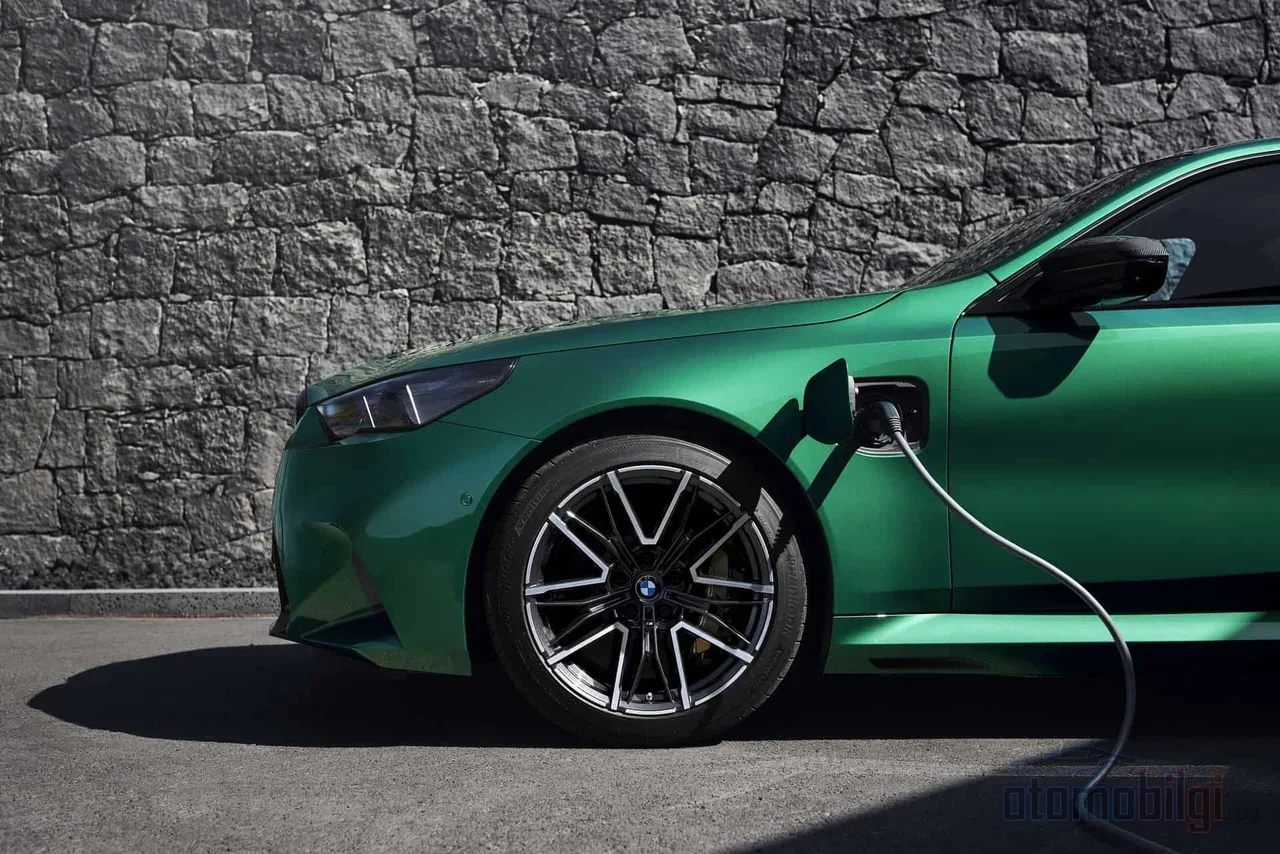
Nothing bad happens to a plug-in hybrid that never gets plugged in: the vehicle keeps working like an ordinary hybrid, with the battery's reserved portion fed by regenerative braking. The damage is not to the vehicle but to your wallet; because a unplugged PHEV is heavier than a comparable standard hybrid, it almost always delivers worse fuel economy.
Highlights
- The official average consumption of PHEVs is ~1.57 L/100 km; in the real world it rises to 6.12 L/100 km.
- When plugged in, a PHEV can go 20-50 miles (roughly 32-80 km) on pure electricity; average daily driving in the US is ~31 miles.
- A PHEV battery carries about one sixth of the energy of an average EV battery.
- On Level 2 (240 volt) charging, a full charge takes 2-3 hours; overnight on a 120 volt household outlet.
- According to a manufacturer executive, "what we know about plug-in hybrids today is that most people don't plug them in."
What Happens to a Plug-in Hybrid Owner Who Never Plugs In?
Mechanically, nothing happens - and that is the interesting part. When a PHEV's high-voltage battery appears "depleted," it is not actually completely empty; a portion of its capacity is held in reserve, and the battery continues to draw power from regenerative braking and the engine, just like in a full hybrid. Some models can even regain 1-4 miles of pure electric range during long, steep downhill descents.
So there is no breakdown, battery damage, or stranded-on-the-road scenario. The economic and environmental scenario, however, is very clear: an unplugged PHEV usually consumes more fuel than a standard hybrid. The reason is simple physics - a PHEV carries a battery that is several hundred pounds heavier, and you drag that weight along every kilometer. While it is still somewhat better than gasoline vehicles, you end up with the strange combination of "a more expensive but less efficient hybrid."
What we know about plug-in hybrids today is that most people don't plug them in.
The Gap Between the Advertised Figures and the Real World
The distance between the PHEV's promise and its reality is wide enough to be measured in numbers. Official test cycles assume that the driver will plug in every day and that the electric range will be used regularly. In reality, PHEVs with an official average of ~1.57 L/100 km soar to 6.12 L/100 km in real-world use - roughly a fourfold difference. A large-scale study of one million vehicles confirms the same result: PHEVs burn far more fuel than the manufacturer promised.
Regulators have also accepted this reality. When real-world data showed that drivers use far less electricity and far more gasoline than regulators assumed, the EPA lowered the assumed electric driving share in the regulation it proposed in 2023: for example, a PHEV with 35 miles of electric range now counts as "zero carbon" at a rate of 45% instead of 57%. Data from vehicle computers, which carries no user bias, shows an even lower electric driving share than app-based fuel logs.
The incentive paradox
The awkward part is this: some drivers, the $7,500 federal EV tax credit's old version and state incentives let them buy a PHEV cheaper than its gasoline equivalent and then use it entirely like a gasoline car. For manufacturers, this picture is fine too; PHEV is a cheaper emissions compliance route compared to full EVs, and they don't have to verify whether it's plugged in. Manufacturers aren't required to report plug-in data collected via telematics, and most don't report it.
Weight Penalty: The Price of the Big Battery
The source of the penalty paid by the driver who never plugs in lies beneath the vehicle's body. Full hybrid (HEV) batteries typically have a capacity of 1-2 kWh and work within a narrow charge range, focused on power - designed to return energy from regenerative braking during acceleration. A PHEV carries a battery several times larger than a full hybrid; on average, about one-sixth the energy of an EV battery moves these vehicles down the road.
For a driver who never uses the electric range, this weight difference is pure ballast. Edmunds and independent testing come to the same conclusion: due to the extra weight, PHEVs have somewhat worse fuel economy than their hybrid siblings. The reliability picture isn't bright either - PHEVs cause noticeably more reliability problems than both classic hybrids and gasoline cars; the complexity of two drivetrains on one side, and complaints about features like scheduled charging and cabin pre-heating via an app, are among the reasons. Nearly three dozen PHEVs are sold in the US market, and every model carries the same equation.
Charging Habits Change Everything
What makes a PHEV valuable isn't the vehicle itself, but the usage pattern. While plugged in, 20-50 miles (32-80 km) of electric range; in a regime where electric mode covers most of daily driving, these vehicles deliver an entirely different calculation. The average daily drive in the US is about 31 miles - meaning a driver who plugs in every night could theoretically complete most days without burning a drop of gasoline.
The impact of charging at home and at work
Among drivers with the ability to plug in at home or work, electric-only mileage can exceed 50% and fuel consumption can drop to nearly half. Charging at work is an increasingly common option among EV and PHEV owners; a vehicle left plugged in overnight sets off in the morning with full electric range. Level 2 (240 volt) charging station, the battery charges in 2-3 hours, while on a 120 volt standard home outlet it charges overnight.
The same equation works in reverse: those without home charging - especially apartment-dwelling renters - practically can't use the PHEV's advantage at all. The electric range stays on paper, while the vehicle's weight is paid for every day.
Who Should Buy a PHEV, and Who Is Better Off with a Standard Hybrid or Gasoline Car?
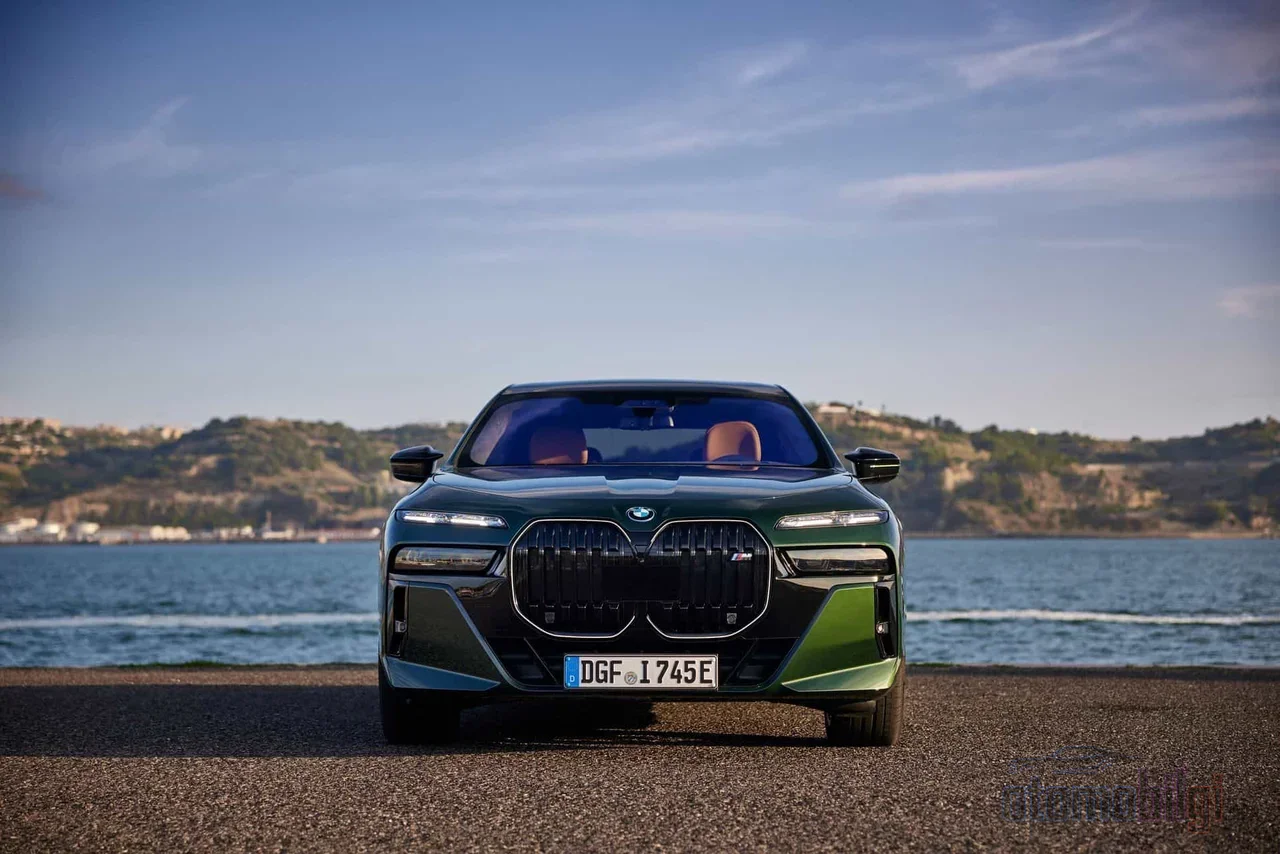
The answer lies in the driving profile. The profile that truly benefits from a PHEV is narrow and defined: daily Less than 70–100 km of driving per day, mostly urban usage, and the ability to charge at home every night. In this scenario, the bulk of daily distance is covered electrically, and gasoline is used almost never, as an insurance policy for long trips.
| User Profile | Recommended Choice | Why |
|---|---|---|
| Can charge at home every night, under 70–100 km per day | PHEV | Most daily driving is electric, gasoline is almost never burned |
| No charging option at home or work | Full hybrid or gasoline | A PHEV that never gets plugged in consumes more than a standard hybrid |
| Priority is low purchase and operating cost | Full hybrid | Cheaper upfront, slightly better fuel economy |
| Frequently drives long distances and doesn't want charging stops | PHEV or full hybrid | With a gasoline tank, long trips involve none of the charging stops of EVs |
The long-distance scenario carries clear data in the PHEV's favor: drivers setting off fully charged report averages of around 50–51 mpg (~4.6 L/100 km) over the journey in forum experiences. In a market where electricity costs half as much as gasoline, repeating this makes economic sense too - meaning the plug is encouraged by financial logic as well; so the "nobody plugs in" generalization should be approached with skepticism: there are also PHEV communities that plug in regularly, and they form a vocal minority.
Cold Weather and Other Range Factors
Electric range is not a fixed value. Temperature studies show that cold weather has the greatest effect on full EVs, while hybrids experience smaller but real losses. In a PHEV, this effect has two layers: electric range shrinks in winter, and consumption in gasoline mode rises slightly. Even so, the range drops of serious proportions seen in winter in older-generation PHEVs are far more limited in today's models.
Regenerative braking is the balancer of this picture. Even if the battery is never plugged in, the energy recovered during braking, together with the reserved capacity, allows the vehicle to operate in hybrid mode with reasonable efficiency. The problem is not efficiency but opportunity cost: the same regenerative system, combined with regular plugging in, produces several times more electric kilometers.
The "Should We Punish Those Who Don't Charge?" Debate
The topic has evolved beyond a matter of wallets into a policy debate. A driver who never charges can, controversially, burn more fossil fuel than a gasoline vehicle by dragging around a depleted battery; which is why criticism of PHEVs as "eco-roleplaying" grew. The most striking proposal is also harsh: one manufacturer executive said it is technically possible to reduce engine power via a remote software update for PHEV owners who never charge - "if the driver never charges the battery, engine power can be reduced; technically this is feasible."
The other side's argument is also strong: after all, it is the vehicle owner's decision, and no one thinks such an intervention will be implemented anytime soon. Cutting the power you paid for in a software update is, from a consumer rights perspective, as problematic an area as reduced consumption. For now, the debate remains at the rhetorical level; regulators are taking a softer route by tightening the assumptions manufacturers make on consumers' behalf.
Conclusion: The Plug Is the Only Way to Recoup the Price Difference
A PHEV is initially a more expensive vehicle: its large battery and charging hardware create this difference. The only mechanism that can close the gap is electric range - in other words, the plug. For a driver who charges every night and whose daily driving stays below 70-100 km, a PHEV is a sensible and economical choice. If you will not plug it in, the math points to the same conclusion: buying a regular hybrid is both cheaper upfront and offers slightly better fuel economy. The numbers are clear; the choice is yours.
Sources
- What Happens If You Never Charge Your Plug-In Hybrid? - Car and Driver
- Don't plug in your plug-in hybrid? EPA will now hold automakers responsible. - ICCT
- PHEVs Promised Efficiency, Drivers Are Burning Three Times More - Carscoops
- PHEVs Use More Fuel Than Advertised, Major Study Finds - ElectricCarsReport
- What Should Automakers Do If Plug-In Hybrid Owners Never Plug In? - BMWBlog
- Plug-In Hybrid Electric Vehicles - Alternative Fuels Data Center
- What is the Battery Differences in EV, HEV, PHEV? - Midtronics
- Will a Plug-In Hybrid Save You Money? - Consumer Reports
- Hybrid vs. Plug-in Hybrid Cars: What's Right for You? - Edmunds
- Workplace Charging - Plug In America
- Plug-in Electric Vehicle Charging: The Basics - EPA
- AAA Study Reveals Temperature Impacts on EV and Hybrid Performance - AAA
- What to know about driving PHEVs in the Canadian winter - Mitsubishi Motors Canada