Why Does a Hybrid Sometimes Refuse to Switch to Electric Mode?
Share This Page
The main reason a hybrid vehicle switches to the gasoline engine even when the battery gauge shows full is that the control software evaluates electric mode against thresholds such as speed, power demand, battery temperature, and cell voltage balance. The "fullness" you see on the gauge and the energy the system is willing to use for electric driving are not the same thing; the system deliberately keeps this band narrow to preserve battery life.
Highlights
- In full hybrids, EV Mode can generally be used up to 24-40 km/h Toyota defines this limit at approximately 40 km/h .
- Battery charge is kept within a narrow band for cell longevity; the visible "fullness" and the usable energy are not the same.
- With a very cold or very hot battery, the system limits the power it can deliver and relies more heavily on the gasoline engine.
- Sudden acceleration, hills, and cabin heating demand can end EV Mode on their own.
- The hybrid battery is not designed to power the vehicle on its own for long periods; the system deliberately prevents this.
Control Logic: How Full Is a "Full" Battery, Really?
The brain of the hybrid system is an energy management software that constantly reads a set of inputs: battery state of charge, cell temperatures, cell voltages, vehicle speed, accelerator pedal position, and requested power. Electric mode engages when all of these inputs remain within certain limits at the same time. If even one of the limits slips outside, the software switches to the gasoline engine - and it does so without giving you a long explanation.
The first and most misleading input is the state of charge itself. Whether nickel-metal hydride or lithium-ion makes no difference; hybrid batteries are chemical systems that dislike being fully charged or fully discharged. At the extremes, the cells come under stress and their lifespan shortens. For this reason, the management software keeps battery charge within a narrow band: the point the gauge calls "full" is actually the upper band of the usable portion of the chemical capacity. The system deliberately limits the usable energy to preserve its lifespan. Manufacturers state this openly: if the hybrid battery's energy drops below a certain level, the gasoline engine engages to charge it even if the vehicle is not moving.
So part of the answer to the question "why did it switch to gasoline mode while my battery was full" is mathematical: the fullness you see is wider than the energy budget the system allocates for electric driving. The difference is a buffer zone deliberately reserved to protect the battery.
Speed and Power Demand: EV Mode's Hard Limits
In the hybrid's design philosophy, EV Mode is a tool for low speed and short distance. In full hybrids, the switch from battery to gasoline engine generally occurs in the 24-40 km/h range; manufacturers position this threshold at approximately 40 km/h . This range should not be read as a fixed value: the transition point shifts depending on the current battery condition and power demand.
The physics beyond that boundary is simple. As speed increases, air and rolling resistance grow, the power drawn by the electric motor rises exponentially, and the current demanded from the battery increases. Because high EV speeds directly increase the load on the battery and the power supply system, the software reserves for itself the band where the gasoline engine's efficiency and power are at their highest. If you press the pedal too hard during acceleration, the vehicle automatically exits EV Mode; the same rule applies when climbing hills and during rapid overtaking.
Temperature: A Silent but Steady Factor
Outside temperature and cabin heat are among the main reasons why a vehicle fails to switch to electric mode even though the battery is full. In cold weather, the internal resistance of lithium-ion and NiMH cells rises, the battery works less efficiently, and the power it can safely deliver or receive is reduced. A similar restriction is applied in extreme heat as well. The control software leans more heavily on the engine at both extremes; some systems even use engine heat to warm the battery.
This loss is measurable but relatively small. Hybrids experience performance and efficiency losses in cold conditions; in return, they are less affected than fully electric vehicles under the same conditions. The nuance matters: the loss exists, but the hybrid architecture buffers its impact with the engine. Additionally, the cabin heating demand alone can start the engine - because some of the heating energy comes from engine temperature.
Scenario by Scenario: When Does the System Go Electric, and When Gasoline?
Pulling away from a complete stop
When you first start a hybrid, the vehicle typically moves in electric-only mode and draws its power from the battery. If there is no cabin heating need, this electric start can last anywhere from a few hundred meters to a few kilometers. If heating is active, the engine engages early; this is not a malfunction, but the natural result of thermal management.
Low speed in city traffic
This is the home of EV Mode: low speed, short distance, gentle throttle. When conditions are suitable, the system progresses on battery power and emissions are zero. The stop-and-go cycle of traffic makes sustaining this mode easier, since regenerative braking recharges the battery at every slowdown.
Sudden throttle and hills
The moment you press the pedal noticeably, the software sees that the requested power exceeds the current the battery can safely deliver and connects the engine. On a hill, the same calculation is triggered earlier; the incline permanently raises the torque demanded.
Highway and high speed
Staying electric at high speed means high power demand and high load on the battery and the electric power supply system; therefore, in full hybrids, EV Mode cannot be used at highway speeds. The vehicle is designed for fuel savings in city traffic. In plug-in hybrids, the picture is somewhat different: efficiency drops at sustained high speeds, but the system can remain electric for a while during highway cruising as well. The rumor that "above 50 miles a hybrid always runs on gasoline" is not based on any precise numerical threshold; the transition is decided not by speed but by the instantaneous power balance.
Regenerative Braking and Charge Acceptance of a Fully Charged Battery
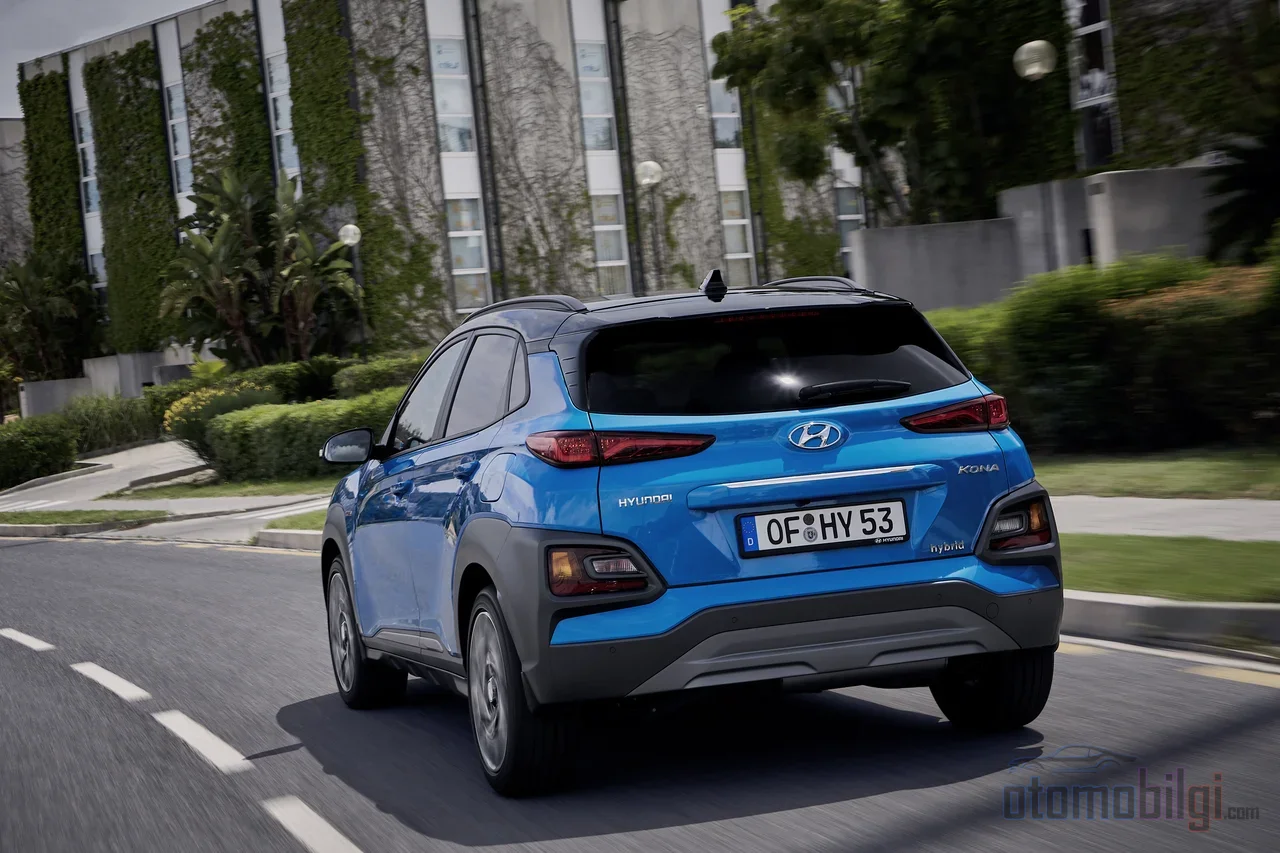
The mechanism that closes the energy loop in a self-charging hybrid is regenerative braking: as the car slows down, the electric motor turns into a generator, produces electricity from the rotating wheels, and carries this energy back to the traction battery. The generator works as a kinetic energy recovery system that converts braking energy into electrical energy; in some architectures, motor-generators take on both the drive and regeneration functions.
But there is a limit here as well: when the battery is fully charged, charge acceptance drops, and the effective charging rate of regenerative braking decreases. The system cannot risk pushing energy into a battery that is already sitting at the top band. This behavior is another piece of the question "why doesn't the system force EV mode at full battery" - both the input and output sides are restricted by the same protection logic. On steep descents, B mode increases regeneration and hands speed control over to electric braking; the engine kicking in for charging while coasting downhill in D mode is part of the same logic.
Is This Behavior a Fault? When Should You Worry?
Manufacturer sources describe these transitions as normal control logic, and in most cases they are right: the engine coming on when temperature, speed, and power demand thresholds are active is by design. The engine running periodically in "Ready" mode even when the battery is not fully charged is a normal part of the self-charging system. Forum users sometimes perceive the same situation as a problem; what reconciles the two perspectives technically is that the thresholds can be exceeded without you noticing.
The signs that should worry you, however, are as follows:
- The vehicle never starting in electric mode under any conditions in mild weather, at low speed, with a high battery indicator.
- A noticeable deterioration in fuel consumption without any explainable reason.
- The complete loss of electric mode accompanied by warning lights.
One practical maintenance note: the most common reason hybrids fail to start is not the high-voltage battery but a weak or dead 12-volt auxiliary battery. It is recommended that a vehicle that will not be used for a long time be kept in Ready mode for about 60 minutes per week or driven for at least 30 minutes; the engine coming on periodically in Ready mode is the charging process itself.
Summary: Electric Mode Is Not an Obligation, It Is a Budget
A hybrid's electric mode is not a mode but rather an energy budget calculated moment by moment. Every second, the system weighs the state of charge, cell temperature, speed, and requested power, and moves on the battery as long as the budget allows. Even when the gauge says "full," speed, cold weather, sudden acceleration, or the protection band may have consumed this budget. Switching to the gasoline engine is not an error but a sign that the system is working exactly as designed - keeping the battery in a narrow band is the very decision that protects cell life, and therefore your wallet, in the long run.
Sources
- How Do Hybrid Electric Cars Work? - AFDC
- Toyota Hybrid Drive Modes - Capitol Valley Toyota
- How Does EV Mode Work on the 2026 Toyota Camry Hybrid - Pueblo Toyota
- How Do Hybrid Cars Work? - Consumer Reports
- AAA Study Reveals Temperature Impacts on EV and Hybrid Performance - AAA Newsroom
- Comparison of energy consumption between hybrid and EV - ScienceDirect
- How Hybrid Cars Transition Between Battery and Petrol Power - Exclusively Hybrid
- Car not switching to EV despite full charge - Toyota Owners Club
- Will my Toyota hybrid be okay if I don't drive it? - Toyota UK Magazine
- What Is a Hybrid? - Toyota Türkiye
- Why Do Hybrids Sometimes Idle Their Engine? - Sparrowcar
- Are Hybrid Cars Good In Cold Weather? - Wiscasset Ford
- 1.5 eHybrid Not Switching to Electric Mode - Otopanorama
- Understanding Hybrid Cars - 1000 Islands Toyota
- Why Won't My Hybrid Car Start? - Green's Garage Miami
- When to use EV mode in a plug-in hybrid car - RACV
- Energy flow - Kia Owners Manual
- Regenerative braking and full battery - PriusChat