Daily Driving Habits That Extend Electric Range in Plug-In Hybrids

Share This Page
A plug-in hybrid's electric range is largely determined by battery capacity; however, in daily use, how much you get out of that capacity is in the hands of your driving habits. Gentle throttle use, choosing the right speed, making full use of regenerative braking, handling cabin climate control while plugged in, and planning your route to suit electric mode increase range measurably without changing the vehicle. For plug-in hybrids with 20-40 miles (approximately 32-64 km) of electric range depending on the model, using nearly all of that distance is a completely manageable technical matter.
Highlights
- Electric range varies widely among models: 10-80 miles (approximately 16-129 km).
- At around -9°C and a 70 mph cruising speed, range can drop by up to 25%.
- Regenerative braking can recover up to 70% of the kinetic energy lost during braking, according to some estimates.
- Each hour of Level 2 charging roughly means 13 km more electric range.
- Air conditioning use can reduce the estimated range by approximately 1.6 km based on an older-generation example.
Why Does Plug-in Hybrid Electric Range Vary by Usage Style?
Electric range depends on the ratio between the energy in the battery and the vehicle's instantaneous energy consumption. Anything that disrupts this ratio shortens range: hard acceleration, high cruising speed, accessories like air conditioning and seat heaters, and tires rolling at low pressure increasing rolling resistance. Since the battery in plug-in hybrids is smaller than in fully electric vehicles, the proportional share of each loss is larger.
So why are air resistance and speed so critical? Because at low speeds, most of the energy goes into carrying the vehicle's weight; above a certain speed, air resistance begins to increase with the square of the speed. For example, a vehicle traveling at 80 mph consumes far more energy compared to 65 mph. So easing off the accelerator a bit on the highway makes a noticeable difference in the range bill. Keeping tire pressure at the manufacturer's recommended PSI value likewise reduces rolling resistance and directly contributes to range.
Gentle Throttle and Early Lift-Off: The Cheapest Cure for Range
The electric motor delivers its torque instantly from zero; this is a nice feature but an invitation to a bad habit. Sudden throttle drains the battery quickly and rapidly reduces range. Slow acceleration, on the other hand, is the most cost-free way to save energy: softening a pedal movement requires no equipment or investment.
The Eco Mode offered by most plug-in hybrids automates this. By optimizing acceleration and the fuel-air mixture, it extends electric range; since it slightly restricts performance, it does not appeal to a driver expecting full throttle. An additional advantage is that it increases regenerative braking intensity: every moment you brake, more power goes to the battery. In daily traffic, the combined effect of these two can make a bigger difference than any single hardware upgrade could provide.
How to Get the Best Efficiency from Regenerative Braking?
The working principle of regenerative braking is simple: at the moment of braking, the electric motor acts like a generator and writes the vehicle's kinetic energy back to the battery. According to some estimates, it is possible to recover up to 70% of the lost energy; however, this upper limit reminds us that there are losses at every conversion in the recovery chain. Practical observations within the motor, battery, and electrical reliability circles show that the system's total efficiency is significantly lower than the theoretical upper limit. The right approach is not to debate the exact value of the figure, but to integrate into driving the engineering reality that regenerative braking preserves and complements electric range. As a side effect, the maintenance frequency of the conventional braking system also decreases.
Applying the Technique Correctly
- Anticipate stops in advance and release the accelerator early: gentle deceleration instead of sudden braking returns more energy to the battery.
- In models that support one-pedal driving, use this mode in stop-and-go traffic; from the moment you release the accelerator, the tension turns into energy recovery.
- Prefer low fan speed and the seat heater; collecting energy early rather than leaving braking to the last moment is the rationale of regenerative braking.
Climate Control, Preconditioning, and the Critical Role of the Plug
Cabin heating and cooling are the quietest consumers of electric range. In the experience of an older-generation Prius Plug-In using the air conditioner reduced the estimated range by about 1 mile (1.6 km); pressing the climate control's auto mode could push the fan to maximum and instantly trigger the gasoline engine. That is why experienced drivers prefer to make do with low fan speed and the seat heater. As a general rule, cooling consumes less energy than heating; in modern systems the difference can range from a few miles to values climbing as high as half the range in heavy scenarios where heating and cooling work together.
This is why preconditioning is in practice one of the habits that makes the biggest difference to range: when you heat or cool the cabin while the vehicle is plugged in and run the HVAC on grid power, you start your journey with a full battery without spending it on this task. This tactic also appears as a standard recommendation in the owner's manuals of current models. Note that cabin preconditioning and battery preconditioning are different things: the former brings the cabin temperature, the latter the battery, to the ideal temperature using grid power. Some current models can do both at once while plugged in. In cold climates, heating the battery with grid power before driving allows the battery to enter its efficiency band earlier.
Route and Mode Selection: Where to Use EV Mode and Where to Use HV Mode?
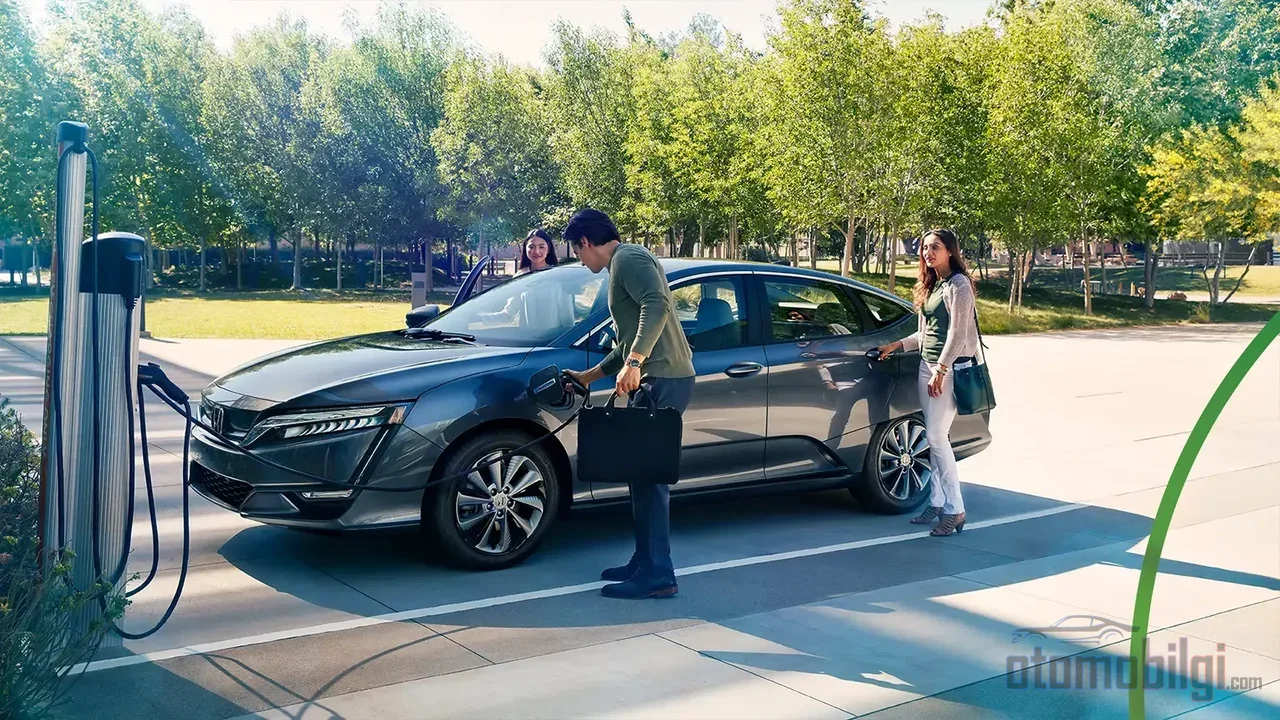
Route planning is critical for maximizing range. Short daily trips such as school runs, grocery shopping and the like are ideal scenarios for EV mode: you consume the battery especially at low speeds where efficiency is high. Covering the urban portion with electricity before the highway and switching to hybrid mode when entering the highway is the long-journey version of the same logic. The EV mode preservation function found in some models allows you to save the charge for out-of-town trips or heavy traffic; user experiences show that even after approximately 50 km of city driving, the battery charge level can remain at around 85%.
Planning charging points along with route selection physically extends the range. The range advantage of a plug-in hybrid comes from regular plugging in; keeping the battery full is the most important prerequisite for actually using the vehicle's electric potential. Finding a Level 2 charger along a route and adding about 8 miles (13 km) of range per hour of charging noticeably increased the electric usage rate even in an old example with a small battery: the same driver raised their electric contribution from 900 miles (about 2%) to 3,035 miles (about 6%) over eight months. Considering the larger batteries of today's models, it is clear that the same habit will correspond to a larger percentage in current vehicles.
| Charging Level | Voltage | Range Added Per Hour |
|---|---|---|
| Level 1 | 120 V | 3-5 miles (5-8 km) |
| Level 2 | 240 V | 12-80 miles (19-129 km) |
| DC fast charging | 480 V | Full charge in 30-60 minutes |
How Much Does Air Temperature Affect Range?
Temperature is the biggest factor affecting electric range outside the driver's control, and its hardest blow comes in the cold. In a controlled test, range decreased by about 25% at an air temperature of approximately -9°C and a cruising speed of 70 mph. In scenarios where short trips and cabin heating come into play together, the loss in electric range can reach up to 40%; even the fuel range in hybrid mode can show a drop of up to 34%. The fact that range on a cold highway journey is about 25% less compared to the optimum value at around 27°C is a result repeated under different measurement conditions.
Hot air treats the table much more gently: while range loss is about 5% at around 32°C, above 38°C the loss can exceed 30% due to the effect of air conditioning use in the heat. Cold batteries physically show lower capacity; although the hybrid battery becomes less efficient at low temperatures, overall fuel economy decreases only slightly. The current assessment that temperature significantly affects electric and hybrid efficiency, with the greatest effect seen in the cold, summarizes this picture. The practical conclusion is clear: accepting winter range loss as a natural physical fact and concentrating pre-conditioning and EV mode on short distances, while pre-cooling with the air conditioning before stopping in summer, is the most rational planning.
Battery Health: The Long-Term Value of Range Habits
Daily habits determine not only today's range but also tomorrow's range capacity. It is known that electric and hybrid batteries are mostly designed for at least 200,000 miles (320,000 km) of use; stressed batteries can shorten this lifespan noticeably. Keeping the state of charge within the 20-80% band is the best-known rule for preserving electrode integrity and most vehicles already automatically reduce charging speed after 80%. Regular DC fast charging use is practical, but repeated heavy use can lead to measurable battery life loss in the long run; it makes sense for a plug-in hybrid owner to save it for exceptional trips.
A plug-in hybrid can be used without plugging in: the gasoline engine and the self-charging hybrid mode continue to work. However, this mode of use effectively shuts off the vehicle's main advantage. Keeping the battery regularly charged is the common thread running through every habit above; what truly narrows range is allowing the battery to stay empty and stacking losses like hard acceleration and low tire pressure on top of each other. While each item on this list may seem small individually, together they permanently change the distance the same vehicle covers in electric mode in daily life.
Sources
- Plug-In Hybrid Best Practices
- Maximizing EV Range on your Plug-in Hybrid
- Electric and Plug-In Hybrid Electric Vehicle Best Practices
- AAA Study Reveals Temperature Impacts on EV and Hybrid Performance
- Cold Temperatures Affect an Electric Vehicle's Driving Range
- How Do Hot & Cold Temperatures Affect EV Range?
- Regenerative Brakes: How Do They Work?
- Using Climate Control on Hybrids & PHEVs
- How to increase electric car range
- When to use EV mode in a plug-in hybrid car
- Plug-in Hybrid-Electric Cars
- Electric & Plug-In Hybrid Electric Vehicles
- How much does using your AirCon Affect EV Range?
- How to Maximize Plug-In Hybrid Driving and Minimize Range Anxiety
- Five Tips on How to Drive a Hybrid Car Efficiently