How Long Does It Take to Charge a Plug-in Hybrid?
Share This Page
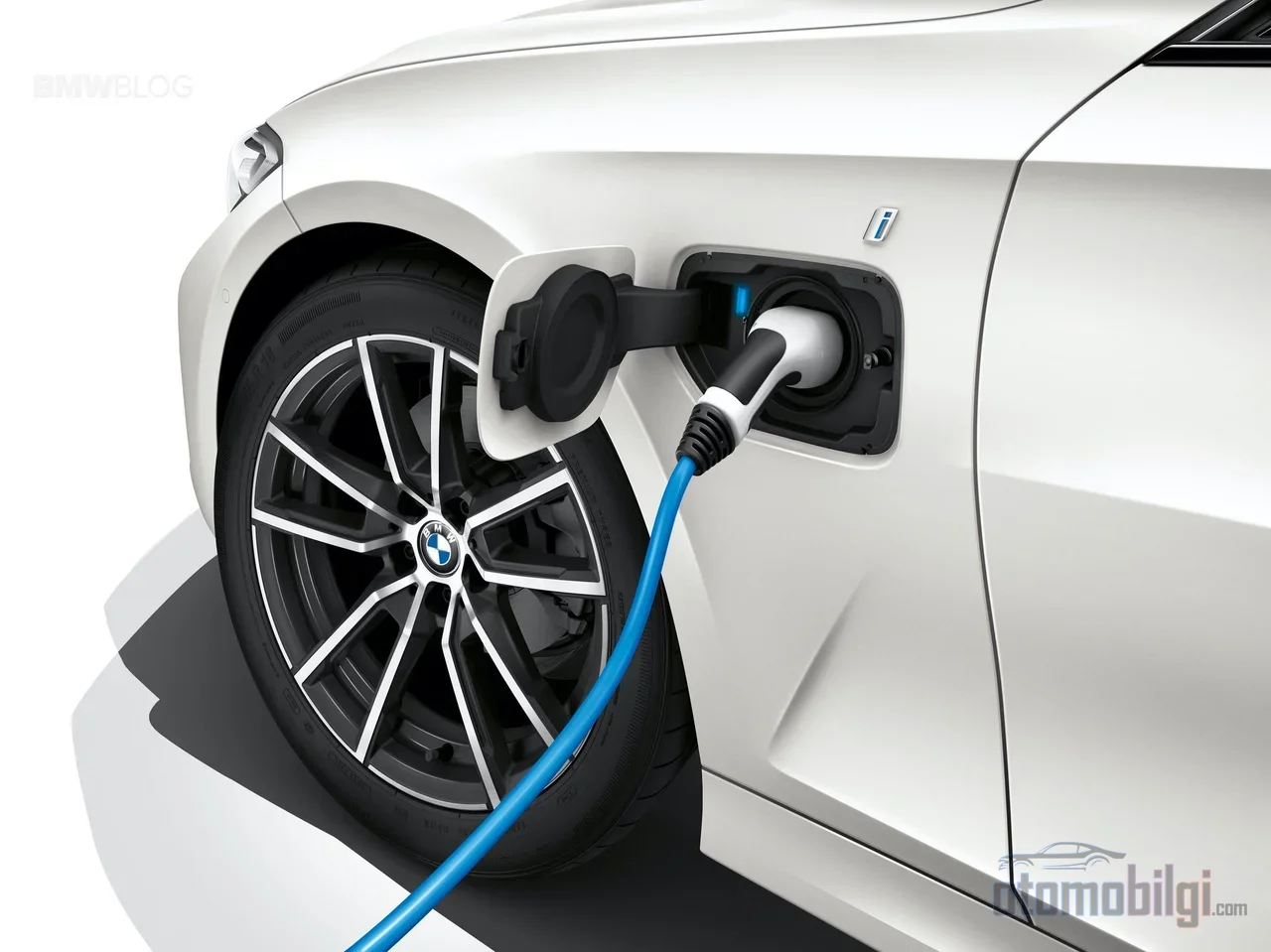
A plug-in hybrid vehicle typically considers its battery sufficiently charged within 4 to 12 hours; three variables determine this time: the battery's capacity (in the 8-20 kWh range for most models), the power the charging source can deliver, and the upper limit the vehicle's onboard charger can accept. Whichever of the three is smaller determines the charging time. On this page we calculate all three variables with concrete examples and explain why the same vehicle can charge in 10 hours from a home outlet but in 4 hours from a wall unit.
Highlights
- Plug-in hybrid batteries are usually in the 8-20 kWh range; fully electric vehicles' batteries are on the order of 60-80 kWh.
- A full charge from a regular home outlet (Level 1) usually takes 6-12 hours. takes.
- With a Level 2 wall unit, a full charge typically drops to 3-6 hours. drops.
- Most plug-in hybrids' onboard chargers are limited to 3.3-7.2 kW; a more powerful station does not speed this up.
- Most plug-in hybrids do not support DC fast charging; even in models that do, this charge takes about 40 minutes. takes.
How to Calculate Charging Time: A Simple Formula
At the core of the charging time calculation there is a single formula: the time in hours is found by dividing the energy to be transferred (kWh) by the power the vehicle actually accepts (kW). For example, charging an 80 kWh battery from 20% to 80% means 48 kWh of energy; at a station delivering 7.68 kW, this process takes about 6.3 hours. The same logic applies to plug-in hybrids; in fact, thanks to their small batteries, the numbers become more manageable.
It is also necessary to take into account that charging does not proceed at a constant speed from start to finish. When the battery is empty, power acceptance is high, and as it approaches 80% fullness, the speed is deliberately reduced. This behavior is called tapering and is designed to protect the battery. The practical result is this: the portion from 10% to 80% is generally shorter in time than the portion from 80% to 100%. Although this effect is less pronounced in plug-in hybrids than in fully electric vehicles, it explains why the last 20% takes longer.
The five fundamental factors affecting the time can be listed as follows: battery size, the state of charge when starting to charge, the maximum power the vehicle can accept, the maximum power the charging station can deliver, and environmental conditions - especially cold weather. The first four of these five are examined one by one in the following sections; the effect of cold weather deserves a separate section.
Typical Charging Times by Battery Capacity and Power Source
The batteries of plug-in hybrids, unlike those of fully electric vehicles, are deliberately kept small: most models carry a capacity between 8 and 20 kWh. This capacity range is enough to complete daily suburban traffic on electricity; on long journeys, the gasoline engine kicks in. As a concrete reference, the Mitsubishi Outlander PHEV(2018) has a 13.8 kWh battery offering about 24 miles of electric range - a representative profile for the class.
The charging times of the same vehicle with different power sources are a good yardstick for reading the differences in the table:
| Charging source | Typical power | Outlander PHEV (13.8 kWh) |
|---|---|---|
| Home outlet (Level 1) | ~1.4-1.9 kW | Approximately 6-12 hours (across the class) |
| Level 2 / wallbox | 3.6 kW | 4 hours |
| Level 2 / wallbox | 7.4 kW | 4 hours |
| Three-phase station | 22 kW | 4 hours |
| DC fast charging (supported models) | 43-50 kW | Approximately 40 minutes |
The most striking takeaway from the table is this: going from 3.6 kW up to 22 kW does not shorten the Outlander's charging time at all. The reason the time stays at 4 hours across four rows is explained in the next section - and it accounts for why most plug-in hybrid owners never see the speed they expect from their wall unit.
Onboard Charger: The Real Limit That Sets the Time
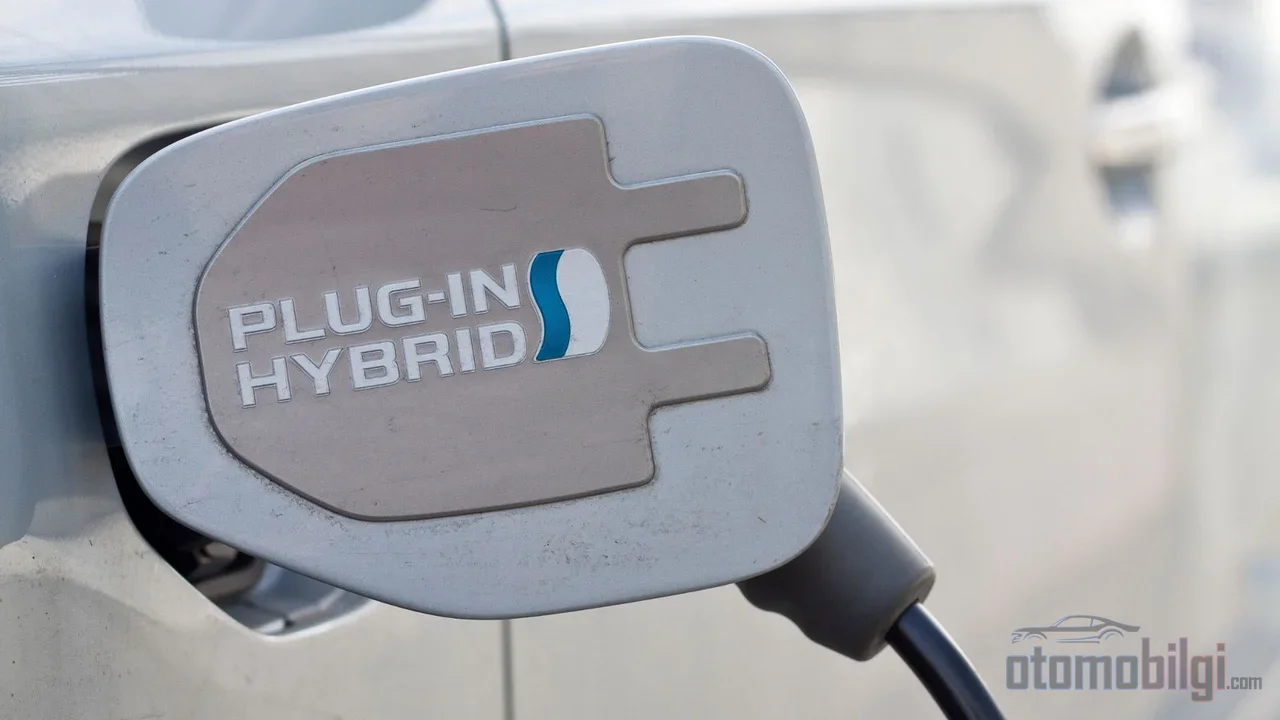
Charging time is not determined solely by the station's power; the AC-DC converter inside the vehicle itself, i.e. the onboard charger, decides how much power will be accepted. In the vast majority of plug-in hybrids this limit is 3.3-7.2 kW well below the 11-19.2 kW acceptance rates of fully electric vehicles. The result: a vehicle that accepts 7.4 kW connected to a 22 kW station still charges at 7.4 kW. A more expensive, more powerful charging point does not save time on its own.
To illustrate the scale with an example: it is officially documented that in certain plug-in hybrid models the AC charging ceiling remains at 3.7 kW and the vehicle does not speed up despite being connected to a more powerful station. In other models this figure is somewhat higher; according to some sources, one plug-in hybrid model, at 7.4 kW, is among the fastest AC-charging vehicles in its class. In other words, even the difference within the class reaches a factor of 2-3; checking a vehicle's onboard charger rating before buying it can save more time than the wall unit installation itself.
So why do manufacturers use such low-power chargers? The logic chain is simple: the battery is already small, it does not take long to fill, and high-power charging does not gain much without increasing heat and stress in a small battery. In return, most plug-in hybrids also do not support DC fast charging; this is one of the most notable hardware differences between them and fully electric vehicles.
Single-Phase or Three-Phase: The Home Charging Difference
The speed of home charging depends on the home's electrical infrastructure. With standard single-phase supply, typical charging power ranges from 2.4 kW to 7.4 kW; with this power, a 50 kWh battery fills in about 7 hours. Three-phase supply opens the way for 11 and 22 kW wall units: a three-phase home station can fill a 24 kWh vehicle in about 2 hours. In addition, three-phase also allows multiple high-power devices to run at home at the same time.
But an honest accounting is needed here: this advantage remains limited for plug-in hybrid owners. If your vehicle's onboard charger is limited to 3.3-7.2 kW, the extra speed provided by a three-phase 22 kW installation is minimal. 22 kW home chargers also require three-phase power, which is not common in residential buildings and is expensive to install. Only for fully electric vehicle owners or households that will charge multiple vehicles back to back does the three-phase investment often make sense. For plug-in hybrids, the priority order is different: first a well-configured single-phase wall unit, and three phases only if a need arises.
Why Does Cold Weather Extend Charging Time?
Winter charging takes longer than summer charging, and there are two mechanisms behind this. The first is physical: low temperature slows down the chemical reactions in the battery cells; electron exchange progresses slowly when lithium-ion cells are cold. The second is software-related: the vehicle automatically reduces the accepted charging power to protect the battery. This slowdown is not a malfunction; on the contrary, it is a measure that protects battery health.
The impact is not to be underestimated: cold weather can reduce long-distance range by up to 25% and the extension in charging time is especially noticeable in high-power charging. Extreme heat is just as responsible as cold; despite the thermal management system, both extremes slow down charging. As an additional note, a worn-out - degraded - battery means both longer charging time and shorter range; in other words, with an aging battery, both the waiting gets longer and the distance to travel gets shorter.
Daily Use: Overnight Charging and Top-Up Charging at Work
The real payoff of estimating charging time correctly is seen in the daily plan. The vehicle spends approximately 95% of the day parked; this time is not wasted time for charging, but capital. There are two typical scenarios for using it.
Overnight charging plan
A 7.4 kW home charger fills a fully electric vehicle with a 60 kWh battery in under 8 hours. Since a plug-in hybrid's battery is a quarter of that, the overnight period is more than sufficient: within an 8-10 hour sleep window, 40-50 electric range miles accumulate, and low-mileage drivers close most of their days without gasoline this way. Those who estimate the duration correctly align charging entirely with sleep; those who cannot either find a half-full battery in the morning or get up at night to check the plug.
Top-up charging at the workplace
The second strategy is to charge for short periods wherever the vehicle is parked rather than draining the battery completely - that is, the top-up charging approach. Public and workplace stations are in the 7-22 kW band; over an 8-hour workday, more than 50 kWh of energy can be drawn from a typical Type 2 station, which means several full charges for a plug-in hybrid. Another function of workplace charging is inclusivity: it enables drivers without a private garage or parking spot to switch to electric use.
Frequently Asked Questions
How long does it take to charge a plug-in hybrid from a regular home outlet? Most models fully charge within a 6-12 hour range; sources predominantly cite a 5-12 hour band for Level 1. With daily use of 30-40 kilometers, overnight charging easily covers this.
How long does it take at a fast charging station? For the few models that support DC fast charging, about 40 minutes; but most plug-in hybrids do not support this protocol at all, so the fast charging station on the roadside is usually useless for you.
I connected it to a wall unit, why is it still charging slowly? Almost always the answer is the same: the vehicle's internal charger limit. Even if the wall unit offers 22 kW, a vehicle that accepts 3.7 kW charges at 3.7 kW.
How much faster is it compared to a fully electric vehicle? Because the battery is small, it takes much less time in terms of minutes and hours: a 13.8 kWh plug-in hybrid charges in 4 hours at 7.4 kW; an 82 kWh fully electric model would have taken about 12 hours at the same power.
Conclusion: No Planning Without Knowing the Numbers
Three numbers determine plug-in hybrid charging time: the battery's kWh value, the charging source's kW value, and the maximum the vehicle can accept - the duration is shaped by the smallest of the three. Extracting this trio from your vehicle's manual takes ten minutes and gives you three things: knowing whether overnight charging is sufficient, calculating whether the wall unit investment will actually bring a real speed gain, and understanding why switching stations on the road does not change the time. From an engineering standpoint it is that simple; from a daily life standpoint, the difference is the difference between starting the morning with a 100% battery and a 70% battery.
Sources
- How Long Does It Take to Charge an Electric Car?
- EV Charging Calculator - Chargie
- PHEV Charging at Home: Costs, Times, & Choosing a Charger
- Charging a Plug-In Hybrid
- How Long to Charge a Hybrid Car
- MINI PHEV Charging Speed
- Charging Times Calculator
- How to Calculate an Electric Car's Charging Time
- Single-Phase vs Three-Phase EV Charging
- EV Chargers and Electricity Supply Explained
- Single-Phase vs 3-Phase EV Charger
- Five Tips for Charging EVs in Cold Weather
- Hot & Cold Temperatures and EV Range
- What's Your Charging Plan?
- Workplace Charging