Between Prius and Tesla: The Battery Cooling Difference
The Toyota Prius's battery pack may look like a component sitting quietly in the trunk or under the rear seat; yet every cell inside it must remain within a narrow temperature band. There are two fundamental engineering approaches to maintaining this band: blowing air with a fan, or carrying heat between plates with a coolant. The Prius chose the former throughout its generations, while many plug-in hybrids and electric vehicles have moved to the latter. So what does this choice really change - charging speed, battery life, or just the cost table?
The answer to this question comes from the physics of the battery thermal management system (BTMS). Heat is generated during charging and discharging by Joule heating arising from electrical resistance, and by electrochemical reactions under high load. A package that cannot expel this heat first loses its performance, then its lifespan. Therefore, the difference between air and liquid cooling is not a comfort detail, but a design decision that directly affects the vehicle's usage profile.
Why Must the Battery Stay Within a Certain Temperature Range?
Modern battery packs are typically meant to be kept in the 20-45°C range; some approaches define the optimal band as 20-40°C. This range preserves three things at once: safety (it reduces the risk of thermal runaway - that is, a cell heating uncontrollably), capacity and charge acceptance, and long-term lifespan.
When the temperature rises above this band, chemical degradation accelerates. To give a rough but striking rule, every sustained 10°C increase above the recommended temperature halves the battery's service life. When it drops below, the problem lies elsewhere: a cold cell temporarily loses a significant portion of the energy it can store, and charge acceptance drops; in extreme cold, hybrid battery capacity can temporarily decrease by 20-30%. This is not a malfunction, but the normal behavior of lithium-ion chemistry - and it is precisely for this reason that heating, as much as cooling, is part of thermal management.
Key Highlights
- Many full hybrids, including the Prius, cool the battery with a small blower fan that draws cabin air over the battery modules.
- Modern battery packs are typically meant to be kept in the 20-45°C range.
- Every sustained 10°C increase above the recommended temperature halves battery life.
- The official charging range for lithium-ion is 0-45°C; charging below 0°C can cause permanent damage.
- Coolant (water/glycol) cooling is the most common thermal management technology in today's electric passenger vehicles.
How Air Cooling Works: The Prius's Method
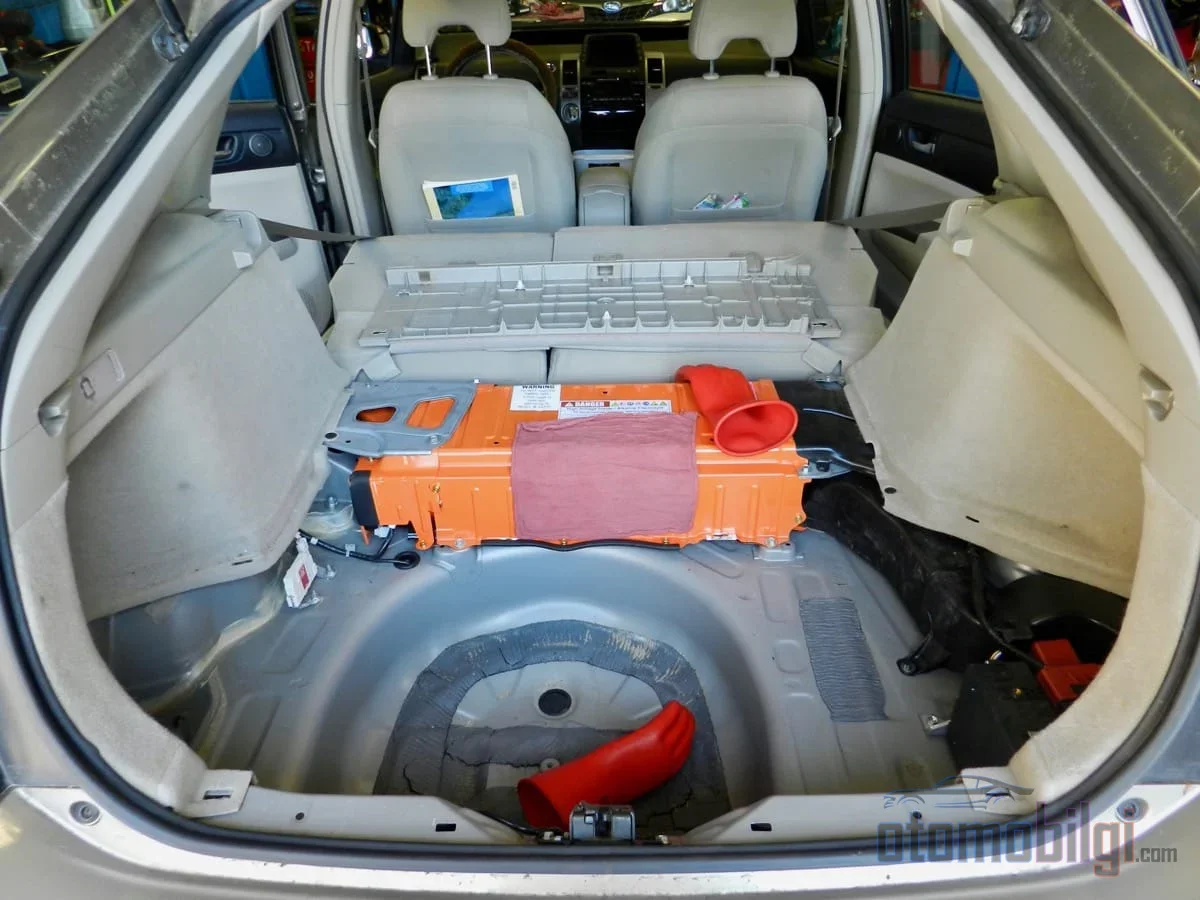
The Prius is the classic example of the air-cooled approach. A small electric blower draws cabin air through channels passing over and between the battery modules; a thermocouple monitors cell temperature and adjusts the fan speed accordingly. The system has no liquid, no pump, no risk of leakage - just air and the walls that direct it.
This simplicity has engineering costs, but first the advantages must be listed:
- The initial cost is low; a light and simple design.
- Maintenance needs are minimal, and parasitic power consumption is very low.
- Since it contains no liquid, it carries no risk of leakage.
The price, however, is physics itself: the heat capacity of air is very low compared to liquids. Air cannot efficiently absorb the heat produced and carry it away. The result is uneven cooling and hot spots within the pack - some cells run hotter than others. Cells operating at different temperatures age at different rates and diverge in their states of charge; the usable capacity and lifespan of the pack only reach as far as the weakest link. Moreover, air cooling is not suitable for scenarios such as fast charging and sustained high power.
Why Is Blower Fan Maintenance Critical?
In an air-cooled system, the fan is the sole outlet for heat. Because it draws in cabin air, dust and hair accumulation is inevitable; a clogged fan can damage the high-voltage battery. One of the simplest and most effective things Prius owners can do to preserve battery life is to keep this cooling fan and the air channels clean.
Liquid Cooling: Plates, Circuits, and a Narrow Temperature Band
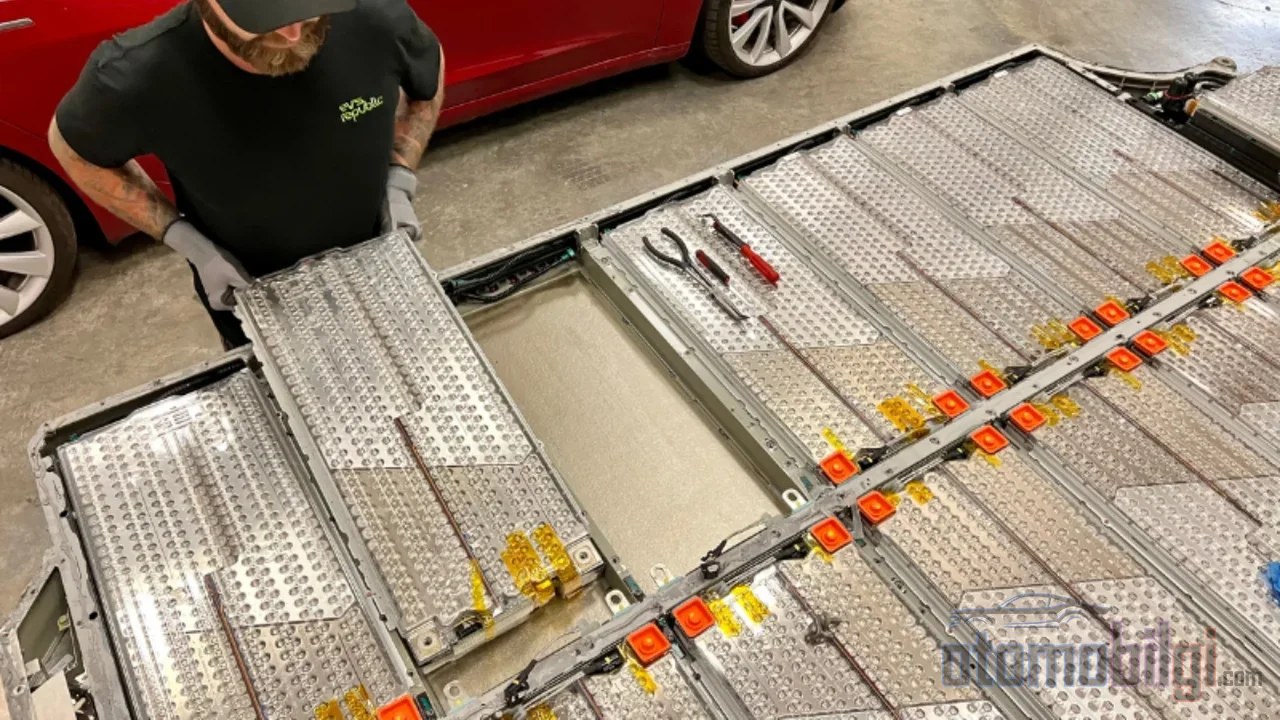
In a liquid-cooled system, a water/glycol mixture coolant is circulated through plates or tubes that are in direct thermal contact with the cells; it carries the heat it collects to a radiator or to the vehicle's air conditioning circuit. Water/glycol-based cooling is the most common thermal management technology in today's electric passenger vehicles; the Tesla Model S and the Audi e-tron use this approach.
The system's fundamental strength is uniformity: liquid cooling keeps the cells within a narrow temperature band. This both preserves long-term capacity and ensures that the pack remains entirely balanced. Academic comparisons point in the same direction: thanks to a higher heat transfer coefficient, liquid cooling is more energy-efficient than air cooling.
Its disadvantages lie along the axes of cost and complexity: a complex and expensive design, the risk of coolant leakage, and continuous parasitic power consumption from pumps and sensors. In other words, liquid cooling is not a free advantage; it is a system choice.
When we put the characteristics of the two approaches side by side, the picture becomes clear:
| Feature | Air Cooling | Liquid Cooling |
|---|---|---|
| Heat transfer | Low | High |
| Temperature distribution | Uneven, hot spots | Very uniform |
| Fast charging support | Limited | Very good (supports 800V+) |
| Initial cost | Low | High |
| Parasitic power | Very low | Moderate (pump, sensors) |
| Impact on lifespan | Degrades faster | Extends lifespan |
Why Do Plug-in Models' Batteries Need Liquid Cooling?
The difference in thermal management between full hybrids and plug-in hybrids is no coincidence. The larger battery packs of plug-in vehicles generate more heat under high loads, and this heat accumulates faster than the cells can dissipate on their own. Liquid cooling stands out in high-power and repeated fast-charging scenarios; allows the battery management system (BMS) to maintain higher charging speeds for longer without having to reduce the current.
Therefore, the evolution from air cooling to liquid cooling, keeping the cells in their comfort zone to preserve calendar and cycle life, became established as hybrids evolved into electric vehicles. Liquid systems carry heat not only faster but also more evenly - in large packs, this uniformity is far more critical than in small ones.
There is a nuance to be aware of here: the BMS can only partially compensate for weak cooling. The BMS limits the current when temperatures rise, but it cannot expel the heat. In a pack with inadequate thermal design, the inevitable result is throttled performance, i.e. power reduction. The better the cooling, the shorter the duration of this limitation.
How Does Temperature Affect Charge Acceptance and Regenerative Braking?
Power Limitation in Heat
When the battery moves outside the acceptable temperature window, ion movement slows down and charge acceptance drops. On the hot side, the BMS steps in: it protects the cell by limiting the current. To the driver, this shows up as reduced power and slowing charging. For lithium-ion, the official charging range is 0-45°C; cycles performed outside this range affect lifespan.
Regeneration Limitation in Cold
Cold directly hits regenerative braking. Because a cooled-down lithium-ion battery cannot safely accept large amounts of charge, regenerative braking is reduced or temporarily disabled; the driver falls back on the friction brake, which wastes energy as heat. The vehicle limits the hybrid system's output and input until the battery warms up sufficiently - this is not a condition that permanently shortens battery life, but a temporary protection. The critical limit is this: Below 0°C, charging lithium-ion is not recommended; it can cause permanent damage through the lithium plating mechanism.
On the heating side, some plug-in vehicles automatically engage the battery heater when needed while plugged in; the driver can turn this off manually. Systems that heat the battery using the climate control heating system to increase regeneration are also being developed - in cold climates, this side of thermal management is just as decisive as cooling.
The Different Cooling Needs of NiMH and Lithium-Ion
Cell chemistry also shapes the cooling requirement. Nickel-metal hydride (NiMH) batteries used in the classic generations of the Prius require less strict temperature control and can get by with passive thermal management such as heat sinks; they withstand a wider operating temperature range, and the effect of ambient temperature on performance is smaller. The fact that they heat up more than lithium-ion during operation is a remarkable feature, yet ultimately a more tolerant chemistry.
Lithium-ion, on the other hand, offers higher energy density and lower weight; in return, it demands more serious thermal management, such as an aluminum casing and an advanced BMS. The optimal operating temperatures of the two cell types are actually similar; difference is that lithium-ion tolerates excursions outside this band much less. That is part of the chemical rationale behind the preference for liquid cooling in plug-in and electric vehicles.
So Which One Is Better: but complexity and cost keep these solutions confined mostly to the premium segment today.
The short and clear answer is this: The Toyota Prius's battery is air-cooled - with a small blower fan that draws in cabin air - and for a full hybrid usage profile, this is an adequate solution; in applications requiring high power, repeated fast charging, and a narrow temperature band, liquid cooling is clearly superior.
The decision really depends on the load profile. For light vehicles, with low continuous load and cost sensitivity, air cooling is the smarter choice: cheap, lightweight, easy to maintain. When it comes to high power, frequent fast charging, or a large plug-in battery, liquid cooling protects both performance and lifespan. And from there, hybrid solutions are born: a combination of air and liquid, or liquid and phase-change materials (PCM) - as in examples like the Porsche Taycan - can offer up to a 20% efficiency gain in power transfer; but complexity and cost confine these solutions mostly to the upper segments for now.
On the driver's side, the practical takeaway fits in two sentences: In an air-cooled hybrid, such as a Prius, keeping the cooling fan clean is the simplest way to preserve battery life. In a liquid-cooled plug-in or electric vehicle, good thermal design determines how quickly regeneration returns in winter and how fast charging speeds recover in summer - because good cooling brings the cell back into its comfort zone before the BMS restricts you.
Sources
- Liquid Air vs. Hybrid Cooling for EV Battery - LEAPENERGY
- Liquid-Cooled vs Air-Cooled EV Battery Packs | EVDrive
- Types of EV Battery Thermal Management Systems - Exoes
- A comparative study between air cooling and liquid cooling - ScienceDirect
- Thermal Evaluation of Toyota Prius Battery Pack
- Review of battery thermal management systems in electric vehicles - ScienceDirect
- How It Works: Battery Thermal Management System - Modine
- How Temperature Affects Lithium Battery Charging - Volts.ca