Why Does a Hybrid Battery Never Fully Charge or Drain?
Share This Page
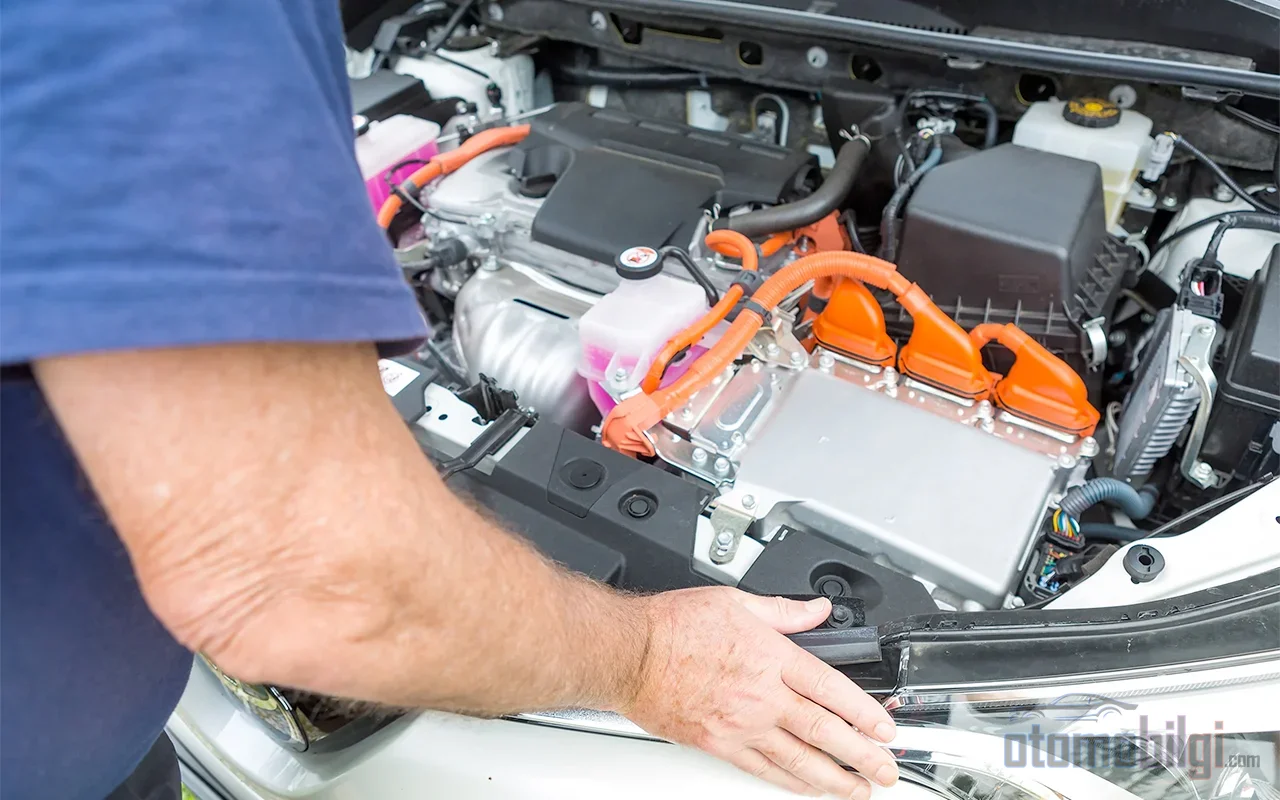
Your hybrid battery never shows 100% full or 0% empty, because manufacturers deliberately keep a portion of the battery hidden as a buffer zone that is never reflected on the gauge. The system typically cuts off charging at around 80% and never lets the battery drop below a minimum level; this range is designed to extend battery life by protecting the cells from chemical stress and to reserve space for regenerative braking.
Highlights
- The hybrid battery usually charges with a ceiling that appears to be 80% around
- The vehicle keeps a minimum charge in the battery at a level of 10-20% for the eCVT to operate
- At temperatures around freezing point, the battery can temporarily lose up to 20-30% of its power
- In 2026, hybrid battery replacement typically costs $2,000-8,000 between
- Modern batteries lose only an average of 1.8% of capacity per year in moderate conditions
No Matter What the Gauge Says, the Entire Battery Is Not Used
Almost all hybrid and electric vehicles have a portion of capacity that the driver can never access. Even when the gauge shows 100% or 0%, an amount of energy remains in the cells that is unusable. That is why you see two different values in technical specification tables: gross (nominal) capacity refers to the total capacity of the pack, while net (usable) capacity refers to the portion the software opens up to the driver.
The difference may be bigger than you think. For example, in a Kia EV3 Long Range, the gross capacity is 81.4 kWh while the usable capacity is 78.0 kWh; meaning roughly 3.4 kWh is reserved by the system from the start. In hybrids, this ratio is even more pronounced percentage-wise due to the small size of the pack, and the full buffer logic comes into play here: the manufacturer deliberately closes off both ends of the battery.
So don't read the 20-80% range as some manufacturer obsession with the gauge; these two ends are engineering's answer to battery chemistry. The Q&A sections below explain one by one why both ends of this buffer exist.
Why Does the Battery Never Appear 100% Full?
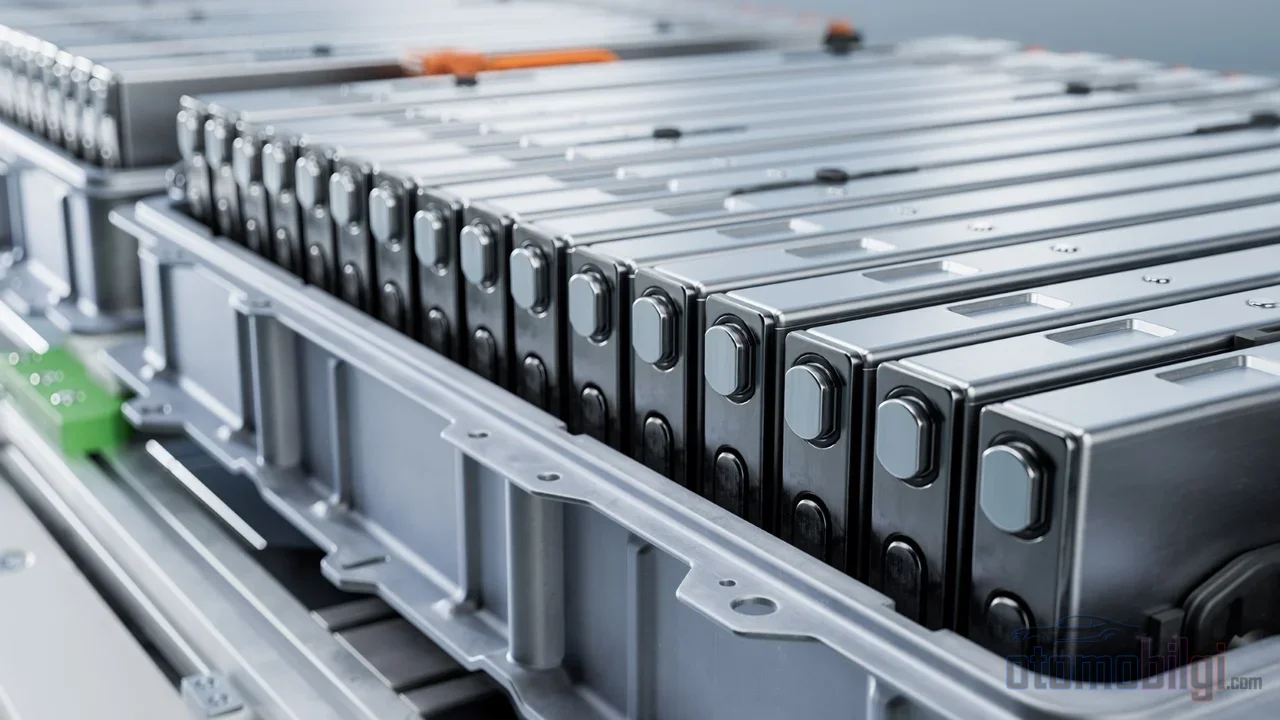
There are two concrete reasons for the buffer closed off at the top end. The first is protection: lithium-ion and nickel-metal hydride cells experience the most stress at charge levels near the top, and overcharging is the only operation that can cause permanent damage to the cells. The system cutting off charging at a visible level like 80% means the cells never enter this risky zone.
The second reason is less well known but just as important: empty storage space is needed for regenerative braking. A hybrid vehicle recovers energy that would otherwise be lost as heat by running the electric motor in reverse during braking, and for this energy to enter the battery, there must be room for it. If the battery were pinned at the top, a significant portion of the braking energy, your most efficient energy source, would have nowhere to go.
A third practical reason is charging dynamics: when the battery reaches roughly 70% charge, the charging power it accepts drops noticeably, and filling it completely takes a long time and becomes inefficient in terms of energy. Stopping the system in this region saves time and improves efficiency. In plug-in hybrids the picture is somewhat different, because there the manufacturer uses the buffer in another way: for example, Toyota reserves about 20% of capacity for hybrid use to protect longevity and limits the electric (EV) mode to 80% charge; the portion charged from the outlet and the portion used by the hybrid system itself are thus separated.
Why Doesn't the Battery Drop to 0%?
The reason for the buffer closed at the lower end is mechanical: in hybrid drivetrains, the battery can never be completely drained while the electric motor is engaged. The eCVT structure used in Toyota hybrids requires electricity at every moment; therefore the vehicle enforces a minimum charge of roughly 10-20% in the EV battery, and even when the gauge shows 0%, this reserve remains in the cells.
One function of this reserve is also acceleration support. This portion, which the driver cannot see, is set aside to meet the engine's momentary demands and to keep the transition between the internal combustion engine and the electric motor smooth. As many hybrid owners point out on forums, there is no way to see the battery's actual charge level directly; the gauge represents only the usable current that will feed the electric motors.
Does the 20-80% Range Really Extend Battery Life?
Short answer: yes, measurably. In lithium-ion cells, as depth of discharge (DoD) decreases, cycle life extends, and the optimum charge voltage in terms of lifespan is calculated at about 3.92 V per cell. Operating in the 20-80% range eliminates the chemical stress associated with a completely full or completely empty battery. Field experience and cell tests show that this range can increase cycle life up to 2-3 times in poor cells, and by about 50% in good cells. As a practical calculation: one cycle from 80% to 20% uses only 60% of the battery's capacity; the cost of each cycle drops, and the total number of cycles increases.
It should also be honestly added: the value of the rule is not equally great in every condition and varies with cell quality; in some circles this rule is criticized as an exaggerated dogma. However, in the hybrid context the debate is largely academic, because you are not managing the buffer - the battery management system (BMS) manages it on your behalf. Without you doing anything, the vehicle enjoys the advantages of this range from the day it leaves the factory.
Why Does the Charge Percentage Fluctuate with Seasons and Use?
The Effect of Cold Weather
In winter, hybrid batteries can temporarily lose up to 20-30% of their efficiency and instantaneous power output at temperatures near or below freezing point. The symptoms of this loss are familiar: rapid drops in SOC, consumption values below normal, and the internal combustion engine running unusually frequently. Cold weather also demands extra energy for cabin heating, and this demand draws additional power from the battery.
The critical distinction here is this: cold affects the battery's instantaneous performance, but there is no strong evidence that it permanently shortens its lifespan. The vehicle software reducing charging power on its own at low temperatures is also not a restriction; on the contrary, it is a protective measure taken to avoid stressing the battery. The hybrid battery warning seen in winter is often not a critical failure, but a sign that the system is taking precautions.
Hot Weather and the Limits of Regeneration
On the hot side, the picture is more serious. When a charge level above 90% combines with temperatures above 45 °C, calendar aging in lithium-ion cells doubles; NMC-type batteries frequently held at 100% degrade 20-30% faster than those held at 80%. Behind manufacturers' insistence on keeping the battery away from near-full levels lie these measurable effects.
The most visible example of usage-dependent fluctuation is regenerative braking: when the battery is completely full or very cold, regeneration is deliberately limited; it returns when the battery warms up and the charge level drops. So energy recovery during braking being strong one day and weak the next is not a malfunction, but the daily operation of buffer logic.
Battery Chemistry, Lifespan and Warranty Table
The buffer topic carries a slightly different meaning depending on which chemistry the battery is made with. Two main chemistries are used in today's hybrids, and both benefit from a 20-80 style buffer; the difference lies in lifespan expectations and temperature sensitivity.
| Feature | NiMH | Lithium-ion |
|---|---|---|
| Typical lifespan | 8-10 years | Up to 12 years |
| Common usage | Usually older hybrids | New-generation hybrids and plug-ins |
| Energy density | Lower | Higher |
| Temperature sensitivity | Less sensitive to heat and cold | More sensitive; thermal management is critical |
| Capacity retention | Retains more balanced | Generally longer-lasting in the real world |
The warranty side also confirms lifespan expectations: most manufacturers offer at least an 8-year/100,000-mile limited warranty for hybrid batteries; on some models this extends up to 10 years/100,000 miles. Mitsubishi explicitly states that hybrid vehicles should last at least 8-10 years or 160,000 km. If replacement is needed, in the 2026 picture the cost generally ranges between $2,000-8,000, mostly in the $2,000-4,000 band for mainstream hybrids. The main reasons for replacement are natural aging, heat damage, insufficient cooling, and unbalanced or weakened cells - none of which are the result of buffer usage.
The degradation table is also reassuring: an analysis of 10,000 electric vehicles found that the average annual capacity loss has fallen to 1.8%, and that new models' batteries can last more than 20 years under moderate conditions. Hybrid packs, being smaller and buffered more frequently, are generally even luckier.
Should I Worry About This?
No - and the reason is exactly the mechanism this article describes. The gauge not reaching 100% or not dropping to 0% is not a fault, it is the system's design goal. The BMS maintains charge limits on your behalf; it reserves room for regeneration, prevents overcharging, restricts power in the cold and keeps it away from the ceiling in the heat. Your only task, if you use a plug-in hybrid, is not to force the 100% target in daily charging and not to repeat DC fast charging unnecessarily; both of these narrow, with your own hands, the range that the buffer protects.
One more note: lithium-ion has no memory, and it is normal for the BMS to occasionally need a wide charge range for SOC calibration and cell balancing. If the vehicle asks you to do this, follow the manufacturer's recommendation; if not, do not touch the buffer zone. Ultimately, a hybrid battery operating in the 20-80% range is not a faulty battery, but a battery working exactly as it should.
Sources
- Should I Charge My EV To 100% | How It Depends On Your Battery - Eleport
- EV Battery Health: Key Findings from 22700 Vehicle Data - Geotab
- BU-808: How to Prolong Lithium-based Batteries - Battery University
- How Winter Affects Hybrid Battery Performance in the UK - GreenTec Auto
- Why does Hybrid battery not charge to full? - Rav4World
- Why doesn't the battery ever charge fully? - PriusChat
- NiMH Battery vs Lithium-Ion - EVLithium
- Hybrid Car Battery 101 - Mitsubishi Motors Canada
- Car Warranty Coverage for Hybrid and EV Batteries - KBB
- How Much Does Hybrid Battery Replacement Cost in 2026? - Empire Auto Protect
- Regenerative Brakes: How Do They Work? - KBB
- BMW Electric Range FAQ - BMW USA
- Five tips for charging EVs in cold weather - Electrify America
- 20-80 Battery Rule - Litime
- What's the Difference Between Hybrid and Plug-In - Toyota