3 Big Promises and 4 Problems of Solid-State Batteries for Hybrids
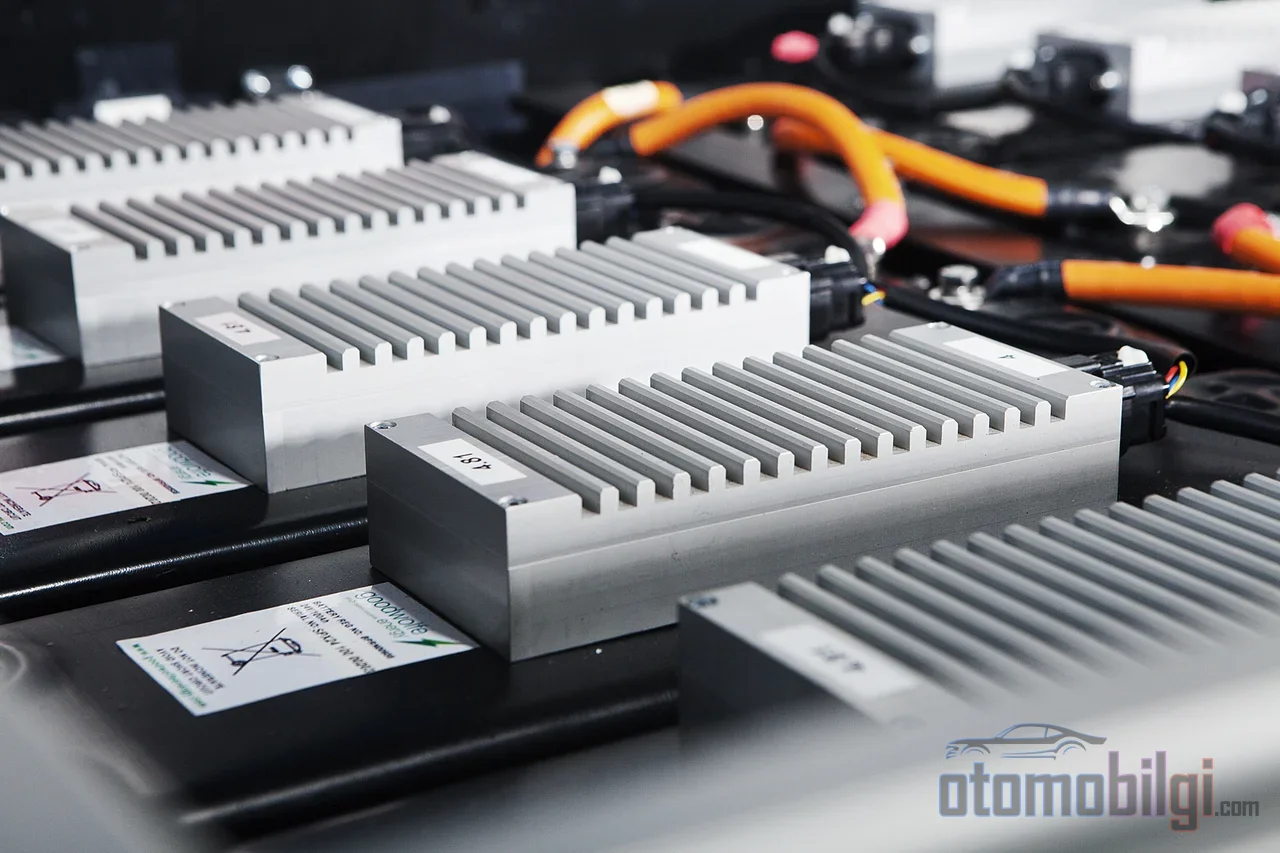
The battery pack in a hybrid vehicle's trunk today is dominated by two chemistries: nickel-metal hydride (NiMH) and lithium-ion. The former is cheap and durable but bulky; the latter is efficient but demands attention in terms of thermal management and lifespan. Now a third player has entered the queue in laboratories: the solid-state battery. Energy density results above 800 Wh/kg have been reported in laboratory settings, and this figure is several times above the typical 160-250 Wh/kg range of today's lithium-ion packs. So when, how, and with how much of a difference will this technology arrive in hybrid vehicles? The answer is tightly bound both to the physical limits of the chemistry and to the automotive industry's qualification timelines.
How Does a Solid-State Battery Differ From Lithium-Ion?
The difference lies in a single design decision: the state of the electrolyte. In a lithium-ion battery, lithium ions move within a liquid electrolyte made of organic solvents (carbonates, ethers) and lithium salts (LiPF6, LiBF4, LiTFSI, LiFSI) between the positive and negative electrodes. In a solid-state battery, this liquid is replaced with a solid electrolyte such as oxides (garnet, NASICON-like compounds), sulfides (argyrodite), or polymer-inorganic salt combinations. Once the liquid medium is gone, there is no longer a need for a polymer separator either.
The real technical gain of this change emerges on the electrode side. The solid electrolyte enables the use of a lithium metal anode and a high-voltage cathode. Compared to graphite, a lithium metal anode alone provides a 40-50 percent increase in energy density. However, there is another side to the coin: while a liquid electrolyte can wet the entire electrode surface, a solid electrolyte works with a smaller contact area. This means high internal resistance and interface problems; this is the main reason why the technology's current cycle life limits are limited and its charging speed is slow.
Highlights
- Lithium-ion packs are in the 160-250 Wh/kg range; the solid-state target is 250-800 Wh/kg.
- An energy density result of above 800 Wh/kg has been reported in laboratory settings.
- In a solid-state battery, the risk of thermal runaway disappears; there is no flammable liquid electrolyte.
- The first automotive applications are largely clustered around 2030; there is a longer window for series use in hybrids.
- There is no solid-state battery vehicle available for purchase today.
Solid-State vs. Lithium-Ion in Numbers
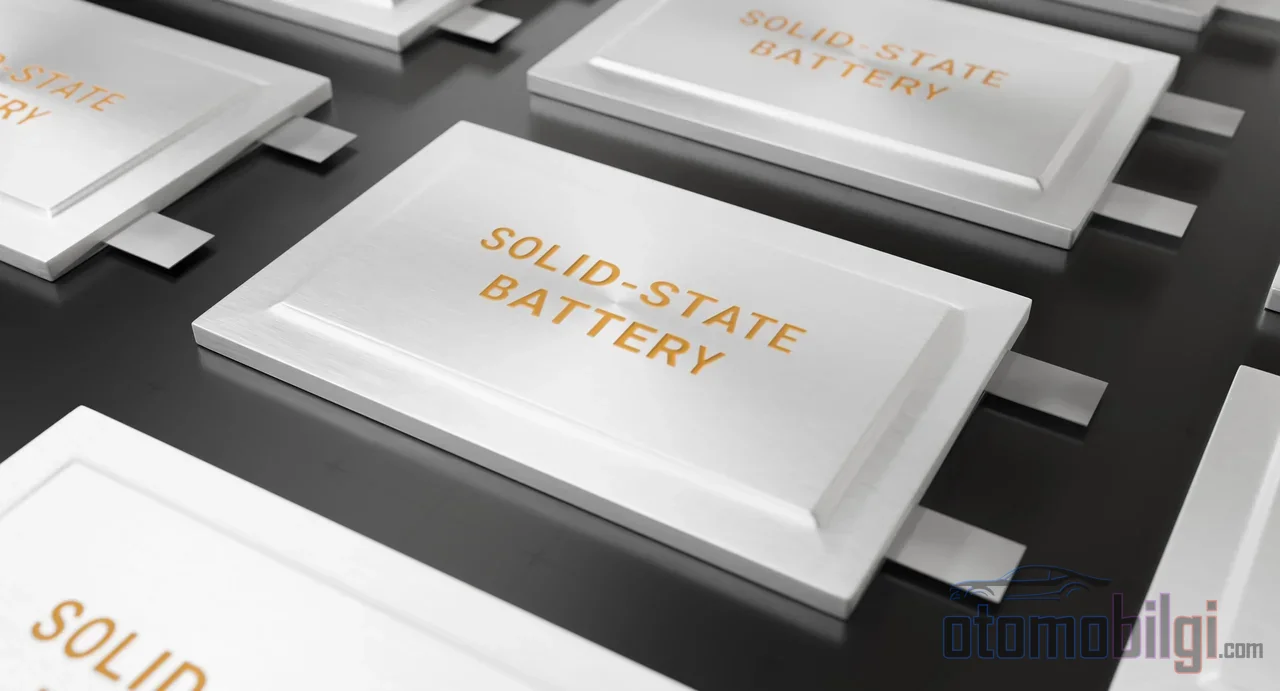
In engineering discussions, data speaks instead of words. Placing the current state of the two chemistries side by side over shared characteristics clarifies where solid-state shines and where it still must prove itself.
| Characteristic | Lithium-ion | Solid-state |
|---|---|---|
| Energy density | 160-250 Wh/kg | 250-800 Wh/kg |
| Cycle life | Higher | Currently lower (crack formation) |
| Charging speed | Faster today | Currently slow; potentially ultra-fast |
| Thermal stability | Low; risk of thermal runaway | High; non-flammable |
| Cost and production scale | Mature and cheap | Expensive; scaling is limited |
The width of the ranges depends on the measurement method and design type: thin-film solid-state batteries are measured in the 300-800 Wh/kg band, while volumetric (bulk) types fall in the 250-500 Wh/kg band. Prototypes exceed 300 Wh/kg, and some demonstrations have delivered results in the 400-800 Wh/kg range. This is not a contradiction; it is a snapshot of different maturity stages. Concrete examples are multiplying rapidly: The joint research by Mercedes and Factorial reports 450 Wh/kg energy density; this battery is 33 percent smaller and 40 percent lighter than a comparable lithium-ion battery. Donut Lab announced that the measured gravimetric density of its solid-state battery is 409 Wh/kg. Chery aims to test its fully solid-state battery reaching 600 Wh/kg in a vehicle under the Exeed brand next year.
Safety and Temperature: Between Promise and Reality
The most praised aspect of solid-state is safety, and this praise has a solid foundation: since there is no flammable liquid electrolyte, the risk of thermal runaway and gas venting is largely eliminated. Its high-temperature performance is also among the best of current chemistries.
However, an engineer demands that every claim be tested. A peer-reviewed study has shown that fully solid-state batteries that short-circuit can reach significantly higher temperatures than conventional lithium-ion and may lead to fire. In other words, the assumption that solid-state is absolutely safe cannot be accepted without experimental verification. Moreover, the cold side of the picture is even more critical: while the low-temperature performance of solid-state batteries is the worst among current technologies, batteries with liquid electrolytes deliver the best performance in the cold. For hybrid users in cold climate regions, this is a serious open question going forward.
Today's Hybrid Batteries: The Limits of NiMH and Lithium-Ion
To understand what solid-state will change, one must first know the limits of the current setup. In the hybrid world, two battery chemistries compete, and the differences are measurable:
- Energy density: NiMH is 55-110 Wh/kg; lithium-ion is 100-300 Wh/kg. For the same energy, a lithium pack is far lighter.
- Cycle life: a typical NiMH pack lasts around 500 cycles; lithium-ion is usually above 1,000 cycles.
- Cost: NiMH packs come at less than half the cost of lithium packs in production, and below 75 percent in development. That is why some manufacturers stay loyal to NiMH in full hybrids.
On the longevity side, the picture is generally reassuring: high-voltage hybrid batteries last on average 8-15 years and can reliably be used for 100,000-150,000 miles; typical warranty coverage includes this range. Extreme heat and cold shorten lifespan; frequent DC fast charging in plug-in hybrids has the same effect. Out-of-warranty replacement costs run into several thousand dollars. This is precisely the picture that solid-state promises to shake up for hybrids: longer lifespan, higher thermal endurance, and many times more energy in the same volume.
What Does Solid-State Battery Mean for Full Hybrid and Plug-in Hybrid?
Full hybrid (HEV): Smaller pack, wider electric window
A full hybrid is not plugged in; it draws all of its battery's energy from regenerative braking and the internal combustion engine. What is demanded of the battery in these vehicles is not volume, but high power density and durability. Solid-state makes a difference here in two ways: much more energy is stored in the same physical volume, so the vehicle can operate in fully electric mode for longer periods and at higher speeds; and as thermal endurance increases, demanding scenarios such as cold-start regenerative braking create less stress. On the other hand, low-temperature performance, which is solid-state's biggest weakness today, is precisely the point that could affect the core operation of a full hybrid based on regenerative braking; this is one reason for the technology's delayed entry into hybrids.
Plug-in hybrid (PHEV): Multiplying electric range in the same pack size
A plug-in hybrid is charged with a plug, and its electric range is directly proportional to battery capacity. Solid-state's advantage is more visible here: if a pack at the 450 Wh/kg level is 40 percent lighter than a comparable lithium-ion pack, the same range is achieved with far less weight, or far more range with the same weight. Lightness also directly improves fuel consumption in a plug-in hybrid. Caution is needed on the charging side: today, the charging speed of solid-state batteries is slower than lithium-ion; goals such as 10-minute charging are not yet beyond being marketing promises. The good news is that solid-state batteries do not change existing AC and DC charging standards; vehicles and infrastructure remain compatible.
Commercialization Timeline: When Will Solid-State Batteries Come to Hybrids?
The timeline is as decisive as the technology itself, and the situation at the end of 2026 is as follows: today, there is no purchasable solid-state battery in any car; the technology is at the laboratory and small-scale prototype stage. The window ahead is roughly drawn as follows:
- The first commercial applications in electric vehicles are expected around 2026-2027; some projects have production starts in early 2026.
- Toyota targets series production between 2027-2028, with 10-minute charging and a range of more than 620 miles.
- When sector analyses examine the production timelines of 14 solid-state projects, they show that mainstream automotive applications cluster largely around 2030.
- On the chemistry side, solid-state technologies are in the middle of a 4-6 year qualification cycle; 2027 stands out as the critical threshold of this cycle.
Market forecasts are also consistent with this pace: solid-state batteries are expected to reach a 10 billion dollar market by 2036. In contrast, the industry's caution should also be noted; in public debate there is a widespread view that first-generation solid-state packs may turn out to be problematic and could carry the risk of a large-scale recall. When it comes to hybrid vehicles, the picture becomes even clearer: the first wave will be EV-focused. Since hybrid packs already work with small, cheap and mature solutions, manufacturers are expected to invest in large packs first under cost pressure. For hybrids, a realistic expectation for solid-state is a window after 2030, and meeting the desired 10-20 year durability target for hybrid batteries with solid-state's current low cycle life will only be possible once the interface problems are solved.
Conclusion: How Will Solid-State Change Hybrid Vehicles?
The short and clear answer is this: solid-state batteries have the potential to redefine range and lifespan in hybrid vehicles, but they will do so not with today's technology, but with a maturity arriving after 2030. The results above 800 Wh/kg reported in laboratories are proof of a theoretical revolution compared to NiMH's 55-110 Wh/kg and lithium-ion's 160-250 Wh/kg ranges; removing the flammable liquid electrolyte radically improves safety and thermal endurance. Against this, today's reality is high cost, limited cycle life, slow charging and poor cold weather performance. Solid-state adds value when the small pack's power and durability win in full hybrids, and range and lightness win in plug-in hybrids; but the revolution in the hybrid battery world will not begin until the cycle life gap is closed and the cost curve bends downward. For now, the right position is to watch and to track the qualification results between 2027 and 2030 on a measurable basis.
Sources
- Solid-State Battery vs Lithium-ion | Differences
- Solid State Batteries Vs. Lithium-Ion: Which One is Better?
- Solid-State Batteries 2026: Advances, Challenges & Applications
- Are solid-state batteries safer than lithium-ion batteries? (Joule)
- Difference Between Semi-Solid State and Lithium-Ion Battery
- What's the Difference Between Hybrid and Plug-In Hybrid Vehicles?
- Lithium vs NiMH Battery Packs
- Donut Lab Reveals Amazing Performance Tests
- Production Timelines for 14 Solid-State Batteries
- Solid-State Batteries 2026-2036 (IDTechEx)