Why Can't LFP Batteries Find a Place in Hybrids?
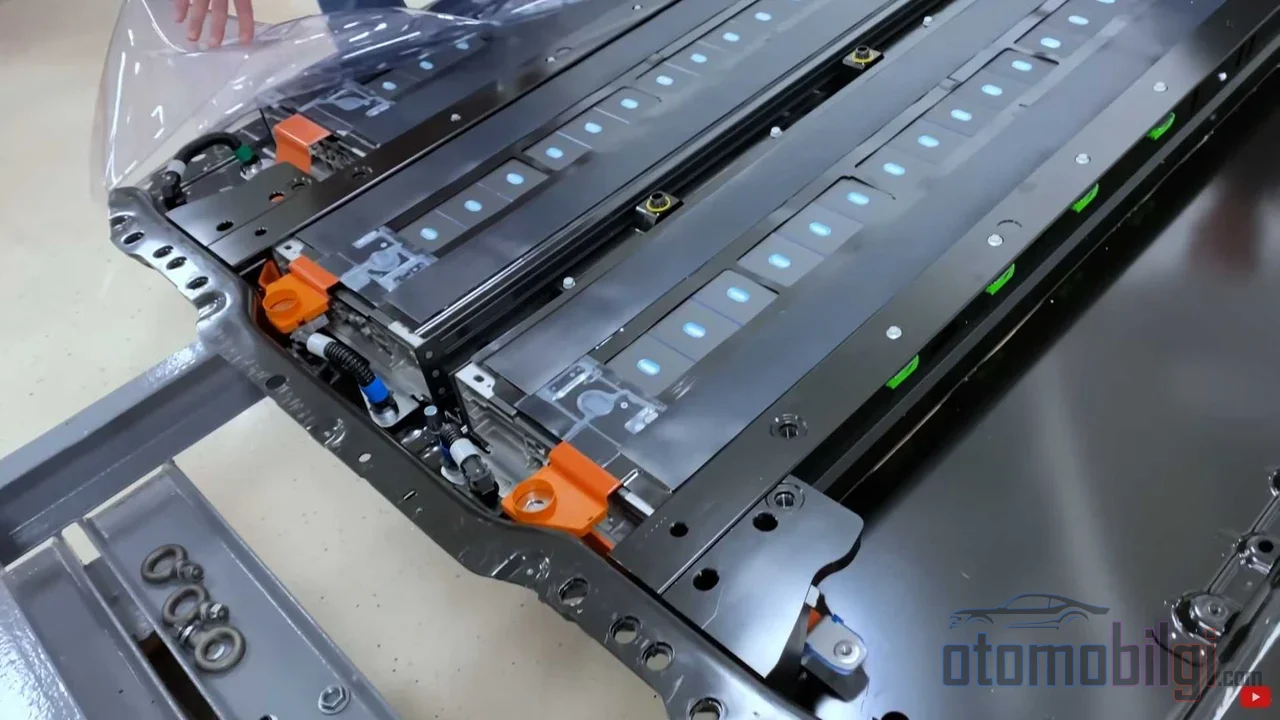
In electric cars, lithium iron phosphate, i.e. the LFP chemistry, is now the center of gravity of the market: As of 2026, LFP makes up more than 55% of electric vehicle batteries used worldwide. Many manufacturers, from Tesla to BMW, from Ford to BYD, have switched to this chemistry in their standard range models. However, when you look at the small battery packs of plug-in hybrids or self-charging full hybrids, the picture is completely reversed: NiMH or nickel-based lithium-ion cells still rule here. So why can't a cheap, long-lasting and thermally extremely stable chemistry find a place in exactly the vehicle segment where cost is critical?
The answer cannot be reduced to a single reason. There are two engineering problems at play: the first is the role energy density plays within a hybrid's limited volume and weight budget, and the second is the calculation challenge that LFP's flat discharge curve poses for the battery management system (BMS). Before explaining the two separately, we need to look at what exactly LFP brings.
What Does LFP Chemistry Bring to Electric Vehicles?
LFP belongs to the same lithium-ion family as NMC and NCA; the difference lies in the use of iron and phosphate on the cathode side. This change brings three concrete advantages. The first is cost: while the cell price for LFP is at a level of approximately $98.50 per kilowatt-hour, it is around $112.70 for NMC and around $120.30 for NCA. The second is lifespan: LFP offers a cycle life 2-4 times longer than NMC and shows no significant degradation even after more than 3,000 cycles; some measurements mention a range between 4,000 and 10,000 cycles. The third is safety: while the thermal runaway onset temperature is approximately 270 °C for LFP, it is at a level of 210 °C for NMC and 150 °C for NCA. In addition, since it contains no cobalt or nickel, its production footprint is also smaller - an average of 15-25% lower carbon emissions is reported compared to nickel-based chemistries.
Highlights
- LFP makes up more than 55% of the world EV battery market as of 2026.
- The thermal runaway threshold is ~270 °C for LFP; 210 °C for NMC, 150 °C for NCA.
- LFP cell cost is ~$98.50/kWh; NMC ~$112.70/kWh.
- LFP's flat discharge curve makes voltage-based SOC estimation practically unusable.
- Since volume and weight are critical in hybrid batteries, low energy density weighs more heavily.
This picture has made LFP almost a mandatory choice in fully electric vehicles. Tesla announced its switch to LFP starting in 2021 in the standard range Model 3 and Model Y, BMW starting in 2025 in its own models, and Ford in 2023 for the European-market Mach-E and certain F-150 markets. Forecasts point in the same direction: More than half of the electric vehicles delivered in 2027 are expected to have LFP and derivative chemistries. In short, LFP solves the cost-safety-longevity equation in the segment where the battery is the largest and most expensive part of the vehicle.
The Battery Problem in Hybrids Is a Different Equation
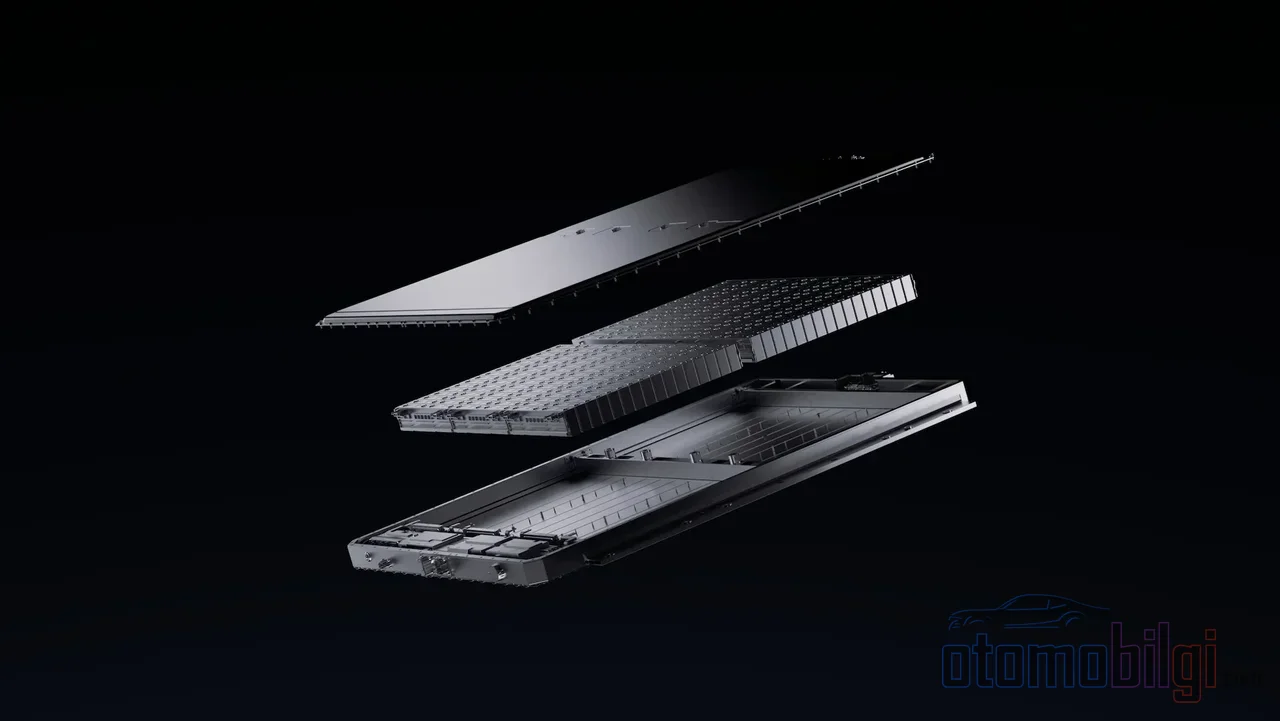
In a hybrid, the battery is not a large energy reservoir; it is a small, compressed power buffer. In a plug-in hybrid the pack is typically a few kilowatt-hours, and in a full hybrid much smaller. The vehicle runs this pack through constant partial charge and discharge cycles: filling it with regenerative braking, draining it during electrically assisted acceleration. Two constraints stand out in this operating profile: while the volume and weight the pack occupies are nearly fixed, the amount of energy to be stored must be as high as possible; and the BMS must be able to make continuous and accurate state of charge (SOC) estimation within a narrow SOC window. LFP struggles precisely at these two points.
Energy Density: A High Price in a Small Pack
LFP's best-known weakness is its low energy density. In a pack of the same size it stores approximately 30% less energy than NCA; more cells are needed for the same energy, meaning more volume and weight. In addition, since the operating voltage per cell is lower, more cells must be connected in series for a given voltage level. In a large EV battery this drawback can be offset by the low cost; the vehicle gets a bit heavier, but the range target can still be met. In a hybrid, however, there is no room for bargaining: the pack's location and weight budget have already been calculated in the chassis. A less energy-dense chemistry means a price paid in electric range, cargo volume, or vehicle weight. That is why nickel-rich chemistries with higher energy density are preferred in the lithium-ion packs of hybrids; LFP, on the other hand, is generally positioned in low-range electric models.
Flat Discharge Curve: The Physics That Makes SOC Estimation Difficult
The second problem is more technical but just as decisive as the first. The simplest way to estimate a battery's state of charge is to measure its open-circuit voltage (OCV) and map that voltage to a known SOC curve. In NMC and NCA this curve is sloped: the voltage drops gradually and predictably, and small voltage differences correspond to specific SOC differences. In LFP, the curve is almost completely flat across a wide SOC range - like a plateau. The voltage difference between full and half full drops to the millivolt level. As a result, measurement errors and the hysteresis effect render voltage-based SOC estimation practically unusable; academic studies show that this uncertainty is significantly larger in LFP than in other chemistries.
In an electric vehicle with a large battery, there is a known antidote to this problem: the BMS works with Coulomb counting (accumulating the current flowing in and out) and the user is occasionally asked to perform a calibration charge that brings the battery to 100% - Tesla's recommendation of a full charge once a week for its LFP vehicles is based on this logic. In a hybrid, this way out is not practical. The vehicle operates in constant partial cycles, and even if it is a plug-in, the user does not charge to 100% every time; in a full hybrid, there is no such concept as external charging anyway. As a result, in the LFP hybrid package, the BMS rarely reaches its most reliable trump card - the calibration point - and SOC uncertainty grows systematically. This is a serious constraint for hybrid software that must manage energy flow in real time; estimation error directly affects the quality of electric assistance and battery life management.
Why Is NiMH Still in the Field?
Toyota is the most prominent manufacturer that still prefers nickel-metal hydride (NiMH) batteries in its full hybrids. This insistence may seem outdated at first glance; NiMH has lower energy density than lithium-ion and is prone to memory effect. However, the operating profile of a full hybrid matches NiMH's strengths: the pack is small in size, costs are low, and cycle durability is sufficient in a regime of partial charge-discharge cycles spread over years. In plug-in hybrid and fully electric models, the manufacturer is switching to lithium-ion because the energy density requirement increases. So in the hybrid world, the chemistry choice is layered according to the vehicle type: NiMH or small lithium-ion in full hybrids, nickel-based lithium-ion on the plug-in side. LFP cannot stand out as a leading candidate in any of these layers.
Comparison: Hybrid Battery Chemistries Side by Side
| Feature | NiMH | NMC (lithium-ion) | LFP |
|---|---|---|---|
| Energy density | Low | High | Below NMC, ~30% less than NCA |
| Cycle life | Shorter than lithium-ion | Reference | 2-4 times that of NMC |
| Cell cost | Low | ~$112.70/kWh | ~$98.50/kWh |
| Thermal runaway threshold | - | ~210 °C | ~270 °C |
| SOC estimation | Easy | Easy (sloped curve) | Hard (flat plateau, hysteresis) |
| Hybrid compatibility | Established in full hybrids | Widespread in plug-ins | Limited |
The table makes the main message clear: The two columns where LFP excels (life and cost) are not decisive because the battery's share of total hybrid cost is already small; whereas the columns where it is weak (energy density and SOC predictability) hit right at the heart of hybrid design.
Health Reading and the Challenge on the Service Side
The flat discharge curve has an unknown second cost: diagnosing battery health (SoH) also becomes harder. Voltage-based health readings fall short with LFP; for an accurate assessment, internal resistance measurement, cell balancing, temperature data, and charge history must be interpreted together. In the hybrid service network, this becomes an additional source of uncertainty when making battery replacement decisions. In LFP-equipped electric vehicles, occasional calibration charges and non-voltage diagnostic methods are already part of the service routine; carrying the same burden over to hybrid packs is an additional cost for the existing infrastructure. This operational side is a silent but real reason why manufacturers do not look favorably on LFP in hybrids.
Can the Balance Change?
The picture is not static. Two developments could change the equation on the hybrid side. The first is new methods in SOC estimation: Approaches aimed at SOC estimation by measuring the expansion force and mechanical stress of cells according to their state of charge offer an independent reference in addition to Coulomb counting. If such methods mature, LFP's biggest software-related obstacle shrinks. The second is progress on the energy density side: LMFP, a manganese-doped derivative of LFP, offers higher energy density; it stays ahead of nickel-based chemistries in terms of thermal stability, at the cost of somewhat shorter cycle life and, for now, higher cost. Values such as Svolt's short blade cell with 188 Wh/kg and 5C charging support and Geely's 192 Wh/kg design show that the phosphate family is closing the density gap. Meanwhile, the market's signals are mixed: News that GM may consider abandoning LFP in its future electric vehicles is proof that the chemistry will not be a winner in every segment.
The Clear Answer: Why Doesn't LFP Find a Place in Hybrids?
To summarize: LFP is not too inadequate to be used in hybrids; it is not preferred because it conflicts with the two requirements of a hybrid. In a small pack, energy density determines the range and weight balance; LFP demands more volume and weight for the same energy. Accurate SOC estimation is critical for a hybrid BMS operating in continuous partial cycles; LFP's flat discharge curve and hysteresis make this estimation far more difficult than with other lithium chemistries, and a workaround such as a calibration charge is not practical in hybrid use. Its strong cards, such as long cycle life and low cost, cannot be decisive in the hybrid segment, where the battery's share of the vehicle's total cost is low.
A reasonable forecast for the period ahead is this: As SOC estimation methods improve and the phosphate family's energy density increases, the likelihood of LFP entering hybrids will rise - but as of 2026, this transition has not yet begun, and especially on the full hybrid side, the NiMH and nickel-based lithium-ion arrangement continues.
Frequently Asked Questions
Do LFP batteries really last longer?
Yes. They offer 2-4 times longer cycle life than NMC; no noticeable degradation is observed at over 3,000 cycles of use, and some data go up to 4,000-10,000 cycles.
Why does LFP tolerate regular 100% charging?
While NMC cells prefer to operate in the 20-80% window, LFP wears less at high charge levels. One reason for this tolerance is that the BMS occasionally needs a full charge: SOC estimation cannot be reliably calibrated without reaching 100%.
Does LFP work in cold weather?
It works, but charging performance drops noticeably below -20 °C; NMC performs better in this condition. The battery must be preconditioned before fast charging in cold weather.
Why do Toyota hybrids use NiMH?
The small battery of a full hybrid can meet the requirements for power, cost, and durability with NiMH. The manufacturer is switching to lithium-ion in plug-in hybrid and fully electric models due to energy density, for those wanting more electric range.
Sources
- Why We're Excited about LFP Batteries for Electric Cars
- What to Know About LFP Batteries
- Electric vehicle batteries – Global EV Outlook 2026
- Which Cars Have LFP Batteries?
- State-of-charge estimation for lithium iron phosphate batteries
- Enhanced SOC Estimation for LFP Batteries
- Toyota Still Favors Nickel-Metal Hydride Batteries for HEVs
- LFP Vs NMC Battery: A Technical Comparison
- Hybrid vs EV Batteries Explained: The Complete Guide 2026
- High-Accuracy SOC Estimation for LFP Batteries in Hybrid Packs