The Second Life of Hybrid Batteries: Home Energy Storage
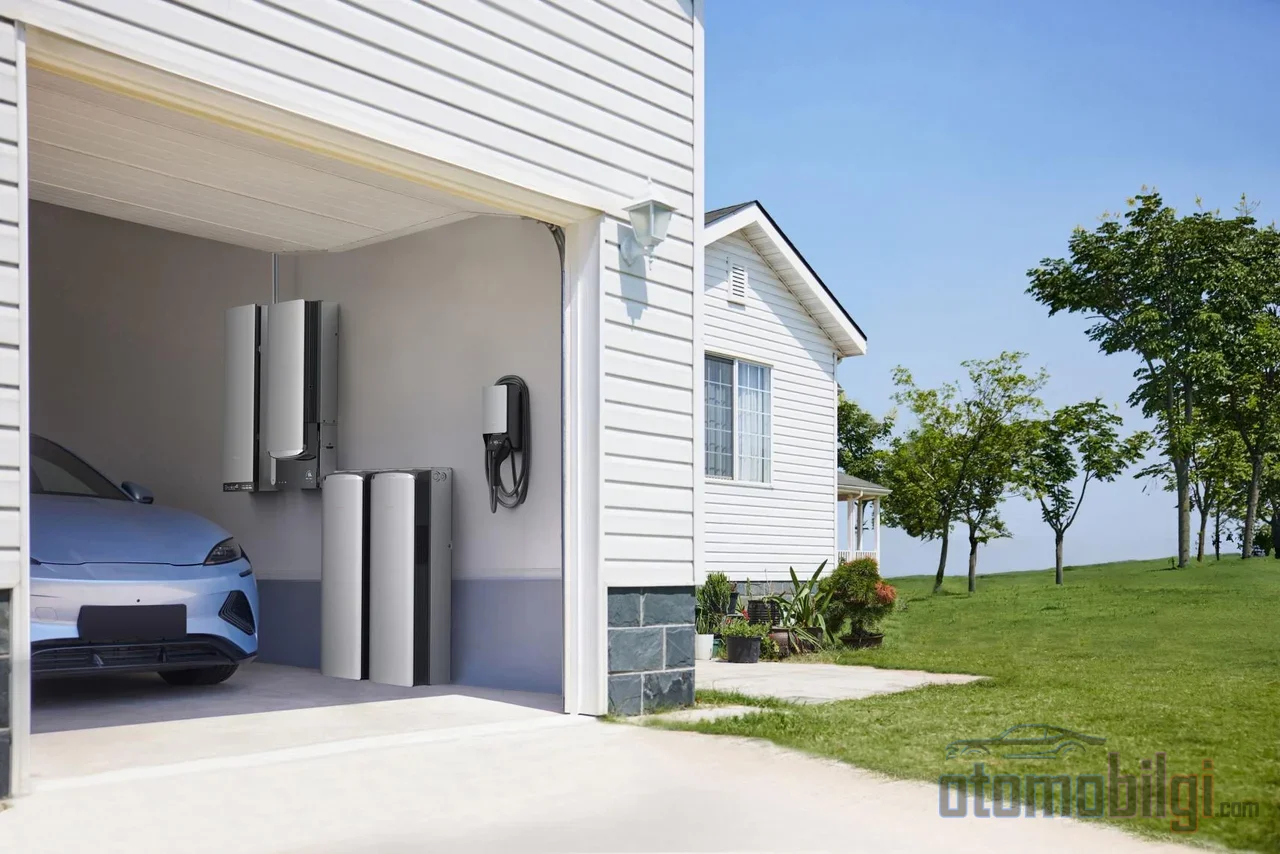
A battery removed from an electric vehicle is, on paper, dead. When its capacity drops below 80% of its original value, the manufacturer declares it 'end of life', the warranty closes, and the vehicle no longer wants it. Yet most of the storable energy still remains inside that same pack. The real question is this: where do these packs that have become insufficient for the vehicle go, why do some of them keep working for years more, and why do others disappear without ever reaching recycling facilities?
Viewed in terms of range, the logic is simple: a drop from full capacity to 80% directly shortens the electric vehicle's range, and buyers' expectation of high performance makes this pack unlivable in a car. Although the difference a user notices amounts to nothing more than 'one more charging stop', the vehicle manufacturer's threshold is much stricter. On the stationary storage side, the picture is exactly the opposite: high energy density or sudden power is not expected from a ground-based system; a pack that runs at low speed for long periods is entirely sufficient. The trash of the vehicle world is the raw material of the grid world.
The 80% Threshold: Why Is a Battery Considered 'End of Life'?
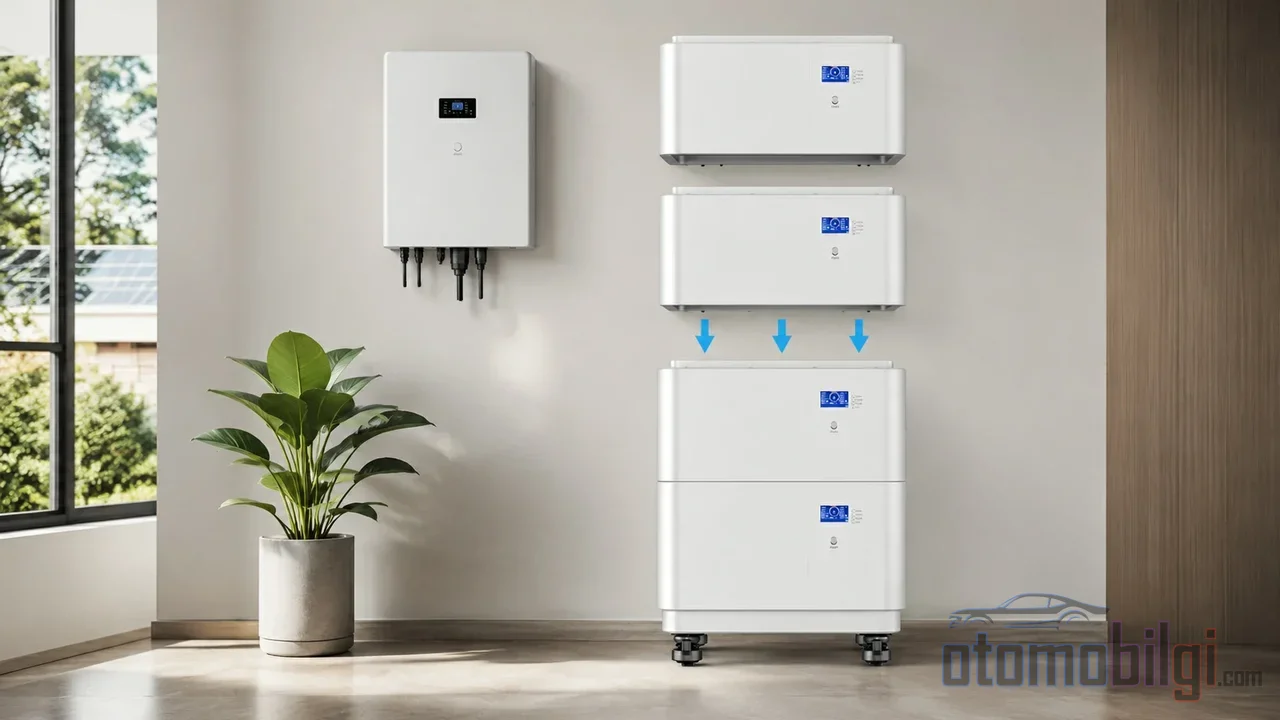
The industry measures battery health with State of Health (SOH); this value is the ratio of the cells' current capacity to the original capacity. When a battery's SOH value drops into the 70–80% range of its original capacity, it is considered end of life on the vehicle side; some organizations give this threshold as approximately 75%. The threshold is defined in a narrow range because its role in the vehicle is decisive: range, acceleration, and fast-charging tolerance depend on this capacity.
The critical point is that most packs coming out of vehicles still carry more than 80% of their original capacity. This energy has not been lost; it has merely changed owners. The terminology needs to be clarified: using a battery in another vehicle means reuse, while putting it into grid-side stationary storage means repurposing. Both come before recycling, and both spread the battery's initial production emissions over more years; they reduce the need for new raw material mining and new production.
Highlights
- EV batteries are considered end of life for the vehicle when they drop to 70–80% of their original capacity.
- Packs removed from vehicles mostly retain more than 80% of their capacity.
- In second-life storage, packs can keep working for another 8–10 years.
- The EU Battery Regulation mandates raising the recycling rate to at least 65% by 2030.
- Estimates for second-life market size for 2026 cluster in the range of $1.1–1.27 billion.
Where Does the Second Life Work? Usage Map in Stationary Storage
Every stationary storage application is not equally suitable for an aged EV pack. The key variable determining suitability is cycle frequency: the more frequently a pack is fully charged and discharged, the faster it ages. That is why use cases are evaluated in three groups.
| Use Case | Suitability | Why |
|---|---|---|
| Commercial backup power | High | Rare cycling; the pack degrades slightly |
| Delays grid upgrades | Medium | Activates during load peaks |
| Residential backup and EV charging storage | Medium | Enables avoiding demand charges |
| Rooftop solar storage with daily cycling | Low | Full cycles every day age it quickly |
| Frequency regulation services | Low | Frequent cycling retires the pack quickly |
The scale is growing too: batteries retired from autonomous vehicle fleets are being converted into grid-connected storage in California and Texas; a facility with a 12 MWh scale in California is cited as an example of this approach. The application dimension is also social: solar and storage systems can reduce the energy burden of low-income households by up to 60% at scale. Since energy expenses in these households exceed three times the share of income compared to other households, second-life storage is a solution that relates not only to technology but also to the issue of access. It also contributes to air quality by reducing the use of peaker gas plants - which are often located near low-income areas.
Vehicle-to-Grid: How Does the Repurposing Process Work?
A battery's start of a second life is a measurable process of several steps:
- SOH assessment: The remaining capacity and internal resistance of the cells are measured.
- Repurposability analysis: The pack's condition, safety status, and remaining life are examined for suitability.
- Configuration decision: Will the whole pack be used, or will modules and cells be separated and matched?
- Reassembly: Adapting to a battery energy storage system (BESS) architecture.
Whole Pack or Module by Module?
Using the whole pack as-is is fast but requires access to the battery management system's (BMS) software; the BMS is the brain that monitors charge-discharge cycles, temperature, and cell health, and its software is the manufacturer's intellectual property. Dismantling the pack and evaluating the modules individually offers freedom of measurement, but it is expensive and involves a technical pitfall: if modules that cannot be matched according to SOH and chemistry similarity come together, the system drops to the performance of the weakest cell group.
Certification: The Price of Safety
The UL 1974 standard exists for the evaluation of used batteries; facilities audited under this standard are being certified. On the EU side, a certification methodology based on the EU Battery Regulation (2023/1542) has been proposed. The cost side is not negligible in scale: It is estimated that the UL 1974 test alone could cost around 30% of the price of a used battery. One manufacturer stated that it spent approximately $1.2 million on four separate UL certifications (1973, 1974, 9540, 9540A); As of 2023, only one facility had obtained a facility-based certification. There is also no centralized battery recovery system in the US; batteries are classified as dangerous goods in transport and the packs are heavy - logistics is a cost item in its own right.
How Big Is the Market? How Big Is the Market?
Figures on the size of the second-life market should be read as ranges, since they are based on different definitions and years: Estimates ranging from $0.7 billion for 2025 to $1.27 billion for 2026 extend to a range of $7.6-15.7 billion for 2033-2034, with compound annual growth estimated at around 34%. Grid-connected storage draws the largest blocks for frequency regulation and peak shaving needs. The lithium-ion recycling market, however, is larger: The market, worth approximately $7 billion in 2026, is expected to reach $31.8 billion by 2033, with a compound annual growth rate above 23.4%. In the long term, by 2043, annual recycling of approximately 23.8 million tons could mean metals worth about $101 billion.
Recycling: Low Rates and Emerging Methods
Collection rates are far below the desired level: The share of batteries collected and recycled in the US and the EU is estimated to remain below 10%. Most current recycling operations are not profitable; in an environment where transport can account for up to 70% of total costs, the economic balance is fragile. The EU is trying to change this picture with the Battery Regulation, which mandates a target of at least a 65% recycling rate by 2030.
Pyrometallurgy, Hydrometallurgy, and Direct Cathode Recycling
Three main methods represent three different equilibrium points:
- Pyrometallurgy: High-temperature smelting; suitable for large volumes but loses most of the lithium.
- Hydrometallurgy: Separating metals with chemical solutions; better lithium recovery but requires more processing steps.
- Direct cathode recycling: Without breaking down the cathode structure, it 'recharges' the trapped lithium through chemical or electrochemical relithiation, solid-state sintering, or molten salt methods. It achieves over 98% recovery and offers 24.4% lower greenhouse gas emissions compared to hydrometallurgy.
Is LFP Recycling Economically Viable? Comparison with NMC
The calculation here depends on the chemistry. Today, most EV batteries in the US have an NMC chemistry; their nickel and cobalt content gives them an attractive residual value for recyclers, which pushes them into competition with repurposing companies. The cobalt and nickel content of NMC811 keeps its residual value above that of LFP; the recycler's break-even cost has been calculated at around $309. LFP, on the other hand, is based on iron and phosphate: since its raw materials are abundant and cheap, the traditional recycling economics are weak and it is harder to recycle. However, this is the other side of the coin - the EV market's shift toward LFP provides repurposers with a cheap battery supply and a lower fire risk. With direct cathode recycling, profitability can also be possible for LFP; a study shows that LFP recycling profit is less sensitive to SOH variations than NMC's, but that both costs and revenues remain smaller.
Frequently Asked Questions: What You Need to Know About Second-Life Batteries
Is a battery trash once it drops to 80% capacity? No. With 70-80% capacity, second life can keep working in stationary storage for another 8-10 years; this period significantly extends the battery's total service life.
What applications is it suitable for? Low-cycling backup power is the most suitable area. Frequent-cycling grid services such as frequency regulation and daily full-cycle rooftop solar storage quickly consume a retired pack; it is not suitable for these jobs.
Is it safe? The perception of fire risk limits adoption, especially in the residential market. UL certifications aim to build this trust, but the cost of the certification process slows widespread adoption.
Why choose second life when new batteries are getting cheaper? The competitiveness of second-life packs relies on lower prices; as new battery prices fall, this advantage narrows. Still, the advantage of avoiding first-production emissions and reducing waste remains beyond price.
The industry is also addressing this balance on the policy side: access rights for manufacturers to BMS and battery data, lifetime traceability via the battery passport, simplification of certification processes, extended producer responsibility, and design standards that facilitate disassembly are among the leading proposals for scaling up the second life.
Conclusion: The Battery's Real Story After the Vehicle
In summary, a second-life battery can be expressed with this definition: A battery pack that has dropped to 70-80% of its capacity in a vehicle is not trash; the energy it still carries is put to use for another 8-10 years in low-cycling applications in stationary storage systems, and only afterwards is it broken down into its metals through recycling methods. Every link in the chain has its own economics, certification, and risk. Closing the loop fully - rising collection rates, cheaper certification, and the profitability of direct cathode recycling - will determine whether this market grows in the next decade, or becomes the story of energy thrown into the trash.
Sources
- Repurposing EV Batteries for Second-Life Stationary Storage - ACEEE
- Second-Life Electric Vehicle Battery Repurposing Facility Certification - UL Solutions
- The EV Battery Life Cycle: What Happens When EV Batteries Reach End of Life - ULSE
- Extending the electric vehicle battery first life - ScienceDirect
- What happens to EV batteries at end of useful life - Electric Vehicle Council Australia
- Second-Life Batteries Can Play a Vital Role in the Clean Energy Transition - WRI
- Second Life EV Battery Market Report - Fortune Business Insights
- Breakthroughs in Lithium-Ion Battery Recycling Methods - GreenLi-ion
- Low-carbon circular recycling of spent lithium-ion battery cathodes - RSC
- Pathway decisions for reuse and recycling of retired lithium-ion batteries - PMC