Does an LFP Battery Last Longer If It Waits at Half Charge?

LFP batteries are known as the most forgiving chemistry in the lithium-ion world: They can withstand charging to 100% and endure thousands of cycles. Yet this durability has a limit, and the limit is drawn precisely at the level where the battery spends most of its time. So does an LFP battery really last longer if it sits half full? The short answer is yes, but the two mechanisms behind the answer are far more concrete physical processes than what the percentage indicator suggests: the lost lithium inventory and the iron dissolving from the cathode. Once you understand these two, it is not hard to see why an LFP pack parked at 100% and the same pack resting at 50% will be at different states of health years later.
On this page we will approach the topic not as an ordinary list of charging tips, but through degradation mechanisms. Because the benefit of a low average state of charge in LFP chemistry is not just a simple practical recommendation; it is a chemical fact that directly slows down the two fundamental aging processes inside the cell.
Calendar Aging and Cycle Aging: Two Separate Clocks
There are two separate mechanisms that consume a battery's life, and they operate on different clocks. Calendar aging is the capacity loss that occurs over time even if the battery is never used. Its main driving forces are the state of charge (SOC) and temperature. The root process is the growth of the SEI (solid electrolyte interphase) layer on the anode surface: every time this layer thickens, it consumes lithium and electrolyte, and the consumed lithium never comes back.
Cycle aging, on the other hand, is the wear caused by charge and discharge cycles. It depends on the depth of discharge (DOD), the C-rate, and the SOC range used. For example, cycling between 20-80% creates significantly less electrode stress than cycling between 0-100%. The practical rule that follows is simple: the narrower the range the battery operates in, the smaller the loss per cycle.
What the two mechanisms have in common is that both are sensitive to the charge level. In a cell resting at a high SOC, SEI growth accelerates; in a cell cycled over a wide range, cycle-induced wear increases. In the next section we will look at the chemical basis of this sensitivity in LFP chemistry.
Key Takeaways
- Running LFP cells at a low average state of charge significantly reduces the capacity loss caused by lithium inventory loss and iron dissolution.
- The LFP cycle life typically falls in the range of 2,500-10,000 cycles; for NMC, the same band is around 1,000-3,000 cycles.
- The recommended level for long-term storage is 40-60% SOC; for daily use, the 20-80% range is a practical target.
- Due to LFP's flat voltage curve, the battery management system occasionally needs a full charge; once a week is enough for calibration purposes.
- Temperature is the dominant factor in overall aging; charging habits play a secondary role.
Mechanism 1: Loss of Lithium Inventory (LLI)
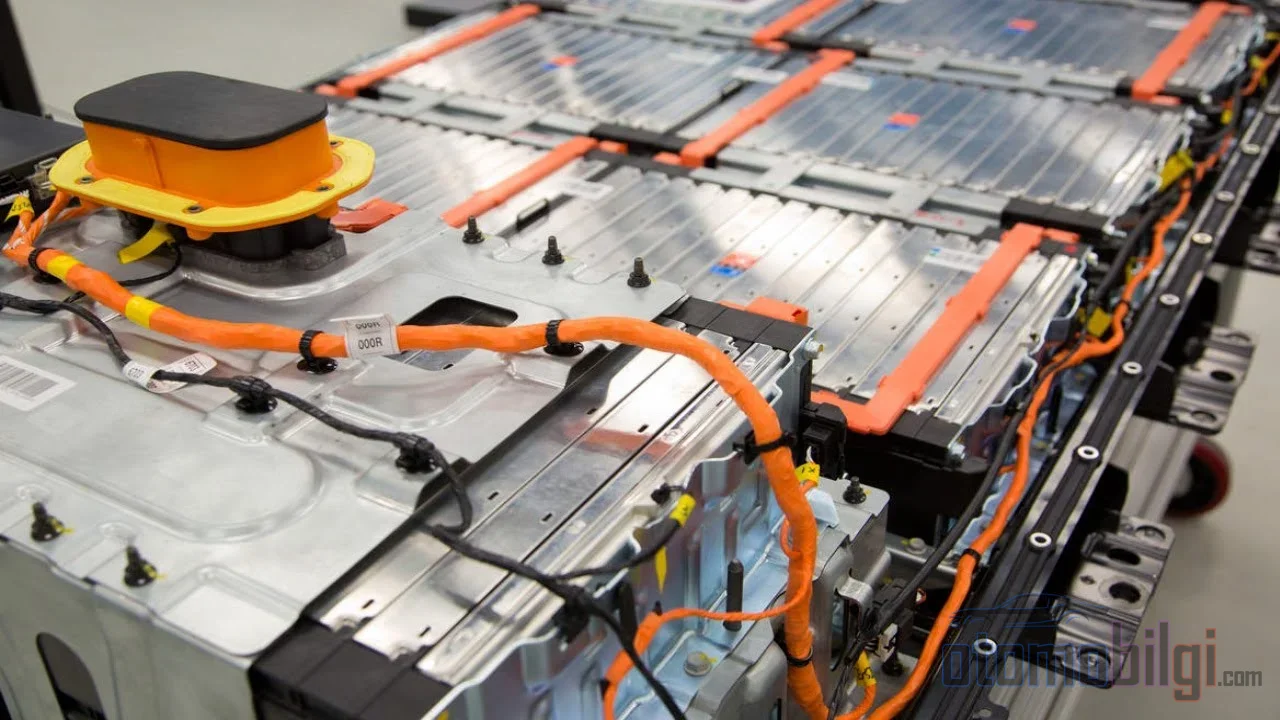
In lithium-ion cells, the dominant degradation mode is called loss of lithium inventory (LLI): lithium ions that should circulate in the circuit become bound by side reactions and can no longer contribute to capacity. This is precisely the primary capacity loss mechanism in LFP/graphite cells.
The process works as the following chain of logic: when the cell is held at a high state of charge, the graphite anode is fully lithiated. Lithiated graphite is more reactive with the electrolyte than empty graphite; therefore, an anode resting at high SOC consumes the electrolyte more aggressively and the SEI layer thickens faster. Each thickening means lithium being removed from the circuit, and this lithium cannot be recovered. The result is the silent erosion of usable capacity.
At a low average SOC, on the other hand, the graphite carries less lithium, its reactivity drops, and side reactions slow down. When the same cell rests at around 50% at the same temperature, the lithium inventory is lost at a much slower pace. A recent academic review dated 2026 also confirms loss of lithium inventory as the main culprit in cell degradation and focuses on battery design concepts that can compensate for this loss. In short, LLI is both the easiest mechanism to understand and the one with the greatest preventable share.
Mechanism 2: Iron Dissolution
LFP's cathode material takes its name from its iron (Fe) phosphate structure. This structure is quite robust overall, but at high states of charge a small amount of iron can dissolve from the cathode active material. Iron dissolution is listed as one of the leading causes of capacity loss in LFP batteries; it is evaluated together with phase transitions and the CEI layer that forms on the cathode surface.
The harm of dissolving iron is not merely the loss of material from the cathode: iron ions can migrate through the electrolyte, reach the anode side, and disrupt the lithium cycling there. In other words, iron dissolution works hand in hand with loss of lithium inventory, producing double damage. When the cell is held at a low average state of charge, this dissolution decreases markedly; both aging engines inside the cell also downshift.
From here, the core finding of this page emerges clearly: Operating LFP cells at a low average state of charge significantly reduces the capacity degradation caused by loss of lithium inventory and iron dissolution. This is not a usage habit preference, but a direct consequence of two chemical mechanisms.
Cycle Life Comparison: LFP and NMC
The difference between the chemistries can be summarized in a single number, but the range must be read correctly. LFP cells are widely rated at 2,500-10,000 full cycles up to end-of-life thresholds. For NMC chemistry, the typical band under the same conditions is on the order of 1,000-3,000 cycles. Independent evaluations converge on the view that LFP provides 2-4 times longer cycle life than NMC and comes at a lower cost per kWh.
The reason for this wide range is the measurement conditions: discharge depth and C-rate: as these vary, even the same cell can reach very different cycle counts. In routine use, it is known that LFP cells reach 4,000-6,000 full cycles up to the 80% capacity threshold, with the best cells exceeding this. So lower-bound figures like 2,500 represent the worst-case scenario under harsh conditions; upper values like 10,000 represent the potential under ideal conditions.
| Feature | LFP | NMC |
|---|---|---|
| Typical cycle life | 2,500-10,000 cycles | 1,000-3,000 cycles |
| Routine full cycles (to 80% capacity) | 4,000-6,000 | Lower |
| Tolerance to 100% charge | High | Lower |
| Cost per kWh | Lower | Higher |
| Voltage curve | Flat (hard to track SOC) | Sloped (easy to track SOC) |
LFP's advantage in lifespan is clear. However, this table also frames the debate about 100% charging: LFP is noticeably more resilient to high charge levels than NMC, and regular full charging may not cause a serious problem. On the other hand, a 2024 US-based study shows that repeatedly charging LFP batteries to 100% can lead to accelerated degradation similar to nickel-based chemistries. The two findings do not contradict each other: LFP's tolerance for 100% is higher than NMC's, but this tolerance is not unlimited, and holding at a continuously high SOC accelerates aging in both chemistries.
The Flat Voltage Curve Trap: Why Is an Occasional Full Charge Necessary?
The most interesting engineering problem in LFP's practical use concerns not aging but measurement. The voltage curve of LFP cells is nearly flat, especially in the region above 50%: as the state of charge rises from 60% to 80%, the terminal voltage changes very little. This flat curve makes it difficult for the battery management system (BMS) to track the state of charge accurately over time; the indicator gradually drifts away from the true value.
The solution is to occasionally fully charge the cell to renew the BMS's calibration reference. Reaching 100% once a week is sufficient for this purpose; constant full charging is neither necessary nor recommended. In other words, a low average SOC strategy and correct calibration are two separate requirements that must be pursued together on a regular basis.
Practical Outcome in Hybrids and Plug-in Hybrids
What range should you target in daily use?
In full hybrid vehicles, battery management is already kept within a narrow range by software; there is nothing the user needs to do. In plug-in hybrids, however, the choice matters because control is in the user's hands. The practical targets are clear: in daily use the 20-80% range, and during long-term parking the 40-60% level. Expert assessments agree that repeated 100% charging in plug-in models shortens battery life; the general recommendation is not to let the battery drop below 20% and not to routinely exceed 80%.
Avoid deep discharge
But the measure must not be overdone: deep-discharging an LFP battery below 10% can cause the inverter to shut down under high loads due to low voltage. A low average SOC is a good thing, but a battery sitting at 5% in the fridge for weeks is not a good thing. The healthy zone is in the middle.
Temperature comes before everything else
All the fine-tuning of charging habits has a limit: long-term testing on large-format LFP cells shows that temperature is the dominant factor in total aging, while the cycling protocol plays a secondary role. In a hot climate, heat combined with a high SOC in a car parked even in the shade produces faster degradation than heat combined with a low SOC. So a low average charge level is an important lever, but on its own it is not enough without fixing the thermal conditions.
Frequently Asked Questions
Does an LFP battery last longer if stored half full?
Yes. Keeping LFP cells at a low average charge state slows lithium inventory loss and iron dissolution, significantly reducing capacity loss. For long-term storage, the 40-60% band, and for daily use, the 20-80% range, are a practical and sufficient target.
Is charging an LFP battery to 100% every day harmful?
Keeping it constantly at 100% accelerates both calendar and cycle aging; this also applies to LFP, though not as strictly as to NMC. On the other hand, thanks to LFP's flat voltage curve, a full charge once a week for calibration purposes is beneficial. The difference lies between routine and exception: the daily routine is mid-levels, the exception is a full charge.
Should the battery be stored at a level close to zero?
No. Although the lowest calendar aging is theoretically seen at very low SOC, this approach is not supported by reliable sources and carries the risk of deep discharge. The recommended level for long-term storage is the 40-60% band; this level slows both lithium inventory loss and iron dissolution, protecting the cell.
Is LFP's lifespan really longer than NMC's?
Yes, typically 2-4 times longer. LFP cells are rated in the 2,500-10,000 cycle band, while NMC is in the 1,000-3,000 cycle band. As conditions become harsher (deep discharge, high C-rate, high temperature), the cycle count of both chemistries drops; but the difference is preserved.
Conclusion: Health Life Is a Matter of Level Choice
The answer to the LFP battery question is embodied in two mechanisms: a low average charge state slows the consumption of the electrolyte by lithiated graphite and reduces iron dissolution from the cathode. Together, these two processes are among the main variables determining how much capacity the cell will lose over the years. If you own a plug-in hybrid or electric vehicle, keeping the battery at mid-levels throughout ownership (20-80% usage, 40-60% storage, one calibration charge per week) is the simplest way to convert most of the cycle life potential into real range. Temperature management is a prerequisite of this strategy; beyond that, all that remains is to use the gauge with common sense.
Sources
- Lithium iron phosphate battery - Wikipedia
- The Operation Window of Lithium Iron Phosphate/Graphite Cells Affects Their Lifetime - J. Electrochem. Soc. (Zsoldos et al. 2024)
- A Review of Capacity Fade Mechanism and Promotion Strategies for Lithium Iron Phosphate Batteries - MDPI Coatings (Hu et al. 2024)
- How to design a zero-degradation battery by compensating for loss of lithium inventory - Cell Reports Physical Science (Rawat 2026)
- Calendar Aging vs Cycle Aging in LFP Batteries - SunLith Energy
- The Degradation Behavior of LiFePO4/C Batteries during Long-Term Calendar Aging - MDPI Energies (Sui et al. 2021)
- New Study Raises Questions About LFP Battery Charging Habits - Battery Tech Online
- Why We're Excited about LFP Batteries for Electric Cars - Recurrent Auto
- Hybrid Battery Health: 7 Pro Tips - Kelley Blue Book
- LFP, NMC and Sodium-ion Compared (2026) - battery.mba