Why Do LFP Battery Vehicles Need a Full Charge Once a Week?
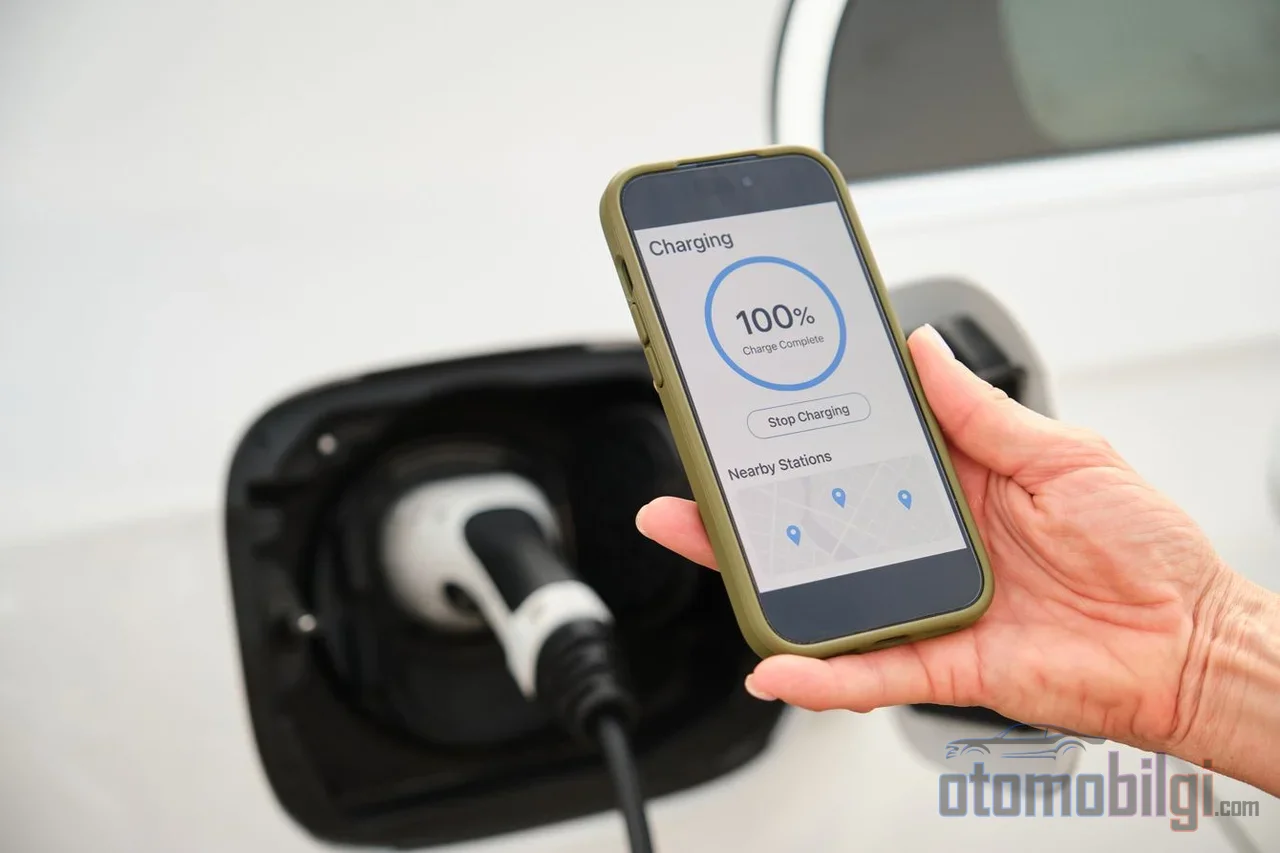
For most electric vehicle owners, the charging advice is clear: stop at 80% for daily use, and only rarely go up to 100%. Then one day you open your Tesla Model 3's owner's manual and read the opposite: this car wants a full charge once a week. BYD repeats a similar recommendation for its LFP-battery models. Why do two vehicles with the same lithium-ion technology receive instructions that are complete opposites of each other? The answer lies not in the battery itself, but in the software that reads it.
Flat Voltage Curve: LFP's Measurement Problem

LFP, or lithium iron phosphate cells, have an almost flat voltage curve across most of the usable charge range. Between roughly 20% and 80% charge, the cell voltage barely changes within the 3.2V-3.3V band. The scale is in fact so narrow that in one measurement, the total change between 27% and 94% charge was measured at only 0.07V. In other words, a cell at 25% charge and one at 75% charge are indistinguishable from each other in terms of voltage.
This creates a serious problem for the battery management system (BMS). In lithium-ion cells, the state of charge (SOC) is typically estimated from voltage; it is a translation game played with the resting voltage (OCV). In NMC cells, voltage rises noticeably as charge increases, so this estimate is reliable. In LFP, however, voltage-based estimation does not work in real time due to the flat region: the system may mistake a 25% charge for 75%.
As a solution, BMSs resort to a second method called coulomb counting: they calculate the charge by counting the amount of electricity flowing from the battery moment by moment. However, like any counting method, this too is prone to drift; it drifts by around 2-5% within a few days. Condensation, a faulty cell, or simply small errors accumulated over time push the gauge away from reality. So how is this drift reset?
Weekly Full Charging Is Actually a Calibration Process
We know that in LFP cells, the voltage curve moves sharply at only two points: when it reaches the full charge voltage (3.65V per cell) and when it approaches the discharge cutoff point (2.5V per cell). These two extremes are the only anchor points the system can trust. When the battery reaches full charge voltage, the BMS fixes the SOC definitively at 100%; and at 0% at the discharge cutoff point. All estimates in between are realigned between these two anchors.
This is precisely why manufacturers ask LFP owners for regular full charges: the goal is not to fill the battery, but to validate the software. If the drift is left uncalibrated for a long time, the range estimate can deviate by up to 30% - a 400-kilometer range indicator may point to a battery that actually delivers 280 kilometers. A full charge has a second benefit as well: if the vehicle is left plugged in after reaching 100%, the BMS completes cell balancing, which is made difficult by the flat voltage. Two cells that appear identical in voltage may actually be at different states of charge; balancing closes this hidden gap.
There is one nuance to keep in mind: a full charge requirement is not a common trait of lithium chemistries. There is no memory effect in the battery, and charging precisely to 100% for calibration is not even necessary; the most reliable reading points are the regions below 30% and above 70%. But for LFP, the practical and manufacturer-recommended method is regular full charging.
Highlights
- LFP cells show a total 0.07V voltage variation measured across the 20-80% range; the BMS cannot read state of charge from voltage.
- Coulomb counting can drift by 2-5% over time; if left uncalibrated, the range estimate can deviate by up to 30%.
- LFP typically delivers 3,000-6,000 full cycles; while NMC is around 1,000-2,500 cycles.
- The thermal runaway threshold for LFP is approximately 270-300°C; for NMC it is 150-210°C.
Why Does the Picture Completely Reverse with NMC?
In NMC cells, considered the second generation of nickel chemistries, the voltage curve is sloped: as state of charge rises, the voltage also increases steadily. For this reason, the BMS can verify state of charge from voltage at any moment; weekly calibration is not required. Full charging itself does not destroy NMC as a one-time event - the real danger is leaving the vehicle sitting at 100% charge for a long time. At high state of charge, the cells remain under stress at high voltage, and this leads to capacity loss in the long run. That is why the standard recommendation for NMC is to keep daily use within the 20-80% band unless range is needed.
Putting the difference between the two chemistries side by side in a table clarifies why they receive exactly opposite recommendations:
| Feature | LFP | NMC |
|---|---|---|
| Voltage curve | Nearly flat between 20-80% | Sloped, rises with state of charge |
| SOC estimation | Cannot be read from voltage, requires calibration | Reliably read from voltage |
| 100% charging | Recommended weekly (BMS calibration) | Only before a trip, without leaving it sitting |
| Cycle life | Approximately 3,000-6,000 full cycles | Approximately 1,000-2,500 full cycles |
| Thermal runaway threshold | Approximately 270-300°C | Approximately 150-210°C |
| Fast charging tolerance | More tolerant of repeated fast charging | More sensitive |
Depth also makes a difference on the cycle life front. While 100% depth of discharge in LFP cells yields about 3,000 cycles, use at 50% depth pushes this number above 8,000. BYD's Blade battery is also based on this durability of the LFP architecture and is designed with a lifespan target exceeding 5,000 charging cycles. What NMC offers in return is density: it stores approximately 250 Wh of energy per kilogram, meaning more range at the same weight. Each chemistry is the product of a different balance.
Which Vehicles Use LFP?
LFP is no longer a niche option; it has become the main chemistry of entry-level and standard-range models. Tesla uses LFP batteries in the RWD (rear-wheel drive) versions of the Model 3 and Model Y - in the Model 3 with 60 kWh in early production runs, and 60.9 kWh capacity from 2024 onward. Ford is one of the brands that switched to LFP in the Standard Range package of the Mustang Mach-E. BYD, meanwhile, is the most ambitious player in the picture: its entire current lineup carries LFP-based Blade batteries, and the brand is the world leader in producing this chemistry. So much so that there are industry reports that Tesla will source Blade batteries from BYD for its production in China.
Here is a historical data point to gauge how widespread this is: In the first nine months of 2022, Tesla and BYD accounted for 68% of all LFP batteries in newly sold electric and hybrid passenger vehicles. That figure belongs to that date, and since that day LFP's total market share has grown even further; yet the fact that these two major manufacturers are the load-bearing pillars of this chemistry has not changed.
How to Find Out Whether Your Vehicle's Battery Is LFP or NMC?
The most practical method is to go back to the vehicle's official technical specifications and owner's manual; the cathode chemistry is usually stated in the battery section. Vehicle listing platforms operating in the second-hand market are also increasingly offering the ability to filter by battery type and cathode material; when buying a used electric vehicle, asking about the chemistry as well as the battery capacity is now part of buyer awareness. There is also a rule of thumb: a limited-range, entry-level version of the same model is most likely LFP; long-range and performance versions usually carry NMC.
The vehicle itself can also give a clue. If you see a message on the screen after a software update indicating that battery calibration is required, it usually means the BMS wants to realign its SOC calculation - and this is the best time to follow the manufacturer's charging recommendation. If your owner's manual contains a statement about charging to 100% weekly or once every two weeks, your vehicle's BMS is designed with LFP logic.
A Practical Charging Routine: Two Chemistries, Two Calendars
Translating this information into daily life means keeping two separate calendars. In a vehicle with an LFP battery, the flat voltage curve makes it impossible for the BMS to read the state of charge from voltage, so the battery must be charged fully to 100% once a week or at most once every two weeks - this does not harm the battery; on the contrary, it preserves the accuracy of the gauge and cell balance; after charging is complete, the vehicle should be left plugged in for a while if possible.
In a vehicle with an NMC battery, the routine is the reverse: the daily charge limit is kept at 80%, 100% is used only before a long trip, and the vehicle is not left sitting at 100% charge; it is unplugged or driven off right away. There is no calibration hassle, because the voltage curve constantly allows the BMS to verify.
Let us underline two notes. First, fast charging should not be confused with calibration: the most accurate way to complete a full-charge calibration is to pass through the upper band of charge with slow AC charging. Second, in the context of solar energy storage, there are approaches that recommend keeping the upper charge limit of LFP cells at 80-90%; however, this recommendation belongs to the different lifespan goals of storage systems and should not be confused with the daily-use electric vehicle scenario. The manufacturer's instruction is what is binding for your own vehicle.
In short, in engineering terms: A 100% charge is a calibration command for LFP, but a voltage burden for NMC. The flatter the chemistry's voltage curve, the more often the software needs anchor points. Take one look at what the manual says; that instruction is no coincidence, it is a direct consequence of your cell chemistry.
Sources
- BMS for LiFePO4 Batteries: Requirements Guide
- Do I Need to Charge My Car to 100%? - Recurrent Auto
- Are Today's Electric Car Batteries Already Obsolete? - go-e.com
- LFP vs NMC Batteries - Electrifying.com
- LFP vs NMC Batteries: Which EV Chemistry Is Right for You - autodoc.co.uk
- EV Battery Types - Electric Car Scheme
- BYD Blade Battery - BYD Europe
- Which Cars Have LFP Batteries? - EVDB
- LFP Batteries: Why Top EV Makers Choose This Tech - Battery Technology
- What to Look for When Buying a Used Electric Car? - babuba.com