How Does a BMS Work? Cell Balancing and Charge Limits
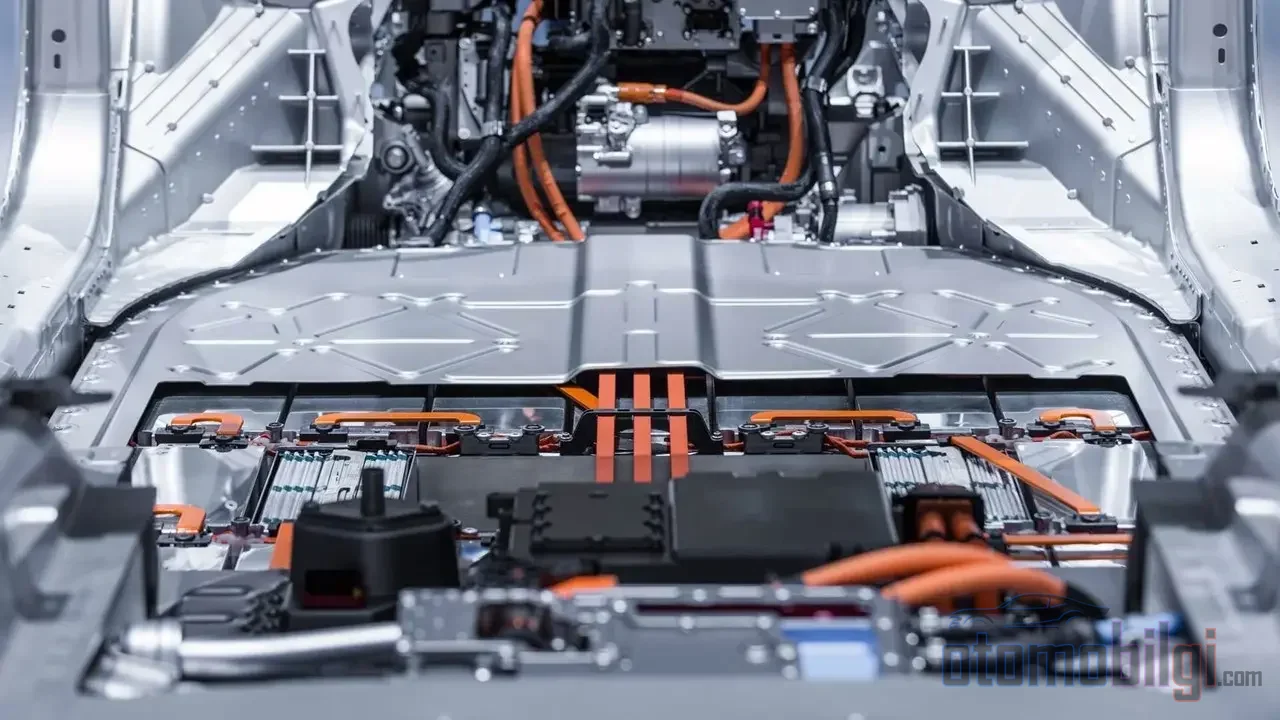
You have plugged your vehicle into a fast charging station that supports 150 kW, and the display reads 46 kW. A week later, the same vehicle draws 135 kW at the same station. The station is not faulty, nor has your battery degraded; the only thing that changed between the two sessions is the battery's current state, and the unit that reads this state and decides the charging power is the battery management system. Most drivers equate charging speed with the station's power. In reality, the station only sets the maximum power offered; how many kW enter the battery is decided on the vehicle side by the battery management system, known by the abbreviation BMS.
On this page, we examine the invisible decision-maker of the charging process from a systems perspective: voltage balance between cells, temperature monitoring, current limitation, and the communication chain established with the station. By the end of this page, you will understand, through the eyes of the BMS, why your vehicle charges slowly in some sessions and the logic behind the charging curve.
What Is a BMS and What Is Its Role in Charging?
The battery management system is an electronic control unit that monitors, protects, and manages the battery pack at the cell and module level. It serves as an intelligent interface between the cells and the vehicle's electrical system. It is built on five basic components: voltage, current, and temperature sensors; a microprocessor that makes the decisions; a cell balancing circuit; protection circuits that instantly cut off in case of short circuit, overcurrent, or overheating; and a communication interface that talks to the station or the vehicle network.
In the context of charging, the BMS's job can be summarized in one sentence: to renegotiate the energy entering the battery every second according to the current cell conditions. The rules of this negotiation are set not only inside the vehicle but also in the digital conversation established with the station.
Key Highlights
- It is not the station but the BMS that decides the charging power; the station only offers a maximum power.
- Most lithium-ion cells cannot be fast-charged below 5 °C and should never be charged below 0 °C.
- The slowdown after 80% results from the BMS gradually reducing the current as the cell voltage approaches its upper limit.
- In an unbalanced pack, capacity is limited by the weakest cell.
- A battery operating at 45 °C instead of the optimum 20 °C can lose up to 50% of its efficiency in continuous charge-discharge cycles.
Power Negotiation Between the Vehicle and the Station
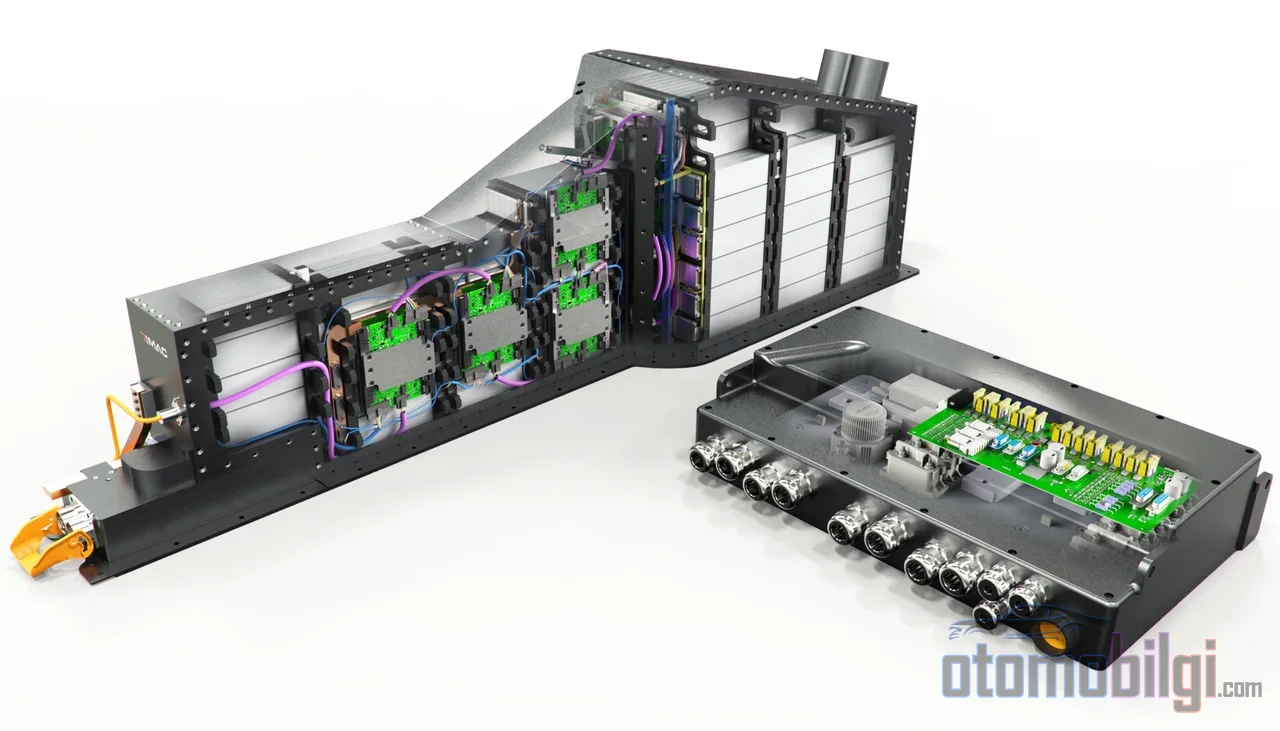
The moment you plug in the cable, a technically silent conversation begins. The vehicle establishes contact with the station through standard protocols such as ISO 15118; safety checks are performed, and the BMS communicates its status to the other party: current state of charge (SoC), battery temperature, cell voltages, acceptable charging limits, and battery chemistry. The station combines its own capacity with these limits, and the parties agree on a safe voltage and current range. The kW value you see is the current result of this negotiation.
The BMS's Different Roles in AC and DC Charging
In AC charging, the power passes through the on-board charging unit inside the vehicle; this unit operates within the BMS limits and converts alternating current into direct current. With DC fast charging, conversion is done at the station side, power goes directly to the battery, and the on-board unit is bypassed. This means the following: In DC charging, the only mechanism protecting the battery is the BMS. The BMS communicates with the station in real time, continuously feeding back the acceptable voltage, current, and safety ranges; the station complies with this feedback. The graph we call the charging curve is precisely this feedback flow laid out over time.
How Does a Session End?
Throughout charging, the BMS monitors conditions and dynamically adjusts parameters according to temperature or voltage changes. As cell voltage approaches the upper limit, it requests a gradual reduction in current; once the limit is reached, it demands that the current be cut off completely. The signal that safely ends the session also comes from the BMS. It also performs peak current monitoring against sudden current spikes: it integrates the current over time and reduces or cuts the power if the overshoot persists. This way it responds to short circuits with sub-second reaction, while remaining tolerant of brief and harmless peak demands. Hysteresis is applied to prevent back-and-forth jumping at the cutoff threshold.
Temperature Tracking: The Hidden Key to Charging Speed
The heaviest-weighted parameter in the BMS's charging decisions is temperature. Lithium-ion chemistry demands a narrow comfort zone; BMS thermal management typically targets a narrow range such as 30-35 °C. Once you move outside this range, intervention is inevitable.
Why Is Charging in Cold Weather Problematic?
Below 0 °C, charging is physically problematic: in a frozen cell, metallic lithium plating can form on the anode during charging. This is permanent damage; it reduces capacity and makes the cells prone to failure. For this reason, most lithium-ion cells cannot be fast-charged below 5 °C and should never be charged below 0 °C. Cold cells must be heated before charging; for this, the BMS can activate an external line heater or under-module heating plates, and can protect the pack by disconnecting the battery system's main positive relay during preheating.
The Measurable Cost of Temperature
To speak in numbers: a battery operating at the optimum 20 °C can lose up to 20% of its efficiency at 30 °C; in continuous charge-discharge cycles at 45 °C, this loss can rise to 50%. In the cold, chemical reaction rates slow down and usable capacity drops. The BMS therefore works in two directions: for cooling, it uses passive airflow or active systems consisting of ethylene-glycol-based liquid cooling, an electric motor-driven pump, a radiator, and cooling plates; for heating, it activates the heating circuits. By opening and closing valves, it tries to keep cell temperature within a narrow range.
When you arrive at a station with a freezing cold battery in winter, or connect with a pack warmed up by a long highway drive, the BMS automatically reduces charging power to protect the cells. This behavior is the most common explanation for some sessions going slower than expected.
Cell Balancing: The Difference That Determines the Pack's Fate
A battery pack consists of hundreds of cells connected in series, and these cells are not perfectly identical. Self-discharge is not a manufacturing defect but a natural property of the chemistry; with cycle count, high temperature and calendar age, the differences between cells grow. By monitoring each cell individually, the BMS detects even the smallest imbalance and tries to equalize the SoC difference with its balancing circuit.
What happens if balancing is not done? The highest-voltage cell reaches the charge limit early, and the current has to be cut so that the pack is not overcharged while the other cells are still not full. In short, the weakest cell determines the usable capacity of the pack. Balancing also prevents degradation by reducing hot spots arising from overcharging of weak cells.
Passive and Active Balancing
| Method | Working Principle | Advantage | Disadvantage |
|---|---|---|---|
| Passive balancing | Excess energy is dissipated as heat through a discharge resistor | Simple, common, low-cost | Energy is lost as heat |
| Active balancing | Energy is transferred from high-voltage cells to lower ones | Energy loss is minimized | Complex and costly |
In the passive method, each cell has a parallel transistor switch and a discharge resistor; all cells are charged up to the capacity of the weakest cell. The active method uses capacitive or inductive energy storage to transfer excess energy without converting it into heat. The BMS design engineer decides which method is optimal by looking at cost, pack size and application requirements.
Safety Layers: What Happens When a Limit Is Exceeded?
The BMS continuously compares live voltage, current and temperature readings against programmed operating limits. When the limits are approached or exceeded, it intervenes gradually: first it reduces power, cuts the charging current if necessary, and if current draw exceeds safe limits or charge voltage rises dangerously, it disconnects the battery from the system. It kicks in the same way when cell voltages fall below the minimum safe level.
These limits are not aesthetic choices but damage thresholds. If the limits are exceeded for a certain period, the pack is damaged and dangerous thermal runaway conditions can begin. In a lithium-ion cell kept at low voltage for a long time, copper dendrites can grow on the anode; this is a serious safety risk that increases self-discharge. In short, every limit set by the BMS is a decision backed by a measurable damage mechanism.
BMS Explanation of Common Situations
Why Does Charging Slow Down After 80%?
As the state of charge rises, cell voltages approach the upper limit, and the BMS gradually reduces the current to protect the battery. The noticeable slowdown after 80% is a direct result of this mechanism. Every dip on the vehicle's charging curve is not an error on the screen, but a snapshot of a protection decision.
Why Does the Same Vehicle Charge Differently at Different Stations?
Your battery may be too cold or too hot; the BMS reduces power in both cases. The station may be sharing power with other vehicles through dynamic load management. Voltage drops on the grid side also directly reduce charging power. The slowdown experienced in summer heat follows the same logic: the heat causes the BMS and the charging unit to reduce power in order to stay within their safe operating range.
How to Detect a BMS Fault?
Typical symptoms include a noticeable drop in range, charging sessions that end early, BMS warnings on the dashboard, abnormal heating during charging, and inconsistent power delivery. In some cases the system recovers with recalibration; the general approach is to use the battery down to about 10%, wait an hour, then set the limit to 100% and perform an uninterrupted full charge. The BMS relearns the actual capacity during this full cycle. Reset steps vary by vehicle model.
Short Answer: What Exactly Does the BMS Do During Charging?
The BMS is the decision-maker that monitors cell voltages, temperature and current at every moment of charging, informs the station of the safe power that can enter the battery, and updates this limit in real time as conditions change. It balances the cells, keeps the temperature within a narrow range, enforces current limits, and safely ends the session. Behind every fluctuation in charging speed is this system working to extend your battery's life.
As a driver, the two most effective things you can do are based on this same logic: not switching immediately to fast charging with a very cold battery (this is why preconditioning exists) and not pushing a pack that is approaching its upper voltage limit. The BMS is already protecting you; making its operating conditions easier measurably extends battery life.
Sources
- How Battery Management System Works in EVs
- What is a Battery Management System (BMS)? - How it Works
- EV charging curve: Why charging speed fluctuates
- Battery Management System (BMS) in Modern Devices
- Battery heating strategy to enhance fast-charge performance
- Active Balancing: How It Works
- Charging Curve in Electric Vehicles
- What Your EV Charging Time Calculator Doesn't Tell You
- Active cell balancing - Texas Instruments
- What is BMS in Electric Vehicles