How Is Electric Vehicle Charging Affected in Hot Weather?
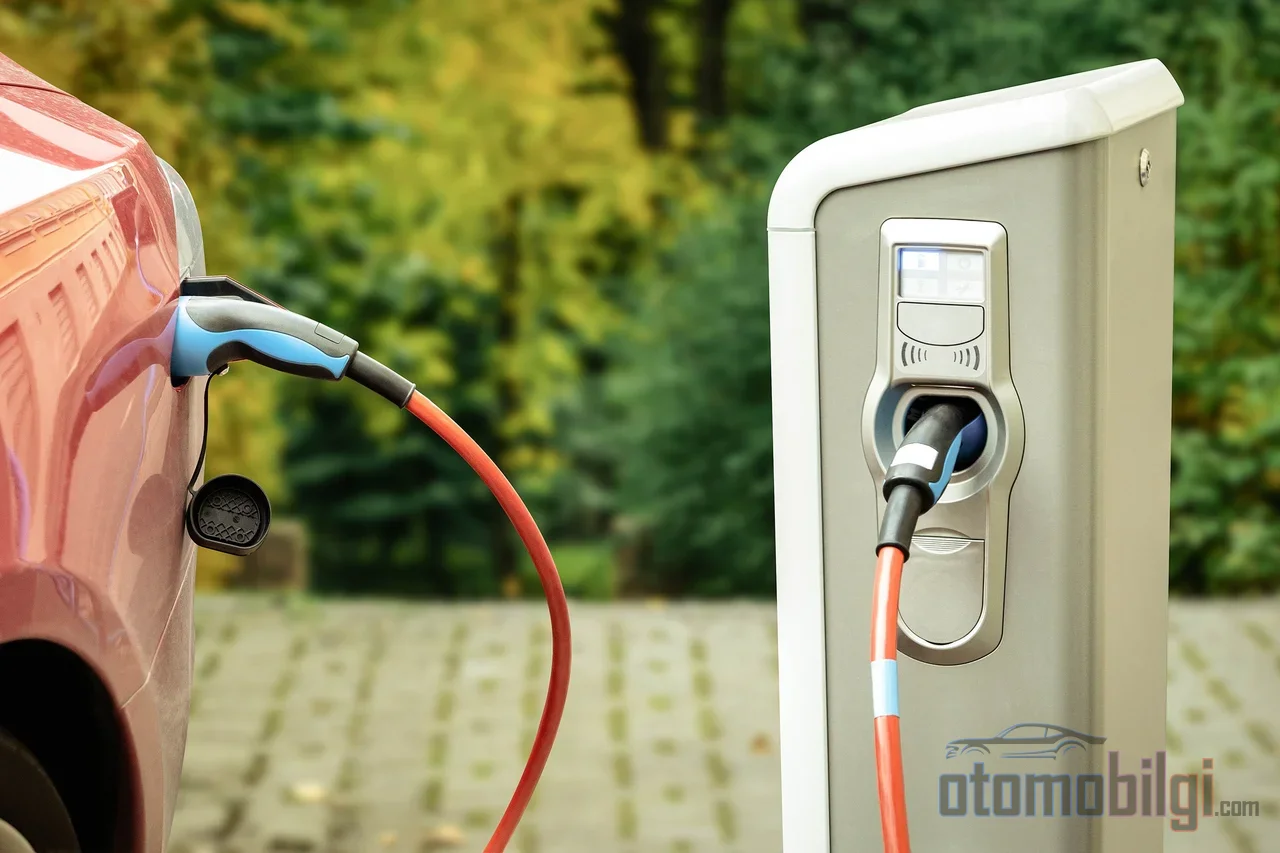
An electric vehicle connected to a fast charging station on a summer midday faces a very different problem from an ice-covered winter morning start: the battery is already warm. We all talk about slow winter charging; yet hot weather is a variable that determines charging speed and battery health just as much as cold does. So where does that power go when the thermometer rises and you plug in, and why does the kW value the station promises never show up on the screen?
On this page, we take a close look at how high air temperature affects the lithium-ion battery, why the vehicle's thermal management system throttles charging speed on its own, and what kind of extra wear fast charging in hot weather causes in the long run. We then move on to everyday usage tips such as pre-cooling practices and choosing the right time to park and charge.
Lithium-ion battery temperature: Ideal band and dangerous thresholds
Lithium-ion chemistry works most efficiently in the range of 20–25 °C. Within this band, both range and charging speed peak; ion movement within the cells and internal resistance behave closest to the values engineers designed. As the thermometer climbs above this band, the picture changes: above 35 °C the battery can begin to overheat, above 50 °C the cells can be damaged, and the lithium-ion structure cannot withstand temperatures around 70 °C.
Highlights
- The ideal operating band of the lithium-ion battery is 20–25 °C; above 35 °C the risk of overheating begins
- At an ambient temperature of 32 °C, range loss is around 5%, rising to 17–18% at 38 °C
- Batteries in hot climates degrade roughly 0.4% faster per year than in temperate climates
- In vehicles that frequently use DC fast charging above 100 kW, additional capacity loss of up to 3.0% per year is measured
- Liquid cooling is the most efficient thermal management solution in hot weather conditions
Why does charging slow down in hot weather? The logic of gradual throttling by the BMS
High ambient temperature slows down the battery's internal processes; this reduces performance both while driving and charging. What is really interesting is that the charging process itself generates heat. If the battery is already hot in a vehicle parked in the sun, the heat added by the charging current quickly pushes the cells toward the dangerous band. At this point the battery management system (BMS) steps in and gradually throttles the charging speed automatically to protect cell temperature.
In other words, the power the station can deliver and the power the vehicle accepts are not the same thing. In summer heat, a vehicle with high cell temperature connected to a 150 kW DC station may never reach the top of the charging curve; the kW value on the screen stays well below what you see in winter. This is not a malfunction; it is protective behavior the system performs by design.
Range and battery life: What does hot weather cost?
The measurable effect on range
Hot weather does not reduce range as dramatically as cold, but its effect is not zero either. A large-scale evaluation shows that at an ambient temperature of 32 °C batteries lose only about 5% of their normal range, while at 38 °C this drop rises to 17-18%. As a general framework, both hot and cold weather can reduce range by between 10-30% depending on the model. Air conditioning also shares the blame for increased energy consumption in high heat: On a 200 km journey lasting 2.5 hours, an air conditioner running at 2 kW of power can reduce range by 25-30 km. Compared with winter heating, cooling consumes less energy, but the effect is not negligible.
Accelerated aging in the long term
A single hot charge does not kill the battery; the real issue is the accumulation of exposure. Accelerated aging can be seen in EV batteries in hot weather of around 40 °C and above. A recent battery health analysis tracking a large fleet reveals that batteries operating in hot climates degrade about 0.4% faster per year than those in temperate climates. Although this seems like a small figure in itself, it creates a measurable difference in battery capacity over the years.
The fast charging debate: Testing the myth with data
Fast charging in hot weather is one of the most debated topics in the electric vehicle world. On one side, it is measured that vehicles making intensive use of DC fast charging above 100 kW experience up to 3.0% faster degradation per year on average; frequent DC fast charging in hot climates shows a strong correlation with the combination of high current and high heat. The academic side also supports this picture: During fast charging, high current generates excess heat due to internal resistance, and this resistive heating leads to degradation in the cells over time. In overheated cells, electrode degradation and the risk of thermal runaway, that is, uncontrolled heat escape, also come into play.
On the other hand, the picture is not entirely bleak. There is also a study claiming that regularly fast-charged vehicles show no significantly greater degradation except in edge cases such as very hot climates. The practical takeaway is this: occasional DC fast charging is not a problem, but if the combination of hot weather plus high current becomes a daily routine, extra wear becomes inevitable. An interesting detail is that degraded batteries generate more heat due to more pronounced side reactions; in other words, an aging cell becomes more prone to heating up, and the cycle can accelerate itself.
Thermal management systems: The difference between liquid cooling and air cooling
Modern electric vehicles do not leave this burden entirely to the driver. Vehicles equipped with pipes circulating coolant in the battery and motors, radiators, and a BMS that continuously monitors battery temperature; in hot weather, run the thermal management system using a small amount of power from the battery to maintain the temperature. This system is also active during charging and devotes some energy to cooling - this is another reason why charging speeds are throttled.
| Approach | Example manufacturers / models | Hot weather performance |
|---|---|---|
| Liquid cooling | Tesla, Hyundai, Audi, Renault | The most efficient solution; effectively carries heat away during high-current charging |
| Air cooling | Nissan Leaf | May fall short in hot weather |
When choosing a vehicle in regions with a hot climate, the cooling architecture is as important a criterion as technical specifications like motor power. An air-cooled battery may cause no trouble in moderate use, but in a region with long summers it can fall behind both in charging speed and long-term health.
Pre-conditioning: Bringing the battery into the ideal band before charging
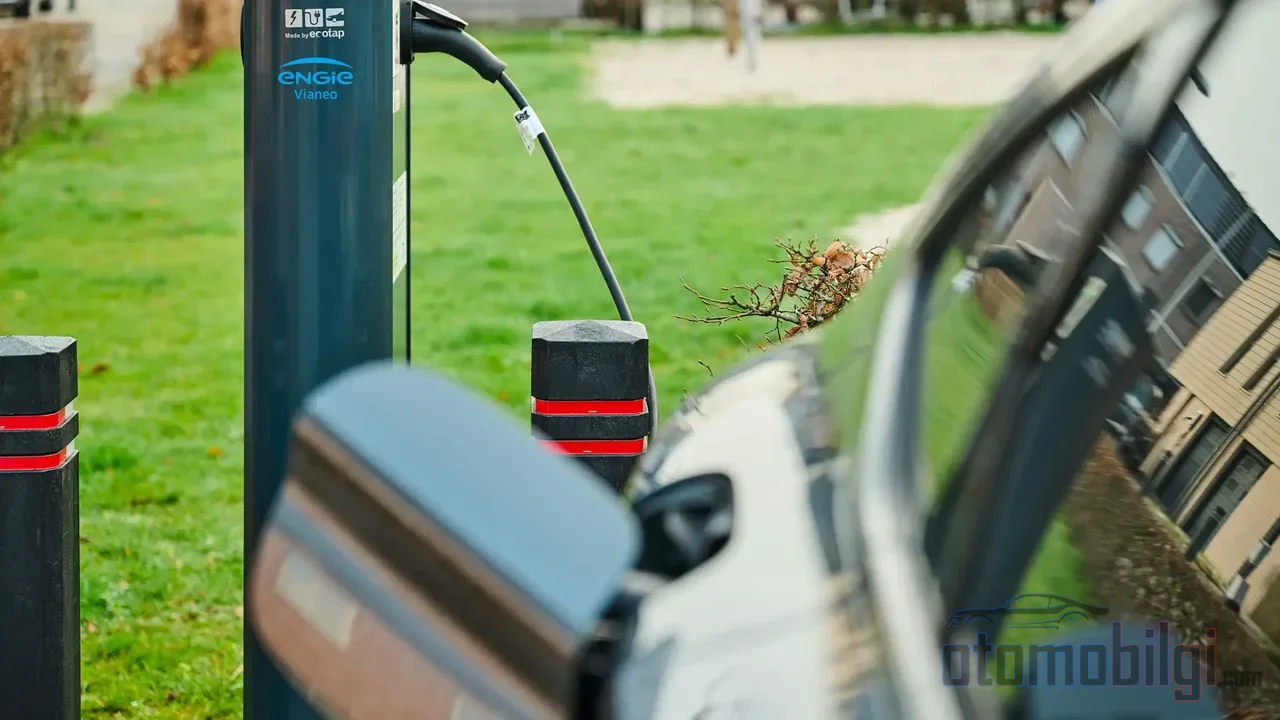
Pre-conditioning is the process of heating or cooling the battery before charging to prepare it to the ideal temperature. On the cold-weather side, this is a feature nearly every manufacturer talks about; it usually moves the cells into the 15-35 °C band, heaters kick in when needed, or motor waste heat is directed into the cooling circuit. But does it also work in hot weather?
Manufacturer guides mostly address this topic from a cold-weather perspective; for example, Kia recommends pre-conditioning mainly at temperatures below 10 °C and before DC fast charging. However, the same logic also applies on the hot side: cooling a battery that has been sitting in the sun with elevated cell temperatures before arriving at the charging point reduces the need for the BMS to throttle charging in the first minutes. Drivers sharing this experience on user forums report that a hot battery becomes suitable for charging within 20-30 minutes with pre-conditioning. Let us note that this is a case example, not a standard measurement.
One limitation comes from comfort. Ford's official support documentation states that in extreme heat or cold, the vehicle prioritizes energy for the cabin, so the capacity allocated for pre-conditioning may be restricted. In other words, on a very hot day, the vehicle may first try to complete cabin cooling; bringing the battery to the target temperature may drop to second place.
Hot weather charging practices: A daily use guide
The theory translated into practice is quite clear. The following habits directly affect both charging speed and the battery's long-term health:
- Park in the shade. It naturally keeps the battery and cabin cool; it reduces the need for air conditioning and therefore range loss.
- Choose your charging hours. Charge at night or in the early morning, when the air is cooler. If charging during the day is necessary, prefer covered or underground stations; the vehicle can cool down somewhat while charging.
- Run the air conditioning while charging. If you turn on the air conditioning via the mobile app while the vehicle is connected to the charging point, the cabin cools down in advance, and this energy is drawn from the grid rather than the battery.
- Avoid charging in direct sunlight. Charging or waiting in direct sun during midday hours raises cell temperature unnecessarily.
- Keep daily charging at 80%. Most manufacturers and charging experts recommend 80% as ideal for daily use; DC fast charging should not be a daily routine, but occasional use is not a problem.
- Don't overlook small savings. Eco mode, smooth driving, correct tire pressure and removing unnecessary load help compensate for some of the hot weather losses.
On the home side, you can also rest easy: Normal summer temperatures pose no risk to home charging units. For example, a common wall unit can be designed to operate in temperatures up to 50 °C. What is concerning is not the unit itself, but the condition of a battery sitting at that temperature.
So, is it safe to charge an electric vehicle in hot weather?
The clarified answer to this page's central question is: Yes, it is safe to charge an electric vehicle in hot weather. The thermal management and battery management systems of modern vehicles continuously monitor cell temperature and do not allow the safety limit to be exceeded in any scenario, including fast charging; the price of this is that the charging speed is automatically reduced if necessary. What is at risk is not safety, but efficiency: a hot battery charges slowly and ages faster over the years. By parking in the shade, charging during cooler hours, keeping daily charging at 80% and pre-cooling the battery before a long trip, you protect both your charging time today and your capacity ten years from now. Discussing slow charging in winter while overlooking the hot weather factor means seeing only half of the picture.
Sources
- Tips for Charging Electric Cars in Hot Weather - Pod Point
- Summer Charging: 5 Warm Weather Tips for EVs - EVgo
- How does extreme weather affect EV battery performance?
- Heatwaves and your electric car's range - ENGIE Vianeo
- EV Battery Health Study - Geotab
- What is EV Battery Pre-Conditioning? - Kia
- How do I precondition my battery for DC Fast Charging? - Ford
- A review of thermal management systems of lithium-ion batteries - ScienceDirect
- Does Fast Charging Affect Battery Life? - Osprey Charging
- EV Battery Health: Why to Charge Your EV to 80% - Chargie