How Does Leaving the Battery at 80% Extend Its Life?
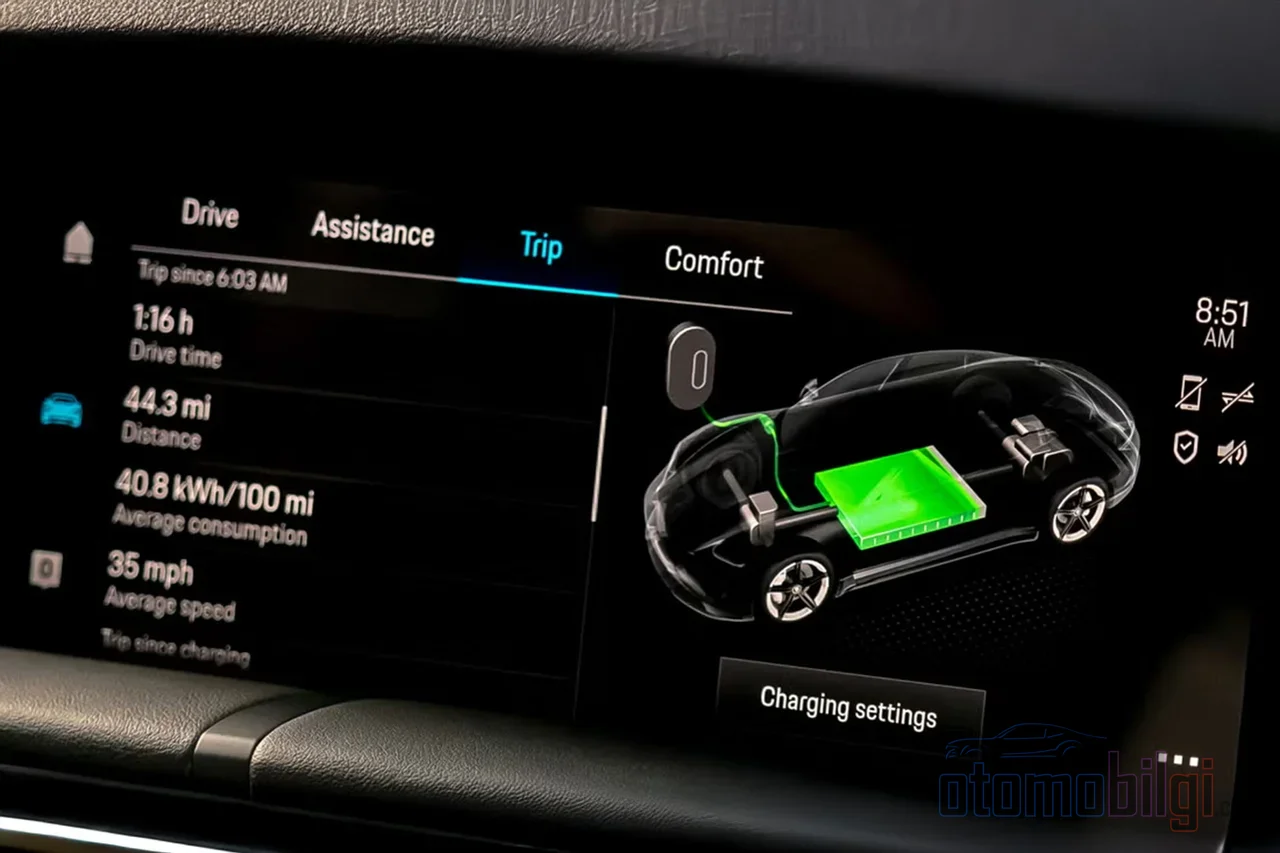
Seeing 100% on your electric vehicle's screen every night might feel like you're doing something good; yet for the battery's chemistry, the situation is quite the opposite. Lithium-ion cells are at their most comfortable state not at the two ends of the state of charge, but in the middle. And this is not a marketing line from sales brochures, but an engineering fact that can be directly measured through electrode potentials and reaction kinetics. In this article, we take a step-by-step look at the physics behind the 20-80% range, the cycle advantage it provides in NMC and NCA batteries, and how you can carry this habit into daily life.
The Link Between State of Charge and Cell Voltage
Your battery's percentage is actually a parameter that looks plain on the screen but is represented by voltage inside the cell. A cell with NMC chemistry nominally operates between 3.6-3.7 volts and reaches approximately 4.2 volts when fully charged. In LFP cells, this band is lower: nominally 3.2 volts, with 3.65 volts at the top. As the charge level rises, the cell voltage approaches the upper cutoff, and it is precisely in this region that degradation mechanisms gain momentum.
The critical point is this: battery aging is not mostly determined by cycle count, but decisively affected by how long the cell stays in which voltage region. At a high state of charge, the cathode operates at high potential; electrolyte oxidation accelerates and the passive layer (SEI) forming on the cell surface thickens. At a very low state of charge, the anode is deprived of lithium and there arises a risk of dissolution of the copper current collector. The middle region is the range where both electrodes are chemically stressed the least; in terms of reaction kinetics, it is an electrochemically stable region.
The Cost of the High and Low Ends: Four Degradation Mechanisms
The main processes leading to the aging of a lithium-ion cell are as follows:
- SEI growth: The continuous thickening of the passive layer on the cell surface leads to lithium loss. While a battery kept fully charged at 40 °C loses approximately 35% of its capacity in one year, the loss of a battery kept at a 40% charge level and 25 °C is only around 4%.
- Lithium plating: Especially during fast charging (>1C), charging in cold below 10 °C, and at high voltage, metallic lithium deposits on the anode surface. This carries the risk of irreversible capacity loss and dendrite formation.
- Cathode structural degradation: It accelerates markedly above 4.1 volts; the top 20% segment of the charge curve is the most stressful region for the cathode.
- Deep discharge damage: Regularly taking the battery below 20% accelerates copper dissolution from the current collector on the anode side and over time paves the way for the risk of internal short circuit.
Temperature directly scales this picture: chemical reaction rates roughly double with every 10 °C increase. The combination of a 100% state of charge and high temperature is the worst condition in which you can leave a battery.
Highlights
- With NMC batteries, 0-100 usage drops to 80% capacity after approximately 500 cycles, while 50% depth of use provides ~1,500 cycles.
- A battery left fully charged at 40 °C loses ~35% of its capacity in one year; at 40% charge and 25 °C, the loss is ~4%.
- The upper voltage is 4.2 V for NMC cells and 3.65 V for LFP - LFP spends far less time in the high-stress region.
- LFP batteries offer a lifespan clearly above that of NMC (500-2,500) with 3,000-10,000+ cycles.
- Manufacturers typically provide an 8-year / 160,000 km warranty against battery capacity.
How Much Does the 20-80% Range Really Extend Cycle Life?
When the numbers speak in engineering terms, the picture becomes clear. In NMC chemistry, the number of cycles required for capacity to drop to 80% changes dramatically depending on the depth of charging used:
| Usage range | Depth | Cycle life (to 80% capacity) |
|---|---|---|
| 0-100 | 100% | ~500 cycles |
| e.g. 25-75 / 30-80 | 50% | ~1,500 cycles |
| e.g. 60-85 | 25% | ~2,500+ cycles |
| 3.0-4.0 V (approximately 0-75%) | Narrowed voltage | Above 2,000 |
The difference is clearly evident: the same cell, the same materials, the same chemistry - by simply narrowing the operating window, lifespan can increase three to fivefold. Of course, this does not mean that the 20-80% range is an official specification of cell manufacturers. The rule is rooted in a much older source than specifications: it is a practical usage guide born from the behavior of NMC cells in phones and derived from the physics of electrochemistry. It is neither a myth nor a strict engineering necessity; vehicles' battery management systems, optimized charging curves, strategies of holding at 80-90%, and temperature-sensitive control already manage part of this degradation on your behalf. The value of the rule lies in supporting, through usage habits, the chemical reality that software cannot disable.
Reconciling the 20-80% Rule with Range Anxiety
A critical question comes into play here: Doesn't stopping at 80% mean giving up part of your daily range? In practice, no - because the rule is a flexible framework, not a dogma. Charging the vehicle to 100% once before a long trip does not instantly damage the battery; the problem is the continuous and repeated state of being fully charged, especially in hot environments. In route planning, aligning charging stops with the 20-30% level uses time efficiently and keeps cells away from the lower end.
Experience also makes anxiety fade on its own: new electric vehicle owners typically get used to the vehicle's actual range habits within 30-60 days and internalize how much energy they need for daily use. It is not necessary to fill the vehicle every night for a daily work commute; spreading charging over two to three days and planning according to actual driving needs is more than sufficient for most users. Moreover, the warranty assurance also balances the anxiety: manufacturers offer periods such as 8 years / 160,000 km against excessive capacity loss in the battery; in normal use, there is no scenario that would turn the battery into a source of fear.
Charge Limit Setting: Step-by-Step Correct Usage
The most powerful tool at your disposal for putting the rule into practice is the vehicle's own software. The process is carried out with the following steps:
- From the charging or battery menu on the vehicle's screen, set the target charge level (charge limit / target charge) to the 80–90% range for daily use.
- Some vehicles offer this with ready-made profiles: daily and trip profiles set the limit automatically; you only choose the correct profile.
- Before a long trip, temporarily raise the limit to 100%; in an NMC-battery vehicle this is a one-time exception and causes no problems.
- At a fast-charging station, the charging speed already slows noticeably after exceeding 80%; some charging apps offer an option to automatically stop the session at 80%. Do not use fast charging unnecessarily outside of trips - fast charging accelerates degradation through lithium plating; leave daily tasks to slow AC charging.
- If you are going to park the vehicle for a long time, do not leave it at 100% and in the heat; protect it from extreme weather conditions.
- Why Lithium-Ion Batteries Last Longer at 20-80% State of Charge
- Lithium-Ion Battery Degradation: The Complete Guide
- Should I Charge My EV to 80% or 100%?
- 20-80% Battery Rule: Still Worth It in 2026?
- Should You Charge LiFePO4 Battery to 100% or 95%?
- Lithium-Ion Battery Degradation Rate
- EV battery charging best practices: the 20-80 rule
- How to Extend the Battery Life of Electric Vehicles?
- Everything About Electric Vehicle Charging
- Experimental comparison of fast-charging protocols for NMC and NCA Li-ion batteries
One more subtle point: fast charging cannot be said to be harmful in every case. Experimental studies show that pulsed (pulse) charging protocols can increase cycle life by up to 167% under certain conditions. So what is harmful is not so much the speed itself, but applying it under conditions the cell cannot tolerate.
Why Are LFP Batteries Exempt from This Rule?
Not all lithium-ion chemistries share the same voltage window, and the rule therefore varies from vehicle to vehicle. LFP (lithium iron phosphate) chemistry, unlike NMC/NCA, operates in a much lower voltage band; even when fully charged, the cell is around 3.65 volts and never reaches NMC's 4.2-volt stress zone. As a result, LFP is far more resistant than NMC to high-voltage degradation mechanisms, and its cycle life ranges from 3,000 to 10,000+ - clearly above NMC's 500–2,500 band.
Another unique aspect of LFP lies in the percentage: because of the flat voltage curve in the 40–80% range, the battery management system's charge percentage calculation can drift. That is why in LFP vehicles, an occasional full charge to 100% is not only harmless but necessary: a full charge allows the BMS to balance the cells and calibrate the percentage indicator. For standard-range models with LFP batteries, manufacturers' typical recommendation is regular 100% charging; for long-range vehicles with NMC/NCA packs, the daily limit is 80% or below. In summary: the answer to the question of which rule applies to you lies in your vehicle's battery chemistry - and verifying this information from your owner's manual or the vehicle information screen should be your first step.
Summary Answer: How Does Leaving the Battery at 80% Extend Its Life?
Keeping the charge of an EV with an NMC/NCA battery in the 20-80% range daily moves the cell away from high and very low voltage regions, raising cycle life from roughly 500 cycles to 1,500 and beyond. The source of the gain is not magic, but the fact that electrode potentials in the middle region minimize chemical side reactions. Raising the limit temporarily to 100% on a long trip is acceptable; what really should be avoided is leaving a fully charged, warm battery sitting there for a long time. Owners of vehicles with LFP batteries, however, are exempt from this discipline: for them, the right habit is a full charge to 100% every now and then, for cell balancing and gauge accuracy.