What Happens If a Hybrid Battery Outlasts the Vehicle's Lifespan?
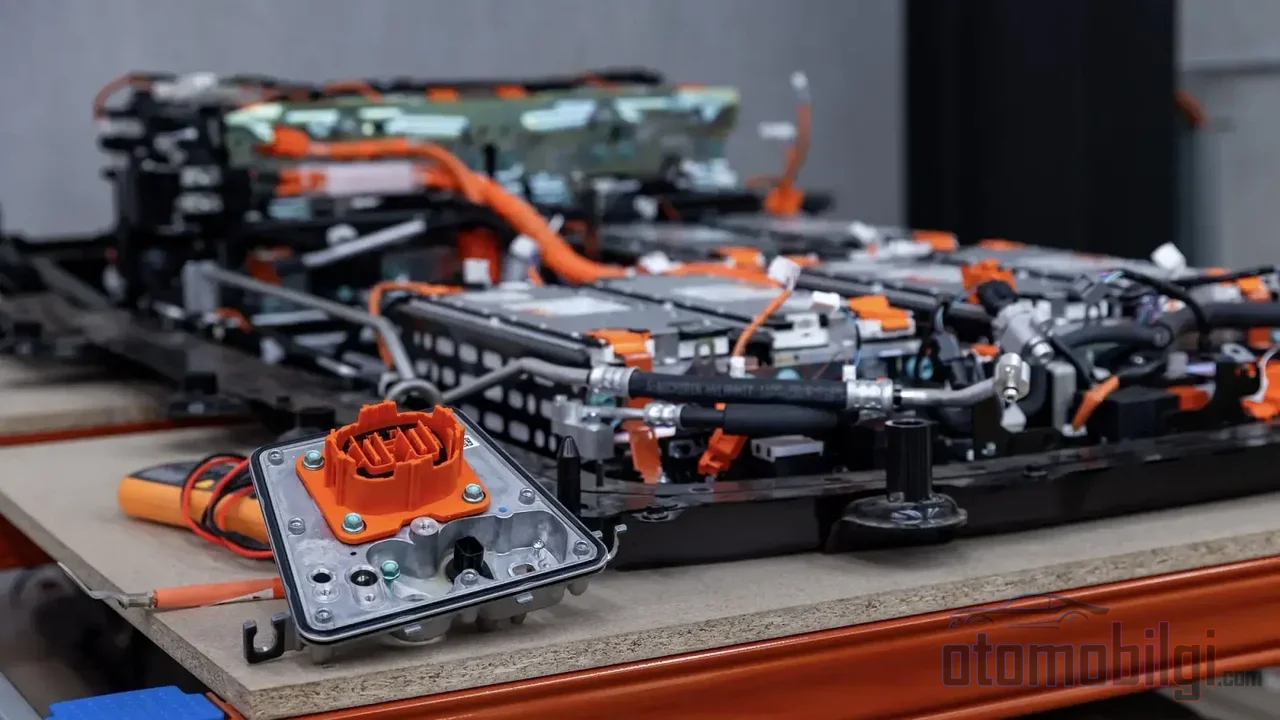
When the battery failure light comes on in a hybrid's dashboard, most vehicle owners think of just one question: the replacement cost. But the truly interesting question emerges a few years later, when the vehicle is scrapped. What happens to the hybrid battery that outlives the vehicle? Is it a load headed for the trash, or an energy store beginning a second career? The answer is part of a chain stretching from battery chemistry to grid economics, and every link in that chain can be described with numbers.
End-of-Life Threshold: Why Is 80% Capacity a Critical Boundary?
A battery's life in a vehicle ends not according to its capacity, but according to the speed of its capacity loss. In the technical literature, a battery is considered at end of life when it drops to 70-80% of its original energy capacity. In common practice this threshold is approximately 80%; some organizations define the practical end of life in a vehicle as ~75% capacity. The difference has to do with how strictly the definition is interpreted: a battery at around 75% still works, but the balance the vehicle was designed around has been disrupted.
There are two practical reasons behind this threshold. The first is arithmetic: a vehicle designed with a 400 km range target drops to 300 km at 75% capacity, and this noticeably changes the user experience. The second is chemistry: degradation does not progress linearly; when capacity falls below 80%, the loss usually accelerates. In other words, the threshold is not where the battery is finished, but where the decline steepens.
Manufacturers' warranty structure reflects this reality. In hybrid and electric vehicles, battery warranties are typically around 8 years / 100,000 miles (approximately 160,000 km); some manufacturers extend to 10 years, and Kia offers a warranty extending to 150,000 miles / 15 years. Manufacturers usually commit to at least 70% capacity at the end of the warranty period. Vehicles, however, are expected to last ~15 years and 180,000-200,000 km. Large-scale telemetry data, in an analysis covering 22,700 vehicles, shows an average of 88% capacity after 8 years and annual degradation of about 1.5-2.0% - meaning batteries usually comfortably outlast their warranties and work without issue as long as they remain in the vehicle. The problem begins when the vehicle itself reaches the end of its life; because a battery, at 70-80% capacity, is still a component that stores a significant amount of energy.
Highlights
- A battery is considered end of life for a vehicle when it drops to 70-80% of its original capacity - but it keeps storing energy.
- According to a dataset of 22,700 vehicles, the average capacity after 8 years is 88%; annual loss ~1.5-2.0%.
- Batteries used in second-life storage applications can last an additional up to 10 years beyond their life in the vehicle.
- Modern recycling can recover nickel, cobalt, and manganese at rates of up to 95%.
Second Life After the Vehicle: Grid Storage and Beyond

A battery removed from a vehicle no longer has the density transportation requires, but it is more than sufficient for stationary storage. The vehicle's job is to demand high power through repeated fast charge-discharge cycles; on the grid side, the demands are gentler, and the battery can keep working for years in this less demanding regime. The industry's common assessment is that in second-life storage systems, batteries can add another up to 10 years on top of their vehicle life.
The range of applications is surprisingly broad:
- Grid-scale storage: System services such as frequency regulation, voltage support, and excess energy storage.
- Peak shaving: Flattening grid load by covering consumption peaks from the battery.
- Backup power and microgrids: Outage backup for commercial facilities; building small-scale grids on islands or campuses.
- Home energy storage: Charging cheaply at night for daytime use, or storing excess solar energy.
Companies are now converting old packs with 70-80% remaining capacity into megawatt-scale stationary storage systems. A modeling study on evaluating vehicle-to-grid (V2G) and second-life batteries together shows that this approach can reduce total resource use by lowering the need to manufacture new stationary batteries. An assessment published at Princeton estimates that second-life technology could reduce battery storage costs by up to 70% and carbon emissions from the system body by up to 99.6%. Even if the figures look exaggerated, the logic is simple: using an already manufactured battery whose cost has already been paid once more is more efficient in every respect than producing from scratch.
Recycling: How Are Battery Metals Recovered?
Second life is not every battery's destiny. Damaged, unstable, or economically unrepurposable packs go directly to recycling. There are three fundamental methods for lithium-ion batteries, and the difference between them relates to how much of the chemical structure is preserved:
- Pyrometallurgy: Melting at high temperature. A simple and mature method, but the metals are obtained as alloys and require further refinement.
- Hydrometallurgy: Leaching (dissolving) the metals with acids or other solvents. Modern facilities can recover more than 95% of lithium and cobalt with this method.
- Direct recycling: A new-generation approach that recovers the cathode material without breaking down its chemical structure. Since the structure is preserved, it is theoretically the most efficient method.
The scale is also growing with policies. The European Union has set a framework targeting the recycling of 70% of lithium-ion batteries by 2030. Concrete data is coming from the manufacturers: General Motors announced that its recycling processes can recover up to 95% of nickel, cobalt, and manganese, and up to 80% of lithium. The resource conservation dimension is critical: Recovering strategic materials such as lithium and cobalt directly reduces demand for new mining.
NiMH or Lithium-Ion? End-of-Life Implications of the Chemistry Difference
In the hybrid world, two battery chemistries live side by side, and this difference has tangible consequences once the vehicle's lifespan is exceeded. Most older-generation hybrids use nickel-metal hydride (NiMH), while newer generations and more recent models feature lithium-ion packs. While the performance difference in the vehicle is relatively small, the picture changes at the second life and recycling stage:
| Feature | NiMH | Lithium-ion |
|---|---|---|
| Typical cycle life | ~500 cycles | 1,000+ cycles |
| Energy density | Lower, heavier | Higher, lighter |
| Temperature tolerance | Better in the cold | More sensitive |
| Fire risk (during recycling) | Lower | Short-circuit risk if cut incorrectly |
| Ease of recycling | Easier, contains no toxic heavy metals | More complex, requires specialized facilities |
| Suitability for second life | Limited | Ideal for grid storage |
NiMH's advantage on the recycling front is structural: its lack of toxic heavy metals and lower fire risk make processing easier both technically and environmentally. Lithium-ion, on the other hand, stands out on the second-life front: its high energy density and longer cycle life make the packs far more suitable for value-added applications such as grid storage. Disassembling a lithium-ion pack also requires care; if the cells are cut incorrectly, there is a risk of short circuits and fire.
Second Life or Direct Recycling? How Is the Decision Made?
Not every retired battery goes to the grid, and this remains a dilemma. The choice between routing to a second life and direct material recovery is largely made based on economic feasibility: the pack's health, the homogeneity of the cells, the distance to the facility, and current metal prices are the deciding factors. There is also an obstacle on the user side - consumer and industrial trust is still a developing factor in the widespread adoption of second-life products.
So what is the summary of this entire chain? When a hybrid battery outlives the vehicle, it does not become trash: with 70-80% of its capacity, it first serves in stationary energy storage for up to 10 years, and then up to 95% of its metals are returned to the economy through recycling. The end of the vehicle is not the end of the battery, but the first stop of two more separate lifespans. This perspective also proves useful when evaluating battery replacement costs: a new pack costs 2,500-8,000 dollars, while reconditioned packs range from 1,000-3,000 dollars - meaning the battery's residual value is a figure that must be accounted for even after the vehicle.
The practical conclusion for a hybrid owner is clear: a battery beyond its warranty period is still serviceable in most cases, and ceases to be a source of concern throughout the vehicle's service life. The fate of the vehicle afterward is no longer an uncertain environmental problem, but a matter of resource management governed by a measurable second-life and recycling chain.
Resources
- What happens to EV batteries at the end of their useful life - Electric Vehicle Council
- Extending the electric vehicle battery first life - PMC (NIH)
- Quantifying EV battery end-of-life - ScienceDirect
- What Happens When EV Batteries Reach End of Life? - UL Standards & Engagement
- EV Battery Health - Geotab
- Battery Second Life FAQ - U.S. Department of Energy AFDC
- Second-Life EV Batteries as Grid Storage - Princeton Dataspace
- On the potential of vehicle-to-grid and second-life batteries - Nature
- Recycled minerals from GM EV batteries - GM Newsroom
- Battery Collection Best Practices Report to Congress - EPA
- A Second Life for EV Batteries - TerrePower
- End-of-life or second-life options for retired EV batteries - ResearchGate
- NiMH Battery vs Lithium-Ion - EVLithium
- NiMH Battery Recycling Guide - Samrinc
- Lithium-Ion vs NiMH - EcoFlow
- What Happens When a Hybrid Battery Dies - Exclusively Hybrid