Why Are PHEV Batteries Small But Expensive Per Kilowatt-Hour?
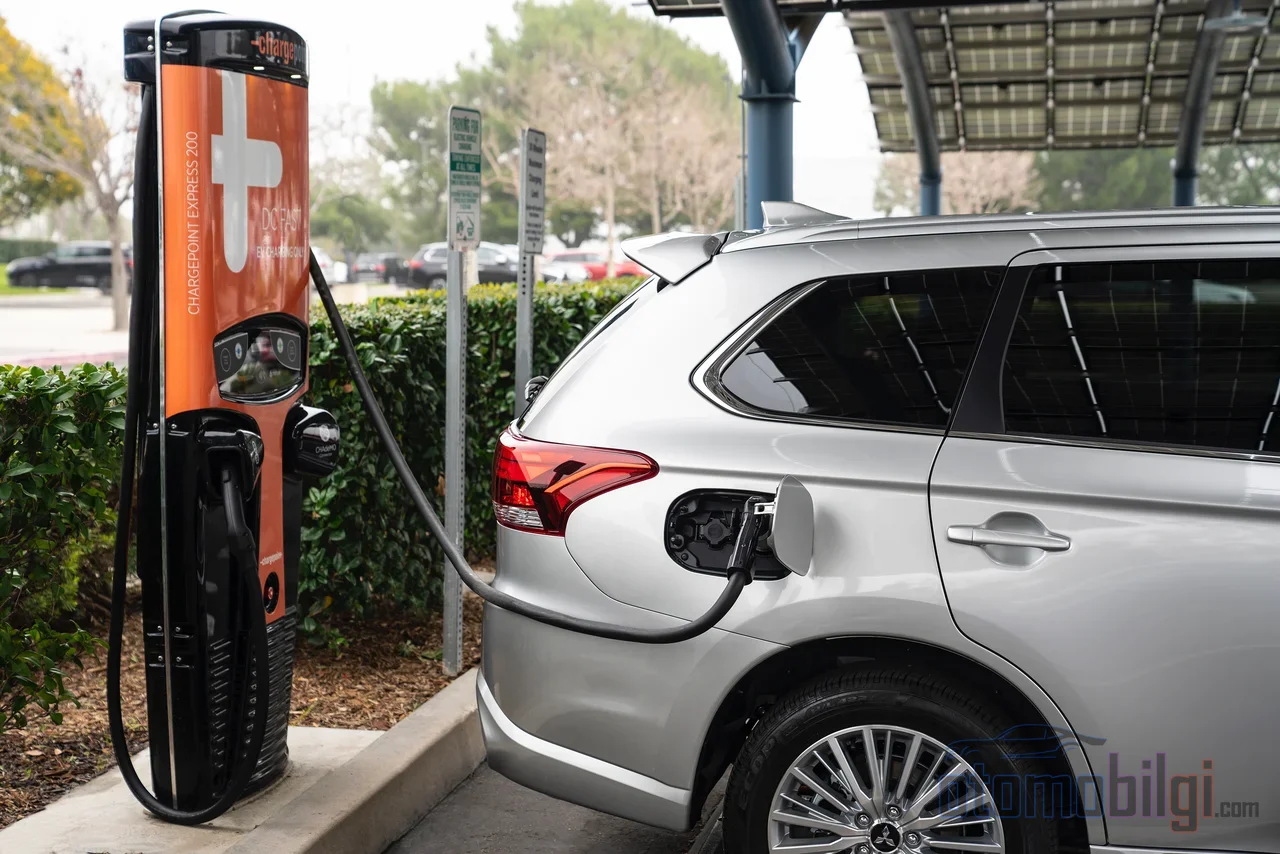
Battery packs in electric cars reach capacities of 70-100 kWh, while plug-in hybrid packs mostly stay between 6-51 kWh. If the capacity is small, the cost should be small too; this expectation, which seems logical at first glance, reverses when the price per kilowatt-hour is calculated. Techno-economic analyses show that plug-in hybrid packs cost about 545 dollars per kWh, while large-capacity electric vehicle packs cost about 230 dollars. Although the gap has narrowed in current models, it is still significant: with 2022 data, PHEV packs have a per-kWh cost about 23% higher than electric vehicle packs.
So why is a small battery more expensive per unit? The answer lies not in quality, but in physics and economics: fixed costs divided across few kilowatt-hours, electrode constraints imposed by power-focused cell design, and low production volumes. In this article, we break down these mechanisms one by one.
What Does Cost Per Kilowatt-Hour Mean and Why Is It Surprising?
Battery cost can answer two different questions. The first is the pack's total price: a 12 kWh plug-in hybrid pack is naturally cheaper than a 72 kWh electric vehicle pack. The second is unit cost, that is, the total cost divided by capacity. When the comparison is made on this second figure, the picture changes: the small pack strains your wallet more for every kilowatt-hour.
A classic techno-economic analysis estimates lithium-ion pack manufacturing costs at about 545 $/kWh for plug-in hybrids and about 230 $/kWh for battery electric vehicles in light vehicles. The difference is roughly twofold. A more recent modeling shows that for 2022, PHEV packs were at 165 $/kWh, while electric vehicle packs of a similar period were in the 117-134 $/kWh range; in terms of ratio, the same 23% premium persists. Although the figures vary by period and method, the direction does not change.
Highlights
- In the classic techno-economic analysis, the PHEV pack comes in at ~545 $/kWh and the BEV pack at ~230 $/kWh.
- In recent modeling (2022), PHEV packs have a per-kWh cost 23% higher than BEVs.
- PHEV packs can use only 85% of their capacity; in BEVs this figure is 92%.
- Thick electrodes increase the active material ratio and reduce per-kWh cost but require sacrificing charging speed.
- The reason for the higher cost is not quality; it is scale, cell design, and integration requirements.
Mechanism 1: Fixed Costs Don't Fit in a Small Pack
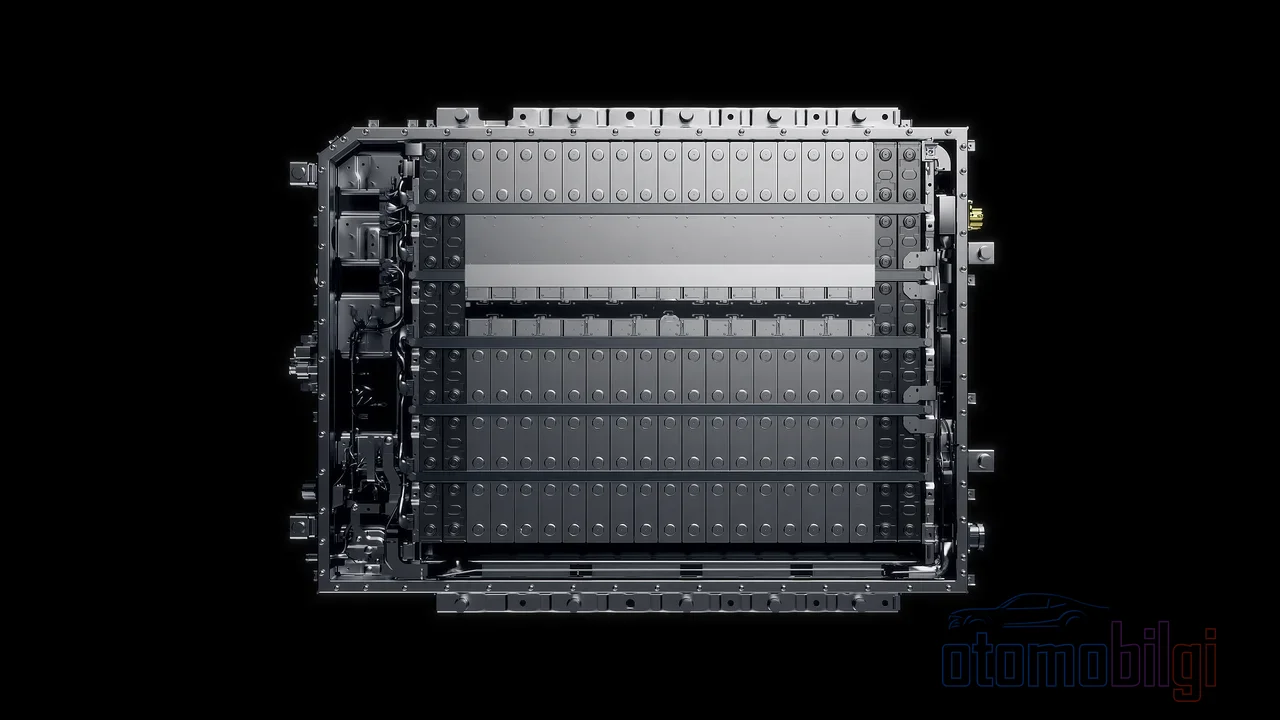
The cost of a battery pack does not consist of cells alone. The pack enclosure, the mechanical structure connecting the cells, the cooling circuit, sensors, the battery management system, and the high-voltage interface are items spent regardless of capacity. In a 72 kWh pack, these fixed costs are divided across 72 units; in a 12 kWh pack, the same items are spread across 12 units. The result is that the cost per kilowatt-hour rises on its own.
In the models, this effect is expressed as a "declining pack-to-cell ratio": as pack capacity grows, the share of pack-level additional costs per kWh shrinks. On the electric vehicle side, pack costs that varied between $117-134/kWh by class and range in 2022 are expected to fall to the $66-79/kWh band by 2030, while PHEV packs are projected to remain at around $97/kWh in the same year. The gap is narrowing over time but not closing.
The role of production volume
Fixed-cost logic also applies at the factory level. Annual production per pack design was at a level of roughly 50,000-100,000 units in 2020, and is expected to exceed 500,000 units from 2025 onward; this increase in volume directly lowers unit production cost. Large electric vehicle packs fully take advantage of this benefit, while small vehicle-specific PHEV packs cannot reach the same scale. There is also a notable opposing view: some analyses argue that scale's power to reduce costs is limited, on the grounds that lithium-ion cells are already being produced in the hundreds of millions. In other words, volume matters, but it is not a sufficient explanation on its own. What is truly decisive is how many units of a specific pack design are produced.
Mechanism 2: Electrode Thickness, PHEV's Structural Constraint
The least discussed but most fundamental reason for the difference lies inside the cell. In lithium-ion cells, energy is stored in the active materials on the electrodes; current collectors, separators, and the binder components from the electrode coating process carry no energy, adding only volume and cost. In large high-energy-density cells, manufacturers increase electrode thickness from about 25 micrometers to values reaching 200 micrometers, raising the proportion of active material in the same volume. Unit cost falls, because the share of passive components that do not store energy shrinks.
So why doesn't everyone use this approach? Because thick electrodes lengthen the diffusion path of lithium ions within the electrode. Internal resistance increases, and the maximum safe charge and discharge rate drops. For a long-range electric vehicle, this trade-off is acceptable; low current is drawn from the cell during most of the drive. For plug-in hybrids, the situation is different.
The power-focused cell requirement
With its small battery, a PHEV must meet both electric driving and momentary high-power demands together with the internal combustion engine (acceleration support, recovery through regenerative braking). This high power-to-energy ratio usage requires cells with thin electrodes and, consequently, a high proportion of passive components. In short, a PHEV cell contains less active material and more structural material per kilowatt-hour. This is a direct cost consequence of the design choice; it is not a quality issue.
Mechanism 3: Unusable Capacity and Integration Burden
Nominal capacity and the capacity a driver can actually use are not the same thing. According to the models, the battery can use 92% of the pack in electric vehicles, while in plug-in hybrids this figure is only 85%. The difference comes down to thermal management, durability, and safety constraints: a small package running at high power is operated with a wider buffer zone to preserve its lifespan and stability. In practice, this means a larger nominal battery for the same usable energy, in other words a higher bill per kWh.
Add to that the integration items. PHEV packs are usually placed in a compact volume designed specifically for the vehicle, on a chassis that carries both electric and internal combustion powertrains. The mechanical, electrical, and thermal requirements of integrating the cells into the pack, along with the vehicle interface cost, drive the total pack cost upward. The fact that small packages developed specifically for each vehicle can be more expensive to produce than standard solutions also feeds this picture.
Cost Table: PHEV and BEV Side by Side
If we bring the figures together in a single frame, the table can be summarized as follows. Different analyses give different absolute values; but they all show the same directional difference.
| Indicator | PHEV pack | BEV pack |
|---|---|---|
| Classic techno-economic analysis (pack production cost) | ~545 $/kWh | ~230 $/kWh |
| 2022 modeling | 165 $/kWh | 117-134 $/kWh |
| 2030 projection | 97 $/kWh | 66-79 $/kWh |
| Usable capacity ratio | 85% | 92% |
| Typical electric range | 20-70 miles | 150-400 miles |
| Typical pack capacity | 6-51 kWh | 50 kWh and above |
As can be seen, the PHEV's unit cost handicap persists in every period, even as the absolute figures fall. A concrete example: In 2022, the 72 kWh pack of an electric car with 250 miles of range came to roughly 9,000 dollars at 125 $/kWh; by 2030, the same range is expected to drop to about 3,700 dollars with a 50 kWh pack at 74 $/kWh thanks to improved efficiency. This improvement also affects the PHEV side, but not to the same extent.
Market Reality: A Cheap Car Can Have an Expensive Battery at the Same Time
There is an important paradox here: as vehicles, plug-in hybrids can be cheaper than the longest-range electric cars of the early 2020s. The small pack's lower total cost makes this possible. However, the same modeling predicts that by 2030 the PHEV will become the more expensive technology than both electric and gasoline in every range and class. While the cost of large packs is falling rapidly, the unit cost of the small pack is declining more slowly.
Meanwhile, the market as a whole is on an exciting trend: in 2025, lithium-ion pack prices hit a record low of 108 $/kWh with an average decline of 8%; over the last three decades, battery costs have fallen by roughly 99%, and prices dropped by about 19% each time global cumulative production doubled. Cobalt- and nickel-free LFP cathodes and graphite-silicon composite anodes are among the drivers of this decline. However, this wave is not carrying small, power-oriented PHEV packs as fast as large energy packs.
Short Answer: Why Is the PHEV Battery More Expensive per Kilowatt-Hour?
The clear answer to the question is this: The cost per kWh of a plug-in hybrid battery is higher than that of a large electric vehicle battery due to fixed pack costs being divided over only a few kilowatt-hours, the thin electrodes required by power-focused cell design, the low usable capacity ratio, and low production volume; this is not a quality issue but the result of scale and design.
The practical conclusion is this: a plug-in hybrid's battery is not a "bad" or "inferior" product; on the contrary, it is a structure engineered and optimized to manage high power flow between two power sources with long life. The price of this optimization is paid per kilowatt-hour. From the buyer's perspective, what matters is not unit cost anyway, but the vehicle's total cost of ownership and use; PHEV charging costs the same per kWh as charging an electric car. The unit cost debate should instead be read as a signal about the manufacturer's pricing strategy and the long-term competitiveness of the technology.
Sources
- A techno-economic analysis and optimization of Li-ion batteries for light-duty vehicles (Sakti et al., 2015)
- Assessment of light-duty electric vehicle costs and consumer benefits in the United States (ICCT, EVS36)
- Large-Format Lithium-Ion Battery Costs Analysis (EPRI)
- Reasonable design of thick electrodes in lithium-ion batteries (Sim et al., 2023)
- What Is a Battery Cell? Formats, Chemistry and Key Metrics
- Integration Issues of Cells into Battery Packs for Plug-In and Hybrid Electric Vehicles
- New Record Lows for Battery Prices (BloombergNEF)
- Battery costs have declined by 99% in the last three decades (Our World in Data)
- Estimated Cost of EV Batteries: 2019-2026 (Argonne National Laboratory)
- 2025 Incremental Purchase Cost Methodology and Results (U.S. Department of Energy)