Small Battery, Big Bill: The Real Cost of PHEVs
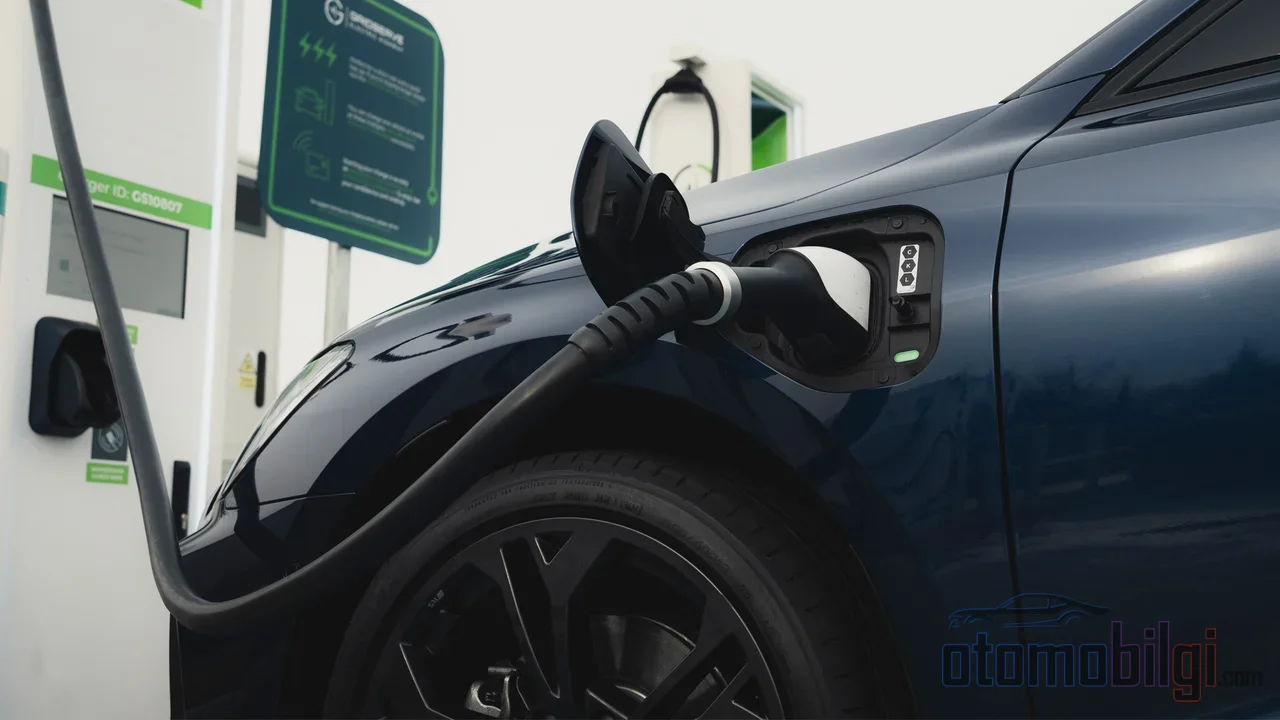
A plug-in hybrid's battery is about one-tenth the size of a fully electric vehicle's, yet the money you pay per kilowatt-hour often turns out higher. The 2025 Toyota Prius Plug-In Hybrid carries a 13.6 kWh lithium-ion pack; the same year's Nissan Leaf is offered at 40 to 60 kWh, while the Hyundai Ioniq 5 comes in at 63 to 84 kWh. At first glance, the numbers seem to favor the plug-in hybrid: small pack, small bill. But when you dig into the unit cost calculation, the picture flips. So why does a 10 kWh pack cost more per watt-hour than a 200 kWh pack? The answer lies not in the battery's chemistry but in engineering accounting.
The Cost of a Battery Pack Is More Than the Cells
When you buy a battery pack, you are not only paying for the lithium-ion cells. The pack; is a system consisting of the battery management system (BMS), cooling circuit, mechanical enclosure, the mounting infrastructure that connects the cells to each other and to the vehicle, and recycling obligations. These items share a critical feature: they are largely independent of kWh capacity. The cost difference between a BMS managing ten cells and a BMS managing a hundred cells is far smaller than the energy difference between ten and a hundred kWh. The same logic applies to cooling plates, enclosures, and mounting.
When fixed items are divided by large capacity, the unit price drops; when divided by small capacity, it swells. Nor is this a rule unique to the battery world. In the stationary energy storage sector, installed cost is in the range of roughly $100-150/kWh for utility-scale systems, while at residential scale it climbs to $400-700/kWh and beyond. In commercial storage systems as well, the BMS and container enclosure set the price as separate cost items. While vehicle batteries can be had from about $100-200/kWh, the fact that small residential batteries are priced around $400/kWh shows that the scale effect operates even at hobby level.
What Makes PHEV Packs Different from BEV Packs?
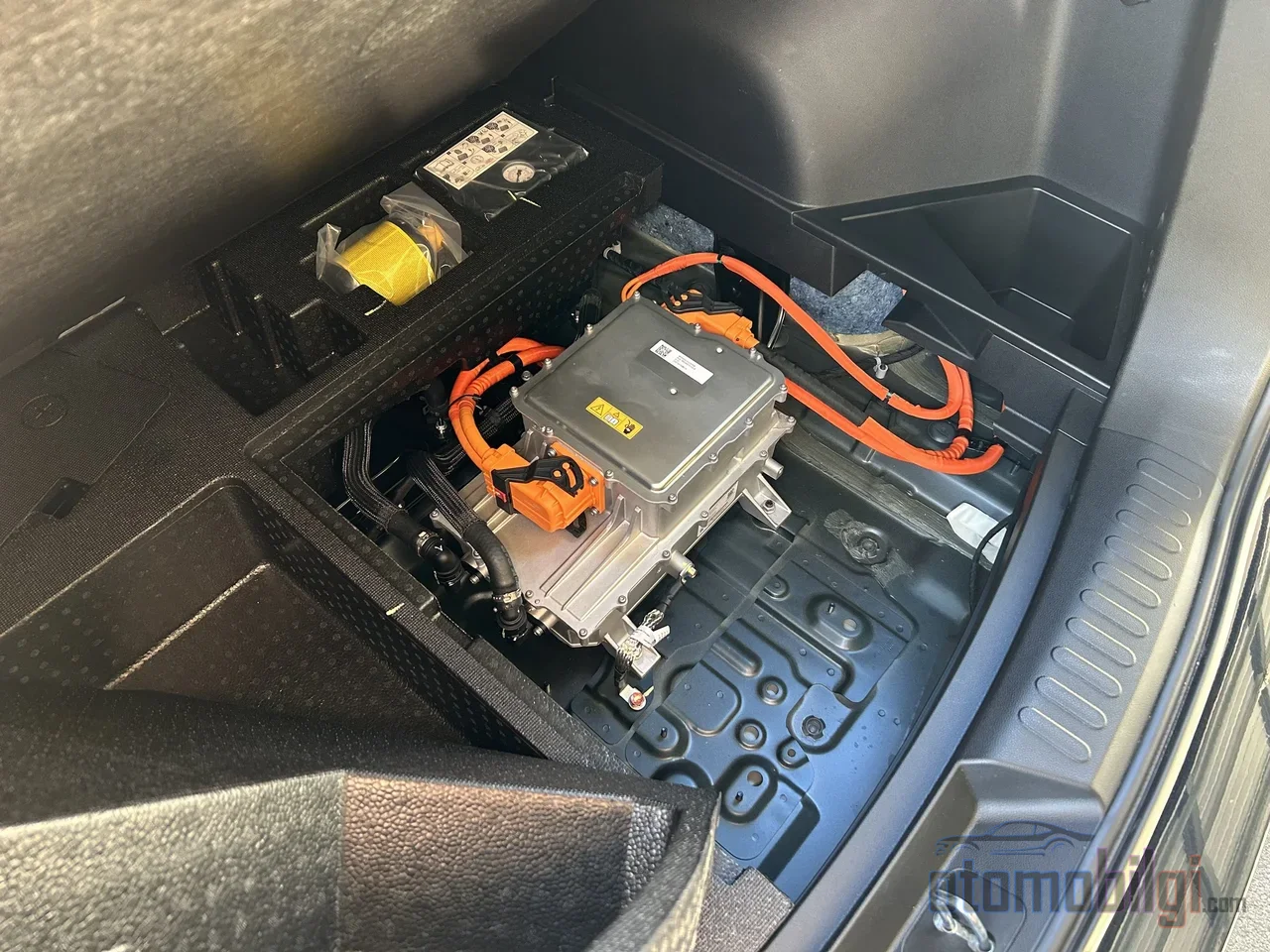
The fixed-cost problem deepens further in plug-in hybrids, because a PHEV pack is designed not only smaller than a BEV pack but also for a tougher job. Plug-in hybrid batteries are subject to power density constraints: they must work alongside the gasoline engine, meet high instantaneous power demands, and absorb sudden charge pulses from regenerative braking. This requires a more complex battery management system.
High C-Rate and the Durability Shackle
Drawing the same power from a small battery means a higher C-rate than drawing it from a large battery. When a 10 kWh pack meets a 100 kW power demand, that means ten times its capacity; for a 100 kWh pack, the same power is only 1C. A high C-rate puts more stress on the cells and may require more durable, and therefore more expensive, components for long life. Plug-in hybrid batteries experience higher C-rates during charging and discharging than full electric vehicle batteries; this is directly reflected in design costs.
Highlights
- PHEV battery capacity ranges between 8-23 kWh within the segment; BEV packs reach 40-149 kWh.
- In the 2030 projection, battery cost is forecast at $250/kWh for BEV and $420/kWh for PHEV.
- A 2024 analysis identified an additional price increase of $454 per kilowatt-hour in plug-in hybrids.
- A new high-voltage battery pack in a PHEV model can cost up to $18,000-25,000 in retail repair costs.
What's Inside the Cost Formula
Cost analyses construct battery price as the sum of module costs, cooling and enclosure costs, and recycling items. The key point of the formula is this: cooling and enclosure create a similar base cost regardless of whether the pack is 10 kWh or 200 kWh. While module cost grows in direct proportion to capacity, the fixed items at pack level remain constant. In the small pack, these fixed costs are spread across eleven units; in the large pack, across two hundred units. The fixed burden per unit explains the difference. Overall battery cost projections are given in a wide range such as $265-710/kWh; in the upper region of the range, small packs and fixed costs dominate.
What the Numbers Say: $420 Versus $250
The conceptual explanation needs to be grounded in numerical data. In projections extending to 2030, $250/kWh is forecast for full electric vehicle batteries and $420/kWh for plug-in hybrid batteries. This means a 68% higher unit cost compared to BEV for the same date; the difference largely comes from the fixed hardware cost spread over small capacity.
Market data also confirms this picture. A study published in 2024 reveals that automakers add an extra $454 per kilowatt-hour when pricing plug-in hybrids based on battery capacity. This finding demonstrates two things at once: PHEV batteries empirically have a higher price per kWh, and this difference can be explained not only by production costs but also by pricing policy. In other words, part of the high unit price is an engineering reality, and part is a market strategy.
| Vehicle class | Typical battery capacity | Electric range |
|---|---|---|
| Hybrid | 1 kWh or less | None |
| Plug-in hybrid (PHEV) | 8-23 kWh | Approximately 25-55 miles |
| Full electric (BEV) | 40-149 kWh | Mostly 250-350 miles |
The asymmetry in the table is striking: a PHEV battery typically has a capacity between one-tenth and one-fifth of a BEV battery, yet the fixed hardware items are similar in size in both packs. The 23.3 kWh pack of the 2025 Mercedes-Benz GLE Plug-in Hybrid is at the upper limit of the segment; still, it is about half the size of the smallest BEV pack. The essence of the matter is this: plug-in hybrid batteries are expensive per kWh, because the same fixed-cost infrastructure is divided over much less energy, and the PHEV pack also demands more durable components with a more complex BMS to meet higher power density requirements.
The Unexpected Efficiency of the Small Battery
There is an ironic point here: while small batteries are at a disadvantage on the cost side, they are surprisingly efficient on the usage side. According to researchers, hybrid vehicles deliver 14 times the emission-reduction benefit per kilowatt-hour of battery capacity compared to fully electric vehicles. A small, expensive battery can do more environmentally efficient work than a large, cheap one. This paradox does not lower the unit price in the cost analysis, but it must be known to see the whole balance: A PHEV battery is both produced at a higher cost per kWh and extracts more benefit from every kilowatt-hour installed.
Warranty and Replacement Cost: The Bill Passed on to the Buyer
The unit cost difference does not leave the buyer alone after leaving the showroom. The most critical consequence appears at the end of battery life. Some manufacturers' warranty manuals indicate a retail repair cost of roughly 18,000-25,000 dollars for a new high-voltage battery pack; the standard hybrid pack is in the ballpark of roughly 13,000 dollars. More importantly, at some manufacturers the PHEV and EV high-voltage battery is not covered by the vehicle's standard 3-year/36,000-mile or 5-year/60,000-mile warranties; separate and longer warranty conditions apply for the battery.
How Much Assurance Does a Warranty Really Give?
The picture is not at all bleak. Hybrid and EV battery warranties are generally at least 8 years/100,000 miles; Toyota backs its hybrid batteries with a 10-year/150,000-mile limited warranty. Moreover, if the battery falls below 70% of its original capacity within the warranty period, the manufacturer is obligated to repair or replace it. This means that most of the risk of a high price per kWh is borne by the manufacturer. After the warranty period ends, however, the options widen: refurbished hybrid packs are priced in the range of 118-135 $ per kWh, consistent with the 115-135 $/kWh cell-level figure. Dealer replacement cost typically varies between 2,000 and 8,000 dollars depending on the vehicle; as an example, it is known that for a 2017 Prius, a dealer price of 2,700 dollars could be obtained, with the new battery coming with a 3-year warranty.
Not Replacing It Is Also an Option
The feature that really changes the battery replacement equation of the plug-in hybrid is that it has a gasoline engine. After roughly 100,000-200,000 miles, when the battery reaches the end of its life, the driver can continue using the vehicle relying only on the gasoline engine without replacement. This is information at the level of a forum experience and not an official commitment outside the warranty; but it is technically possible, and it seriously changes the total cost of ownership calculation. In 5-year total cost of ownership comparisons, hybrids fall in the band of around $42,000, PHEVs $48,000, and BEVs $51,000; The PHEV's middle position is a combination of a small expensive battery and the gasoline engine serving as a backup.
Unit Price Within the Ownership Experience
A high price per kilowatt-hour is an engineering fact that is not felt in daily use; because the PHEV battery is small and charges quickly. Thanks to its small capacity, a plug-in hybrid often reaches full capacity faster on Level 2 charging than a full EV; most models can charge overnight on a standard 120V home outlet. The cost of home charging can drop to as low as about 80 cents in certain example scenarios. On the other hand, most PHEVs do not support DC fast charging; the 2025 Mitsubishi Outlander PHEV is a notable exception to this rule. Level 2 charging is roughly $0.20-0.25/kWh, while DC fast charging is at levels of $0.40/kWh and above.
The economics of driving on electricity vary by tariff. For drivers who charge on a cheap electricity tariff, plug-in hybrids and full EVs are clearly sensible, while with expensive tariffs the math can reverse; with realistic consumption assumptions, it is possible for annual savings to remain below $80 and for the purchase price difference to take decades to close. On the purchase side, a PHEV is typically $1,300-14,000 more expensive than the equivalent gasoline vehicle; for a full EV this range is $5,000-15,000, and for a standard hybrid $0-3,000. The reasons why a PHEV is more expensive than a standard hybrid are also clear: a larger battery pack, a more powerful electric motor, and onboard charging hardware built into the vehicle.
Conclusion: Why Unit Price Matters, and Why It Doesn't
The fact that plug-in hybrid batteries are expensive per kWh is not a manufacturing error or a lack of bargaining; it is the combined result of dividing fixed hardware costs over a small capacity, power density demands, and pricing strategy. The same mechanism makes residential batteries more expensive than utility-scale systems. For the buyer, the real issue is not the unit price but the distribution of total cost: long warranty periods transfer most of the risk to the manufacturer, refurbished packs lower the replacement cost, and the gasoline engine leaves an exit door when battery life ends. The right question is not why a plug-in hybrid battery is expensive per kWh, but whether this expensiveness will pay off in your usage scenario.
Sources
- Hybrid vs. Plug-In Hybrid vs. Electric: What's the Difference?
- Are automakers overcharging consumers for electric vehicle batteries?
- Large-Format Lithium-Ion Battery Costs Analysis
- Cost and Performance of Electric Vehicle Batteries
- Stellantis Hybrid & EV Battery Warranty Guide
- Toyota Battery Warranty
- Is It Worth It to Replace a Hybrid Battery? (2026 Guide)
- Hybrid and EV Buying Guide
- Analysis finds hybrids make better use of scarce batteries than pure EVs
- How Much Does a Battery Energy Storage System Cost