From Cell to Pack: CTM, CTP, CTC, and CTB Differences
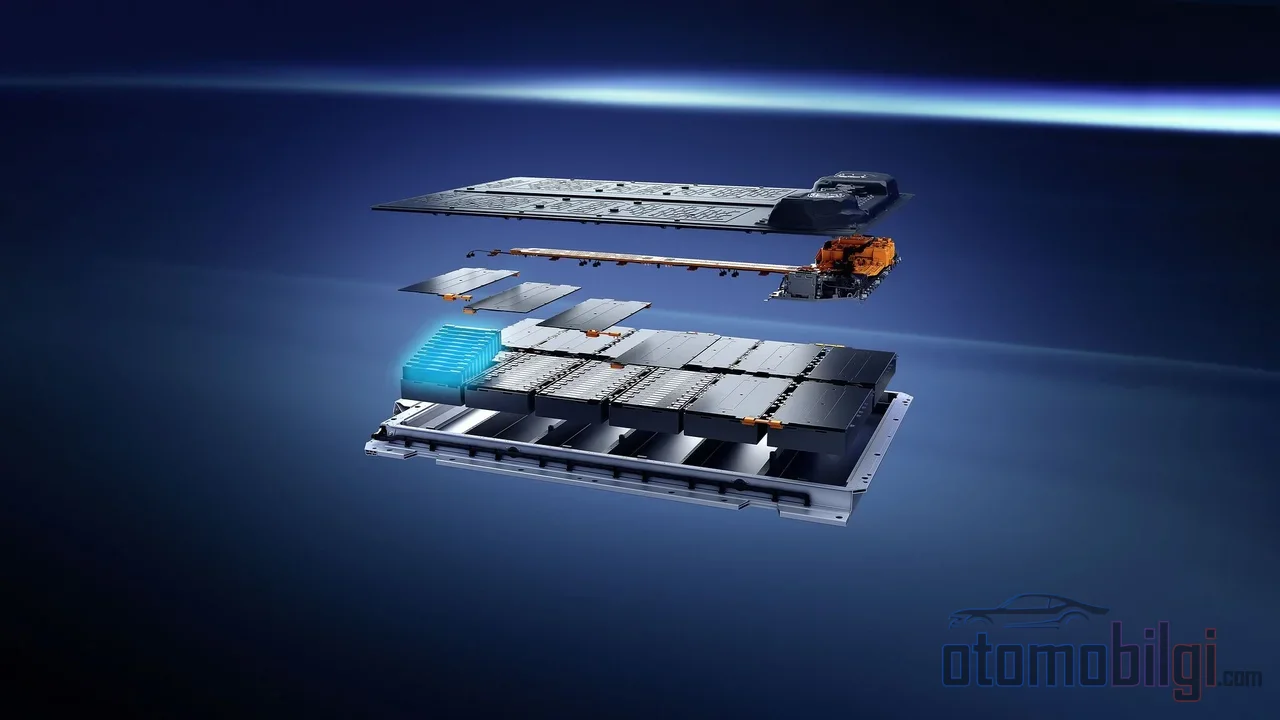
An electric vehicle pack requires 400 to 800 volts, while a single cell produces only 3-4 volts. To bridge this gap, hundreds of cells must be brought together; the real question is how you do it. In recent years, the industry has developed four different answers to this question: the classic layout that puts cells into modules first, CTP that skips the module, CTC that merges the battery with the chassis, and CTB that integrates it into the body structure. Each has a different impact on weight, space, cost and service practicality in hybrid vehicles, and none is universally superior.
Four Stages from Cell to Pack: What Are CTM, CTP, CTC and CTB?
The cell is the smallest electrochemical unit that stores chemical energy; it is produced in three common formats: prismatic, pouch and cylindrical. Cell production is largely a chemical process, while module and pack production is a mechanical assembly job. This distinction matters: when you change the architecture, what you change is the assembly logic, not the chemistry.
Cell to Module: The Classic Modular Layout
In the traditional approach, cells are first assembled into modules in groups. Each module has its own enclosure, busbars, thermal interface and sensors. The modules are then placed into the pack enclosure; the pack also includes the BMS software and usually the cooling-heating system. As standard module formats, VDA 355 (approximately 355 x 151 x 108 mm) and MEB 590 (approximately 590 mm in length) have gained wide acceptance in the industry.
Cell to Pack: Removing the Module Layer
In the CTP architecture, the module layer disappears entirely; cells are placed directly into the pack enclosure. When module enclosures, end plates and gaps between modules are eliminated, more cells fit into the same volume. CATL's CTP technology has reached an efficiency of 72% and a density value at the level of 255 Wh/l; it uses a three-in-one design that combines thermal pads, cooling plates and internal cross beams in a single layer.
Cell to Chassis and Cell to Body: When the Battery Becomes Part of the Structure
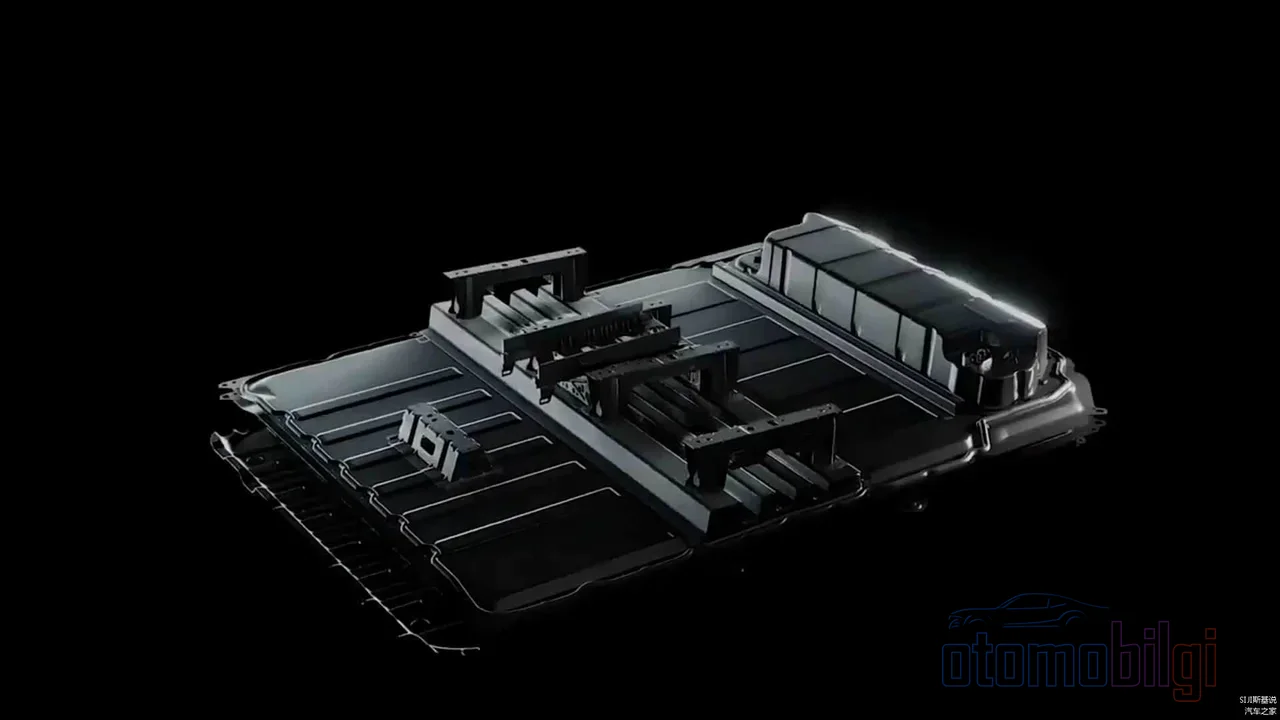
In CTC, the pack structure is integrated directly with the vehicle's chassis frame; the concept of a separate pack enclosure weakens. CTB takes integration one step further: the battery structurally merges with the load-bearing body elements and becomes a primary structural element that contributes to global body stiffness and crash energy management. BYD's cell-to-body architecture provides 66% higher volume utilization. CTB can increase global vehicle body stiffness by more than 50%.
Highlights
- Compared to modular packs, CTP provides an increase of 10-20% in volumetric energy density.
- Tesla predicts that cell-to-chassis technology could reduce vehicle weight by around 10% and increase range by around 14%.
- Structural batteries can offer weight reduction of up to 50% and an increase of 30-40% in energy density compared to conventional architectures.
- Module-level repair can save thousands of dollars compared to a full pack replacement; A single cell group replacement can be done at costs like $499-$699.
- In the US market, hybrid battery replacement typically falls in the range of $1,500-$3,000; dealer prices can exceed $12,000.
Comparison: Weight, Space, Stiffness, Cooling and Repairability
Summarizing the trade-offs of the four architectures in a single table clarifies the decision logic. Values are based on industry data and manufacturer statements; each architecture's gain is financed by making a sacrifice in another area.
| Architecture | Main gain | Main cost |
|---|---|---|
| CTM (modular) | Field repair, supply flexibility | Lower volumetric density |
| CTP | 10-20% increase in volumetric energy density, fewer parts | Low repairability, commitment to single cell format |
| CTC | Approximately 10% weight reduction, increased range | The pack ceases to be an independent structure |
| CTB | Up to 66% volume utilization, more than 50% stiffness increase | Repair controversy in case of structural damage |
Mass and Volume Gains
As module housings and intermediate elements are removed, the same energy is carried with less structural material. Tesla projects that the cell-to-chassis approach will eliminate hundreds of parts, reduce vehicle weight by about 10%, and increase range by about 14%. The structural battery concept goes even further: compared to conventional architectures, up to 50% weight reduction and a 30-40% increase in energy density may be possible. BYD's 66% volume utilization gain in its CTB architecture is also a product of the same logic: the battery is no longer a space-filling load, but the structure itself.
The Cooling Challenge
CTP's most critical engineering problem is thermal management. The structural support, cable space, and thermal interface layer provided by the module are lost; cells sit directly in the pack. Therefore, CTP designs support the cells with large-area thermal management systems, rows, frames, and compressed cell groups. Direct cell cooling provides consistent temperature, reduces the temperature difference between cells (ΔT), and extends cycle life. In the industry, air cooling, liquid cooling, and phase change materials (PCM) are the main thermal management options.
Repairability and Service
In a modular pack, a faulty module can be replaced without dismantling the pack; this is the backbone of field serviceability. With CTP, cell-level replacement is not practical; factory intervention or a full pack replacement comes into play. With a structural battery, the picture becomes even sharper: even a small subframe impact can damage the pack, and if the repair cost exceeds the replacement cost, the vehicle may be written off. In contrast, CATL's subsidiary Ning announced that it reduced the typical replacement price by 10 times with its structural pack repair service; a significant cost difference can emerge between the patch approach and a full pack replacement.
Why Does CTP Carry Value in Small Hybrid Packs?
Hybrid batteries are much smaller than full-size electric vehicle packs; lithium-ion hybrid batteries are small and light, yet they deliver high power and high energy relative to their weight. Full hybrids do not require external charging: the battery powers auxiliary loads, reduces engine idling time, and improves fuel economy through regenerative braking. Plug-in hybrids, on the other hand, are charged with a plug and complete short trips entirely on electric power.
In these small packages, CTP's value comes from volume pressure. Higher volumetric energy density means extracting more usable energy from the same space without compromising cabin and trunk volume. The IEA's 6th global electric vehicle report emphasizes that integration approaches such as cell-to-chassis can also help reduce cold-weather range losses when used in hybrid packs. In other words, packaging architecture affects the reader not only in terms of space and mass, but also in terms of seasonal performance. Moreover, the market context cannot be ignored: In 2026, hybrids reached a 15.2% share in the first 5 months of the year in the US market, while BEV sales declined by 30.8%, and hybrids surpassed both electric and gasoline vehicles in annual mileage. High-volume hybrid production naturally also provides the scale condition that recovers CTP's tooling and validation costs.
What Does Hybrid Battery Replacement Actually Cost?
The reflection of architectural decisions on the service bill is seen in concrete figures. For common hybrid models in the US market, the replacement cost per pack is measured in a range of approximately $1,000-$6,000; $1,500-$3,000 is a typical range, and depending on the vehicle and battery type it can climb to $2,000-$8,000 and above. Dealers may quote total prices reaching $12,269-$12,503; while some Toyota dealers offer quotes of up to $12,000, specialist services can do the same job at a much lower price. Used packs start from $800, and remanufactured packs from $1,500-$3,500; labor at an independent service ranges from $500-$1,500.
For comparison: battery replacement in fully electric vehicles is mostly between $7,000-$25,000 as of 2026. Module-level repair, however, changes the picture completely: a single cell group replacement can be offered at costs such as $499-$699, and replacing a single module can save thousands of dollars compared to a full pack replacement. The service advantage of modular architecture materializes here: whichever module fails, only that module is replaced.
Why Is Modular Design Still Standing?
CTP is not just a technical choice, but a production-scale decision. At production volumes below a few thousand packs per year, CTP's tooling and validation costs cannot be recovered. Modular design has other assets as well: Thanks to standard formats such as VDA and MEB, changing suppliers is possible, and the manufacturer is not locked into a single supplier; module-level test documentation (UN 38.3, IEC 62619) is already available; time to market is faster; compatibility with second-life applications is better. The traceability and second-life requirements of EU Battery Regulation 2023/1542 also align naturally with modular construction.
The known disadvantages of CTP should also be included in the list: high engineering complexity, with thermal management, cell retention and BMS wiring having to be designed at cell level, adherence to a single cell format, long prototyping time and poor second-life compatibility. The decision criteria can be summed up in three questions: is the production volume sufficient, how critical is field serviceability, and is a second life part of the business model? No approach is universally superior; each trades one set of engineering constraints for another.
Frequently Asked Questions
How much energy density does CTP gain over modular design?
It provides roughly a 10-20% increase in volumetric energy density; in industry data, the 15-20% band also applies. The gain comes from the eliminated module housings and dead volumes.
Can a modular pack be repaired in the field?
Yes. A faulty module can be replaced without disassembling the pack. With CTP, however, intervention at cell level is not practical, so factory intervention or full pack replacement is required.
Can a structural battery pack be repaired?
It is a controversial topic. Although structural packs are theoretically repairable, in practice full pack replacement is often the more sensible option; removing the pack and replacing it with a new one is relatively easy. Patch services are trying to change this cost balance.
Why is a standard module format important for sourcing?
Formats such as VDA and MEB free the manufacturer from being locked into a single supplier. CTP, by definition, remains tied to a specific cell format.
Conclusion: Packaging Is a Problem of Engineering Constraints
CTP and CTC do not change the battery pack; or rather, they change the mode of existence of the pack to be changed. CTP skips the module and extracts 10-20% more energy from the same volume, while CTC and CTB can turn the battery into the vehicle's load-bearing structure, reducing weight by roughly 10% and increasing stiffness by more than 50%. The price is that replacing a single module in the field gives way to factory intervention or full pack replacement. On the hybrid side, volume pressure in small packs and high production scale make CTP valuable; low production volume, service priority and second-life goals stay on the side of modular architecture. The right architecture is chosen according to the set of constraints dictated by production figures and service strategy; there is no universal answer.
Sources
- Cell to Pack vs Module Based Battery Architecture
- A review of cell-to-body (CTB) battery-structure integration
- Battery system integration for electric mobility (Joule)
- Electric vehicle batteries - IEA Global EV Outlook 2026
- Battery Cell, Module or Pack. What's the difference?
- EV Battery Pack Designs: From Modules to Body-Integrated Power
- Some Dealers Charge $12k To Replace A Toyota Hybrid Battery
- CATL structural pack repair service
- EV Battery Module Replacement vs. Full Pack Swap
- How Do Hybrid Electric Cars Work? (AFDC)