LTO Battery: 10,000-Cycle Lifespan in Hybrids
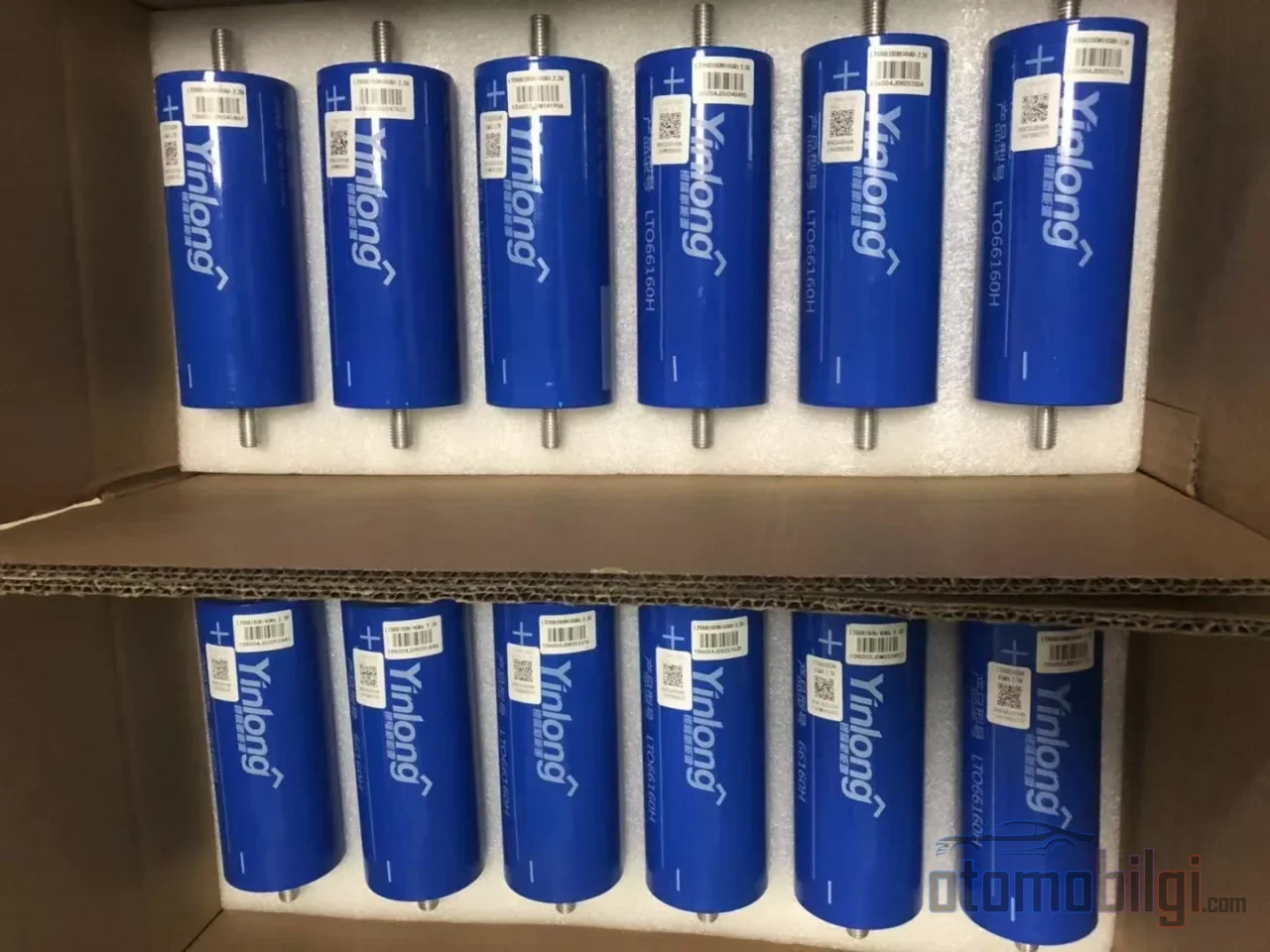
In the hybrid battery world, everyone talks about the same two names: NiMH and lithium-ion. But if there is a chemistry that uses lithium titanate instead of a graphite anode, withstands tens of thousands of charge-discharge cycles, and accepts a charge even in freezing weather, why don't we see it under the hood of production hybrids? The answer to this question lies at the point where an engineering triumph intersects with a commercial dilemma, and the best way to understand how the criteria in hybrid battery selection work is precisely to examine this chemistry.
What Is an LTO Battery and How Does It Work?
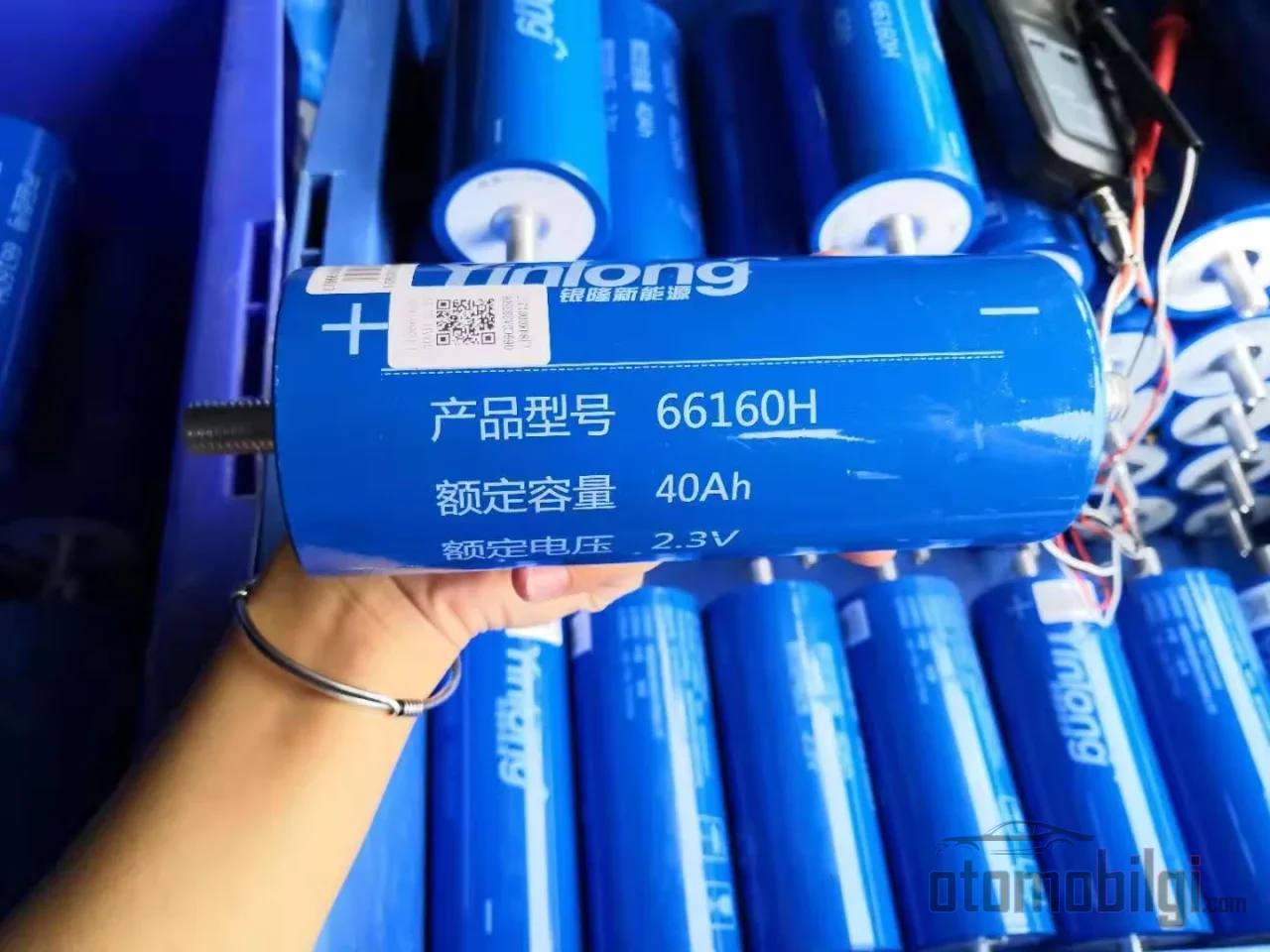
LTO stands for Lithium Titanate Oxide, i.e. lithium titanate oxide (Li4Ti5O12). While the anode, which is the negative electrode in a standard lithium-ion cell, is usually graphite, in LTO cells lithium titanate takes on this role. The result is a structural property that radically changes the character of the cell: during charge and discharge, the crystal structure of lithium titanate changes by less than 0.2 percent. This behavior is called zero strain in the literature and forms the basis of the cell's long cycle life.
What ages a battery prematurely are the small mechanical stresses that accumulate in the electrodes with each charge-discharge cycle and the chemical side reactions. Graphite swells noticeably as it stores lithium; lithium titanate, on the other hand, barely expands at all. So the life of LTO comes not from a chemical coincidence, but directly from the durability of its crystal structure.
Does It Really Last 10,000 Cycles?
LTO's cycle life figures are orders of magnitude above common lithium-ion chemistries. In comparison guides, LTO cells are rated in the 5,000-10,000+ cycle band, while under similar conditions NMC cells are counted at around 1,000-1,500 cycles and LFP cells at approximately 2,000 cycles. A broader perspective suggests that LTO cells can show a lifespan between 6,000 and 30,000 charge cycles.
It is not surprising that the figures span such a wide range, because cycle life varies considerably depending on the charge-discharge rate and operating conditions. Even under heavy loads the results are impressive: under a 5C charge-discharge protocol, full cells can retain more than 90 percent of their capacity after 10,000 cycles; at a more moderate rate such as 1C, retention can stay above 95 percent at the end of 20,000 cycles. Surface-modified cells have been reported to exceed 15,000 cycles at 5C, and there are examples in practical applications reaching 15,000-20,000 cycles. The point to note is this: lifespan depends not only on the cell's chemistry but also on how it is used; just as standard lithium-ion ages prematurely under unfavorable conditions, LTO's life also varies with the conditions.
Key Highlights
- LTO cells fall in the 5,000-10,000+ cycle band; depending on conditions, they can reach 15,000-20,000 cycles
- Full charge time is 10-30 minutes; with a 10C protocol, 80 percent charge in 6-8 minutes is possible
- Energy density is only 60-120 Wh/kg - below half that of NMC
- It can operate in a range of approximately -30 °C to +70 °C; maintains fast-charging acceptance in the cold
- With a cost of $150–200/kWh, above NMC and LFP
Why Is Fast Charging LTO's Natural Talent?
LTO's second big trump card is its charge acceptance rate. When a lithium-ion cell with a standard graphite anode is charged very quickly, lithium ions cannot settle properly into the anode and may form a metallic lithium layer on the surface; this is called lithium plating, and it permanently ages the cell and, in the worst case, can even cause a short circuit. In LTO, this risk is structurally low: the anode's operating voltage against lithium is at a relatively high level of around 1.55 V, which prevents metallic lithium accumulation during fast charging. As a result, LTO cells can be safely charged at up to 10C - that is, at a rate of 10 times their theoretical capacity per hour.
What does this mean in practice? With a 10C protocol, an 80 percent charge level can be reached in 6–8 minutes; in graphite-anode systems, the same process typically takes 30–60 minutes. A full charging time of 10–30 minutes is far alongside the usual 1–2 hours for NMC and 3–4 hours for LFP. This speed is a natural fit for regenerative braking and the power-buffer function of hybrid systems, where instantaneous power demands are high: LTO can retain 75–80 percent of its nominal capacity even at 30C discharge, and a power density of 3,000–5,000 W/kg enables energy recovery at levels of 50–150 kW during braking.
Does LTO Really Cause No Trouble in Cold Weather?
Standard lithium-ion's weakest moment is sub-freezing weather. In graphite-anode cells, charging below zero carries the risk of metallic lithium plating, so charging may need to be slowed down or completely blocked. Since LTO's high operating voltage eliminates this trap, it can maintain its fast-charging capability in the cold as well - and this stands out as a clear advantage compared to LFP, especially in cold climates.
The literature cites slightly different figures for the operating temperature range; this difference reflects cell design and the limits approved by the manufacturer. The general picture is this: typical LTO cells operate efficiently between -20 °C and +55 °C, versions optimized for high temperature cover the range of -30 °C to +80 °C, and some manufacturers claim charge-discharge down to -50 °C. Of course, full capacity is not retained in extreme cold; the loss can be kept relatively small, but it must be taken into account that the accessible energy decreases in very far sub-zero conditions. On the thermal safety side, LTO is also reassuring: it remains stable without releasing oxygen up to 300 °C, which significantly reduces the risk of thermal runaway.
NMC, LFP and LTO: Which Chemistry Makes Sense Where?
In a hybrid context, the character of the three lithium-ion chemistries forms a clear picture:
| Property | NMC | LFP | LTO |
|---|---|---|---|
| Energy density | 150–250 Wh/kg | 90–160 Wh/kg | 60–120 Wh/kg |
| Cycle life | 1,000–1,500 | ~2,000+ | 5,000–10,000+ |
| Full charging time | 1–2 hours | 3–4 hours | 10–30 minutes |
| Cost | $100–130/kWh | $70–100/kWh | 150–200 $/kWh |
| Strong side | Range | Safety and cost | Fast charging and lifespan |
The table's message is simple: LTO sits at the very bottom of the energy density ranking but is far above its class in lifespan and charging speed. The price of this equation comes in two items. The first is cost: 150–200 dollars per kilowatt-hour, nearly twice that of LFP. The second is volume: a 30–40 percent gravimetric energy density loss at cell level means more battery weight and more space for the same range.
Comparison with NiMH: The Old Standards of Hybrids
For many years, the standard of hybrid history was NiMH, and it still appears in some full hybrids. It should be said that NiMH is a reliable but limited technology: energy density stays in the 55–110 Wh/kg band, self-discharge is high and thermal management is problematic. Lithium-ion is clearly ahead in these two items - 100–300 Wh/kg by weight and better values by volume as well. As a result, major manufacturers have completed or are completing the transition from NiMH to lithium-ion in their popular hybrid models. LTO, on the other hand, is not in the chemistry group targeted by this transition; the chemistries manufacturers are turning to are high energy density solutions similar to NMC and LFP.
Why Is There No LTO in Production Hybrids?
The answer lies in the job description of the hybrid battery. In a full hybrid, the battery stores the energy from regenerative braking and delivers power to the motor at startup; the electric range is kept relatively short. However, as the electric range of hybrids grows and plug-in variants gain weight, the amount of energy that must be drawn from the battery becomes critical. Low energy per kilowatt-hour means more cells, more weight and more cost for the same range - and this is exactly where LTO's two weakest points come into play.
In contrast, LTO's characteristics align well, from an engineering standpoint, with the hybrid usage profile. In HEVs, instantaneous currents above 200 amperes are drawn; LTO can handle these loads without turning them into a heat problem. LTO battery systems for heavy-duty hybrid-electric vehicles have been verified under real operating conditions. In plug-in hybrids, LTO power batteries serve in daily shallow cycles - an operating regime that uses 20–30 percent of capacity; with a density of 85–95 Wh/kg, they retain more than 90 percent of capacity after 5,000 cycles. The targeted HEV cells combining an LTO anode with an NCA cathode are defined with a 2.3 V cell voltage, 90–105 Wh/kg, 10,000+ cycles and a calendar life exceeding 15 years. So the chemistry can do the job; the question is who will pay for the production cost and the volume penalty.
Battery Life, Warranty and Impact on Replacement Cost
The typical warranty for hybrid batteries today is 8 years/100,000 miles; Toyota covers its high-voltage battery for 10 years/150,000 miles, and regulations in some regions force manufacturers to provide a 10-year/150,000-mile warranty covering the case where battery capacity drops below 70 percent. The replacement cost side of the table is wide: hybrid battery prices range from an average of 2,000-8,000 dollars, with figures of 18,000-25,000 dollars for a manufacturer's new high-voltage pack. These figures belong to general hybrid batteries; LTO-specific warranty and replacement data has not yet been established.
But the implicit value here of a 10,000+ cycle lifespan is worth considering: theoretically, a durability level that would eliminate the need for battery replacement over the vehicle's lifetime. Even under intensive use, a cell lasting 20 years with a few full cycles per day has a profile that could radically change the post-warranty battery fear. Balancing this at today's cost is difficult; in a lifetime total cost calculation, however, LTO's table improves in scenarios where fast charging and durability gain importance.
The Likelihood of LTO Coming to Hybrids: The 2026 Table
The industry's current route is clear: the focus of battery investments is on solid-state and high energy density chemistries; the electric vehicle battery market grew by about 30 percent last year. Manufacturers' lithium-ion transition in their hybrids is also moving toward high energy density chemistries, not toward LTO.
Still, LTO's story cannot be considered over. Toshiba's new-generation EV battery, with its claim of 80 percent charge in 6 minutes, is marketing exactly this chemistry's speed advantage. There is progress on the R&D side as well: with new cathode architectures, the goals are making LTO cobalt-free and pushing it to 110-130 Wh/kg energy density, reducing production cost by 30-40 percent, and achieving capacity retention above 95 percent after 10,000 cycles. If these figures materialize, the energy density penalty will not be as heavy as it is today, and the path to LTO's entry into production vehicles could open - especially commercial and heavy-duty hybrid applications where fast charging and durability are paramount. As of today, however, the honest answer is this: in the passenger hybrid space, LTO is still a marginal option.
Summary Answer: Does LTO Make Sense in Hybrids?
The clear answer to the question is this: LTO is a chemistry that is technically highly compatible with the needs of hybrids, with a lifespan ranging between 5,000 and 20,000 cycles, charging times that can drop below 10 minutes, and the ability to operate flawlessly even in cold weather; however, its 60-120 Wh/kg energy density and 150-200 dollar per kilowatt-hour cost prevent it from finding a place in manufacturers' passenger hybrids. In passenger vehicles where range and volume are critical, NMC and LFP lead; LTO, meanwhile, remains a sensible option in scenarios where fast charging, durability, and temperature tolerance outweigh energy density - heavy-duty hybrids, intensive-cycle commercial uses, and together with future cost improvements.
Sources
- NMC vs LFP vs LTO Batteries: Complete Comparison Guide
- Lithium Titanate Electric Vehicle Battery
- Lithium-titanate battery
- Lithium titanate battery system enables hybrid electric heavy-duty vehicles
- Batteries for Electric Vehicles - Alternative Fuels Data Center
- Lithium Batteries for Hybrid Cars
- Car Warranty Coverage for Hybrid and EV Batteries
- Electric vehicle batteries - Global EV Outlook 2026
- High Temperature LTO Batteries
- New chemistries for the future of lithium batteries