kW or kWh? Untangling the Units in Electric Vehicles
Share This Page
The station sign reads 180 kW, and your car's battery is 55 kWh; so which one measures what? Everyone taking their first step into the world of electric vehicles experiences the same confusion: these two units - one of speed, the other of capacity - do not correspond one-to-one with any concept in the language of gasoline cars. When misread, the result is tangible: someone returns home dreaming of a 22 kW wallbox, only to learn that the car can charge at a maximum of 7.4 kW. This guide clarifies the two units with everyday analogies, shows the simplest way to calculate charging times, and builds the logic for reading the numbers at charging stations correctly.
What Is the Difference Between kW and kWh?
First, let's look at the physics behind the abbreviations. kW (kilowatt) is a unit of power: it measures how much electrical energy is transferred or consumed in one second. kWh (kilowatt-hour), on the other hand, is a unit of energy: it shows the accumulated total. The garden hose analogy works well; the width of the hose is like kW - the wider it is, the more water flows per unit of time. The watering can is like kWh - the bigger it is, the more water it holds in total.
In an electric vehicle, both units appear in two different places. kW expresses both the speed at which the charger transfers electricity to the battery and the power produced by the motor; a vehicle can have a 200 kW motor power while accepting 150 kW fast charging - these two numbers are independent of each other. kWh, however, almost always measures a single thing: the capacity of the battery. The electric equivalent of fuel tank volume in a gasoline car is not liters, but kilowatt-hours.
The word "hour" in the name is the key to understanding the unit. A 78 kWh battery stores enough energy to deliver 1 kW of power for 78 hours, or 78 kW of power for 1 hour. When power is multiplied by time, energy results; all charging calculations are built on this single logic.
Key Takeaways
- kW is a unit of power (charging speed, motor power), while kWh is a unit of energy capacity (battery size).
- The basic charging time formula: battery kWh ÷ charging power kW = hours.
- A 50 kWh battery charges in about 6-7 hours with a 7.4 kW wallbox; perfect for overnight charging.
- An average electric vehicle consumes 15-18 kWh per 100 km.
- The fastest region in DC fast charging is usually between 10-80%.
Which Concept Is Measured in Which Unit?
There are four fundamental concepts in the electric vehicle literature, and each has a fixed unit. Charging power and motor power are expressed in kilowatts, battery capacity in kilowatt-hours. Consumption is given in kWh/100 km as the equivalent of liters/100 km in gasoline cars. Range, on the other hand, is measured not in any energy unit but in kilometers, and depends on both battery capacity and consumption.
| Concept | Unit | What it describes |
|---|---|---|
| Charging power | kW | The speed at which energy is transferred to the battery |
| Motor power | kW | The vehicle's performance potential |
| Battery capacity | kWh | The total energy that can be stored |
| Consumption | kWh/100 km | Energy expenditure per unit distance |
| Range | km | Range achieved on a full charge |
One point needs attention: high engine power alone does not mean long range. A more powerful version may carry a smaller-capacity battery, and the extra performance drains the battery faster. When comparing consumption figures, it is enough to know as a reference that efficient models stay in the 13-16 kWh/100 km band, while large and heavy models frequently exceed 20 kWh/100 km.
How Is Charging Time Calculated? Simple Formula and Practical Examples
Dividing capacity by power gives the estimated charging time: battery kWh ÷ charging power kW = time. Once you understand the formula, reading station signs becomes easy. If you want to fill a 50 kWh battery with a 7.4 kW wallbox, you divide 50 by 7.4 and arrive at a time of about 6-7 hours; this duration is ideal for plugging in in the evening and finding it fully charged in the morning. The same battery charges in 16.6 hours from a 3 kW household outlet, in about 2.5 hours from a 22 kW three-phase unit, and in about 1 hour from a 50 kW DC station.
For a 60 kWh battery, the table is similar: a 7.4-7.5 kW home unit takes less than 8 hours from empty to full. On the DC side, a 120 kW station could theoretically fill the same battery in about half an hour. A useful comparison for intercity travel is this: charging from 20% to 80%, a 50 kW device takes about 40 minutes on a model with a 78 kWh battery, and about 60 minutes on a 55 kWh model; a small battery does not always mean fast - the acceptance rate is also decisive.
Why doesn't the formula always give the real figure?
The division is a theoretical upper limit, and in the real world three factors extend the time. First, charging does not continue at maximum power from start to finish; in DC fast charging, speed peaks in the 10-80% band, and after 80% the vehicle significantly reduces power to protect the battery. Second, it is not the station but the vehicle that limits charging speed: if your car accepts 7.4 kW AC, having a 22 kW wallbox plugged in will not raise the charging to 22 kW. Third, excessively hot or cold weather slows the battery's acceptance rate. This is why the hours entered into the calculator rarely match the time spent at the payment terminal one-to-one.
AC and DC Charging: Why Are the Numbers So Different?
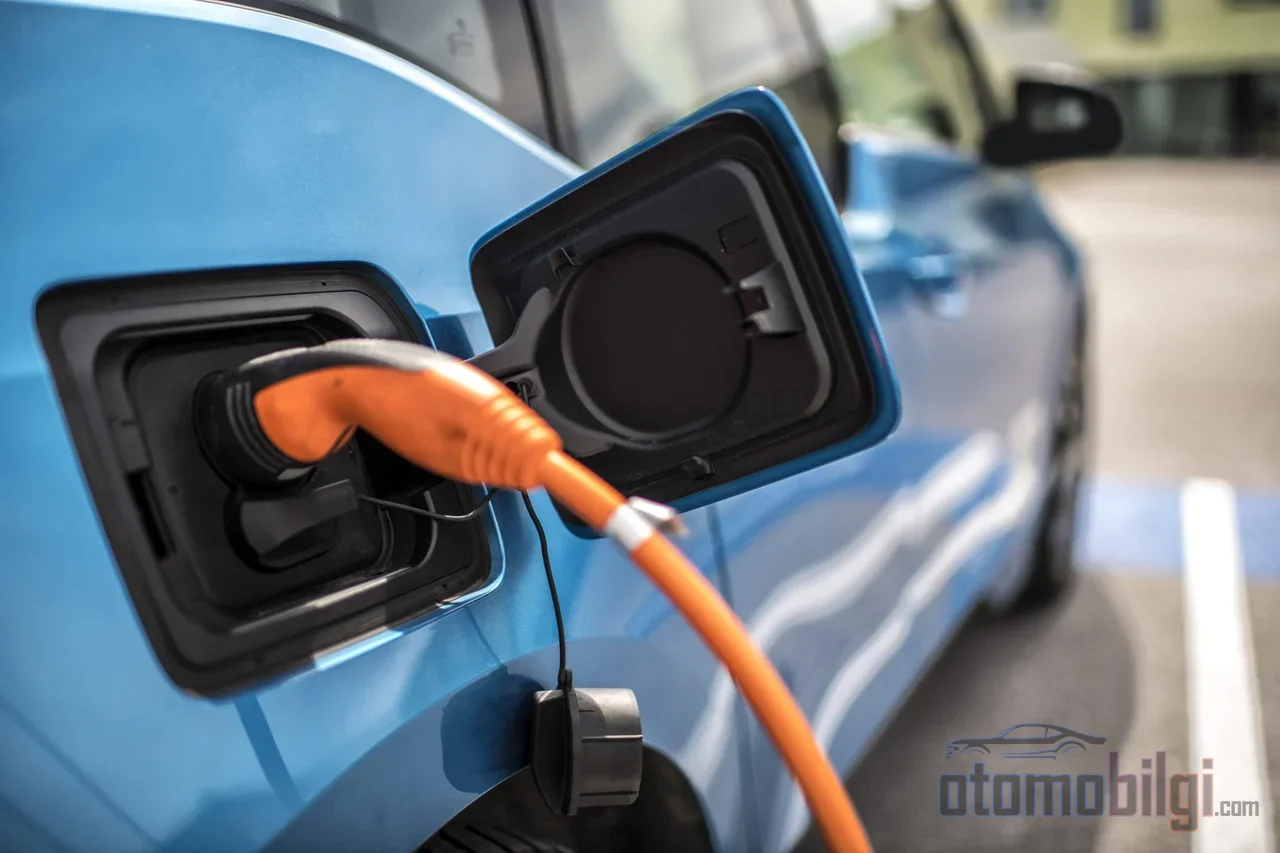
The reason for the wide range of kW values on the signs is where the electrical conversion takes place. In AC charging, the grid's alternating current is converted to direct current by the vehicle's own converter, that is, the on-board charging unit; this unit's capacity is usually at the 7, 11, or 22 kW levels, and it sets the upper limit of charging speed. In DC fast charging, the conversion is done at the station and the energy is fed directly to the battery; power ranges from 50 kW up to 350 kW, or even 450 kW. In short, on both sides it is the vehicle, not the device, that sets the final upper limit; the station only raises the ceiling.
The practical counterpart of this distinction is the difference in time: AC charging typically suits sessions of 4–10 hours, while DC charging fits stops of 20–60 minutes. On the AC side, used for standard home and workplace charging, wall-mounted units called wallboxes are produced in the 3.7–22 kW range; the power stated on the device's label is the maximum value it can deliver to the vehicle on the AC side. In a single-phase home installation, the practical upper limit is around 7.4–7.5 kW; reaching 11 or 22 kW requires a three-phase installation. That is also where the answer to the question of whether to choose an 11 kW or a 22 kW wallbox comes from: first look at your vehicle's acceptance rate and your home's electrical infrastructure, then choose the power accordingly.
Consumption and Range: How to Read the kWh/100 km Value?
In the gasoline world, consumption is measured in liters/100 km; in an electric vehicle, kWh/100 km plays the same role, and the logic is the same: a lower value means an efficient vehicle. In mixed use, an average electric vehicle consumes 15–18 kWh per 100 kilometers; small, lightweight city cars can fall below this value. Real-world measurements in the band of roughly 0.27–0.35 kWh per mile paint a similar picture; in ADAC tests, the consumption of many models remained below 20 kWh/100 km.
Calculating how far you can go on a single kWh translates the unit into everyday life. With a mid-size electric vehicle, one kWh provides about 3–4 km of driving; so a 50 kWh battery and an assumed consumption of 16 kWh/100 km point to a range of over 300 km in rough terms. Since consumption varies from vehicle to vehicle and from weather conditions to driving style, it is best to read this calculation as a range rather than a single definitive number. The same approach applies to range figures: a compact city car with a 39 kWh battery offering around 270 km of range will travel a different distance than a model of the same capacity but different mass and efficiency.
Why Is Knowing the Units Important While Türkiye's Charging Network Grows?
This unit confusion is becoming a practical matter for more and more people in Türkiye every year. The electric vehicle fleet stood at 14,896 units in 2022; it reached 83,826 in 2023 and 185,513 in 2024, and the number of vehicles is reported to have exceeded 450,000. As of June 2026, the country has 45,097 charging sockets; of these, 19,663 are DC and 25,434 are AC technology. In March 2026, the number of sockets had increased by 1,397 in a single month, reaching 42,051, meaning the growth rate is measurably high. Mid-scenario projections show that the number of registered fully electric vehicles could exceed the two million mark by 2030.
In this picture, reading the units correctly proves useful both at home and on the road. If a 7.4 kW wallbox is installed at home and your battery is 60 kWh, you can expect a full charge overnight; but with a three-phase installation and an 11–22 kW unit, that time can be cut in half. On the road, knowing that the high kW value on the sign is only an offer and will be limited by your vehicle's acceptance rate makes highway stop planning realistic. For those who want to calculate charging time in advance, online charging calculators run the same division logic; the only thing you need to learn your car is to know the kWh and acceptance power values of your own battery.
In summary: Keeping the kW and kWh Distinction in Mind
The shortest definition you can remember is this: kW measures speed, kWh measures capacity. The power of the charger and the motor is expressed in kilowatts, while the size of the battery, and therefore your equivalent of a fuel tank, is expressed in kilowatt-hours. Consumption is given in kWh/100 km, and lower is better; range is the kilometer result found by dividing capacity by consumption. When you wonder about charging time, divide capacity by power, then round the result up a bit, taking into account the slowdown after 80% and your vehicle's acceptance limit. Once you have internalized these three rules, station signs, brochures and wallbox labels read like technical specifications; and your decisions are based on data.
Sources
- kW vs. kWh: Guide for EV drivers - bp pulse UK
- kW v kWh – what's the difference? - Octopus Electroverse
- EV Charging and what does KW and KWh explained - MPH Vehicle Solutions
- kW vs kWh Explained: Understanding Energy Measurements - Power Sonic
- Electric vehicle battery - Wikipedia
- Electric Vehicle Charging Calculator - sarj.com.tr
- How Long Does It Take to Charge Electric Vehicles? - Voltti
- How Long Does It Take to Charge an Electric Car? - Pod Energy
- How Long to Charge an Electric Car? - Go-Electra
- EV Consumption: How Much Energy Does an Electric Car - go-e
- How much does an electric car consume? - Enel Learning Hub
- Decoding fleet efficiency: the real cost of kWh per mile - Rightcharge
- Electric Car Power Consumption and Range - Volkswagen UK
- The Difference Between AC and DC Charging - Future Teknik EV 101
- Charging Guide: AC, DC and Charging Speed - MINI Electric Türkiye
- How to Charge an Electric Vehicle at Home / Wallbox Power - Aton Enerji
- The Main Differences Between Single-Phase and Three-Phase Charging - Ever Şarj
- Electric Vehicle Charging Infrastructure for Türkiye - ŞarjDestek / Ministry of Industry and Technology
- The Number of Electric Vehicles in Türkiye Exceeded 450,000 - Litpack
- Türkiye's electric vehicle charging market - Strategy& PwC Türkiye