Kyle Larson Wins at Talladega, Championship Close
Share This Page
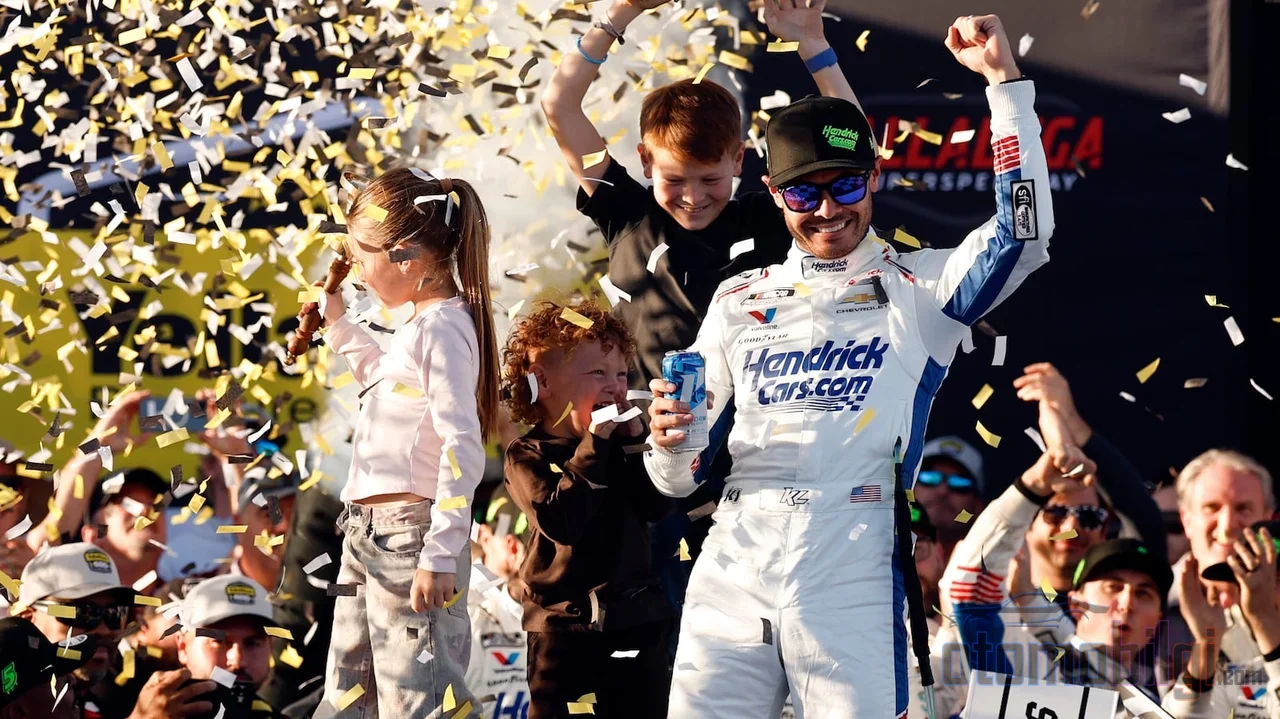
When the final corner of Talladega was filled, no one could clearly name the winner. The leading car at the white flag had slipped ten positions due to contact; a bargain was unfolding behind, with dozens of cars having dropped back. The name that stood out in the dust of the final laps was Kyle Larson, and on Sunday, October 25, he won the YellaWood 500 after a duel that carried the race to an overtime photo finish. So where did this victory bring the 2026 championship race, and why did the day's main controversy become car safety rather than the track? Let's take a look one by one.
Victory from Ten Positions Back in the Final Lap
Talladega Superspeedway, with its 2.66-mile length and steep banking, is one of the least predictable stops on the NASCAR calendar. For years, everyone who comes to this track knows the same thing: ten positions in the draft line can be erased within a single straight stretch. Larson's race became a textbook example of this. The driver who took the white flag first and entered the final lap was displaced by Austin Hill's contact and thrown ten positions backward. If you think conventionally, the race ends there.
It didn't. In the final quarter mile of the track, Larson, carrying the No. 5 Hendrick Motorsports Chevrolet to the low line, passed the seven cars ahead of him and crossed the finish line first alongside Ricky Stenhouse Jr. in a photo finish that was hard to distinguish with the naked eye. The race had gone to overtime; the finish turned into one won not by whoever could complete the lap, but by whoever could read the positions correctly. This was, in a way we couldn't have known at 31, Larson's first Cup Series victory at Talladega and the end of a long superspeedway wait spanning 59 starts.
The numbers also tell a meaningful story: This was Larson's third win of the 2026 season and Hendrick Motorsports' second consecutive victory. The picture before Talladega was not comfortable at all; the playoff advantage had melted down to five points, with the top seven drivers separated by a total gap of 56 points at the summit before the race. Before race day, it had even been written that Larson's favorite status had weakened in the driver standings. Talladega is where the favorites sweat on a track with little predictability; for Larson, sweating seems to have paid off.
Highlights
- Kyle Larson won his first Cup Series victory at Talladega on October 25, 2026; the 59-start superspeedway drought came to an end.
- The victory came in a race that went to an overtime photo finish, from 11th place on the final lap.
- The championship advantage rose to 73 points; Two races remain in the Playoffs.
- Joey Logano's car, losing control, went airborne; the race was stopped due to a 15-car frontstretch crash.
- Denny Hamlin argues that the Next Gen car is not safe at 200 mph.
The 15-Car Crash: Why Did Logano's Car Go Airborne?
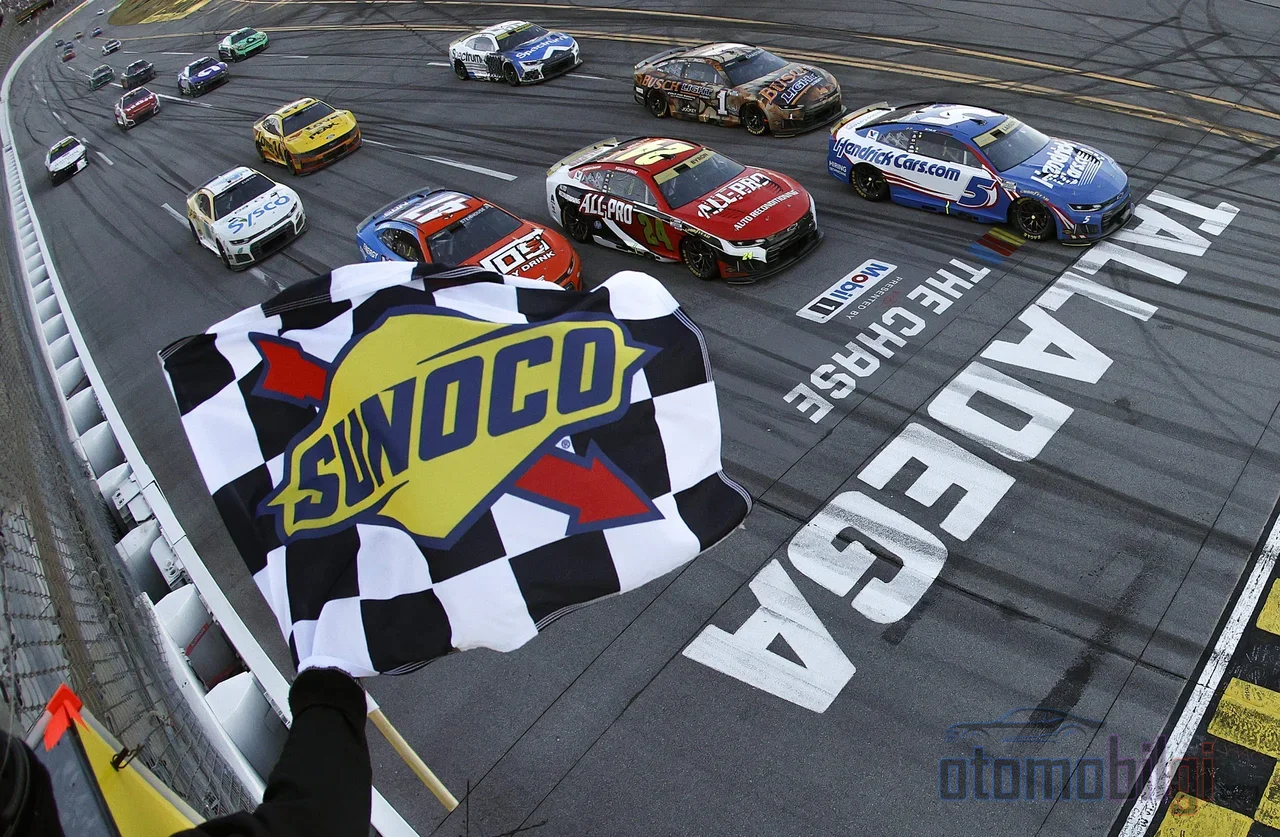
The scene that didn't stay in the day's shadow, but on the contrary covered the screens, was Logano's crash. Joey Logano lost control while running fourth and his car went airborne on the frontstretch. When the densely packed group behind couldn't escape, a 15-car chain-reaction crash developed; Chase Briscoe and Brad Keselowski were also affected. The race was stopped with the red flag because the car went airborne. This kind of action is nothing new at Talladega, but a car going airborne is always a heart-stopping sight; NASCAR's first task was to clarify the driver's condition.
There is an interesting note in the stage scoring: Logano had won the second stage against Larson by only 0.012 seconds. Later, in the race where he went airborne, taking a stage by twelve thousandths of a second was a good indicator of how tightly packed the track was. Pole position had gone to Chase Briscoe (#19); in the results table, behind Larson, William Byron was second, Ricky Stenhouse Jr. third, Ross Chastain fourth, and Cole Custer fifth.
Ricky Stenhouse Jr. Why Did He Lose the Race?
There are practically two answers to this question. The first is the big melee on the final lap itself: Larson was leading at the white flag, but Austin Hill's contact dropped him ten spots, and the chaos changed everyone's position, including Stenhouse's. Stenhouse officially finished third; in a finish so close it could almost be called a win, he could not end up on the right side of the chaos. Staying at the rear on the final lap at Talladega is the mirror image of winning.
The second answer is structural: On drafting tracks, it is not raw speed alone but being on the right line at the right moment that wins. What allowed Larson to move forward from 11th place in the final mile was the timing of his decision to take the last quarter mile of the track on the low line. Stenhouse ending up on the wrong end of the finish was less a one-off piece of bad luck and more the natural consequence of position mattering only for moments as short as seconds in such chaos. In the same race, after finishing second, William Byron made no attempt to hide his disappointment, yet he also did not fail to celebrate his teammate Larson's victory; for the Hendrick camp, the day passed without any losses.
Championship Standings: 73 Points and Two Races
The real news was less the victory than the change in the standings. With Talladega, Larson extended his playoff lead to 73 points, with only two races left in the Playoffs. The Round of 8 continues with Phoenix Raceway and Martinsville Speedway; so while Larson's championship is not mathematically sealed, closing this gap in two races is practically a very difficult task. With Cliff Daniels, the career director of a team accustomed to being at this level in his career, already shouldering responsibility after Phoenix, Talladega largely lifted that pressure.
| Position | Driver | Points | Gap to Leader | Season Wins |
|---|---|---|---|---|
| 1 | Kyle Larson | 2,441 | - | 3 |
| 2 | Denny Hamlin | 2,368 | -73 | 4 |
| 3 | Christopher Bell | 2,367 | -74 | - |
The table also shows an interesting detail: Despite Hamlin arriving with four wins and five poles during the season, he trails Larson in the standings. At Talladega, knowing what the play was matters; what is striking is that even a four-win season is not enough to keep the gap from opening one-sidedly under the playoff system. With three races left in the season, the real distance is more psychological than points-based: Bell and Hamlin both need to win at Phoenix and Martinsville while Larson runs into trouble.
Hamlin's Next Gen Criticism: The Safety Question at 200 Miles
The safety debate that ran before and after the race is part of the story as much as the race itself. Denny Hamlin argues that the Next Gen car is not safe enough at speeds of around 200 miles, and that drivers have repeatedly conveyed this to NASCAR. The concern over preventing driver injuries visibly grew an opposition that had long been a whisper ahead of the Talladega playoff race. Hamlin sees the root of the problems not as technical but as an administrative weakness, voicing the view that new leadership is needed; meanwhile, a demand that the Next Gen car be completely redesigned has also come onto the agenda.
There is also concrete data on the technical side. Hamlin noted on his podcast that the Next Gen car carries significantly more drag compared to the previous Gen 6, describing it as a difference of hundreds of units. For this reason, he proposed the idea of a shorter spoiler for superspeedways, and NASCAR announced that it was evaluating the idea. Hamlin also warned that the Next Gen risks drawing the kind of backlash that the Car of Tomorrow once faced; in other words, the issue is moving beyond a single driver's complaint toward a reckoning over the design philosophy of a generation. In the past, safety debates would open up after a crash; now, the fact that it is a talking point from the start of a major playoff race week also offers a reading of NASCAR's changing approach to governance.
From Martinsville to Phoenix: The Meaning of the Two Remaining Races
The remaining calendar is simple: The remaining legs of the Round of 8 are Martinsville and Phoenix. Larson managing these two races with his 73-point advantage is sufficient in most scenarios. It should be noted that the results may be open to small changes pending official confirmation due to the last-lap crash; such corrections are not unusual in Talladega results. On the other hand, if Larson turned a pre-race advantage of just five points into 73 over one race, the remaining question is not purely mathematical: Can a gap of this magnitude truly crush a Hamlin with four wins and a Bell sitting third just one win behind? Judging by the current picture, the answer is expected to become much clearer at Martinsville.
Conclusion: The Lesson of Talladega
Talladega has been teaching the same lesson for years: When calculating championship odds here, nothing is guaranteed until the final corner. Larson studied this lesson straight out of the textbook; he came from ten rows back to win, carried his championship advantage to a level that effectively secures it, and ended a 59-race wait. But on the same day, Logano's car going airborne and Hamlin's insistent observation that the Next Gen is unsafe at 200 mph were a reminder that the work beyond the track is not finished. The championship is approaching; the safety debate, meanwhile, is only at the beginning of the road.
Sources
- Kyle Larson wins Talladega in overtime photo finish
- Running recap: Cup Series Talladega Chase race recap and results
- NASCAR Talladega finishing order - Hendrick Motorsports
- Final Leaderboard - October 25, 2026
- 2026 NASCAR Cup Series Standings
- NASCAR Talladega takeaways
- NASCAR race at Talladega stopped after Joey Logano's car goes airborne
- Kyle Larson wins YellaWood 500 at Talladega
- NASCAR's Next Gen car: drivers safety concerns
- Denny Hamlin blames NASCAR's leadership for Next Gen safety issues
- NASCAR considering Hamlin's spoiler idea - Hauler Talk
- Talladega Superspeedway to host pivotal NASCAR Playoff races