NASCAR Hands Out Indefinite Suspensions After Corey Heim Altercation
Share This Page
Following the punching assault on Corey Heim at Martinsville Speedway, team owner Chad Bryant has suspended one of his crew members indefinitely with a fine; the two individuals also received monetary fines, probation, and a 2027 race ban. No penalty was applied to Heim for not retaliating. On this page you will find detailed information on who received the penalties, why, and under what circumstances, the disciplinary message NASCAR delivered, and how the incident affected the paddock.
Highlights
- Chad Bryant: $2,000 fine, indefinite suspension, one-year probation, and a mandatory anger management program
- Crew member Steven Civitarese: $1,000 fine, indefinite suspension, and one-year probation
- Across two fights, a total of seven team members were penalized; the video review took about two days
- Corey Heim received no penalty; the footage showed he did not retaliate
- The penalties were announced on September 29-30, following the ValleyStar Credit Union 300 on September 26, 2026
What Happened at Martinsville: How the Fight Unfolded
The incident stems from the ValleyStar Credit Union 300 run at Martinsville Speedway on the night of Saturday, September 26, 2026. In this event, the biggest Late Model race of the NASCAR Regional series, Heim crossed the finish line second and then collided with Chad Bryant Racing driver Treyten Lapcevich in Turn 1, with Heim's car riding over the left front of his rival. What happened after the race was the part that sparked the real controversy.
After Heim got out of his car, he was met near the infield cone stand, close to the track, by Bryant and two team members. The group attacked the young driver with punches; Heim tried to flee after the punch and the supervising crews at the track broke up the fight and removed him from the area. So this was not a classic mutual brawl between two sides, but a one-sided assault. For anyone who has watched paddocks for more than three decades, it is clear that such footage cannot be considered a natural outcome of post-race tension.
NASCAR also reviewed the collision between Heim and Lapcevich but issued no penalty for that move; the focus shifted to the team side, which engaged in physical intervention after the race. The fight took place on September 26, and the penalties were announced on September 29-30; behind this two-day delay was an identification problem, which I will touch on below.
Who Received Penalties and How Much?
NASCAR penalized a total of seven team members in connection with two separate fights. The name appearing as the main defendant is undoubtedly team owner Chad Bryant. Summarizing the penalties in a table would be useful:
| Name | Role | Penalties |
|---|---|---|
| Chad Bryant | Team owner | $2,000 fine, indefinite suspension, mandatory anger management program, one-year probation, banned from the 2027 ValleyStar 300 |
| Steven Civitarese | Crew member | $1,000 fine, indefinite suspension, one-year probation, banned from the 2027 ValleyStar 300 |
| Ryden Lapcevich | Team member | $500 fine, probation until December 31, 2027 |
| Chase Burrow | Race driver | $250 fine, probation until the end of 2027 |
| Brad Houseright | Team member | $250 fine, probation until the end of 2027 |
| Ryan Burrow | Crew member | $500 fine, probation until the end of 2027 |
| Dylan Jenks | Crew member | $500 fine, probation until the end of 2027 |
The second group concerns a separate fight that broke out after the heat race: Chase Burrow and Brad Houseright were penalized for their direct involvement, while Burrow's crew members Ryan Burrow and Dylan Jenks were also placed on similar-length probation. A small note: because a local source uses a different spelling for the surname, Houseright's name is spelled differently in some publications; this spelling difference does not affect the substance of the penalties.
What Does Indefinite Suspension Mean?
An indefinite suspension is one of the heaviest sanctions in NASCAR's penalty schedule: the person involved has no access to any of its events unless NASCAR reverses the decision. In addition, Bryant and Civitarese were specifically suspended from the 2027 ValleyStar Credit Union 300 as well; meaning that, at least for that race, the door was shut without leaving any room for discussion.
Bryant's path back is not completely closed, however. Even if NASCAR reinstates him in the future, a one-year probation and the requirement to complete a NASCAR-approved anger management program await him. These conditions show that the organization holds even someone with team owner status to the same standard; the eras when team owners were treated with a bit more leniency in penalties appear to be behind us.
On the Rule Book side, the basis is also clear: the violation was evaluated under Sections 12-6.1C and 12-6.1C2 ; the definition is physical retaliation from member to member. The fact that such a rule has its own separate section in the rule book is a sufficient clue as to how seriously NASCAR views this behavior.
Why Wasn't Heim Penalized?
This is one of the most frequently asked questions, and the answer is simple: video footage showed that Heim did not retaliate against the attack. NASCAR also separately examined the collision between Heim and Lapcevich after the race but did not impose a penalty for that action. So, from the organization's perspective, there is a clear line between on-track contact and a physical altercation off the track; whoever crosses the line takes the penalty.
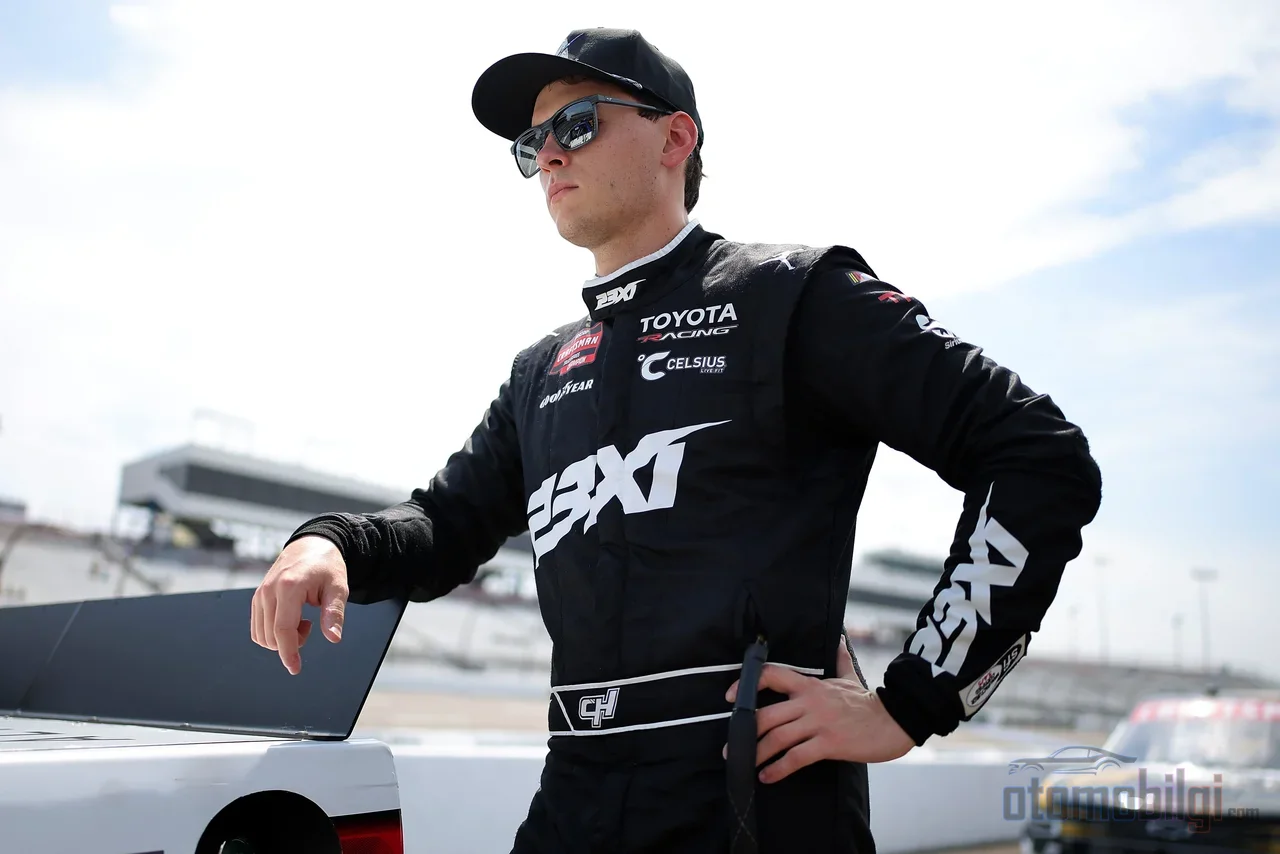
Heim's choice not to retaliate worked in his favor. At 24 years old, racing for 23XI Racing and a Brickyard 400 winner, staying out of such a fight as a driver rising to a Cup seat is also a meaningful distinction for his career. It should be added, though: Heim's record is not without disciplinary history; he had previously received a $12,500 fine and a 25-point deduction for his actions in a Phoenix Truck race and in the Truck Series finale. However, this incident was evaluated independently of those records, and the footage showed nothing against him.
NASCAR's Message: The Rationale Behind the Penalties
The NASCAR side laid out the rationale for the penalties clearly: the framework conveyed by vice president responsible for race communications Mike Forde emphasizes that a crew member raising a hand at a driver is unacceptable and that the organization will respond to such behavior. The notable point in Forde's account is the emphasis that this rule applies whether it is a local series or the Cup Series. In short, NASCAR chose to treat an incident in a small Late Model organization as if it were an incident in the top category.
Why did the identification take two days?
There is a practical explanation for the penalties being announced on September 29-30, roughly two days after the incident. Martinsville has no facial recognition software; at an event involving nearly 90 drivers and several hundred team members, matching individuals one by one from video footage takes time. The identities of the perpetrators only became clear on Monday night. This detail also shows the gap between local series and the top category's infrastructure resources; an identification that could be done quickly at major tracks is done manually at venues like Martinsville.
The historical context is also interesting. An indefinite ban is not a new tool in NASCAR: in 2020, Josh Reaume received such a penalty under the code of conduct, and in 2026 Daniel Dye faced the same sanction for derogatory remarks made on a live broadcast. With the Heim incident, the fact that this policy remains in the spotlight shows that the organization is tightening its disciplinary enforcement systematically, not sporadically.
Impact on the Season and the Championship Battle
This incident is not directly tied to the Craftsman Truck Series championship; the ValleyStar Credit Union 300 is a NASCAR Regional Late Model race. There is no concrete point loss or ranking loss regarding Heim's impact on the 2026 championship table. The real impact of the incident is more symbolic in Heim's career line: being targeted in such an attack in public, as a rising name ahead of his move to 23XI, became a headline neither the team nor the driver wanted.
On the teams side, the picture is more concrete. Chad Bryant Racing has lost its owner and a crew member until Martinsville's 2027 event; a one-year probation also means that any future violation will face far harsher penalties. Heated arguments in the corridors after races used to happen, and still do; but a scenario in which the team owner personally joins the fistfight costing the business itself summarizes today's understanding of the cost of this work.
Discussion: Different Views on the Penalty
Although the official statement's line is clear, not everyone on social media agrees. Some fans argue that the post-race fight did not deserve such severe penalties; NASCAR's own podcast discussions have occasionally drifted to topics like the engine dyno process and qualifying metrics. These views are of course not the official position, but they are an indicator of how the disciplinary policy is followed in the field. My reading is this: NASCAR set a threshold between driver safety and crew conduct, and in this incident the side that crossed the line was clearly the team camp. If the threshold is in such a place, the severity of the penalty is not a matter of debate, but a mandatory conclusion.
Frequently Asked Questions
Why wasn't Heim penalized?
Video review showed that Heim did not retaliate against the attack. NASCAR also examined the post-race collision but chose not to impose a penalty.
What does an indefinite ban mean in practice?
It means indefinite removal from NASCAR events. Bryant and Civitarese were also specifically banned from the 2027 ValleyStar Credit Union 300.
Can Bryant return?
Even if NASCAR reinstates him in the future, a one-year probation will apply; completing an anger management program is also among the required conditions.
In conclusion, the Martinsville night was a case that clearly showed where NASCAR stands: winning or losing on the track is free, but laying a hand on a driver invites the organization's harshest penalties. The seven-person penalty package, especially the indefinite ban directed at the team owner, is poised to remain an example in the minds of anyone who attempts a similar fight in the future.
Sources
- Hauler Talk: NASCAR explains how penalties were issued for Martinsville fight involving Corey Heim
- NASCAR Hands Down Indefinite Suspensions After Corey Heim Assault
- Penalties handed out by NASCAR after post-race fight at Martinsville Speedway
- NASCAR suspends 2 for attack on Corey Heim at Martinsville
- Chad Bryant crew members suspended by NASCAR after Martinsville fight
- NASCAR indefinitely suspends Chad Bryant and another crew member
- NASCAR indefinitely suspends Chad Bryant and another crew member over Corey Heim fight
- Rising NASCAR star jumped, attacked & beaten at America's most famous hot dog shack