Why Did the Dodge Charger Become a Cult Legend as a Muscle Car?
Share This Page
The Dodge Charger became a cultural icon because a single generation - especially the second generation built between 1968-1970 - carved itself into the shared memory of cinema, television, and NASCAR racetracks. With its Coke-bottle curved fenders, hidden headlights, and massive V8s growling underneath, this car became not just an automobile but an attitude. So how did a model whose sales were disappointing in 1966 transform into one of the most recognizable muscle cars in the world? Let me tell the story from the beginning.
Highlights
- The Charger's journey has been ongoing since 1966, spanning a total of eight generations.
- In 1968, Dodge produced 96,100 units - a figure many times higher than the first generation's sales.
- The 1970 Charger was the winningest car in NASCAR that year.
- Richard Petty holds the record in NASCAR history with 200 victories; some of them were earned at the wheel of a Charger.
- By 2022, the SRT Hellcat Jailbreak Edition was at the top with 807 hp.
1966: Birth, Fastback Roof, and a Bad Start
The first Charger actually appeared on the scene as a concept car in 1964; the name also appeared a year later on a special version of the Dodge Dart with a 273 cubic inch (4.5 L) V8. But the real birthday is the 1966 model year: Dodge introduced a model derived from Chrysler's B-platform Coronet, featuring a fastback roofline. Stepping inside, you were greeted by an interesting sight - four seats, a console running all the way to the rear, hidden headlights, and a full-width grille. Dodge's target was less the pure muscle car and more the luxury-performance segment of the Oldsmobile Toronado and Ford Thunderbird.
The engine lineup was broad: a base 318 cubic inch (5.2 L) V8, and at the top, the intimidating 426 cubic inch Hemi. So there was no shortage of serious firepower under the hood. The problem was with the customers: In 1966, 37,344 sales weren't bad, but in 1967 the figure dropped to 15,788. Dodge studied its lesson well, and its next move went down in history.
1968-1970: The Peak of Design and Power
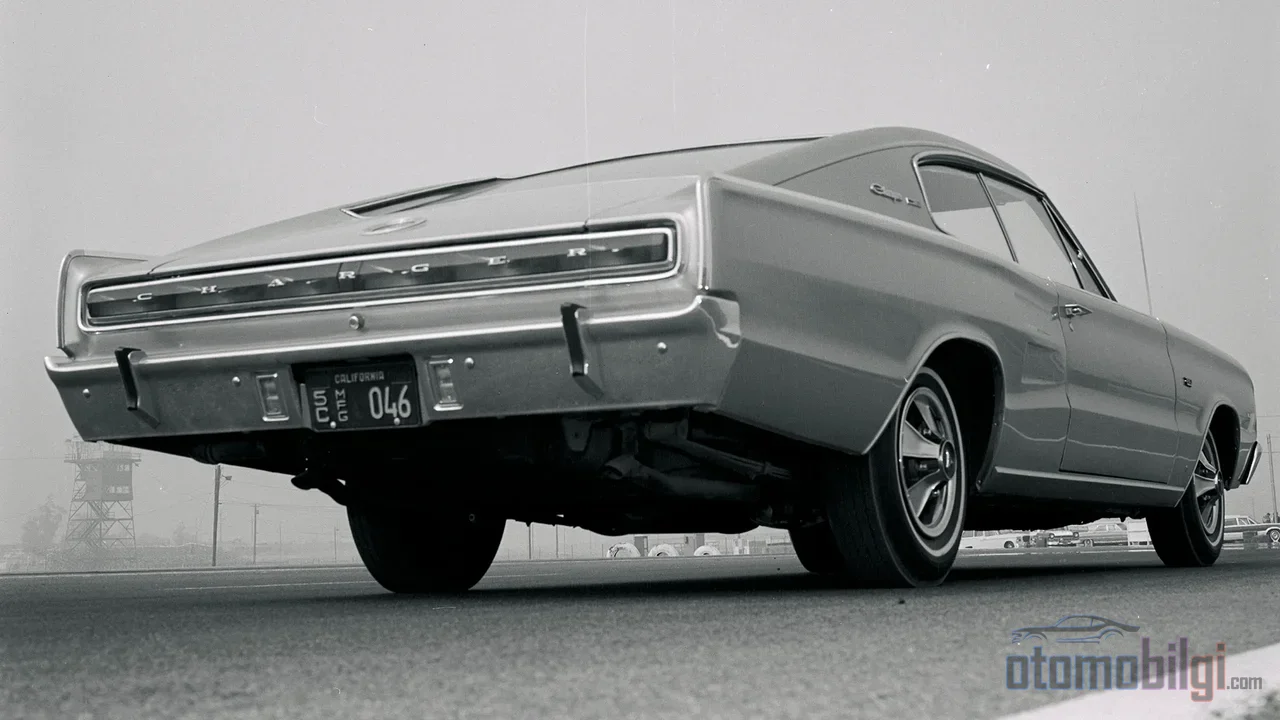
Here it is, the car everyone pictures in their head: the second generation. In 1968, Dodge redesigned the Charger with a less assertive body, a six-cylinder engine option, and a simplified interior. When the Coke-bottle curved fenders, low beltline, flying buttress-style rear roof, and hidden headlights came together, the result was unquestionably the most recognizable Charger silhouette. Dodge had planned production of 35,000; demand exploded so much that 96,100 units rolled out of the factory. Consider the difference: the previous year they had sold 15,788. Sometimes the right design changes everything.
The engine options were also legendary: the 318 V8, the 383 V8, the 426 Hemi, and on top of that the 440 Magnum. Hemi versions today carry the biggest premium in the collector market; hiding underneath were serious details like dual four-barrel carburetors, a high-flow fuel pump, and a special transmission cam. Right behind the Hemi comes the 440 cubic inch six-pack V8 - that famous setup with three carburetors. If you want to compare this generation to an animal: a restless, noisy but self-assured creature that runs on gasoline for breakfast.
On the Track: NASCAR, the Charger 500 and Daytona
Here's the interesting part: The 1968 Charger was a failure on the track. That lovely Coke-bottle body couldn't provide the aerodynamics stock car racing demanded. Dodge's answer was two special builds: first the smoother Charger 500, then the 1969 Charger Daytona with a conical nose extension and a massive rear wing added. The result? The 1970 model year Charger was the winningest car in NASCAR that year and brought Bobby Isaac the championship.
Of course, at the heart of this story is one name: Richard Petty. The man who earned the nickname "The King" with a 200-victory record that still stands unbroken in the NASCAR Cup Series today knew the Charger's track face inside out. His 1974 model No. 43 STP Dodge Charger is remembered as one of the most successful race cars in NASCAR history. And 200. 200 in a Dodge as well: he won the Firecracker 400 at Daytona on July 4, 1984 - his last race that year was run on July 29 at the Talladega 500.
The 1970s: How the Oil Crisis Ended the Muscle Car
Now comes the painful part of the story. The third generation arrived in 1971; the B platform was overhauled to comply with new emissions and safety regulations, with changes like a split grille and a ducktail spoiler. The 1971 Charger is remembered as the last true muscle car with the legendary performance from before the oil crisis changed everything - and in my opinion, that title is more than well deserved. Then the world changed suddenly: the oil crisis, tightening emissions rules and shifting consumer preferences brought down every classic muscle car from the Hemi 'Cuda to the Chevelle SS. The industry calls this period the "Malaise era"; a squeeze lasting roughly from the early 1970s to the mid-1980s.
The Charger's own downfall was swift and painful. In 1975 the model was shifted into the personal luxury car segment and began sharing the Chrysler Cordoba body. In 1976, the Charger name was slapped onto the old Coronet coupes - in my view the most heartbreaking moment, a legend's name stuck on an ordinary coupe. The comeback, by contrast, was incredibly humble: In 1981 the Charger returned as a small front-wheel-drive hatchback. From 1983 onward, the Shelby Charger version was produced; and the final 1,000 cars of this L-body adventure that ran until 1987 were the Charger GLHS, producing 175 hp. From the 426 Hemi to 175 hp... automotive history can be cruel, yes.
2006: The Four-Door Comeback and Rebirth
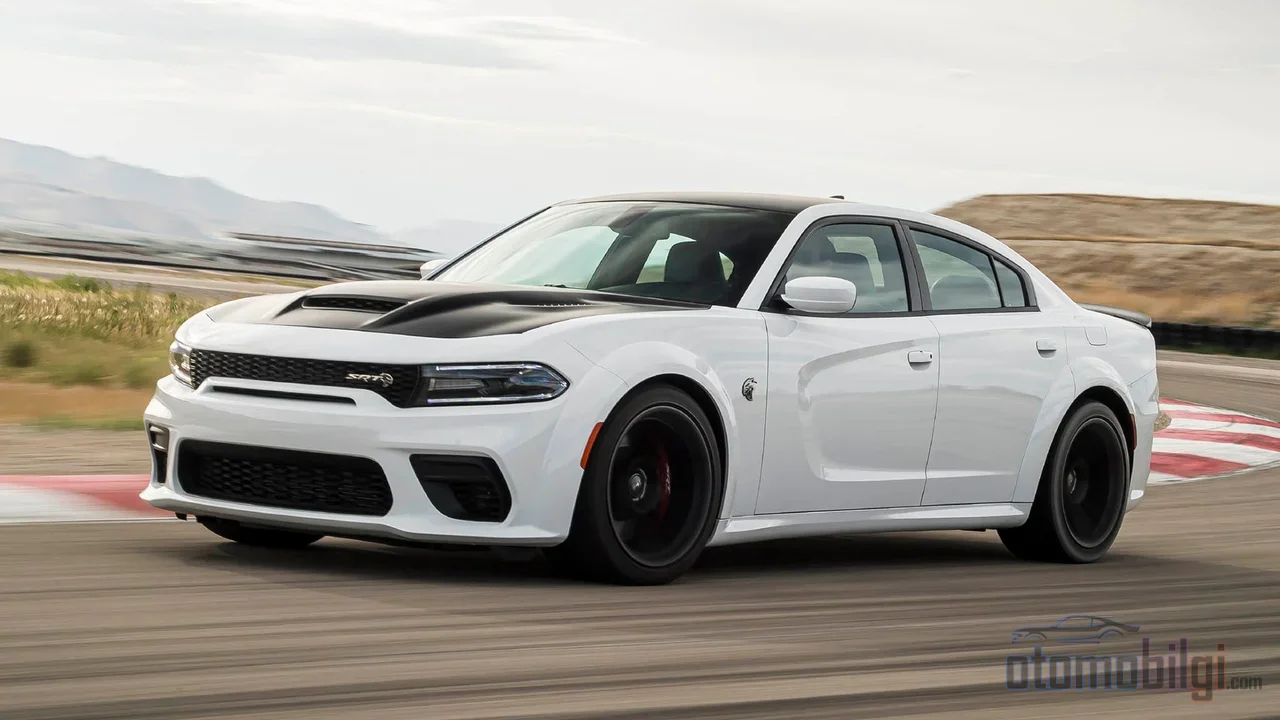
After a twenty-year hiatus, Dodge made a bold (and controversial) move: for the 2006 model year, the Charger returned as a four-door sedan based on the Chrysler LX platform. The LX was Chrysler's full-size, rear-wheel-drive platform introduced in 2005 - in other words, a straight skeleton, but those loyal to the two-door tradition went crazy. Traditionalists said a muscle car couldn't have four doors; time proved Dodge right, because the formula was simple: a big American sedan, rear-wheel drive, and a V8 underneath.
In its early years there were the SE, SXT, R/T, Police and Daytona R/T trims, and the V6 engine and AWD were offered for the first time. The SE had a 2.7 L V6, the R/T had a 5.7 L Hemi V8 with cylinder deactivation technology, and at the top, the SRT8 had a 6.1 L Hemi. Think of cylinder deactivation like this: telling half of the eight cylinders "take a break now" to save fuel - great in the city, and when the light turns green, they're all ready to come back. A major facelift arrived in 2011: the Pentastar 3.6 L V6 producing 292 hp, LED wrap-around taillights, and side and rear design details reminiscent of the 1968-1970 generation. In other words, Dodge was winking at its past.
From Giant Power to Electricity: The Story of the Last Generation
The last generation raised the power ramp even higher: In 2020, the Hellcat widebody became standard, and the SRT Hellcat Redeye trim joined with its 797 hp V8. In 2022, the Jailbreak Edition pushed the ceiling even higher with 807 hp. But that same year, thunder struck: In January 2022, Dodge announced that Chargers with the 5.7 L, 6.4 L and 6.2 L Hemi V8s would be retired at the end of the 2023 model year. The V8's farewell to the Charger came with a grand finale.
The eighth generation arrived for the 2025 model year with both two-door and four-door liftback bodies and took a completely different path: the Charger Daytona EV offered in R/T and Scat Pack trims delivering up to 670 hp - and it even has a "Fratzonic Chambered Exhaust" system that mimics the Hemi sound, so we're talking about an electric car that imitates a growl! The gasoline models haven't entirely gone away: For 2026, the Charger SixPack is offered with the 3.0 L Hurricane twin-turbocharged inline-six delivering up to 550 hp. No V8, but there are still teeth, still temperament.
General Lee and Toretto: The Charger on Screen
What truly made the Charger a universal icon was perhaps not the tracks but the screens. The The Dukes of Hazzard television series made the American public embrace second-generation Chargers; the show's bright orange 1969 Charger, the General Lee, achieved cult status with its signature horn, long jumps and (for the sake of the camera) welded doors. In 2020, the Confederate flag on the car sparked a serious debate: while the show's stars defended the car, a museum official said it would continue to be exhibited as a historical piece. This debate is still ongoing, and I believe it's a subject that shouldn't be oversimplified - the car is beautiful, history is complicated.
On the cinema side, there's no similar good-versus-evil dilemma: Dominic Toretto's 1970 Dodge Charger R/T appeared in The Fast and the Furious, Fast & Furious, Fast Five, and Furious 7. The car Toretto wrecked in the first film returned in later films with a revived version, and in F9 the never-out-of-fashion 2021 Charger Hellcat Widebody took the stage. Today the Charger is spoken of as a symbol of American power, attitude, and muscle culture; and we can't say the "bad boy" roles in the movies didn't contribute a nice bonus to this image.
Is the Modern Charger Still a Muscle Car?
In my opinion, this is the most entertaining argument on this page. According to one camp, yes: a big, heavy, rear-wheel-drive American V8 - it fits the definition of a muscle car to the letter. According to the other camp, no: a four-door, full-size sedan cannot be a muscle car. You could spin this debate for hours, both in forums and in conversations. The nice thing is this: neither side convinces the other, but everyone agrees on the car's character. My position is somewhere in the middle - as much as I love the two-door purebred tradition, I can also love a four-door but Hemi-powered monster.
As for the question of which generation is legendary, there's no debate at all: the 1968-1970 second generation is the Charger's undisputed most iconic and recognizable version. The second generation's Eight, with its NASCAR-winged Daytona, its General Lee, and its Toretto... This car is not a model, it's a novel. Eight generations of downs, comebacks, naming crises, and 807 hp peaks - but every time, it got back up. Which do you think is more memorable: the orange General Lee's jump, or the 1970 R/T gleaming on Toretto's nose?
Sources
- Dodge Charger - Wikipedia
- The History of the Dodge Charger - MotorTrend
- Your definitive 1968-70 Dodge Charger buyer's guide - Hagerty
- 1968-1970 Dodge Charger - Hemmings
- Richard Petty - Wikipedia
- Petty's Prime Years - NASCAR Hall of Fame
- Richard Petty's 200th Victory Car - Smithsonian
- General Lee (car) - Wikipedia
- Chrysler LX platform - Wikipedia
- Malaise era - Wikipedia
- Why The 1971 Dodge Charger Closed The Golden Muscle Car Era - HotCars
- The 4 Reasons Why The Muscle Car Era Ended in the 70s - Muscle Cars Illustrated
- A Ride Through Time: The History of the Dodge Charger - Hunt Chrysler Center
- The History of Dom's Charger - VoloCars
- Our Favorite Fast & Furious Cars - Rotten Tomatoes
- Museum: 'Dukes of Hazzard' Car With Confederate Flag to Stay - WTTW News