How Was the American Ford GT40 That Won Le Mans Born?
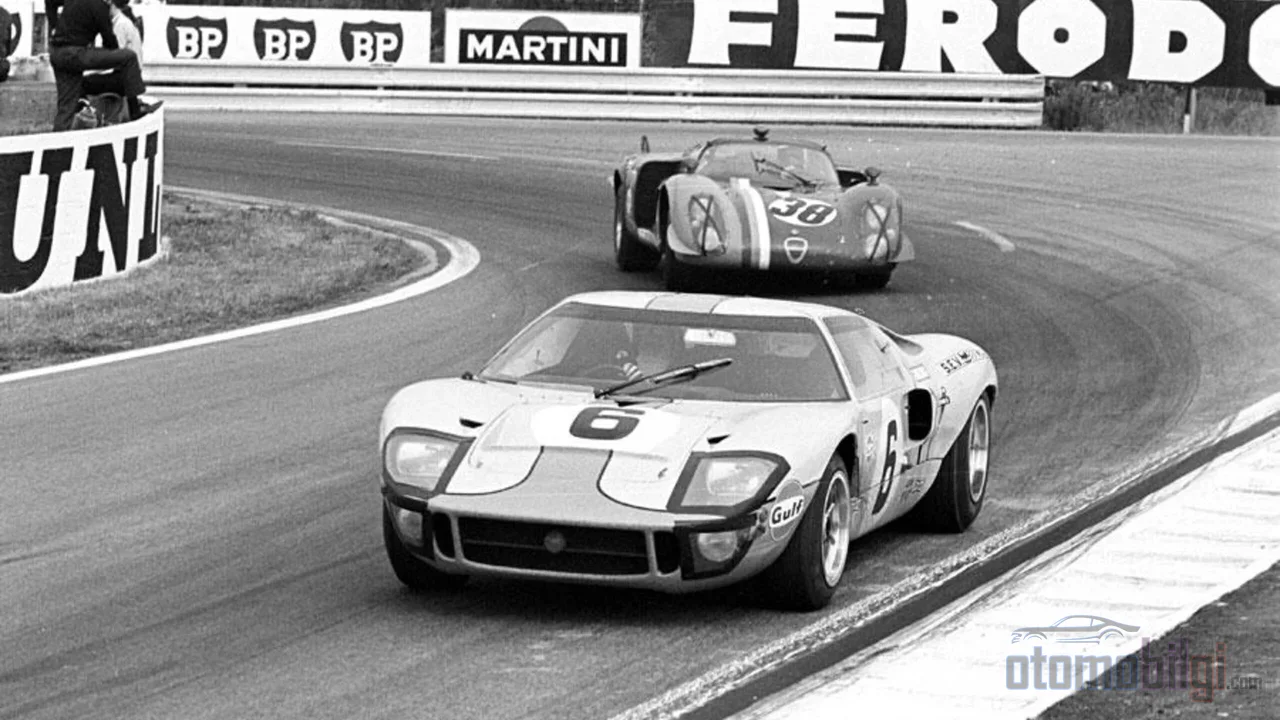
Share This Page
The Ford GT40 is an American race car born as Henry Ford II's revenge project after Enzo Ferrari canceled a buyout deal at the last minute in 1963, and it went down in history by winning the 24 Hours of Le Mans four times in a row from 1966 to 1969. In other words, what can happen when a business negotiation goes wrong? The answer is still being talked about at race tracks today.
Highlights
- Only a total of 105 units of the GT40 were produced
- June 19, 1966: Ford became the first American manufacturer to sweep the top three at Le Mans
- 1966-1969: Four consecutive Le Mans victories
- The GT40 is the only American-made car to win Le Mans to date
- Its name comes from its height: exactly 40 inches
Why Was the Ford GT40 Built? The Revenge of a Broken Deal
The story begins in 1963. Henry Ford II sat down at the table to buy Ferrari. Negotiations progressed quite far, but at the last minute Enzo Ferrari canceled the deal when he saw a clause that would transfer control of Ferrari's racing program to Ford. Speaking for myself: questioning at the last minute whether to hand over one's most valuable possession... understandable from Ferrari's perspective, but from Ford's perspective it was a outright insult.
Henry Ford II thought the same. Instead of sulking, he locked the financial and engineering resources of a massive corporation onto a single goal: beating Ferrari on its own turf, at Le Mans, the monument of endurance racing. Remember, Scuderia Ferrari had won Le Mans consecutively from 1960 to 1965. That was precisely why Ford built the GT40: to break that streak. It sounds like a joke, but a car was born as the child of a broken handshake.
The GT40's Development Process: An Idea Born from Lola
Ford did not start from scratch; it acted smartly and called in the experts. It made a deal with Eric Broadley, founder of Lola Cars, because Broadley's mid-engine, Ford-powered Lola GT was exactly the idea they wanted. Ford bought a pair of Lola GTs, then added John Wyer and Roy Lunn alongside Broadley to create the GT40. For an American manufacturer dreaming of a mid-engine race car, this was serious boldness in those years.
Even the name is a story in itself. "GT" comes from Grand Turismo, and "40" from the car's height: 40 inches. In other words, the car's name literally comes from its stature! Think of it like a movie title after a series of likes. Interestingly, the car's official name was actually "Ford GT"; it was the GT40 nickname that became popular and overshadowed the official name.
The first race was held at the Nürburgring in May 1964, and the results were mixed. At the 1964 Le Mans, Ginther took the lead and Hill set the fastest lap, but the car stubbornly had reliability problems. There was speed, but no finishing. The first engines were 4.2 and 4.7 liter small-block Ford V8s; in other words, they all ran on American-made Ford V8 OHV engines modified for racing. An American heart would be used to beat Ferrari, plain and simple.
What Changed When Carroll Shelby Stepped In?
In 1965, the team's command passed to Carroll Shelby. You've probably heard the name: a legendary figure who spoke like a guinea pig, wore a cowpoke's hat, and went from racer to team boss. Under Shelby, the season wasn't particularly bright; apart from a win at the Daytona 2000 Km and a second place at Sebring, the year was a big disappointment. But what Shelby brought was racing intelligence and confidence for the team. It's like explaining the difference between a fast car and a winning team, and how a team that knows how to close that gap is built... Shelby did exactly that.
Mk II: The Era of the Big Engine and Big Power
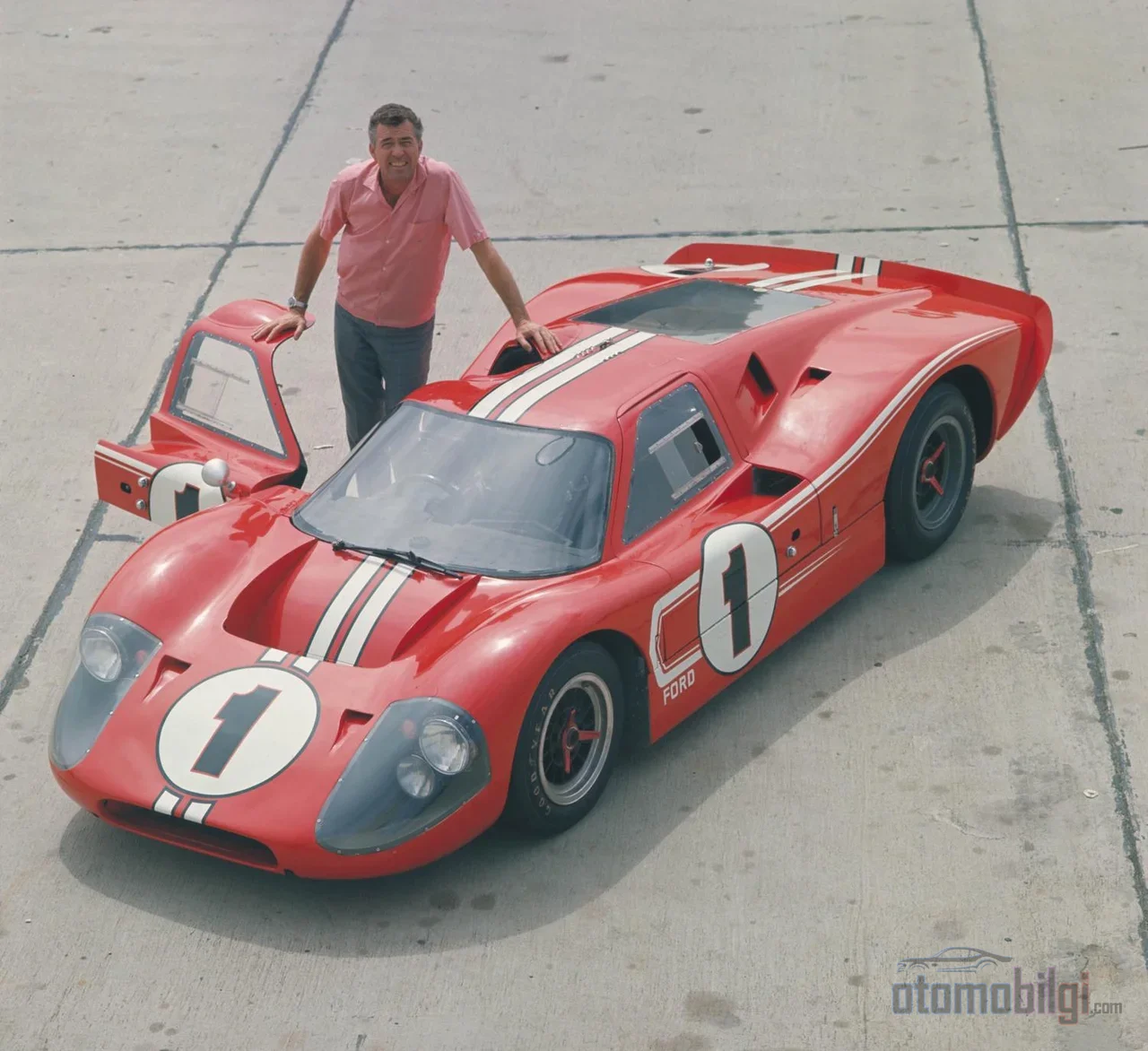
This is where things get serious. Ford brought in the big-block V8, raising the engine to 7.0 liters (427 cubic inches), and the Mk II was born. A reinforced chassis, a sturdier transmission, and a longer nose. The engine and upgrades added a few hundred pounds of extra weight; but in return, the Mk II produced around 485 hp . A simple analogy: giving up on a small and nimble sprinter and sending a butcher-strong boxer into the ring. If breathing for 24 hours matters in endurance racing, the Mk II did it with muscle power.
Ford went to the 1966 Le Mans with 13 GT40s against just 8 Ferraris. The result? Not a single major Ferrari made it past the 17th hour. On the Ford side, history was written: three Mk IIs swept the podium. The winning car covered 3,009.3 miles at an average speed of 125.38 mph. Ford became the first American manufacturer to win Le Mans and also took the Manufacturers' Championship that same year.
A Controversial Finish: What Happened to Ken Miles?
But something was missing from that victory. While Ken Miles and Denny Hulme were in the lead, Ford management asked for the cars to be slowed down so all three could cross the finish line together for a visually "dead heat" finish photo. The problem is: since the McLaren/Amon car started 60 feet behind on the grid, even if they crossed the finish line at the same moment, the technical winner was McLaren. Miles being slowed down and robbed of his victory remains one of the most talked-about moments in racing history. Even who bears the responsibility is a matter of debate; while the film places the blame on Leo Beebe, the real story is told as a staged scene planned by Ford management for that famous photo. It was also said that if Miles tried to pull ahead again, he would be withdrawn from the race. This finish resurfaced years later in the film Ford v Ferrari and is still being debated.
1967-1969: From the Mk IV to the Gulf Colors, a Last-Second Victory
After 1966, the story didn't end at all; on the contrary, it deepened layer by layer. Ken Miles, sadly, lost his life while testing the J-car at Riverside; following this tragedy, the redesigned car was reborn as the Mk IV . The Mk IV was derived from the aluminum honeycomb chassis J-car design, using a Kar Kraft-built 2-speed automatic transmission and a 7.0-liter big-block V8. In 1967, an Andretti/McLaren victory came at Sebring; at Le Mans, Dan Gurney and AJ Foyt beat Ferrari by 4 laps with the Mk IV. That race was also the Mk IV's last race.
The rules changed in 1968: the FIA capped pure racing engines at 3.0 liters and production-based engines at 5.0 liters. Ford's factory team withdrew, but the story wasn't over; John Wyer's J.W. Automotive team, with GT40s in Gulf Oil's famous blue-and-orange colors, won both the 1968 World Sportscar Championship and Le Mans. No factory, but a legend; that was the difference.
And then 1969: with the same chassis (1075), Jackie Ickx and Jackie Oliver beat Hans Herrmann's Porsche 908 by a margin of only about 120 meters Unlike the planned finish of 1966, this is considered one of Le Mans's completely genuine, unscripted closest finishes. Thus Ford's final Le Mans victory with the GT40 was recorded. In total, four consecutive wins from 1966 to 1969: Ford's dreamed-of revenge was more than complete.
| Version | Engine | Notable Feature |
|---|---|---|
| Mk I (GT40) | 4.2 / 4.7 L small-block V8 | The first version; fast but with reliability problems |
| Mk II | 7.0 L (427 cu in) big-block V8, ~485 hp | The 1966 Le Mans one-two-three finish |
| Mk IV | 7.0 L big-block V8 | Aluminum honeycomb chassis, winner of the 1967 Le Mans |
| Mk III | ~305 hp small-block V8 | Only 7 road cars built; the rarest variant |
How Many GT40s Were Produced?
Despite all these victories, total production was only 105 units. Today, that number makes the car almost sacred in the eyes of collectors. Another interesting detail: Ford never registered the GT40 name. When the modern GT entered production in the 2000s, the name rights belonged to someone else, so the car was named "Ford GT." You could say the nickname displaced the official name.
The GT40's Legacy and the Road to the Modern Ford GT
The story of the GT40 is more than just a car story: it is corporate stubbornness, engineering courage, and the sentence "we can do it" engraved into racing history. Today it still holds the title of the only American-made car to win Le Mans; even after sixty years, no one has surpassed that benchmark.
The legacy lives on with the modern Ford GT. The Ford GT models produced in 2005 and 2016 celebrated the racing heritage; the 2016 generation was timed to coincide with the 50th anniversary of the GT40's Le Mans victory and stood out as the most powerful Ford GT ever, with its 3.5-liter EcoBoost engine. In 2026, it was the 60th anniversary of the GT40's 1-2-3 sweep at Le Mans; it was recalled that the winning cars were actually built at the Slough facility in England, and the new GT MkII, a tribute to the 1966 victory, was introduced. Meanwhile, cars like the Mk II-B (the Reims 12 Hours winner with its duplicated chassis number) and the 1966 Mk I are on display in museum showcases today; the P/1046 chassis that won 1966 found a new owner for restoration to its original condition.
Out of a broken deal came four consecutive Le Mans victories. Isn't that the sweetest revenge in racing history, in your opinion? To me, it's a reality of the kind that even screenwriters couldn't write - the best script racing culture has ever known.
Sources
- The Exhilarating History of Ford's GT40 - Revs Automedia
- Ford GT40
- 1966 24 Hours of Le Mans
- The REAL Story of the Twisted "Ford v. Ferrari" Finish at Le Mans in 1966
- Carroll Shelby – a trilogy that forged a place in Le Mans legend
- Le Mans '66: what really happened?
- Ford at Le Mans 1966-1969: from Flower Power to Woodstock
- GT40 Shelby Edition | Legendary Shelby Racing Heritage
- Ford GT40 Mk II History and Technical Analysis - Road & Track
- 1967 Ford Mk IV
- What Engine Did The GT40 Have?
- How Many Ford GT40s Were Made?
- 1966 Le Mans-Winning Ford GT40 Sold
- Ford GT Supercar
- Iconic Le Mans winning Ford GT40 'was a Slough product'
- Ford v Ferrari (2019)