How Did the Willys Jeep Transform from the Battlefront to the People's Vehicle?
Share This Page
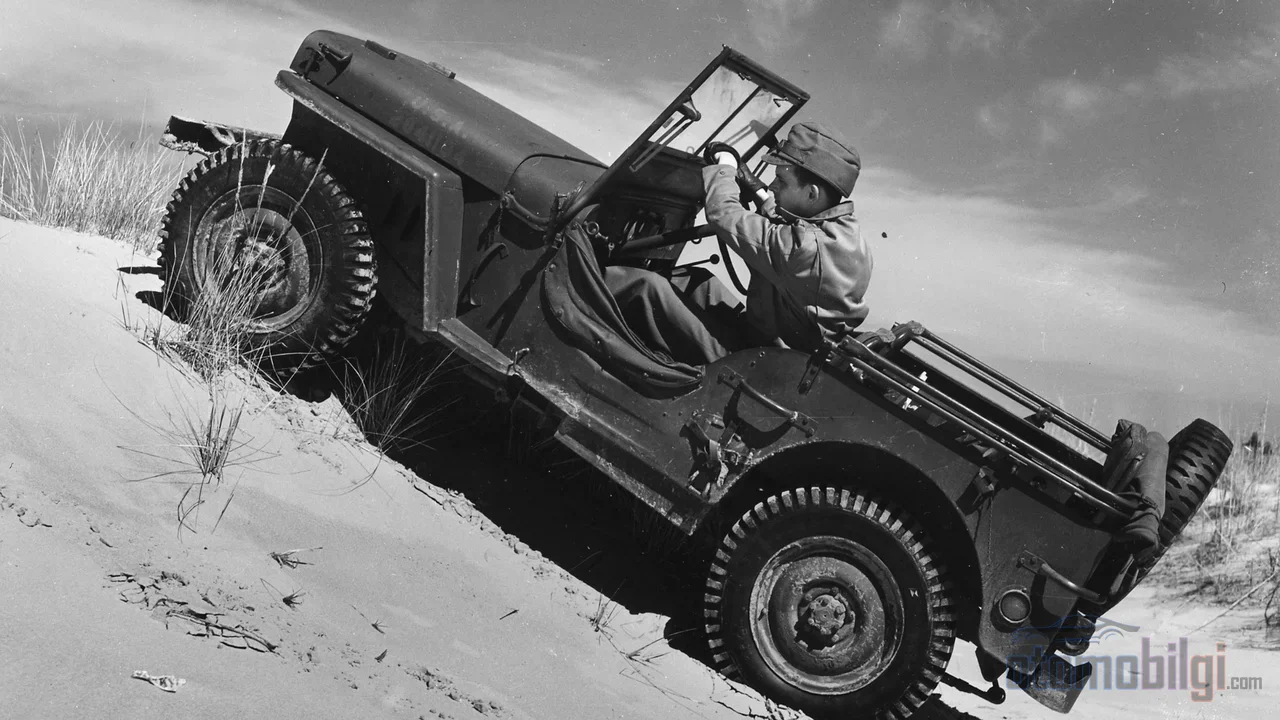
The Willys Jeep is a legendary vehicle designed as a ¼-ton military 4x4 during World War II, with over 600,000 units produced between 1941 and 1945, which after the war Civilian Jeep was transformed into models, becoming the world's first mass-produced civilian four-wheel-drive vehicle and is considered the ancestor of today's SUVs. Small, bare, doorless... But it is precisely because of this that it became one of the most influential vehicles in history. Come on, let's dive into the story of this four-wheeled legend!
Highlights
- Between 1941 and 1945 more than 600,000 Willys MB and Ford GPW units were produced
- Approximately 640,000 vehicles, which made up a quarter of the military motorized vehicles produced by the USA throughout the war
- A 2.2-liter engine, 60 hp and only 1,060 kg of weight
- In 1945, the CJ-2A marked the birth of the first mass-produced civilian 4x4
- In 1951, MoMA declared the Jeep one of the world's automotive masterpieces
A Wartime Emergency: How Was the Jeep Born?
In 1940, the US Army had a very specific idea in mind: a light, all-terrain, four-wheel-drive small reconnaissance vehicle. And they had no patience either - they demanded a prototype from companies in an unbelievably short time, within seven weeks. The only company that accomplished this American Bantam was. So it would be most accurate to say that Bantam invented the original ¼-ton jeep.
But interestingly, the legend ultimately doesn't carry a single company's signature. When Bantam's initial design, the improvements by Willys-Overland engineer Delmar "Barney" Roos, Ford's production power, and the contributions of Army engineers combined, that legendary formula known today as the "committee design" emerged. Bantam was a small company, and due to concerns that it could not handle such a high production volume, the contracts went to Willys and Ford. In July 1941, Willys signed a revised contract for 16,000 vehicles at a price of $738.74 per unit. This price would certainly buy something in today's money, but consider this: a nation's war machine was being built on an almost handmade budget.
The result? Officially the "U.S. Army truck, ¼-ton, 4×4, command reconnaissance," known among the public as the Willys MB and its Ford-licensed twin, the GPW. In fact, even the vehicle's name is a matter of debate - but we will return to that topic later.
A Wartime Job in Numbers: Why Did the MB Become Such a Legend?
Now let me give you a number, and read it without blinking: from 1941 to 1945, with a single standard design, more than 600,000 jeeps were produced. That means the first mass-produced four-wheel-drive automobile in the world to reach six-figure production numbers. Willys produced approximately 363,000 units, while Ford produced over 280,000. In total, roughly 640,000 vehicles made up exactly a quarter of the military support motorized vehicles produced by the USA throughout the war. Think about it: one in every four military vehicles in the war was a jeep!
So why was this vehicle, which looked like a wheelchair with an engine, so beloved? Let's take a look at the technical specifications table:
| Feature | Willys MB / Ford GPW |
|---|---|
| Engine | 2.2 L (134 cu in) Willys L134 "Go Devil", inline 4-cylinder |
| Power | 60 hp (gross) |
| Dry weight | 1,060 kg |
| Length | 3.35 m |
| Ground clearance | 22 cm |
| Transmission | 3-speed gearbox + 2-speed transfer case |
| Top speed | 105 km/h |
| Range | 480 km |
| Crew | 3-4 people |
As you can see, the numbers don't look like they came out of an action movie. But the secret isn't in power, it's in proportion: 60 horsepower carrying a 1,060-kilogram body is, compared to today's heavy SUVs, exactly like a mountain goat. The engine, transmission, and chassis were so simple and orderly that any mechanic at the front could open up whatever vehicle came his way and repair it like a washing machine. That was worth its weight in gold in the middle of a war.
What's more, the jeep didn't just run along the front line. Approximately 50,000 units were exported to the USSR under Lend-Lease. Its main rival, Nazi Germany's Kübelwagen, could only be produced at around 50,000 units - meaning Germany's total production equaled just the portion of jeeps that went to the Soviets. Ford also produced 12,778 units of the amphibious variant GPA "Seep"; yes, a floating jeep!
In the commanders' eyes, the vehicle's place was very clear: General George Marshall described the jeep as America's greatest contribution to modern warfare. Eisenhower wrote in his memoirs that senior commanders considered this vehicle one of the five most vital pieces of equipment for victory in Africa and Europe. A small vehicle with an enormous reputation.
Who Named It? The Dirty Legal Side of the Story
Now let's come to that famous name. Where the word "Jeep" came from is still a topic of conversation, but the legal side is much clearer - and a bit awkward. Willys tried to trademark the name "Jeep" in February 1943 and began positioning itself as the sole creator. Bantam and Ford immediately objected. The result: a lawsuit was filed in 1943, and it was decided that the idea was developed by American Bantam. In 1948, Willys was ordered to abandon its claim of being the sole creator. In other words, the jeep's birth certificate bears multiple signatures - but the biggest signature is Bantam's. This pioneering role was officially recognized in 2015 by Pennsylvania General Assembly's Resolution 382. By the way, let's add that on April 7, 1942, the patent for a military vehicle body was granted to the US Army on behalf of Colonel Byron Q. Jones; a total comedy, isn't it?
Don't worry, the tragicomic part isn't over: after the war, the name still ended up in Willys' hands, and that's how the brand went down in history. The vehicle was a committee job, but the legend has a single name. Do you think that's fair?
From Uniform to Blue Jeans: The Birth of the CJ Models
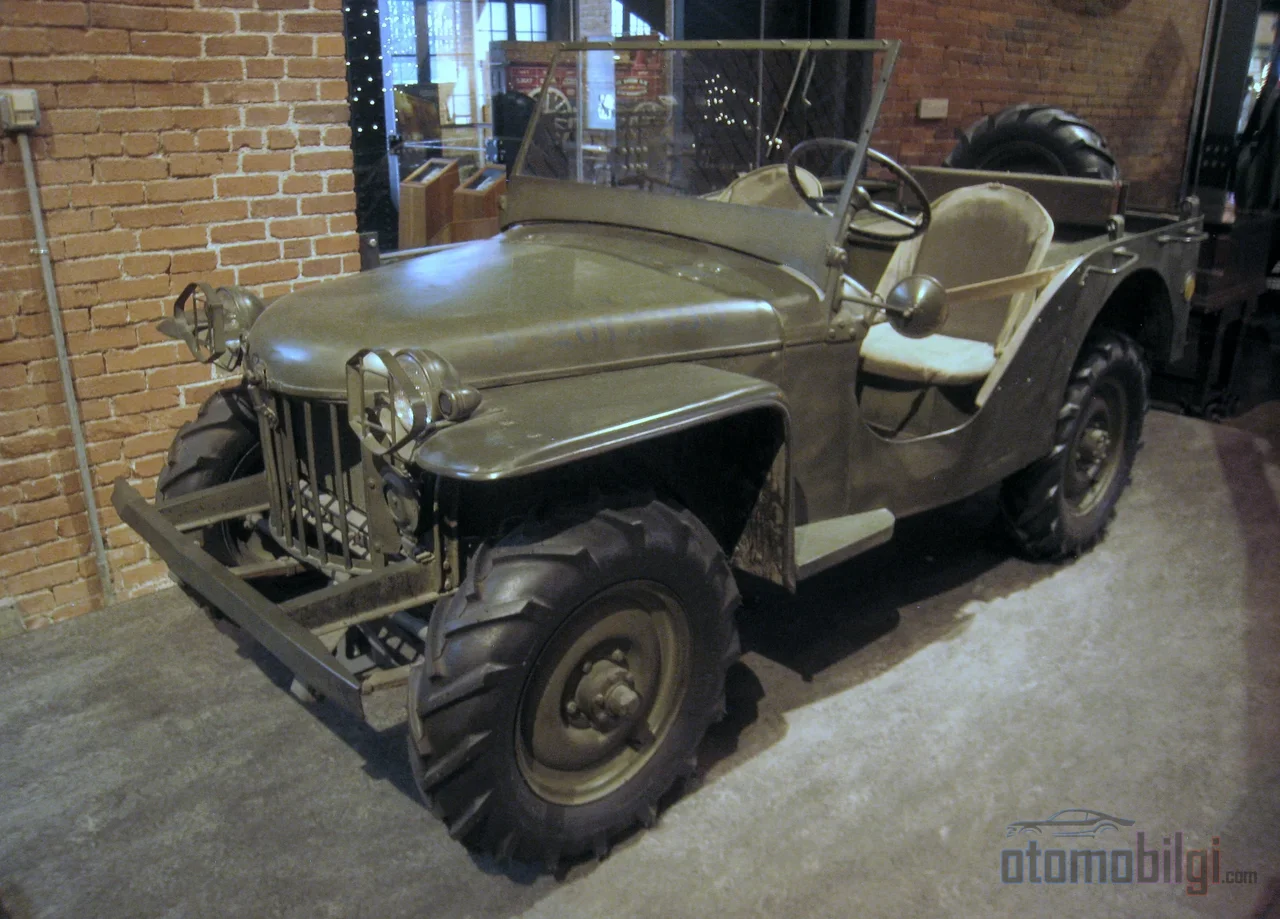
When the war ended, everyone expected the vehicle to be scrapped. Willys had a completely different plan in mind: adapting that military donkey to civilian life. In fact, the company had already begun secretly testing this from 1944, hidden from the government and the industry. CJ1 and CJ2 prototypes were given the name "Agri-Jeep," meaning agricultural jeep - because the target audience was clear from the start: farmers. In 1945, the CJ-2A went into mass production, becoming the world's first mass-produced civilian four-wheel-drive vehicle. Think about how ordinary it is today to write "4x4" on the front of a vehicle; this was the vehicle that created that ordinariness.
The first CJ was almost identical to the wartime-built vehicle; the changes were minor. But this was a deliberate risk, and it paid off. Farmers, farm and ranch operators, outdoor enthusiasts... Jeep became the vehicle of muddy roads, hay bales, and weekends with fishing hats. The vehicle's reputation for versatility was established exactly in this period. In 1953, CJ-3B arrived: the front grille and hood were made taller than its military predecessor - to give the engine more room. Then the line rolled on for many years, and the last CJ-7 was produced in 1986; in the 1987 model year the Wrangler YJ officially took over. One more note: the 1958 Willys Station Wagon is cited as one of the vehicles that helped launch today's SUV segment.
From Hollywood to Museums: How Jeep Became a Cultural Icon
How do you think a vehicle becomes an icon? My answer: first prove yourself in war, then get into everyone's living room via television. Jeep did both. M*A*S*H's 1970 film and the legendary TV series running from 1972 to 1983 featured the jeep as a central element; the vehicle in the film was a WWII-era Ford GPW produced under Willys license, while in the series the jeep appeared in nearly every episode. Even the Smithsonian National Museum of American History holds a toy belonging to the series' jeep in its collection. Think about it: even a vehicle's toy is in a museum!
On the silver screen, the list goes on and on: Jurassic Park, Dukes of Hazzard, Tomb Raider, Saving Private Ryan, Band of Brothers, Twister... Jeep is no longer just a vehicle, it's a film-set classic.
The institutional side is no less impressive: in 1951, the Museum of Modern Art declared the Jeep brand's 4x4 a cultural icon and hailed it as one of the world's automotive masterpieces. In 1991, the MB was designated an International Historic Mechanical Engineering Landmark by the American Society of Mechanical Engineers. Historians say the vehicle earned an almost mythical reputation for durability and versatility, becoming the iconic vehicle of World War II. Moreover, this isn't just wartime-anniversary romanticism: the jeep turned "four-wheel drive" into a household term and inspired the entire recreational 4WD and SUV categories. Even today's Wrangler still carries its original design to a large extent. The seven-slot grille, the round headlights... The same face for 80 years, like the face of a relative you love.
The Willys Jeep Today: Heritage, Trim Names, and the Collector Market
The Jeep brand is celebrating its 85th anniversary in 2026. It's hard to summarize this lineage, stretching from the Willys MB to modern 4xe electric models, in a single sentence, but let's try: we're talking about a vehicle that the world refers to by its brand name alone, the father of four-wheel drive and the SUV. The brand values this heritage so much that it brought back the "Willys" name as a trim level on the modern Wrangler - the 2026 Wrangler Willys 4x4 is on sale with a 3.6L V6 engine. So if you see "Willys" written on the hood when buying a Jeep from a dealer today, don't be surprised; it's a nod honoring the legacy of the original Jeep. What's more, there are reports that Jeep is working on a small, electric, Europe-focused SUV inspired by the historic MB. From military ancestor to urban electric - quite a transformation, isn't it?
As for the collectors' side: classics like the 1942 Willys MB regularly change hands in auction and sales databases; variants like the 1949 Willys Jeep Pickup are on the same market. Exact price ranges vary considerably depending on model, condition, and year, so giving a single figure would be cheating - but this much is certain: an MB in good condition carries history and prestige many times its size. The war's most beloved workhorse is still a star for anyone who parks it in their garage.
Final Word: A Small Chair, A Colossal Shadow
How often is a vehicle's story this clear: a prototype born in seven weeks, six hundred thousand copies, the backbone of a war, the first civilian 4x4, a museum icon, and a design still sold today. The Willys Jeep changed the world while being a vehicle as humble as a reserve fuel can - no doors, no roof. Next time you see a giant SUV with a glass roof on the road, smile; because its ancestor was this little courage that once carried soldiers through the mud. So if it were you, would you collect and restore a classic MB, or would you choose today's Wrangler?
Sources
- Willys MB
- Willys Jeep MB | 1940s Military Army Jeep History
- About WWII 1944 Willys MB Jeep History
- A Brief History of the Willys Jeep
- The First Civilian Jeeps Are Still a Rugged Deal
- The History of the Jeep. Part Two – Civilian Life
- History of the Civilian Jeep
- The History of Jeep: Willys MB to Modern Wrangler
- The Willys MB: The Quarter-Ton Vehicle That Won a War
- The Decade That Introduced the Jeep CJ-5 & M38
- Willys Jeep MB – Manro Classic Museum
- The Forgotten Military Vehicles of M*A*S*H
- Jeep Toy from M*A*S*H – National Museum of American History
- Most Recognizable Jeeps From Film and TV
- 10 Awesome Movie Jeeps
- The Jeep Willys Could Inspire a Small, Electrified SUV
- Celebrating 85 Years of Jeep
- Why Do Some Jeeps Say Willys On Them?
- Jeep Market Data