Steel-Bodied Bird: The Legend of the Jaguar E-Type
Share This Page
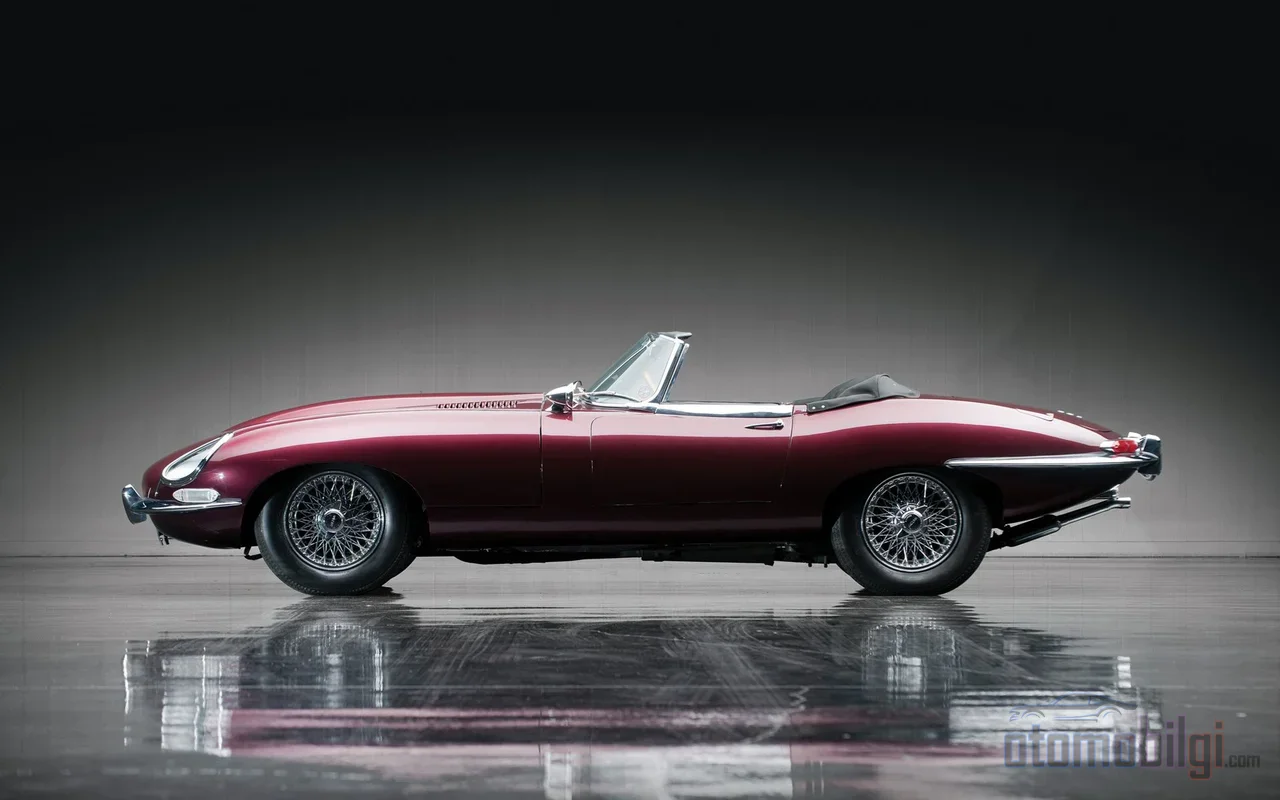
The Jaguar E-Type is a British sports car introduced in Geneva in 1961, which Enzo Ferrari is claimed to have called "the most beautiful car in the world". With its race-bred XK engine, independent rear suspension and aerodynamic body, it was produced until 1974 and became an icon of automotive design. So is this car really worthy of that fame? In my opinion, absolutely yes - and let me tell you why.
Highlights
- March 15, 1961 Introduced in Geneva, with a launch price of £2,256 15 shillings approximately.
- The 3.8-liter XK engine 265 hp of power with a 150 mph top speed.
- Between 1961 and 1974, approximately 72,000 units were produced.
- In 1996 it entered the permanent design collection of New York's MoMA.
- According to plan, 250 units were to be produced; by the end of the show, pre-orders had exceeded 500.
Geneva 1961: The Legend That Made It Just in Time
Even a car's launch story can be a movie scene in its own right. On March 15, 1961, the Gunmetal Grey coupé with the '9600 HP' license plate, which was to be shown to the press at the Parc des Eaux Vives in Geneva, was driven on its own wheels from Coventry to Geneva. The road team was led by PR director Bob Berry; he was delayed by fog between Calais and Reims and arrived with just 20 minutes to spare before the show. Sir William Lyons' reaction was epic:
My God Berry, I thought you wouldn't make it here.
The story didn't end there: demand for press tests exploded so much that test engineer Norman Dewis drove the first E-Type Roadster '77 RW' to Geneva overnight. Records describe this run sometimes as a 17-hour night race, sometimes as a marathon completing 600 miles in 11 hours at an average of 68 mph - whichever figure you take, it was a crazy feat. And the cleverest part: Lyons had timed the launch to coincide exactly with the world's automotive press being in Geneva, with the expenses billed to the SMMT. In other words, Jaguar spent almost a penny on this introduction. The result? While only 250 units of production were planned, pre-orders had already exceeded 500 by the end of the show.
There's another interesting detail: Lyons had actually only planned to build the roadster. Bob Blake, the metalworker who produced the body panels with calculations, built a Fixed Head Coupé body on his own initiative. When Lyons saw it, he reportedly said "I like it, we'll produce that one too." In fact, the car that went to Geneva was first built as a roadster and then converted into a coupé. That classic coupé silhouette we think of today when we hear E-Type almost never existed!
Malcolm Sayer: The Man Who Calculated Beauty
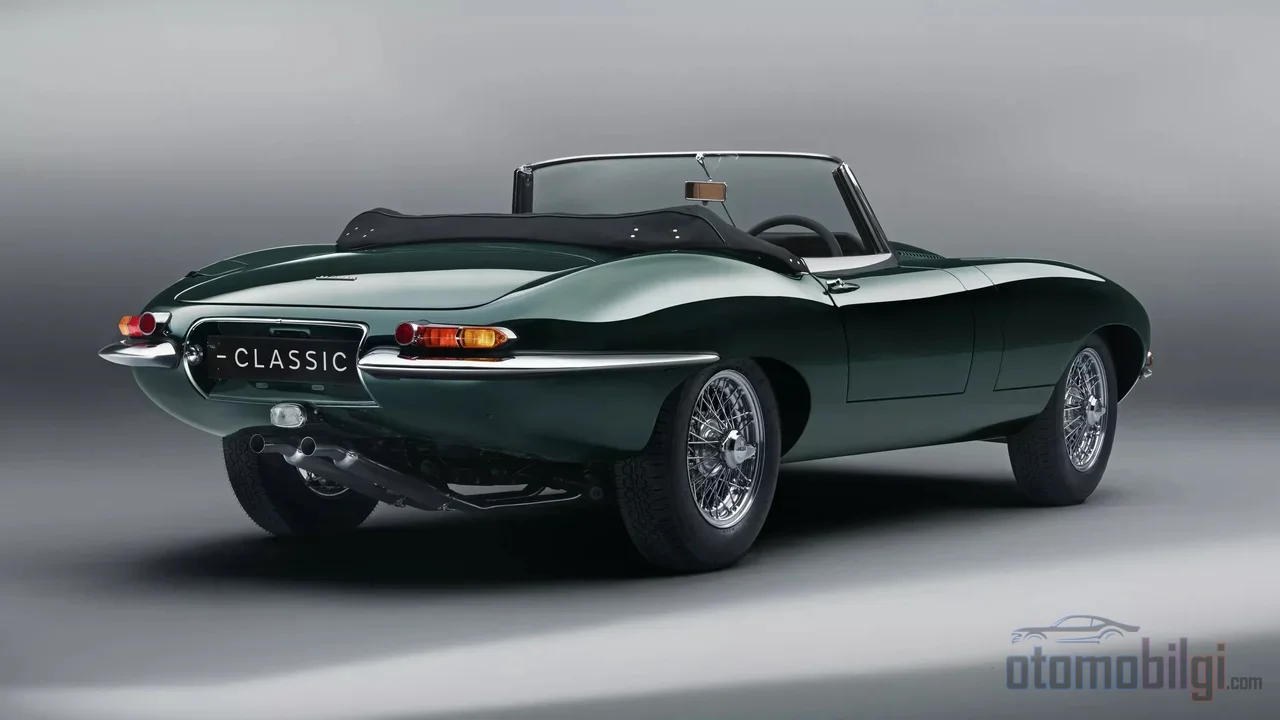
The E-Type's lines are not the product of a designer's wandering pencil, but of an engineer's calculator. Malcolm Sayer, who shaped the body, was an aerodynamics expert with an aviation engineering education; he also shaped Jaguar's Le Mans-winning C-Type and D-Type race cars. Sayer's method was incredible: he determined the form of the C-Type's lightweight aluminum body through long hand calculations, then refined it in the wind tunnel. In other words, those lines exist not because they 'looked beautiful', but because 'that's how the air flows'.
A small historical note: Sayer was even said to be 'an aerodynamicist who couldn't draw', but this information was later corrected - Sayer was an artist-trained stylist who would start with basic sketches, drawing the shape full-size in chalk on the floor. Unfortunately, he suddenly passed away in 1970, at only 53 years of age.
The structural story beneath the body also resembles an evolution lesson: the XK120's heavy steel chassis first became a tubular steel spaceframe (C-Type), then the D-Type gained a strong central tub - a semi-monocoque. That ribbed protrusion on the D-Type's fender, the riveted bonnet bulge made for the E2A's transition from 3.0 to 3.8 liters, became the E-Type's iconic signature. The prototypes were not forgotten either: the E1A (1957) was like a 'three-quarter-scale E-Type', while the E2A raced at 1960 Le Mans in Briggs Cunningham colors but retired after 29 laps with an engine failure. As a result, the E-Type was a full 225 kg lighter than the XK150 it replaced - the triumph of aviation logic on the street.
The Engineering Side: 150 mph and That Famous Rear Suspension
What was under the hood at launch? The 3.8-liter straight-six XK engine: 265 hp of power, 260 lb-ft of torque and 150 mph top speed. This engine was also the legend that gave Jaguar five Le Mans victories in the 1950s. In other words, the E-Type was parading around in street clothes with a race car's engine; like the XK120, it was the world's fastest production automobile. The price side, however, turned the system upside down: against rivals sold at twice the price of an Aston Martin and three times that of a Ferrari, the E-Type was at least half their price. Performance didn't have to be an expensive toy - the E-Type proved it.
At the rear, there was a complete revolution: the independent rear suspension (IRS) developed by Bob Knight. It gathered the differential, suspension, brakes, hubs and axles into a single self-contained unit - like a complete motorized 'rear trunk'. Think of it this way: it's like thinking of your bicycle's rear wheel as a smart module that can move on its own, independent of the road's bumps. At that time, in cars with a rigid rear axle, the difference in road holding and comfort was like night and day. This unit was mounted to the central tub in the E1A prototype and entered series production in 1961.
From Series 1 to Series 3: 14 Years of Evolution
The E-Type was divided into three series during its life, each reflecting its own era. Let's take a quick tour:
| Series | Period | Engine | Standout features |
|---|---|---|---|
| Series 1 (3.8) | 1961-1964 | 3.8 liters, 265 hp | Partially synchronized gearbox, covered headlights |
| Series 1 (4.2) | 1964-1968 | 4.2 liters, same power | Fully synchronized gearbox, better brakes and seats |
| Series 2 | From 1969 | 4.2 liters | Open headlights, large grille intake, Girling brakes |
| Series 3 | 1971-1974 | 5.3-liter V12 | Roadster and 2+2 coupé only |
Series 2: America's Influence
Series 2 was the product of US safety and emissions regulations: the E-Type's signature covered headlights became pop-up, the grille intake grew, the turn signals moved below the bumpers, the rear bumper was raised, and the taillights were renewed. On the mechanical side, there was good news: more powerful Girling brakes, a crossflow radiator with dual fans, and optional power steering. Pure aesthetes missed the covered headlights, but the Series 2, which preserved its classic look, is quite pleased with itself too.
Series 3 and the V12 Era
Arriving in June 1971, Series 3, touched the heart: a 5.3-liter V12 engine. The two-seat coupé was dropped; only the roadster and the 2+2 coupé were produced - with increased leg and head room for taller drivers. You could call it the family man's E-Type, but it was also the final act of the legend; production ended in 1974.
Which Series Should You Buy?
This is the question most frequently asked by those curious about the E-Type, and most owners give the same answer: the 4.2-liter Series 1. Why? With its covered headlights it preserves the original aesthetic, but it drives much more refined thanks to the increased torque of the 4.2 engine, Jaguar's own fully synchronized gearbox, upgraded brakes, and improved seats. In other words, museum-piece looks with modern driving enjoyment. If it were me, I'd go for it.
Its Place in Popular Culture: MoMA, Movies, and Stars
A car is merely a vehicle if it is only fast; if it enters the culture, it becomes an icon. According to Jaguar's own bulletin, the E-Type became as synonymous with the Swinging Sixties as the Beatles and the mini skirt. Among its owners were names like George Best, Brigitte Bardot, Tony Curtis, and Steve McQueen. From the racing world, drivers like Jackie Stewart, Graham Hill, and Bruce McLaren also used it; it was a favorite of the show business world too. On the silver screen, it has a brutal scene: in 'The Italian Job,' two E-Types are torn apart by an excavator. Good news: both were restored and are still on the road.
And perhaps the greatest honor: in 1996, it entered the permanent design collection of New York's MoMA - it was only the third car to be accepted into the museum's design collection. A car entering an art museum is like hanging on Picasso's wall. In fact, in recent years MoMA even brought the E-Type to 1:64 scale Hot Wheels models together with the Citroën DS 23; an icon, it turns out, lives on in small scale too.
What Is the E-Type Legacy Like Today?
The E-Type's legacy breathes not only in classic garages but also in the modern Jaguar. For the 60th anniversary, Jaguar Classic prepared the 'E-Type 60 Collection,' consisting of six matched restoration pairs inspired by '9600 HP' and '77 RW' - including burled walnut steering wheels with King Nerd engravings and 24-carat gold horn push buttons. In addition, 60 limited-edition F-TYPE Heritage 60 Edition units were also produced. This car, which delivered 150 mph in the 1960s at half the price of its rivals, became the roadmap for practically every sports car that followed: a lightweight monocoque-like body, independent rear suspension, disc brakes - most of what we consider 'normal' today was radical in the E-Type's time.
So is the 'world's most beautiful car' claim an exaggeration? Even though this debate keeps circulating in forums, there is a very strong reality behind the institutional records and the honor bestowed by a museum like MoMA. My view: you cannot judge the E-Type just by looking at a photograph; behind those lines there are calculations, races, midnight Geneva runs, and a passion. Don't you think so too? If you ever see a Series 1 on the road one day, take another good look at those covered headlights - you are seeing a sculpture that aerospace engineering gifted us.
Sources
- Jaguar Celebrates 50 Years of Iconic E-type
- E-type Evolution Exhibition - Jaguar Daimler Heritage Trust
- Launching the E-type in 1961 - Stratstone
- E-Type 60 Collection - Jaguar
- Refining the Sports Car: Jaguar's E-Type - MoMA
- The A-Z of the Jaguar E-Type - GQ
- Jaguar E-Type - Wikipedia
- Malcolm Sayer - Wikipedia
- Hot Wheels Collaborates With MoMA - MotorTrend
- 1996: A Cultural Breakthrough for a British Sports Car
- Jaguar E-Type Buyer's Guide - motorcartrader